
Juniper Berry Essential Oil
Essential Oils
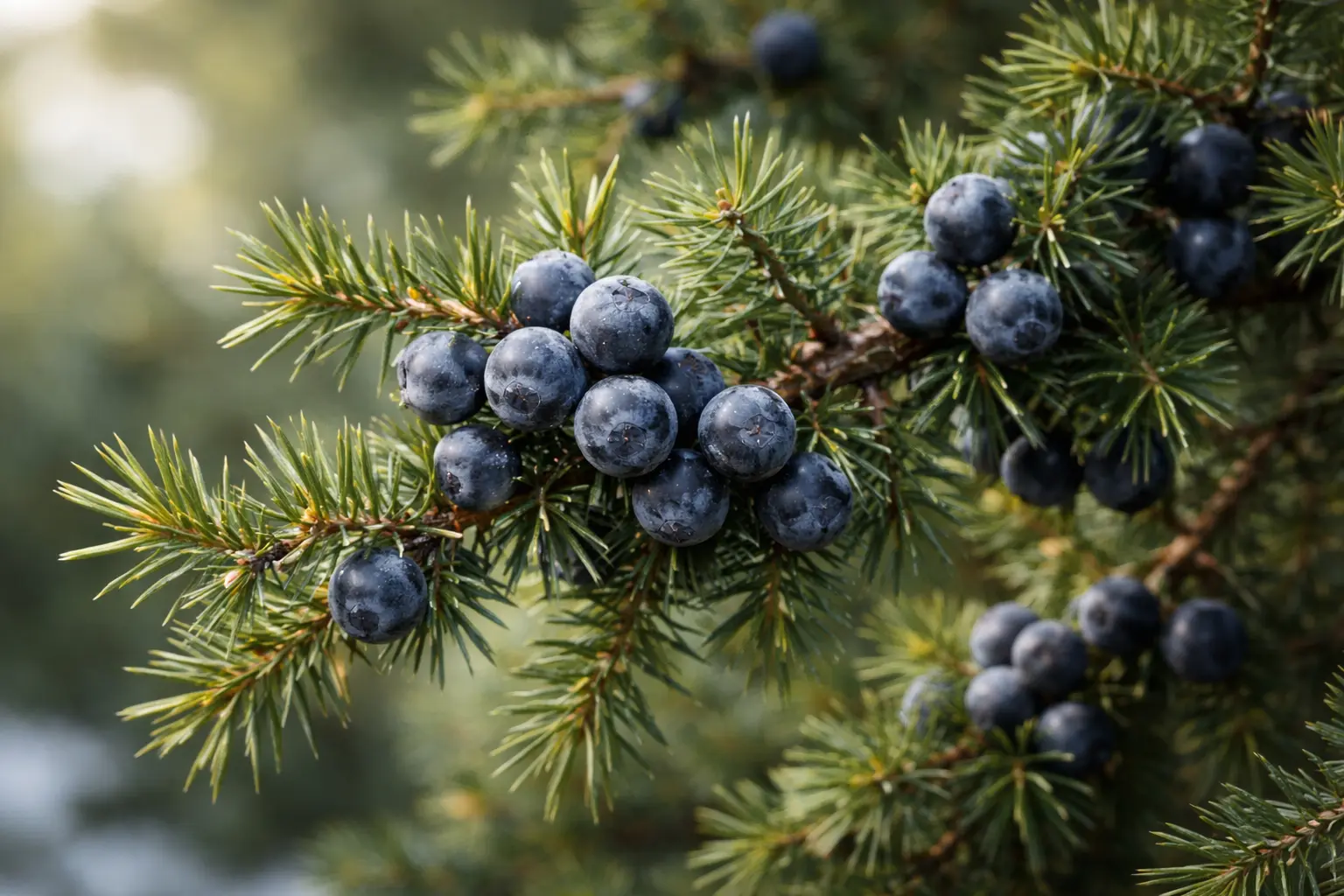
Juniper Berry essential oil smells like clear mountain air, evergreen branches, crushed resin, and a clean forest path after rain.
Steam distilled from the berry-like cones of Juniperus communis, this essential oil is crisp, woody, fresh, and gently balsamic. It is often chosen for grounding diffuser blends, forest-inspired home aromas, natural perfumery, and careful adult body-care routines where a dry evergreen note feels more refined than sharp pine. Like many conifer oils, it should be stored well, diluted carefully, and used with respect for individual sensitivity.
Quick Answer
Juniper Berry essential oil is a fresh, woody, pine-like oil from the berry-like cones of Juniperus communis. It is commonly used in diffuser blends, natural perfumes, massage oils at low dilution, and forest-style aromatic routines. It is not the same as juniper needle oil, and it should be diluted, used moderately, kept fresh, and avoided in casual ingestion.
What Is Juniper Berry Essential Oil?
Juniper Berry essential oil comes from Juniperus communis, a conifer in the cypress family, Cupressaceae. The plant is native across much of the subarctic and temperate Northern Hemisphere, from parts of Europe and Asia to North America.
The “berries” used for the essential oil are not true berries in the botanical sense. They are fleshy, berry-like seed cones that mature to a blue-black color. These cones are famous as the flavoring material associated with gin, but the essential oil is far more concentrated than culinary juniper and should be used by the drop.
Juniper Berry essential oil is valued for its clean evergreen aroma. It has a drier, more elegant profile than many pine oils, with a faint fruity-resinous quality that makes it useful in aromatherapy-style blends, forest accords, natural perfumes, and fresh home routines.
Juniper Berry vs Juniper Needle Essential Oil
Juniper Berry essential oil and juniper needle essential oil may come from related plant material, but they are not identical. Juniper Berry essential oil is distilled from the mature berry-like cones of Juniperus communis. Juniper needle oil is distilled from needles and twigs, and it can smell sharper, greener, and more coniferous.
In blending, Juniper Berry Essential Oil is often chosen when a composition needs a smooth, dry, forest-like note with a subtle fruity edge. Needle and twig oils can be useful too, but they may lean more resinous, camphoraceous, or rustic depending on the material and distillation.
Species also matters. The name “juniper” can refer to several Juniperus species, and they do not all have the same chemistry or safety profile. For this profile, Juniper Berry Essential Oil means oil from Juniperus communis berries or berry-like cones.
What Does Juniper Berry Essential Oil Smell Like?
Juniper Berry essential oil smells fresh, woody, dry, resinous, and pine-like. It can be crisp at first, then softer and slightly balsamic as it opens. Some oils have a faintly fruity, peppery, or gin-like nuance because of the berry-like cones.
The aroma is less sweet than many citrus oils and less heavy than most woods. It sits beautifully between evergreen, herbal, and resinous notes. In a diffuser blend, it can make a room feel clearer and more outdoorsy. In natural perfumery, it works as a fresh woody top-to-middle note that bridges citrus, herbs, woods, resins, and smoky base notes.
Common Uses of Juniper Berry Essential Oil
Juniper Berry essential oil is commonly used in diffuser blends when a room needs a crisp forest atmosphere. It pairs naturally with conifer and wood oils such as Cypress Essential Oil, Cedarwood Atlas Essential Oil, Frankincense Essential Oil, and Sandalwood Essential Oil.
It is also used in grounding routines, especially when someone wants an aroma that feels clean, spacious, and steady. This is best understood as an aromatic atmosphere choice rather than a medical effect. A short diffusion session, a tidy room, and a quiet moment can make Juniper Berry feel especially suitable for transitions between work, rest, and reflection.
In body-care blending, Juniper Berry can add a fresh woody scent to massage oils, bath-adjacent products, foot oils, or unscented lotions, but only when properly diluted and used on appropriate skin. Oxidized conifer oils are more likely to irritate the skin, so freshness and storage matter.
In natural perfumery, Juniper Berry is excellent in forest, fougere, incense, gin-inspired, herbal-citrus, and dry woody compositions. It can make citrus oils feel more grown-up and give heavier base notes a breath of evergreen air.
Quick Tips for Using Juniper Berry Essential Oil
Keep It Fresh
Store Juniper Berry essential oil tightly closed, away from heat and light. Older oxidized oils are more likely to irritate skin.
Use a Light Hand
One or two drops can bring a clear forest note to a diffuser blend without overpowering softer oils.
Pair With Citrus
Try it with pink grapefruit, bergamot, or lemon for a bright woodland aroma.
Respect Sensitive Users
Diffuse moderately in ventilated rooms and use extra caution around children, pets, pregnancy, asthma, allergies, or scent sensitivity.
Dilution Guidance
For adult topical use, Juniper Berry essential oil should be diluted before applying to skin. A conservative everyday range is about 0.5% to 1% for leave-on body products. This means about 1 to 2 drops of essential oil in 2 teaspoons, or 10 ml, of carrier oil.
For small-area adult blends, some people may use slightly higher dilutions, but lower amounts are often enough because Juniper Berry has a clear aroma. For sensitive skin, older adults, children, pregnancy, breastfeeding, or anyone with a medical condition, use extra caution and consult a qualified professional.
Because Juniper Berry is rich in volatile monoterpenes, oxidation is a practical safety concern. If the oil smells harsh, sticky, sour, or noticeably different from when it was fresh, avoid using it on skin.
Simple Dilution Reminder
For a 1% dilution, use about 1 drop of Juniper Berry essential oil in 1 teaspoon, or 5 ml, of carrier oil. Patch test first, avoid broken or irritated skin, and stop use if irritation or discomfort occurs.
How to Use Juniper Berry Essential Oil
For diffusion, add 1 to 2 drops of Juniper Berry essential oil to a blend with citrus, woods, resins, or herbs. Diffuse for short sessions in a well-ventilated room rather than running a diffuser continuously.
For a forest-style room blend, combine Juniper Berry with Cypress Essential Oil, Cedarwood Atlas Essential Oil, or Frankincense Essential Oil. Add citrus if you want a brighter opening.
For massage oil, dilute Juniper Berry essential oil in a carrier such as jojoba, sunflower, fractionated coconut oil, or sweet almond oil. Keep the dilution low, avoid the face and sensitive areas, and do not use on broken or irritated skin.
For natural perfumery, use Juniper Berry as a fresh woody note. It pairs well with Bergamot Essential Oil, Clary Sage Essential Oil, Patchouli Essential Oil, Vetiver Essential Oil, and Sandalwood Essential Oil.
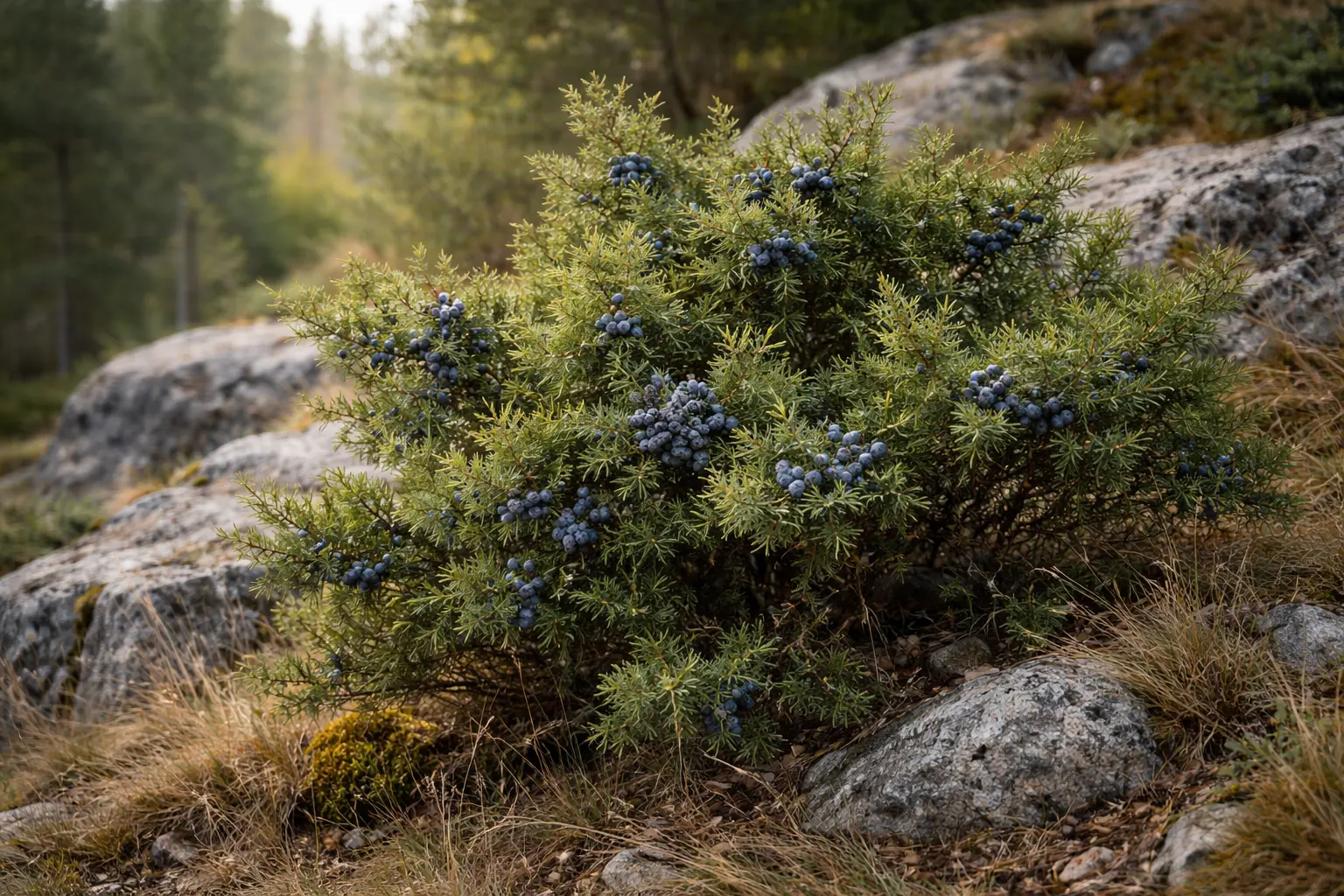
History and Origins of Juniper
Juniper has a long life in northern landscapes, food traditions, fragrance, and folklore. Juniperus communis grows across a broad subarctic and temperate range, and its hardy evergreen form has made it a familiar plant in rocky, open, windswept, and woodland-edge habitats.
The berry-like cones have been used as a flavoring material for foods and drinks, most famously gin. Their aroma is dry, resinous, and unmistakable, giving juniper a place in both culinary history and perfumery. The essential oil captures that familiar evergreen character in a concentrated form.
Traditionally, juniper branches and berries have also carried symbolic associations with cleansing, protection, thresholds, and wild places. In modern aromatherapy, those themes often translate into fresh room blends, winter forest aromas, grounding routines, and simple practices for resetting a space.
Diffuser Blends with Juniper Berry Essential Oil
Forest Air
Forest Air
- 2 drops Juniper Berry Essential Oil
- 2 drops Cypress Essential Oil
- 1 drop Lemon Essential Oil
Clean, green, and outdoorsy, like a cool path through evergreen branches.
Blue Ridge Quiet
- 2 drops Juniper Berry Essential Oil
- 2 drops Cedarwood Atlas Essential Oil
- 1 drop Frankincense Essential Oil
Dry, woody, and resinous, with a steady atmosphere for evening unwinding.
Gin Garden
- 1 drop Juniper Berry Essential Oil
- 2 drops Pink Grapefruit Essential Oil
- 1 drop Rosemary Essential Oil
Fresh, citrusy, herbal, and crisp, with a sparkling botanical character.
What Blends Well with Juniper Berry Essential Oil?
Juniper Berry essential oil blends beautifully with woods and conifers, including Cypress Essential Oil, Cedarwood Atlas Essential Oil, Sandalwood Essential Oil, and Frankincense Essential Oil. These combinations create dry, steady, forest-like aromas.
It also pairs well with citrus oils such as Lemon Essential Oil, Lime Essential Oil, Bergamot Essential Oil, Pink Grapefruit Essential Oil, Sweet Orange Essential Oil, and Red Mandarin Essential Oil. Citrus brightens juniper’s crisp top notes and gives the blend more lift.
For herbal and earthy blends, try Juniper Berry with Rosemary Essential Oil, Basil Essential Oil, Sweet Marjoram Essential Oil, Clary Sage Essential Oil, Vetiver Essential Oil, or Patchouli Essential Oil. Use tiny amounts with heavier base notes so the blend stays clear rather than muddy.
Juniper Berry Essential Oil FAQ
Is Juniper Berry essential oil the same as juniper needle oil?
No. Juniper Berry essential oil is distilled from the berry-like cones of Juniperus communis. Juniper needle oil is distilled from needles and twigs and can have a sharper, greener, more coniferous aroma.
What is Juniper Berry essential oil commonly used for?
It is commonly used in forest diffuser blends, grounding aromatic routines, natural perfumery, massage oils at low dilution, and fresh home aroma blends.
What does Juniper Berry essential oil smell like?
It smells fresh, woody, dry, pine-like, resinous, and slightly fruity. Some people notice a gin-like botanical nuance because juniper berries are used to flavor gin.
Can Juniper Berry essential oil be used on skin?
Yes, but only when diluted and only when the oil is fresh. Avoid undiluted use, patch test first, and do not apply to broken, irritated, or highly sensitive skin.
Can you ingest Juniper Berry essential oil?
Do not ingest Juniper Berry essential oil casually. Culinary juniper berries and concentrated essential oil are not the same thing. Internal use should only be considered under qualified professional guidance.
Juniper Berry Essential Oil, Spirituality, and Soul
The main sections above focus on botanical information, practical use, dilution, and safety. Juniper also has a symbolic and spiritual life in modern aromatherapy, shaped by its evergreen form, resilient habitat, and long association with wild northern landscapes.
Symbolically, Juniper Berry essential oil is often used when someone wants a scent that feels clearing and boundary-setting. Its aroma is crisp rather than soft, steady rather than sweet. It can support a personal ritual of opening a window, tidying a room, lighting a candle, or taking a quiet pause before beginning again.
Juniper also carries a threshold feeling. It suits moments of transition: the end of a workday, the start of a new season, the clearing of a desk, or the simple decision to make a space feel more breathable. These uses are symbolic and personal, not promises of energetic, emotional, or medical effects.
Safety Notes
Juniper Berry essential oil is concentrated and should be used with care. Dilute before topical use, avoid eyes, mucous membranes, broken skin, and sensitive areas, and do not ingest casually.
Use Juniper Berry essential oil moderately in a well-ventilated room. Avoid continuous diffusion, especially around babies, young children, pregnant or breastfeeding people, pets, older adults, and anyone with asthma, respiratory sensitivity, migraines, allergies, or strong scent sensitivity.
For topical use, patch test first and keep dilution low. Avoid using old or oxidized Juniper Berry essential oil on the skin. People who are pregnant or breastfeeding, managing kidney concerns or other medical conditions, taking medication, or using oils with children or pets should consult a qualified professional before use.
Stop use if irritation, redness, itching, headache, nausea, coughing, wheezing, dizziness, or any other adverse reaction occurs. Keep essential oils out of reach of children and pets, and never use them as a replacement for medical care.
Safety-first reminder: Juniper Berry essential oil can bring a beautiful forest note to blends, but freshness, dilution, ventilation, and individual sensitivity matter. More oil is not better; a careful drop or two is usually enough.
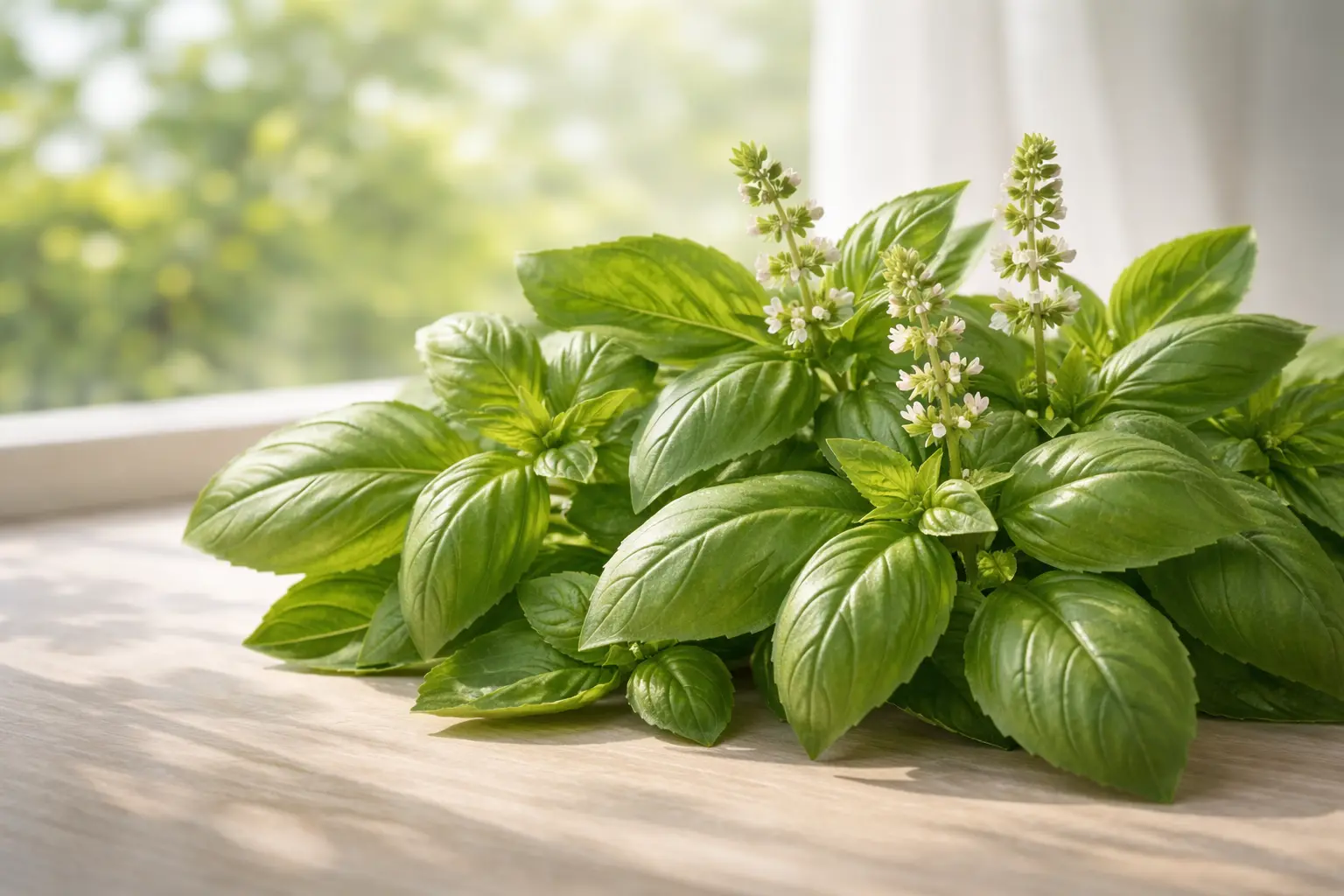
Basil Essential Oil
Basil essential oil is bright, green, sweet, and herbaceous: a familiar kitchen-garden aroma transformed into a concentrated aromatic oil with a crisp, lively personality. Steam distilled from the leaves and flowering tops of Ocimum basilicum, Basil essential oil is often used in diffuser blends, fresh herbal accords, natural perfumery, and carefully diluted body-care formulas. It can feel clear and uplifting in a room, especially when paired with citrus, mint, soft florals, or other Mediterranean herbs. Because basil oils vary widely in chemistry, this is also an oil where chemotype, dilution, and safety notes matter.
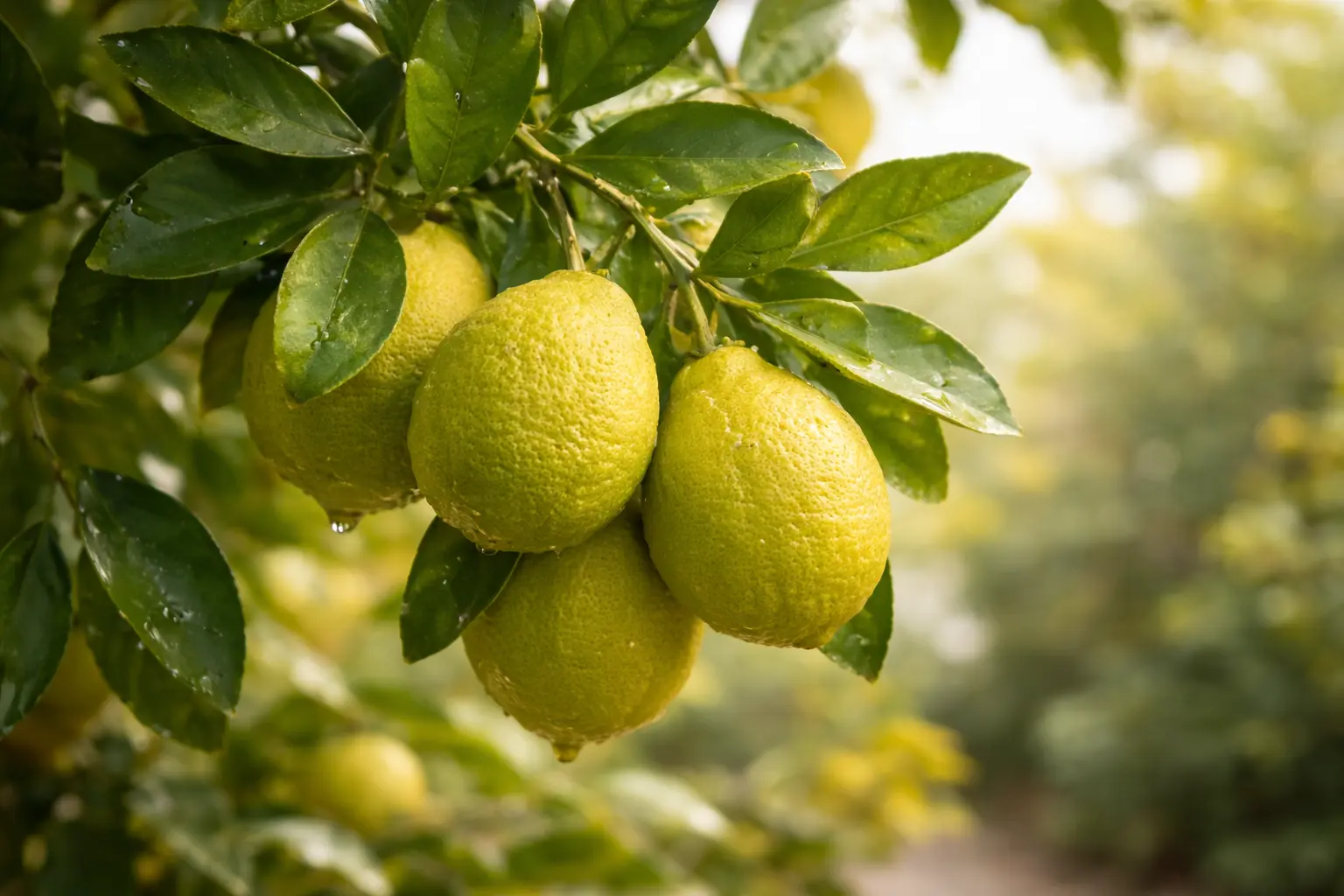
Bergamot Essential Oil
Bergamot essential oil is a bright, elegant citrus oil expressed from the peel of Citrus bergamia. It is best known for its fresh green-citrus aroma, soft floral undertone, connection to Earl Grey tea, and its long-standing role in perfumery, diffuser blends, emotional wellness rituals, and natural fragrance. Bergamot smells lighter and more complex than many familiar citrus oils. It has the sparkle of lemon, the gentle sweetness of sweet orange, a slightly bitter green edge, and a delicate floral quality that makes it blend beautifully with herbs, woods, resins, and florals.
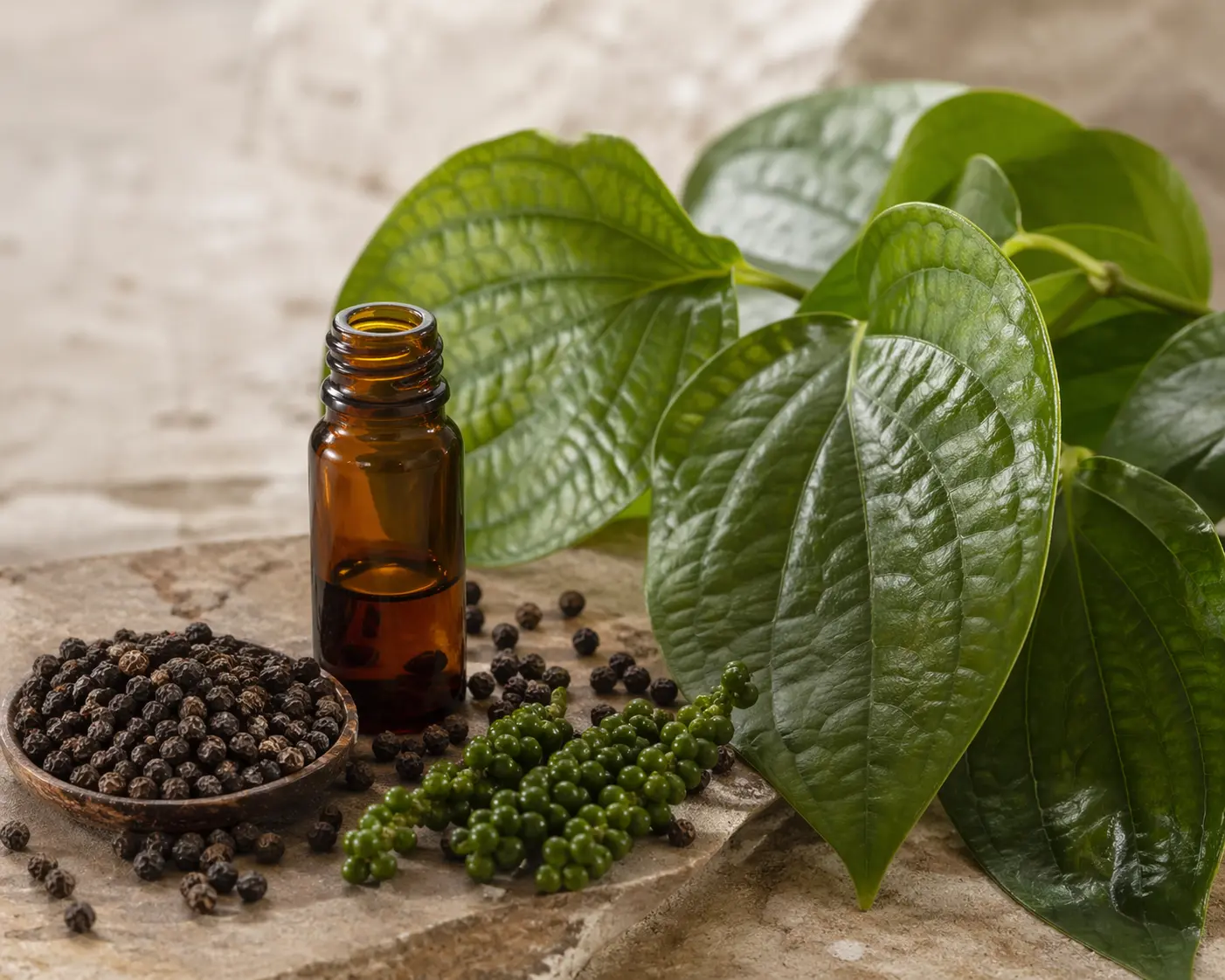
Black Pepper Essential Oil
Black Pepper essential oil is warm, dry, spicy, and quietly energizing, with the familiar spark of cracked peppercorns softened into a smooth aromatic oil. Steam distilled from the fruits of Piper nigrum, Black Pepper essential oil is often used in diffuser blends, natural perfumery, warming-feeling massage oils, and cozy routines where a dry spice note is wanted. It smells recognizable, but it is not the same as sprinkling pepper on food. The essential oil is a concentrated aromatic extract, used by the drop, and it should be diluted carefully before topical use.
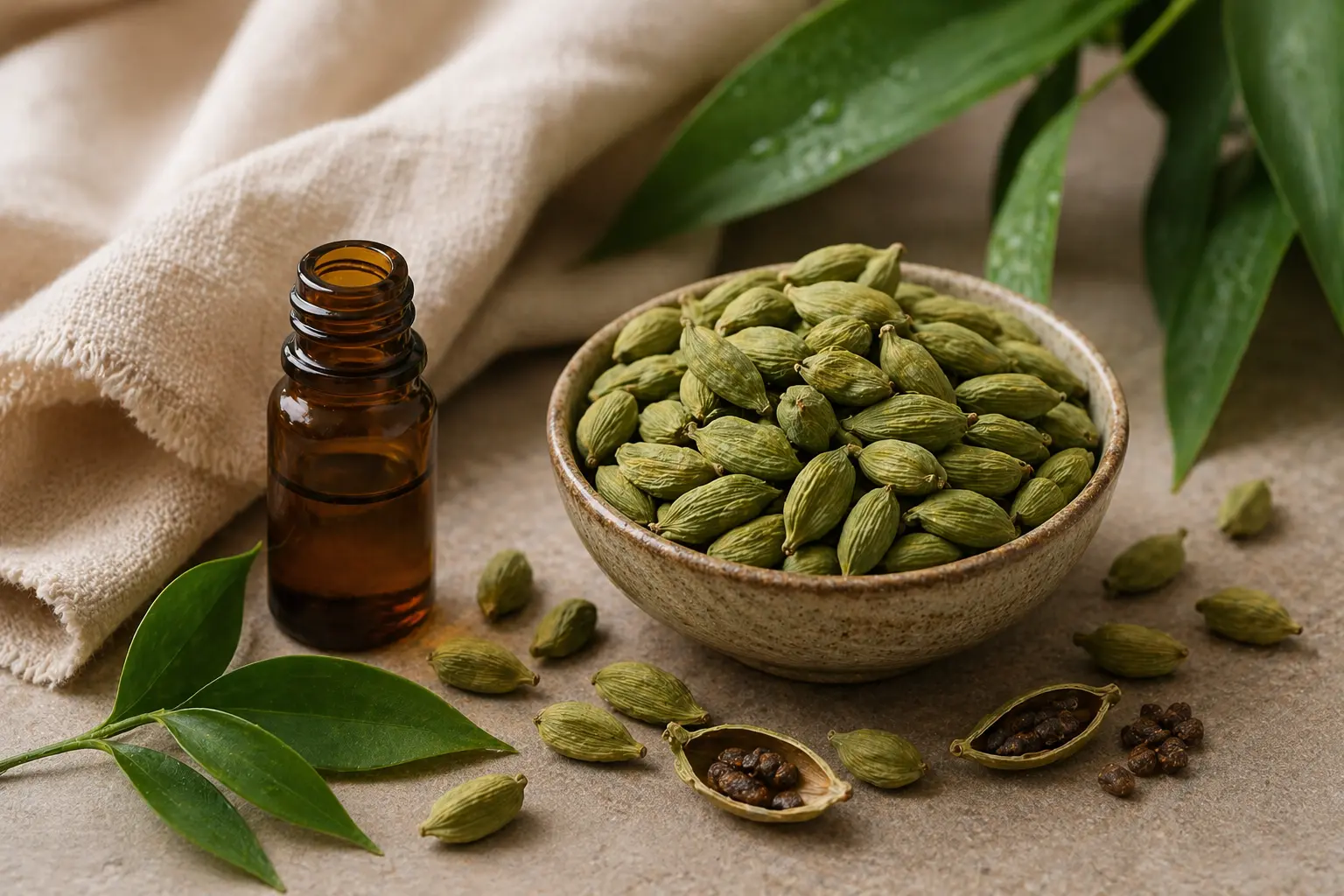
Cardamom Essential Oil
Cardamom essential oil is warm, sweet, spicy, and softly aromatic, with the elegant scent of green cardamom pods, citrus peel, fresh spice markets, and cozy kitchen rituals. Steam distilled from the seeds of Elettaria cardamomum, Cardamom essential oil is often used in diffuser blends, natural perfumery, massage oils at low dilution, and comforting home routines where a smooth spice note is wanted. It is gentler in aroma than many hot spice oils, but it is still a concentrated essential oil and should be diluted, diffused moderately, and used with care around sensitive people.
Further Reading and Sources
For botanical, chemical, and safety-oriented background, these sources may be useful starting points:
- Kew Plants of the World Online: Juniperus communis L.
- Chemical Composition and Antioxidant Properties of Juniper Berry (Juniperus communis L.) Essential Oil
- Chemical Composition of the Essential Oils of Juniperus from Ripe and Unripe Berries and Leaves
- Chemical Composition of Juniperus communis L. Cone Essential Oil and Its Variability among Wild Populations
- Yield, Chemical Composition and Bioactivity of Essential Oils from Common Juniper (Juniperus communis L.) from Different Spanish Origins
- Tisserand Institute: Q&A Safety Maximums for Dermal Application