
Tangerine Essential Oil
Essential Oils
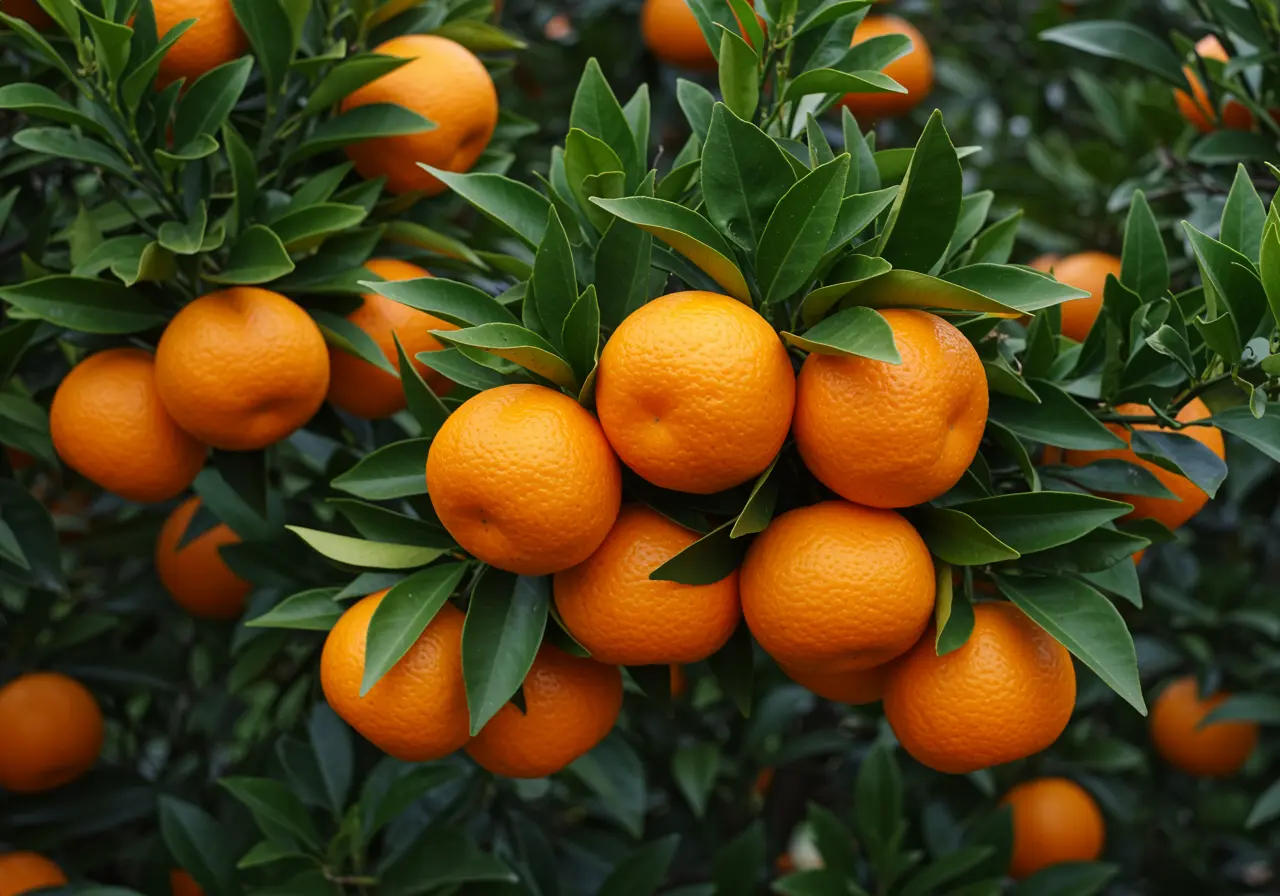
Tangerine essential oil is a sweet, bright, easygoing citrus oil usually cold expressed from the peel of Citrus reticulata fruit. It is closely related to mandarin oils and is often chosen for cheerful diffuser blends, gentle home fragrance, beginner citrus blends, room sprays, body oils, bath products, natural perfume, and relaxed family-style routines.
Tangerine smells soft, juicy, fresh, sweet, and sunny. Compared with lemon or lime, it feels rounder and less sharp. Compared with bergamot, it is less floral and less bitter. Compared with red mandarin, it is often described as similarly sweet and tender, with a lively orange-citrus sparkle.
Quick Answer
Tangerine essential oil is commonly used in aromatherapy for happy citrus diffuser blends, fresh home routines, soft evening blends, childlike comfort aromas, beginner room sprays, body oils, bath products, and natural perfume. It blends especially well with lavender, roman chamomile, cedarwood atlas, frankincense, ginger, cardamom, sweet orange, neroli, and petitgrain.
Tangerine is often treated as one of the gentler citrus oils and is not usually considered a major phototoxicity concern. It still needs normal essential oil safety: dilute before topical use, avoid internal use as a casual practice, use moderate diffuser sessions, keep it away from eyes and mucous membranes, and store it carefully because citrus oils oxidize more easily than many deeper oils.
What Is Tangerine Essential Oil?
Tangerine essential oil is a citrus peel oil from Citrus reticulata. The naming around mandarins and tangerines can be confusing because the fruit group is botanically close, and common names vary by growing region, trade practice, ripeness, and oil supplier. In practical aromatherapy, tangerine is usually understood as a sweet, soft orange-citrus peel oil with a friendly, bright aroma.
Like many citrus peel oils, tangerine is commonly produced by expression rather than steam distillation. The peel is mechanically pressed so the aromatic oil is released from tiny oil glands in the rind. This gives tangerine its fresh, realistic fruit-peel aroma.
Tangerine belongs to the Rutaceae family, along with sweet orange, lemon, lime, pink grapefruit, bergamot, neroli, and petitgrain. It is usually easier and softer than sharper citrus oils, making it useful in beginner blends.
What Does Tangerine Essential Oil Smell Like?
Tangerine smells sweet, juicy, citrusy, bright, light, and soft. It has a familiar orange-peel quality, but it is often more delicate than sweet orange and more playful than bergamot. It can make blends feel friendly, gentle, and emotionally sunny without becoming overly sharp.
In blends, tangerine brightens florals, softens woods, sweetens resins, and gives spice oils a more approachable edge. It is especially useful when a blend needs citrus warmth rather than citrus bite.
Common Uses of Tangerine Essential Oil
Tangerine is most useful when a blend needs easy brightness, gentle sweetness, and a cheerful citrus mood. It is popular in diffuser blends, family-style home aromas, body oils, bath products, natural perfume, simple room sprays, seasonal blends, and soft evening routines.
Diffuser Blends
Tangerine is a beginner-friendly diffuser oil because it smells pleasant to many people and blends easily. It works well with lavender for softness, cedarwood for grounding, ginger or cardamom for warmth, and frankincense for a calm resinous base. Use short sessions in a ventilated room.
Calm and Comfort Routines
Although tangerine is bright, it does not feel as piercing as lemon or lime. This makes it useful in relaxed evening diffuser blends, gentle room sprays, and comfort-focused routines. It can add a sense of warmth and ease without making a blend feel heavy.
Natural Perfume
Tangerine is a top note in natural perfume. It gives the opening of a fragrance a sweet citrus lift. Because citrus top notes fade relatively quickly, tangerine is often paired with longer-lasting oils such as patchouli, cedarwood atlas, sandalwood, frankincense, myrrh, or vetiver.
Body Oils and Bath Products
Tangerine can be used in properly diluted body oils, massage blends, bath products, and lotions. It should be treated like a concentrated essential oil, not a food ingredient or casual skin product. Use it diluted, avoid old oxidized oil, and patch test if your skin is sensitive.
Quick Tips for Using Tangerine Essential Oil
Use It for Soft Brightness
Tangerine is useful when you want a citrus blend that feels cheerful, gentle, and rounded rather than sharp.
Pair with Woods
Try tangerine with cedarwood atlas, sandalwood, or frankincense when you want the sweetness to feel more grounded.
Watch Oxidation
Like many citrus oils, tangerine can oxidize over time. Store it tightly closed, cool, and away from light.
Dilute for Skin
Even gentle-smelling citrus oils should be diluted before topical use and kept away from eyes, lips, and irritated skin.
Dilution Guidance
General Adult Dilution
For general adult topical use, tangerine essential oil is usually kept around 1% to 2% dilution. A 1% dilution is about 1 drop of essential oil per teaspoon of carrier oil. A 2% dilution is about 2 drops per teaspoon of carrier oil.
How to Use Tangerine Essential Oil
In a Diffuser
Use 3 to 5 total drops of essential oil in a standard room diffuser, depending on diffuser type, room size, and scent sensitivity. Tangerine can be the main citrus note or a soft accent. Diffuse intermittently in a ventilated room rather than continuously.
On Skin
Always dilute tangerine essential oil before applying it to skin. It can work well in body oils, massage blends, perfume oils, and lotions, especially with lavender, frankincense, cedarwood, ginger, or cardamom. Avoid broken skin, irritated skin, eyes, lips, and mucous membranes.
In Bath Products
Do not add tangerine essential oil directly to bathwater. Essential oils do not dissolve in water. Blend it into a suitable dispersant, unscented bath gel, or properly emulsified bath product first.
In DIY Products
Tangerine can be used in room sprays, linen sprays, body oils, bath blends, and natural perfume. Water-based sprays need proper formulation, not just water and essential oil. Label blends clearly and keep them away from children and pets.
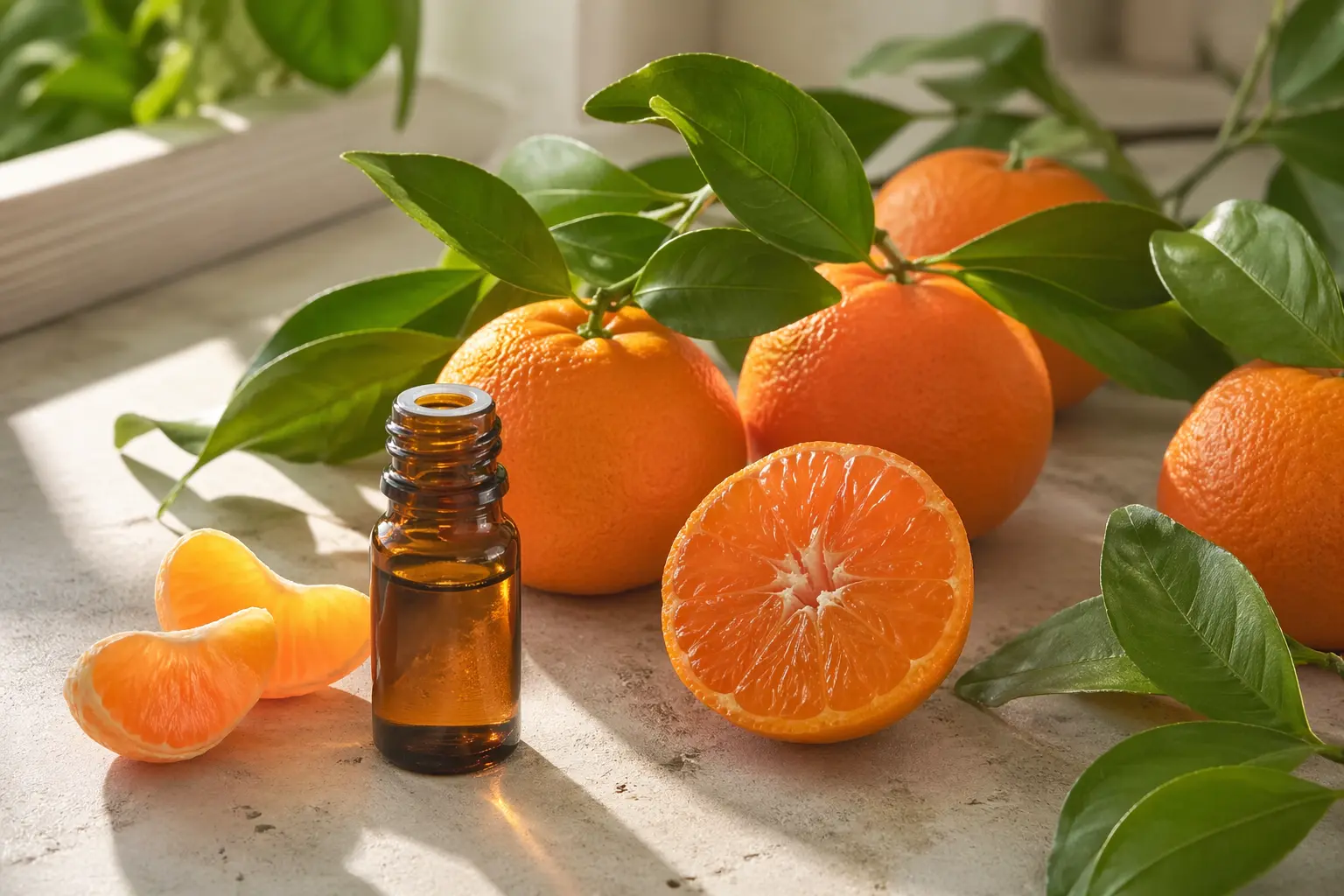
History and Origins of Tangerine
Tangerines belong to the mandarin citrus group, a family of small, aromatic citrus fruits with peel that is usually easier to remove than many oranges. The broader Citrus reticulata group has a long history across Asia and later became widely cultivated in Mediterranean regions, the Americas, and other citrus-growing areas.
The word “tangerine” is historically connected with Tangier, a Moroccan port associated with trade routes that helped bring certain mandarin-type fruits into wider European awareness. In modern use, tangerine and mandarin names can overlap, and essential oil labeling may vary. For practical home use, always read the exact botanical name, extraction method, and safety information on the oil you have.
Tangerine essential oil became popular because its aroma is immediately friendly: sweet, fresh, juicy, and emotionally easy. It fits well in family-room diffuser blends, seasonal citrus recipes, bath products, and beginner aromatherapy routines.
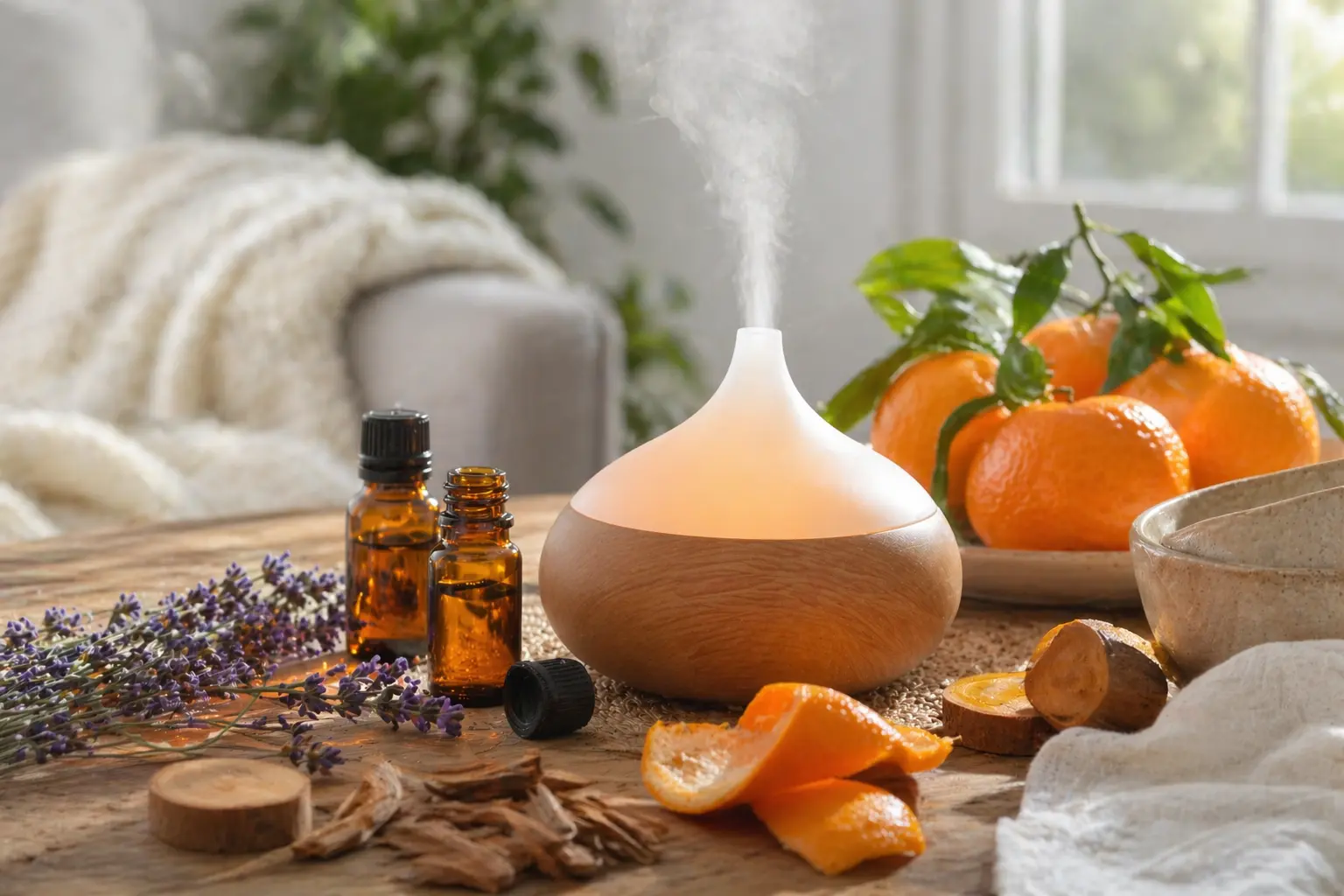
Tangerine Diffuser Blends
Tangerine blends are easiest when they stay simple. Pair it with one soft floral, one wood, one resin, or one warm spice rather than adding too many citrus oils at once.
Sunny Start
Sunny Start
- 3 drops tangerine
- 2 drops sweet orange
- 1 drop rosemary
A bright citrus-herbal blend for morning rooms, errands, and a cheerful start.
Soft Family Evening
- 3 drops tangerine
- 2 drops lavender
- 1 drop cedarwood atlas
A gentle citrus-floral-wood blend for quiet evenings in a ventilated shared room.
Warm Citrus Spice
Golden Calm
- 2 drops tangerine
- 2 drops frankincense
- 1 drop roman chamomile
A soft citrus-resin blend for journaling, relaxed evenings, and emotional comfort routines.
What Blends Well with Tangerine Essential Oil?
Tangerine blends well with sweet orange, red mandarin, bergamot, lavender, roman chamomile, geranium, neroli, petitgrain, cedarwood atlas, frankincense, sandalwood, ginger, cardamom, and coriander.
For a bright blend, use tangerine with sweet orange, rosemary, or spearmint. For a gentle evening blend, use lavender, roman chamomile, frankincense, or cedarwood atlas. For seasonal warmth, use ginger, cardamom, black pepper, myrrh, or sandalwood.
FAQ About Tangerine Essential Oil
Is tangerine essential oil the same as mandarin essential oil?
They are closely related and may share the botanical name Citrus reticulata, but common names can vary by fruit type, ripeness, region, and supplier. Tangerine is generally used for a sweet, bright mandarin-type citrus peel oil. Red mandarin is often softer and rounder, though the two can overlap in practical blending.
Is tangerine essential oil phototoxic?
Tangerine essential oil is not usually treated as a major phototoxic oil. However, it is still a cold-expressed citrus peel oil, so topical citrus safety matters. Use fresh oil, dilute properly, avoid old oxidized oil, and be cautious with leave-on products before intense sun exposure.
Can tangerine essential oil be used around children?
Tangerine is often described as a gentle-smelling citrus oil, but child safety still depends on age, dose, method, ventilation, health status, and individual sensitivity. Use very low amounts, diffuse briefly in a ventilated room, avoid direct inhalation, and do not apply essential oils to children without age-appropriate guidance.
Can tangerine essential oil be used on skin?
Yes, but it should be diluted in a carrier oil or suitable base first. Avoid the eyes, lips, mucous membranes, broken skin, irritated skin, and old oxidized oil. Patch test if your skin is sensitive.
Can tangerine essential oil help with sleep?
Tangerine can be part of a pleasant evening aroma routine, especially with lavender, cedarwood, frankincense, or roman chamomile. It should not be described as treating insomnia or any sleep disorder.
Can tangerine essential oil be ingested?
Do not ingest tangerine essential oil as a casual wellness practice. Essential oils are concentrated and internal use should only happen under the guidance of a qualified professional trained in that method of use.
Tangerine Essential Oil, Spirituality, and Soul
The practical sections above focus on aroma, blending, dilution, and safety. Tangerine also has a symbolic life in modern aromatherapy, where its bright sweet scent is often associated with childlike joy, emotional warmth, softness, and a light returning after a heavy day.
Tangerine does not feel sharp or forceful. It has a gentle citrus glow that can support the atmosphere of a morning ritual, family room reset, journaling practice, or soft evening transition.
Soft Joy
In symbolic blending, tangerine is often used when the desired mood is lighthearted but not overstimulating. It can bring a feeling of ease to blends that might otherwise feel too serious or heavy.
Warmth and Comfort
Tangerine pairs beautifully with woods, resins, and soft spices when a blend needs comfort. Cedarwood, frankincense, ginger, cardamom, and sandalwood can help its sweetness feel grounded.
Beginning Again
Tangerine is a natural choice for small reset rituals: opening a window, cleaning a room, starting a notebook, preparing for a new week, or shifting the atmosphere after a difficult day. These associations are symbolic and sensory, not medical claims.
Safety Notes
Tangerine essential oil should be diluted before topical use. Do not apply it undiluted to skin, do not use it in or near the eyes, and do not take it internally as a casual wellness practice.
Tangerine is not usually considered a major phototoxic oil, but it can still irritate sensitive skin, especially if used too strongly or if the oil is old or oxidized. Store it tightly closed, away from heat, light, and air, and avoid using oxidized citrus oils on skin.
Use extra caution with children, elderly adults, pregnancy, breastfeeding, sensitive skin, asthma, complex medical conditions, medication use, and pets. Diffuse moderately, keep rooms ventilated, and avoid continuous diffusion.
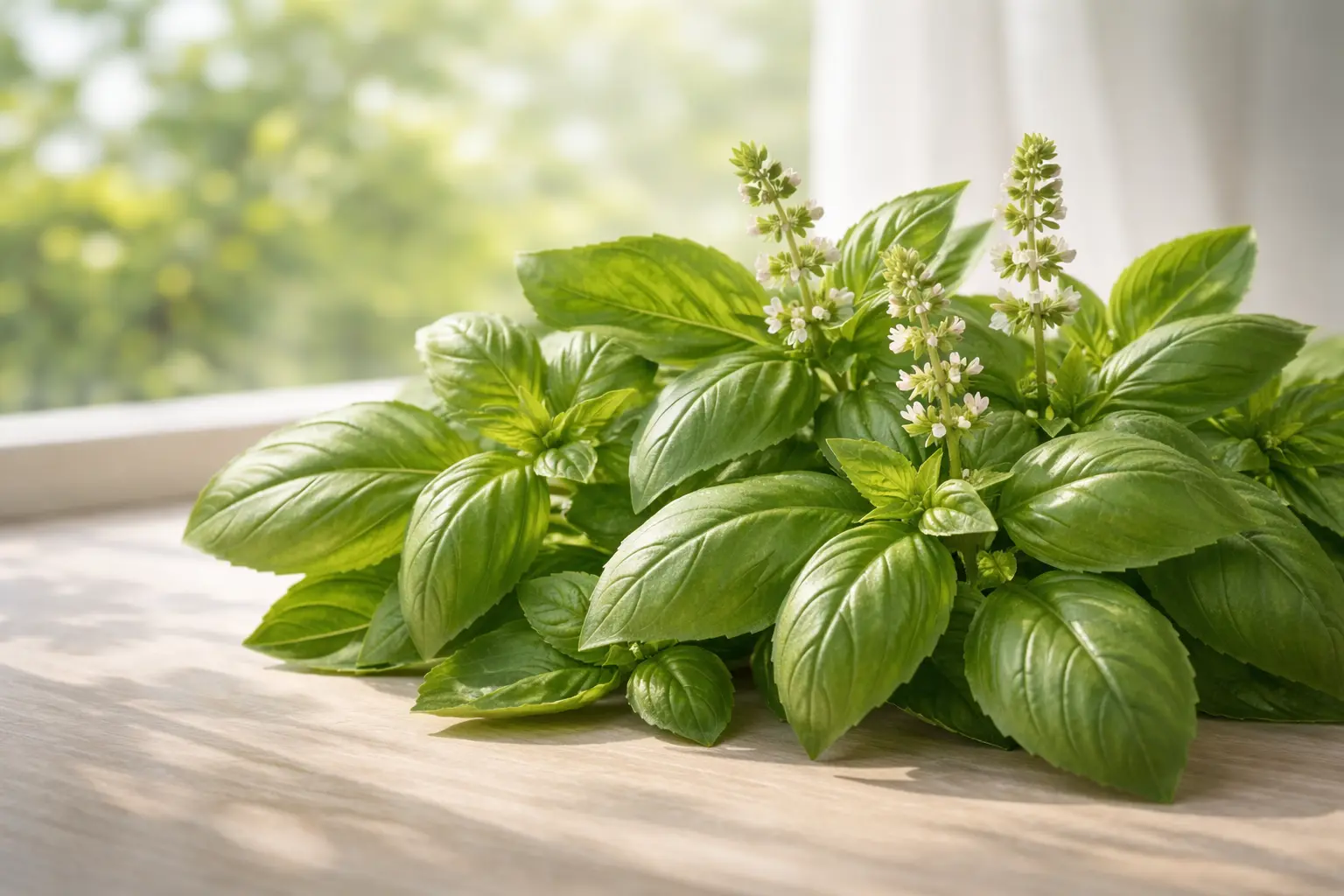
Basil Essential Oil
Basil essential oil is bright, green, sweet, and herbaceous: a familiar kitchen-garden aroma transformed into a concentrated aromatic oil with a crisp, lively personality. Steam distilled from the leaves and flowering tops of Ocimum basilicum, Basil essential oil is often used in diffuser blends, fresh herbal accords, natural perfumery, and carefully diluted body-care formulas. It can feel clear and uplifting in a room, especially when paired with citrus, mint, soft florals, or other Mediterranean herbs. Because basil oils vary widely in chemistry, this is also an oil where chemotype, dilution, and safety notes matter.
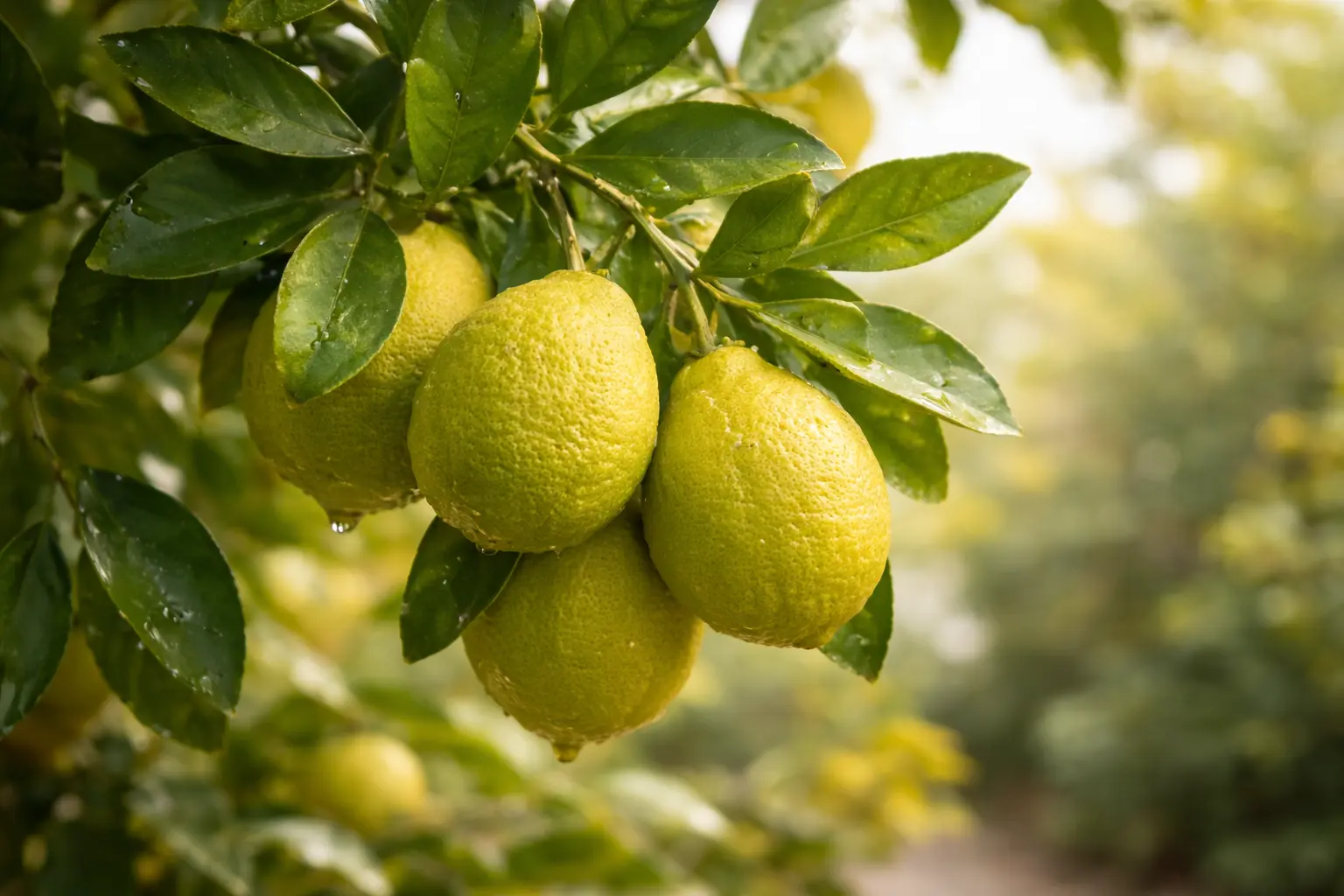
Bergamot Essential Oil
Bergamot essential oil is a bright, elegant citrus oil expressed from the peel of Citrus bergamia. It is best known for its fresh green-citrus aroma, soft floral undertone, connection to Earl Grey tea, and its long-standing role in perfumery, diffuser blends, emotional wellness rituals, and natural fragrance. Bergamot smells lighter and more complex than many familiar citrus oils. It has the sparkle of lemon, the gentle sweetness of sweet orange, a slightly bitter green edge, and a delicate floral quality that makes it blend beautifully with herbs, woods, resins, and florals.
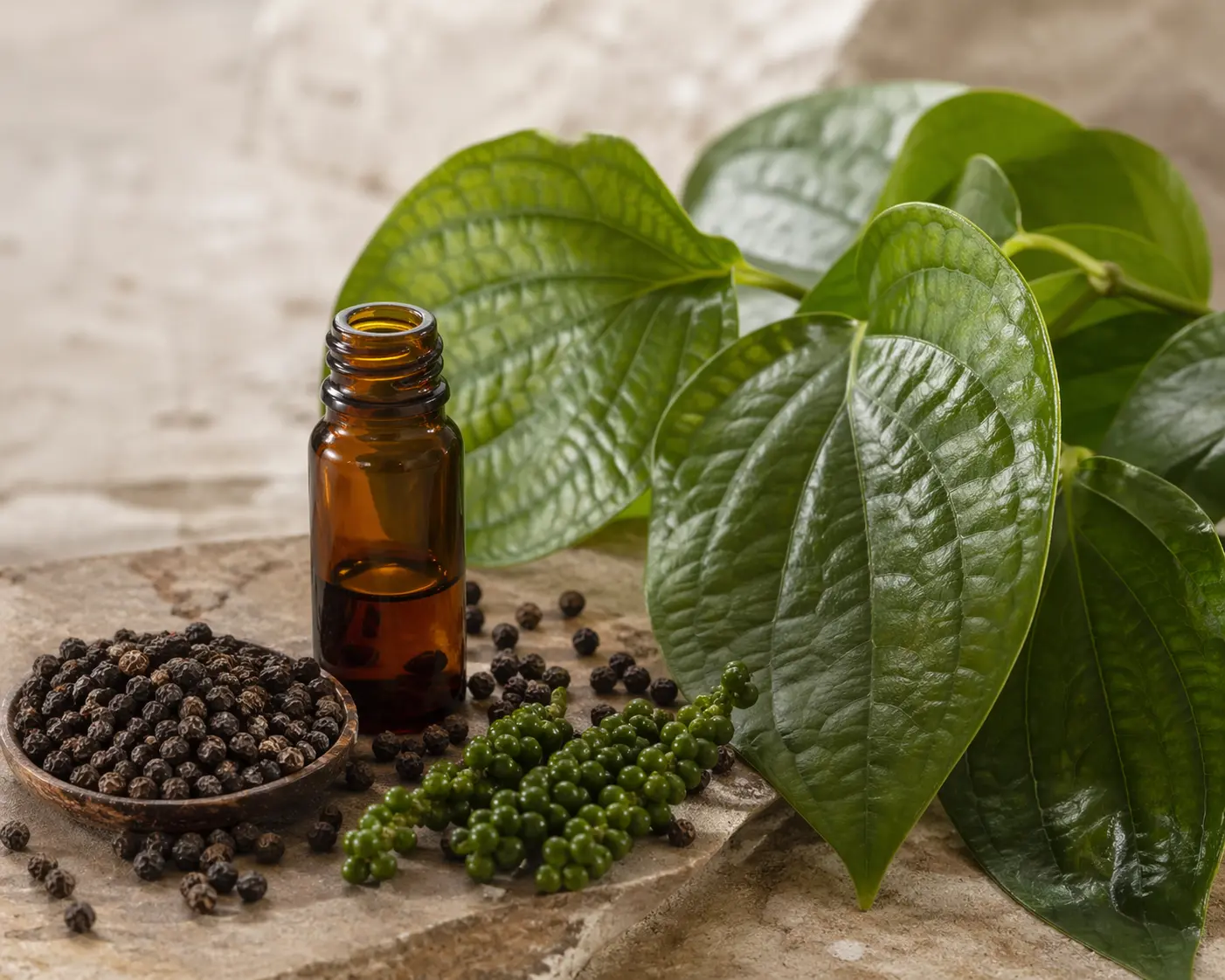
Black Pepper Essential Oil
Black Pepper essential oil is warm, dry, spicy, and quietly energizing, with the familiar spark of cracked peppercorns softened into a smooth aromatic oil. Steam distilled from the fruits of Piper nigrum, Black Pepper essential oil is often used in diffuser blends, natural perfumery, warming-feeling massage oils, and cozy routines where a dry spice note is wanted. It smells recognizable, but it is not the same as sprinkling pepper on food. The essential oil is a concentrated aromatic extract, used by the drop, and it should be diluted carefully before topical use.
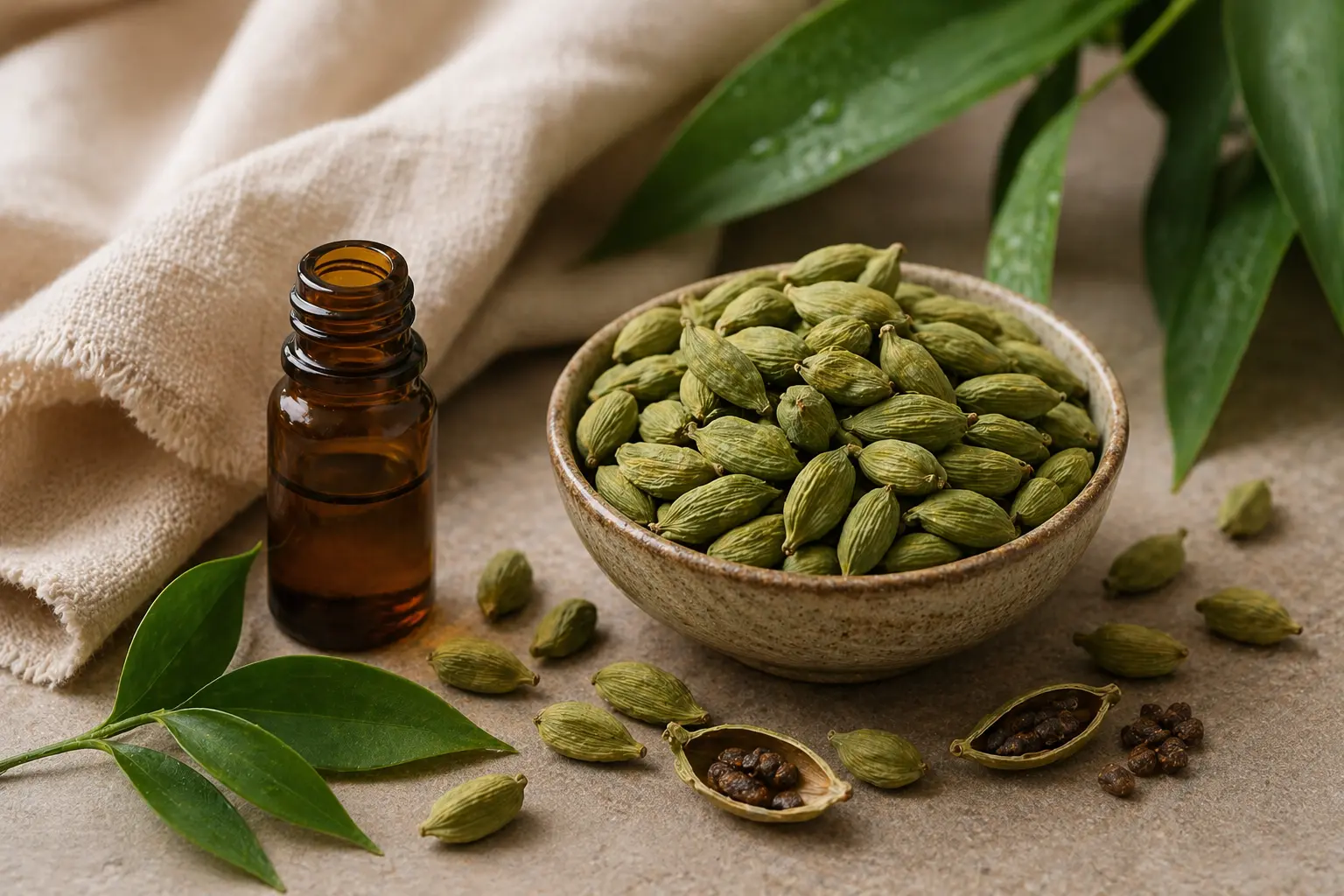
Cardamom Essential Oil
Cardamom essential oil is warm, sweet, spicy, and softly aromatic, with the elegant scent of green cardamom pods, citrus peel, fresh spice markets, and cozy kitchen rituals. Steam distilled from the seeds of Elettaria cardamomum, Cardamom essential oil is often used in diffuser blends, natural perfumery, massage oils at low dilution, and comforting home routines where a smooth spice note is wanted. It is gentler in aroma than many hot spice oils, but it is still a concentrated essential oil and should be diluted, diffused moderately, and used with care around sensitive people.
Further Reading and Sources
For botanical, citrus chemistry, and safety-oriented background, these sources may be useful starting points: