
Essential Oil Safety
Essential oils are concentrated aromatic extracts, and a small bottle can hold the scent of a large amount of plant material. This safety guide explains how to use essential oils more carefully at home, including dilution, diffuser use, topical precautions, children, pets, pregnancy, storage, and common mistakes to avoid.
Safety-first aromatherapy does not need to feel frightening or complicated. Most everyday precautions come back to a few steady habits: use less than you think you need, dilute before applying oils to skin, keep oils away from eyes and mucous membranes, diffuse in ventilated rooms, and avoid internal use unless you are working with an appropriately qualified professional.
Quick Answer
Essential oils should be used in small amounts, diluted for topical use, diffused moderately, stored safely, and kept away from children and pets. Extra caution is needed during pregnancy, breastfeeding, childhood, asthma, allergies, medication use, chronic illness, and when using oils with known concerns such as phototoxicity or stronger skin sensitization risk.
Why Essential Oil Safety Matters
Essential oils are not the same as the fresh plant, dried herb, fruit peel, flower, or tea. They are concentrated aromatic materials, and that concentration is why they can be useful in tiny amounts but irritating or risky when used too strongly. A drop may seem small, but it can still be too much for a child, a pet, sensitive skin, a small room, or a leave-on body product.
A safety-first approach also keeps essential oil use realistic. Essential oils can help create a pleasant atmosphere, support a self-care routine, make a room smell fresh, or add aroma to body-care products when formulated carefully. They should not be presented as cures, treatments, or substitutes for medical care.
Safety-first reminder: Essential oils are educational and aromatic tools, not medical treatments. If you are pregnant, breastfeeding, using medication, managing a medical condition, or using oils around children or pets, ask a qualified professional before use.
The Core Safety Principles
Most home users do not need to memorize every chemistry detail before using essential oils, but they do need a few reliable principles. These habits create a safer foundation for diffuser blends, body oils, bath products, room sprays, and natural perfume experiments.
Essential Oil Safety Rules to Remember
Dilute Before Skin Use
Do not apply essential oils undiluted to skin as a casual habit. Use a carrier oil, lotion, cream, or properly formulated product.
Use Less, Not More
More drops do not make a blend better. Stronger use can increase the chance of headache, irritation, sensitization, nausea, or discomfort.
Respect Individual Sensitivity
Children, pets, pregnancy, asthma, allergies, migraines, sensitive skin, and medication use can all change what “safe enough” means.
Dilution Before Topical Use
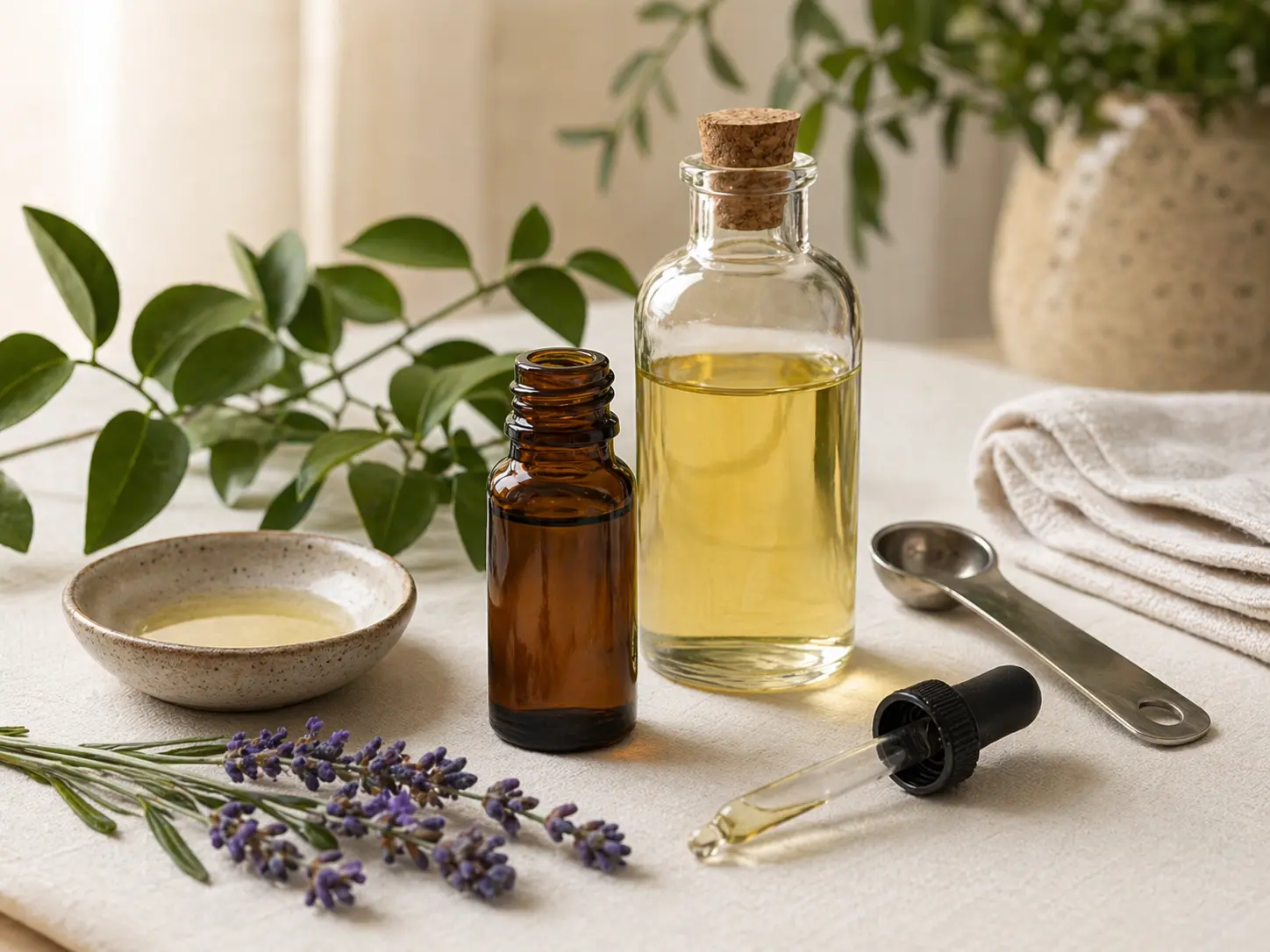
Topical use means applying essential oils to the skin in a properly diluted form. This might include body oils, massage oils, creams, lotions, balms, salves, bath products, roll-ons, or natural perfume oils. Dilution matters because essential oils can irritate skin, trigger sensitization, or cause stronger reactions when used undiluted or too frequently.
For many general adult body-care uses, beginner formulas often stay around 1% to 2% dilution. Facial products, sensitive skin, older adults, and frequent use usually call for lower amounts. Children, pregnancy, breastfeeding, medical complexity, and strong oils require more conservative guidance. Some oils also have specific dermal maximums, so a general dilution chart is not a substitute for oil-specific safety information.
Simple adult starting point: A 1% dilution is roughly 1 drop of essential oil per teaspoon of carrier oil. This is only a broad starting point, not a rule for every oil, person, or situation.
Patch Testing
A patch test can help identify obvious irritation before wider use, especially with a new oil, blend, or body-care product. Apply a small amount of the diluted product to a small area of skin and wait to see whether redness, itching, burning, rash, or discomfort develops. A patch test does not guarantee that a product will never cause a reaction, but it is still a useful caution step.
Where Not to Apply Essential Oils
Avoid the eyes, eyelids, inner ears, nostrils, lips, mucous membranes, broken skin, irritated skin, inflamed skin, and freshly shaved areas. Essential oils should not be used in or near the eyes. If a serious reaction happens, stop use and seek appropriate medical or poison-control guidance.
Diffusing Essential Oils Safely
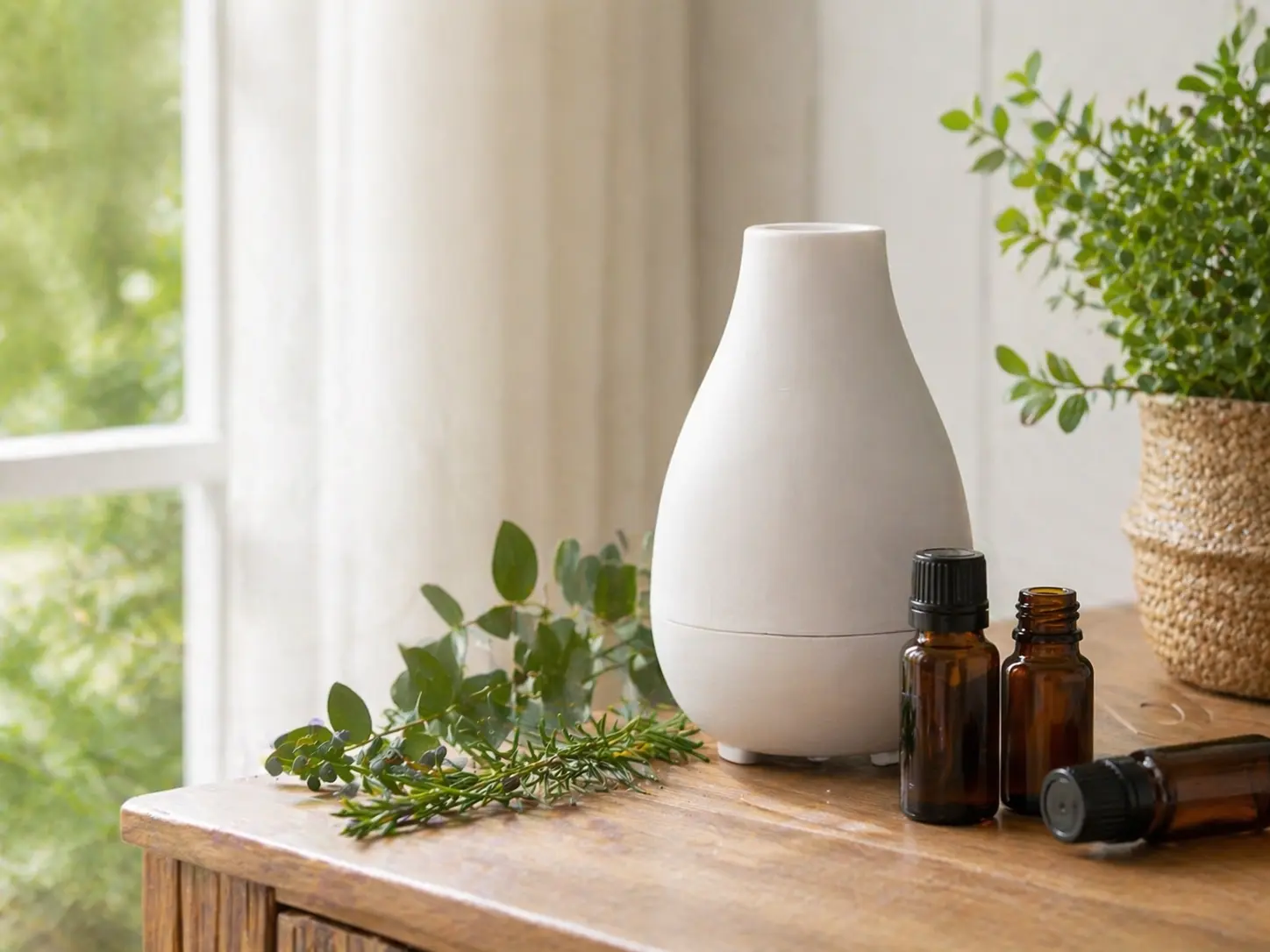
Diffusion is one of the most common ways people use essential oils at home, but “natural scent” can still be too much. A room diffuser spreads aromatic molecules into shared air, which means everyone in the space may be exposed: adults, children, pets, guests, and people with asthma, migraines, allergies, or scent sensitivity.
Use moderate amounts and short sessions. Many home diffuser blends use a few total drops, not large quantities. Keep the room ventilated, avoid continuous diffusion, and make sure people and pets can leave the space if the aroma feels uncomfortable. A smaller room, closed door, strong oil, or sensitive person all call for a lighter approach.
Diffuser Safety Tips
Start Low
Use fewer drops in small rooms, around scent-sensitive people, or when trying a new oil for the first time.
Take Breaks
Diffuse in short sessions rather than all day. Continuous diffusion can make a pleasant aroma become overwhelming.
Keep Air Moving
Ventilation matters. Open a door or window when appropriate, and do not trap strong aromas in a small closed room.
Children, Pets, Pregnancy, and Sensitive Users
Some people and animals need more caution around essential oils. Children are smaller than adults, have developing bodies, and may react more strongly to concentrated aromatic materials. Pets have different metabolism and grooming behaviors, and cats in particular require careful professional guidance. Pregnancy and breastfeeding also call for a conservative approach, because safety depends on the oil, the person, the timing, and the method of use.
Asthma, respiratory sensitivity, migraines, allergies, skin conditions, seizure history, medication use, chronic illness, and complex medical situations can also change the safety picture. In these cases, it is better to use fewer oils, simpler blends, lower amounts, and qualified guidance rather than assuming that a common oil is appropriate for everyone.

Keep oils out of reach: Store essential oils where children and pets cannot access them. Do not leave open bottles, diffuser reservoirs, or blend materials unattended.
Internal Use and Ingestion
Essencyclopedia does not recommend casual internal use of essential oils. “One drop in water” advice is not a safety-first practice. Essential oils do not dissolve in water, and internal use requires training, appropriate formulation, dose awareness, contraindication checks, and professional context.
This does not mean internal use never exists in professional settings or regulated products. It means that home users should not treat essential oils like tea, herbs, supplements, or flavoring drops. If internal use is being considered, it should be under the guidance of a qualified professional with appropriate essential oil safety training.
Phototoxic Essential Oils and Sun Exposure
Some essential oils, especially certain cold-pressed citrus oils, can increase skin sensitivity to sunlight or UVA exposure when used in leave-on skin products. This is called phototoxicity. The risk depends on the specific oil, extraction method, concentration, product type, and UV exposure.
Bergamot is a classic example of an oil that needs careful sun-safety guidance, especially when cold pressed and not FCF or bergapten-free. Expressed lime can also be a concern. Not every citrus oil carries the same level of phototoxic risk, so each profile should be checked individually rather than treating all citrus oils as identical.
Sun-safety habit: If an oil is phototoxic, avoid applying it in a leave-on product before sun or tanning bed exposure unless the formula is safely within recognized limits.
Storage, Oxidation, and Shelf Life
Essential oils change over time. Heat, light, air, and age can affect aroma and chemistry, especially with citrus oils and other oxidation-prone materials. Oxidized oils may be more irritating to skin and may smell stale, harsh, sticky, flat, or noticeably different from when they were fresh.
Store essential oils tightly closed, away from heat and direct light. Keep them upright, clearly labeled, and out of reach of children and pets. If an oil smells off, has changed texture, or is very old, avoid using it on skin. For topical products, also label the blend date and ingredients so you know what is in the bottle later.
Common Essential Oil Safety Mistakes
Most essential oil mistakes come from using too much, using an oil in the wrong context, or assuming that “natural” means automatically gentle. A safety-first routine is not about fear. It is about slowing down enough to match the oil, person, method, and setting.
Mistakes to Avoid
Undiluted Skin Use
Neat application can increase the chance of irritation or sensitization, especially with stronger oils or repeated use.
Too Many Oils at Once
Large blends make it harder to identify what caused a reaction. Beginners are usually better served by simple formulas.
Ignoring the Exact Oil
Species, chemotype, extraction method, oxidation, and phototoxicity can matter. Similar common names are not always interchangeable.
Essential Oil Safety FAQ
Can essential oils be used directly on skin?
As a general home-use rule, essential oils should be diluted before topical application. Some professional practices may use exceptions in specific contexts, but undiluted skin use is not a good beginner habit and can increase the chance of irritation or sensitization.
How many drops should I use in a diffuser?
Use a small amount and adjust for room size, diffuser type, oil strength, and personal sensitivity. Many beginner diffuser blends use only a few total drops. Diffuse in short sessions and keep the room ventilated.
Are essential oils safe around children?
Children need extra caution. Use fewer oils, lower amounts, shorter diffusion times, and avoid direct inhalation or undiluted skin use. Babies, toddlers, children with asthma, allergies, neurological conditions, or medical complexity need qualified guidance before essential oil use.
Are essential oils safe around pets?
Pets are not small humans, and some animals are more sensitive to essential oils than people. Use caution, avoid forcing exposure, keep oils away from fur and paws, and speak with a veterinarian or qualified animal aromatherapy professional before using essential oils around pets.
Can essential oils be used during pregnancy?
Pregnancy calls for conservative use and professional guidance. Safety depends on the oil, timing, person, method, dose, and health context. Avoid casual internal use and strong topical or aromatic exposure without qualified advice.
Can essential oils be swallowed?
Do not ingest essential oils as a casual wellness practice. Internal use requires appropriate training, formulation, and professional context. Essential oils are concentrated aromatic extracts and should not be treated like tea, herbs, or ordinary flavoring.
What should I do if an essential oil causes irritation?
Stop using the oil or product. For skin irritation, remove the product gently and avoid applying more essential oil. If oil gets in the eyes, if a child swallows oil, or if breathing difficulty, severe irritation, dizziness, vomiting, or other concerning symptoms occur, seek appropriate medical or poison-control help promptly.
Further Reading and Sources
These resources offer useful safety background for dilution, topical use, diffusion, internal-use caution, children, phototoxicity, and general aromatherapy safety.
- NCCIH: Aromatherapy
- NAHA: General Safety Guidelines
- NAHA: Exploring Aromatherapy Safety
- Tisserand Institute: Safety Guidelines
- Tisserand Institute: Safety Maximums for Dermal Application
- Tisserand Institute: Phototoxicity, Essential Oils, Sun and Safety
- Johns Hopkins Medicine: Are Essential Oils Safe for Children?
This guide is educational and does not replace medical advice. If you are pregnant, breastfeeding, using medication, managing a medical condition, or using essential oils around children or pets, consult a qualified professional before use.