
Diffuser Guide
Using essential oils in a diffuser can make a room smell fresh, calm, bright, cozy, or botanical, depending on the oils you choose. The safest approach is simple: use a small number of drops, diffuse intermittently, keep the room ventilated, and pay attention to the people and pets who share the space.
A diffuser is not a stronger-is-better tool. A pleasant aromatic background is usually enough. This guide explains how many drops to use, how long to diffuse, where to place a diffuser, how to use oils around children and pets more cautiously, and how to clean your diffuser so old oil residue does not build up.
Quick Answer
For a standard room diffuser, many beginner blends use about 3 to 6 total drops of essential oil. Use fewer drops in small rooms, around children, pets, pregnancy, asthma, allergies, migraines, or scent-sensitive people. Diffuse intermittently rather than continuously, keep the room ventilated, and stop if the aroma causes headache, nausea, coughing, dizziness, or discomfort.
What Does an Essential Oil Diffuser Do?
An essential oil diffuser disperses aromatic molecules into the air. Different diffuser types do this in different ways. Ultrasonic diffusers use water and vibration to create a fine mist. Nebulizing diffusers disperse essential oil without water and can be more intense. Passive diffusers, such as aroma stones or reed-style systems, release scent more slowly.
No matter which type you use, the main safety idea is the same: the aroma enters shared air. That means diffuser use is not only about your preference. It also affects children, pets, guests, housemates, and people with asthma, allergies, migraines, scent sensitivity, or medical complexity.
Safety-first habit: Diffuse so the aroma is noticeable but not overwhelming. Strong scent is not proof that a blend is working better.
How Many Drops of Essential Oil Should You Use?
For many standard room diffusers, a beginner-friendly amount is about 3 to 6 total drops of essential oil. This total can come from one oil or from a blend. For small rooms, short sessions, strong oils, or sensitive people, start with fewer drops. One to three drops may be enough.
Some oils smell soft and rounded, while others are sharp, minty, medicinal, spicy, or very persistent. Peppermint essential oil, eucalyptus radiata essential oil, thyme, cinnamon, clove, and strong camphoraceous oils can dominate a blend quickly. Citrus oils, lavender, gentle woods, and softer florals may feel easier for beginners, but they still deserve moderation.
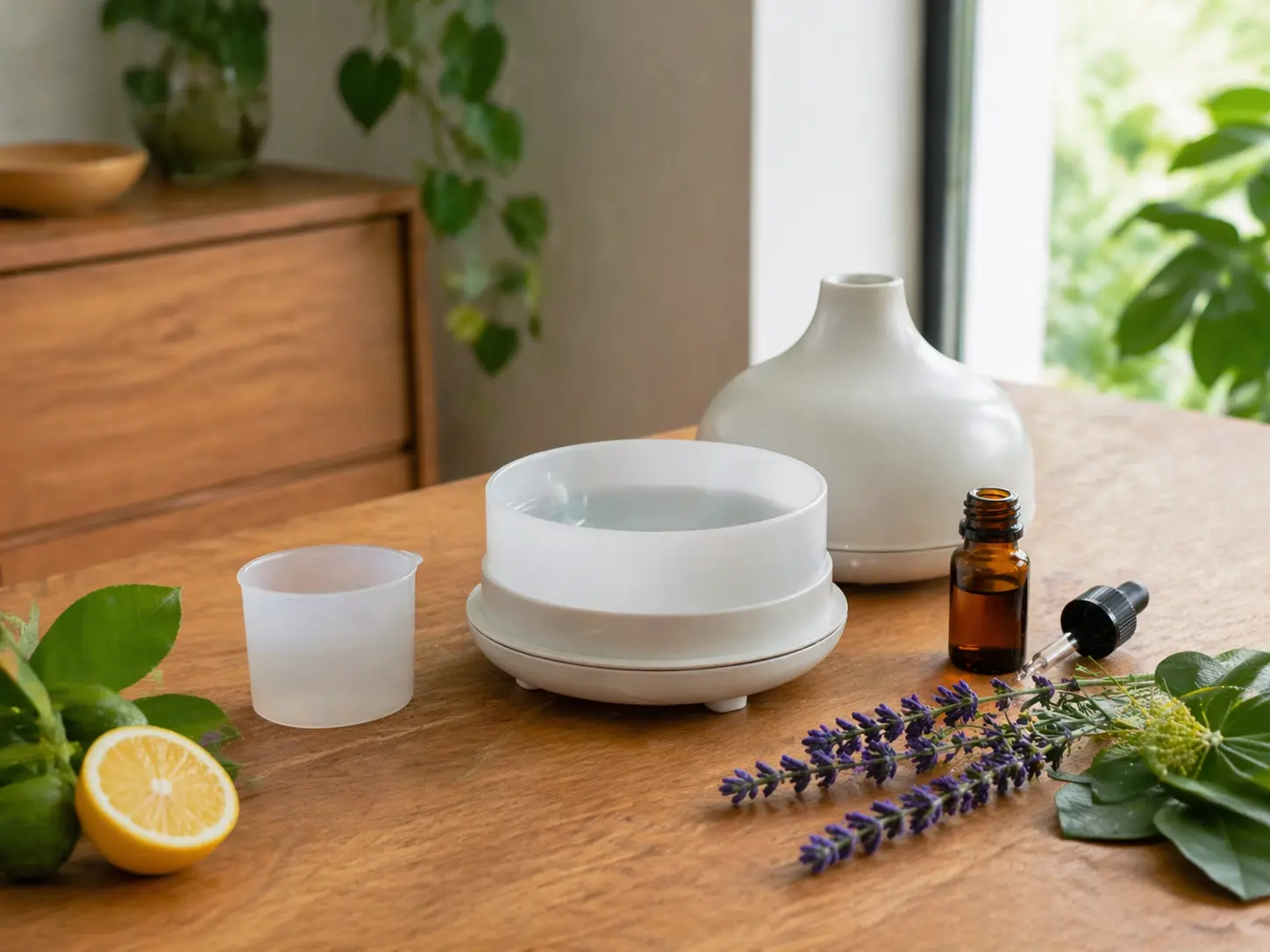
Simple Drop Guidelines
Small Room
Start with 1 to 3 total drops. This is often enough for bedrooms, small offices, or enclosed spaces.
Medium Room
Try 3 to 5 total drops. Keep the door open or allow some air exchange if the aroma becomes too strong.
Larger Room
Use about 4 to 6 total drops as a starting point. Avoid increasing endlessly just because the space is larger.
How Long Should You Diffuse Essential Oils?
Intermittent diffusion is usually a better habit than running a diffuser continuously all day. A common safety-first pattern is to diffuse for about 30 to 60 minutes, then take a break for 30 to 60 minutes. Shorter sessions may be better for small rooms, strong oils, sensitive users, or bedtime routines.
Our noses and nervous systems adapt to scent. After a while, you may stop noticing the aroma as much, even though essential oils are still being dispersed into the air. Instead of adding more drops, take a break, ventilate the room, and return later if needed.
Do not chase the scent: If you stop noticing the aroma, that does not always mean you need more oil. It may mean your nose has adapted.
How to Use a Diffuser Step by Step
Always follow the manufacturer’s instructions for your diffuser model. The steps below are a general beginner pattern for a common ultrasonic water diffuser, not a replacement for the manual that came with your device.
Basic Diffuser Method
1. Add Water
Fill the reservoir to the marked line. Do not overfill, and use the water type recommended by the diffuser manufacturer.
2. Add Essential Oil
Add a small number of drops to the water. For a first try, use fewer drops than you think you need.
3. Diffuse and Observe
Run the diffuser for a short session in a ventilated room. Stop if anyone feels uncomfortable.
Where to Place a Diffuser
Place the diffuser on a stable, water-safe surface where it cannot be knocked over easily. Keep it away from the edge of tables, delicate furniture, electronics, open flames, direct sunlight, and areas where children or pets can reach it. Do not place a diffuser directly next to someone’s face, bed, crib, pet bed, or work area for long periods.
A diffuser should support the room, not dominate it. If the scent feels too strong when you walk in, if the air feels heavy, or if someone needs to leave the room to feel comfortable, use fewer drops, shorten the session, or stop diffusing.
Diffusing Around Children
Children need more caution around essential oils. Use fewer drops, shorter sessions, and gentler oils, and keep the diffuser away from a child’s face, bed, crib, or play area. Do not let children handle essential oil bottles or diffuser reservoirs. Keep all oils out of reach.
Babies, toddlers, children with asthma, allergies, neurological conditions, respiratory sensitivity, or medical complexity need qualified guidance before essential oil use. Some oils that adults enjoy, especially strong minty, camphoraceous, or spicy oils, may not be appropriate around young children.
Diffusing Around Pets
Pets are not small humans. Their bodies, noses, grooming habits, and metabolism are different from ours. Cats, birds, small mammals, and some dogs may be especially sensitive to essential oil exposure. Use caution, diffuse lightly, keep the door open, and make sure pets can leave the room.
Do not apply essential oils to a pet’s fur or skin unless guided by a qualified veterinary or animal aromatherapy professional. Do not place a diffuser near a litter box, crate, bird cage, aquarium, pet bed, or enclosed animal space. If a pet seems uncomfortable, drools, coughs, hides, vomits, acts lethargic, or behaves unusually, stop diffusing and seek appropriate veterinary guidance.
Diffuser Safety for Asthma, Allergies, Pregnancy, and Sensitive Users
People with asthma, allergies, migraines, scent sensitivity, pregnancy, breastfeeding, chronic illness, medication use, or complex medical conditions may respond differently to diffused essential oils. Use lower amounts, shorter sessions, and simpler blends. If symptoms appear, stop diffusing and ventilate the room.
Diffusion should never be forced. If a visitor, child, partner, or housemate dislikes the aroma or feels unwell, the safest and kindest choice is to stop. Aromatherapy works best when it respects the whole room.
Best Beginner Oils for Diffusers
Beginner diffuser oils should be pleasant, flexible, and easy to blend. This does not mean they are safe for everyone or appropriate in every situation, but they tend to be easier starting points than very strong spice, phenolic, or medicinal-smelling oils.
Beginner-Friendly Diffuser Ideas
Fresh and Bright
Try lemon, sweet orange, or bergamot for a clean citrus atmosphere.
Soft and Calm
Try lavender, roman chamomile, or cedarwood atlas for a quieter room blend.
Clear and Herbal
Try small amounts of rosemary, tea tree, or eucalyptus radiata with extra respiratory caution.
Simple Diffuser Blends for Beginners
These blends are written for a standard room diffuser. Use fewer drops for small rooms, sensitive users, children nearby, pets nearby, or any situation where a lighter aroma is wiser.
Open Window Citrus
- 3 drops sweet orange essential oil
- 2 drops lemon essential oil
- 1 drop rosemary essential oil
A bright, clean blend for daytime freshness.
Quiet Evening
- 3 drops lavender essential oil
- 2 drops roman chamomile essential oil
- 1 drop cedarwood atlas essential oil
A soft floral-wood blend for a slower evening atmosphere.
Green Desk
- 2 drops bergamot essential oil
- 2 drops basil essential oil
- 1 drop spearmint essential oil
A fresh herbal-citrus blend for a clean, attentive room mood.
How to Clean Your Diffuser
Regular cleaning helps prevent old oil residue from building up inside the diffuser. Residue can affect aroma, performance, and cleanliness. Follow your diffuser manufacturer’s cleaning instructions first, because different models may need different care.
As a general habit, empty leftover water after use, wipe the reservoir gently, and let the diffuser dry before storing it. Clean more thoroughly after using strong oils, resinous oils, thicker oils, or blends with lingering aromas. Do not submerge electrical parts in water.
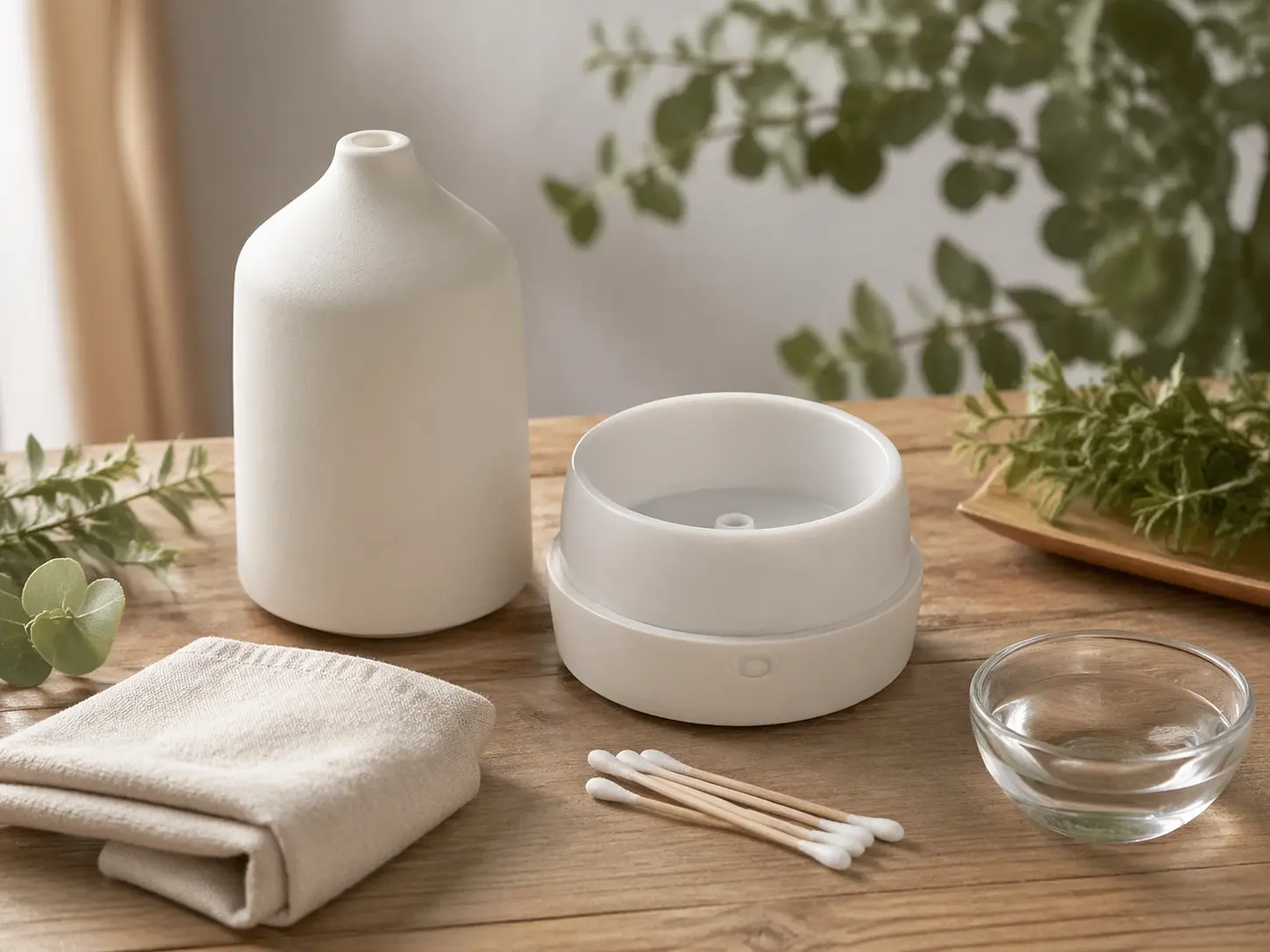
Diffuser Cleaning Habits
Empty After Use
Do not leave old water and oil sitting in the reservoir for long periods.
Wipe Gently
Use a soft cloth according to the manufacturer’s instructions. Avoid harsh scrubbing on delicate parts.
Separate Strong Aromas
Clean well after heavy oils so the next blend does not smell muddy or stale.
Common Diffuser Mistakes
Diffuser mistakes usually come from using too much oil, running the diffuser too long, ignoring room ventilation, or forgetting that other people and pets share the air. A good diffuser routine should feel light, pleasant, and adjustable.
Mistakes to Avoid
Running It All Day
Continuous diffusion can become overwhelming. Use short sessions and breaks instead.
Adding More and More Drops
If you stop noticing the scent, take a break before adding more oil. Your nose may have adapted.
Ignoring Shared Air
Children, pets, guests, asthma, allergies, pregnancy, and scent sensitivity all matter when choosing oils and amounts.
Essential Oil Diffuser FAQ
How many drops of essential oil should I put in a diffuser?
Many beginner blends use about 3 to 6 total drops in a standard room diffuser. Use fewer drops for small rooms, strong oils, sensitive users, children nearby, pets nearby, or bedtime routines.
Can I leave my diffuser on all night?
Continuous all-night diffusion is not the best default habit. If you want bedtime aroma, diffuse for a short period before sleep, use a very low amount, and make sure the room is ventilated. Follow your diffuser’s timer and safety instructions.
Can I use any essential oil in a diffuser?
No. Some oils are too strong, irritating, unsuitable around children or pets, or simply unpleasant in a diffuser. Check the specific oil profile and safety notes before diffusing a new oil.
Is it safe to diffuse essential oils around pets?
Use caution. Pets should be able to leave the room, and diffusion should be light and intermittent. Avoid using essential oils directly on pets unless guided by a qualified veterinary or animal aromatherapy professional.
Is it safe to diffuse essential oils around children?
Children need more caution than adults. Use fewer drops, shorter sessions, gentle oil choices, good ventilation, and keep diffusers and oil bottles out of reach. Babies, toddlers, and children with asthma or medical concerns need qualified guidance.
Can I put carrier oil in a diffuser?
No. Most room diffusers are designed for essential oils, water, or the materials specified by the manufacturer. Carrier oils can damage many diffuser types and should not be added unless the device instructions specifically allow it.
Why does my diffuser smell stale?
Old water, oil residue, oxidized oils, or a dirty reservoir can make a diffuser smell stale. Empty and clean the diffuser according to the manufacturer’s instructions, and avoid using old oils that smell harsh, sticky, or noticeably changed.
Further Reading and Sources
These resources offer useful background on essential oil diffusion, ventilation, inhalation, children, internal-use caution, and general aromatherapy safety.
- Tisserand Institute: Diffusion Guidelines
- Tisserand Institute: Safety Guidelines
- NAHA: General Safety Guidelines
- NCCIH: Aromatherapy
- Johns Hopkins Medicine: Are Essential Oils Safe for Children?
This guide is educational and does not replace medical advice. If you are pregnant, breastfeeding, using medication, managing a medical condition, or using essential oils around children or pets, consult a qualified professional before use.