
Tea Tree Essential Oil
Essential Oils
Tea tree essential oil is a fresh, sharp, herbal essential oil distilled from the leaves of Melaleuca alternifolia. It is best known for its clean, medicinal-herbal aroma and its long-standing role in skin-care, scalp-care, foot-care, home-care, and fresh diffuser routines.
Tea tree is practical and popular, but it also deserves careful handling. It should not be swallowed, it can irritate sensitive skin, and older or oxidized tea tree oil may be more likely to cause skin reactions. For safe everyday use, dilute it properly, store it well, and avoid using it near the eyes, mucous membranes, children, pets, or irritated skin without extra caution.
Quick Answer
Tea tree essential oil is a concentrated aromatic oil steam distilled from the leaves of Melaleuca alternifolia. It has a strong fresh, herbal, slightly medicinal aroma and is commonly used in diluted skin-care blends, scalp products, foot-care routines, fresh home-care recipes, and diffuser blends. It should be diluted before topical use, stored carefully to reduce oxidation, and never swallowed.
Quick Facts
Common name:
Tea tree
Botanical name:
Melaleuca alternifolia
Plant family:
Myrtaceae
Plant part:
Leaves and terminal branches
Extraction:
Steam distillation
Aroma:
Fresh, herbal, medicinal, clean
Aroma note:
Top to middle note
What Is Tea Tree Essential Oil?
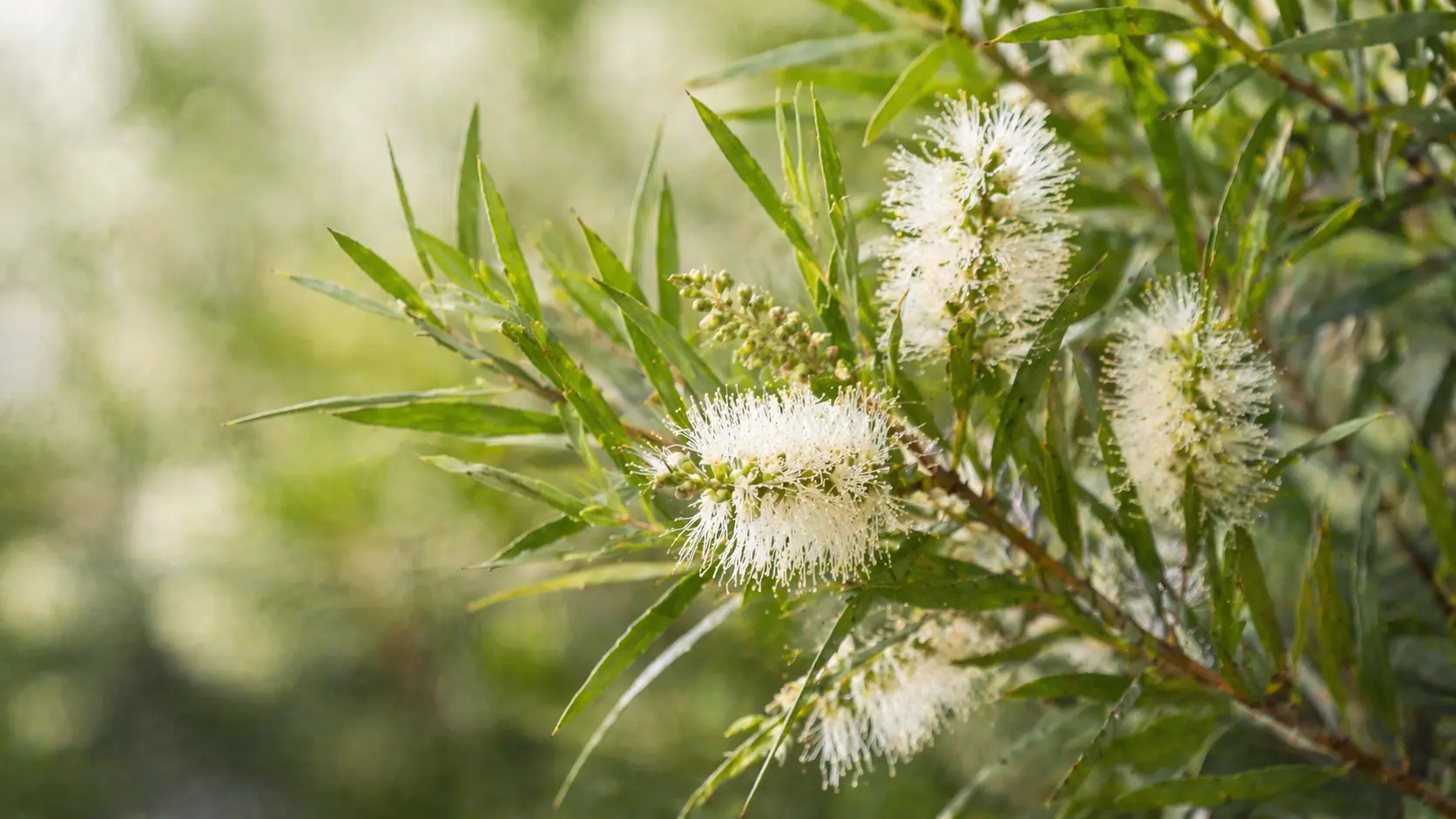
Tea tree essential oil is usually steam distilled from the leaves and small terminal branches of Melaleuca alternifolia, a small tree or shrub native to parts of Australia. It is sometimes called melaleuca oil, although many plants belong to the broader Melaleuca genus, so the botanical name matters.
The oil has a distinctive aroma: fresh, sharp, green, herbal, medicinal, and slightly camphoraceous. Some people find it clean and clarifying, while others find it strong or intense. In blends, tea tree can quickly dominate softer oils, so small amounts are usually enough.
Tea tree belongs to the myrtle family, Myrtaceae. This is the same broad plant family as eucalyptus radiata, clove, myrtle, and many other aromatic trees and shrubs. Many members of this family produce strongly scented leaves or bark, which helps explain tea tree’s crisp, penetrating character.
Tea tree essential oil is not the same thing as the fresh plant, crushed leaves, herbal preparations, or finished skin-care products containing tea tree oil. The essential oil is concentrated and should be handled with more care than the plant material itself.
Tea Tree Plant History and Traditional Use
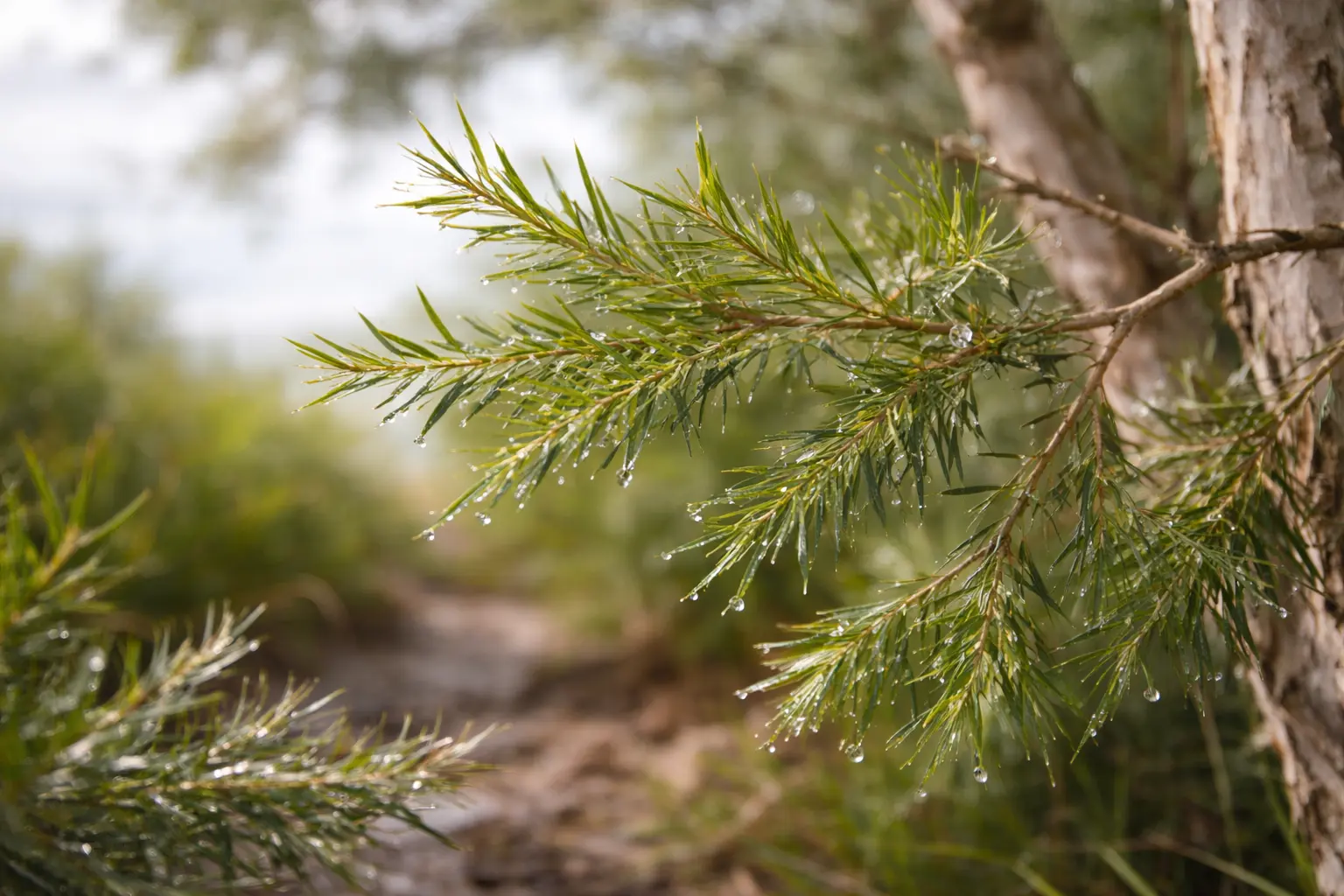
Melaleuca alternifolia is native to Australia, especially areas of New South Wales and Queensland. It grows naturally in wetland, swampy, and coastal lowland environments, often near streams or damp ground. The plant has narrow leaves, pale papery bark, and small white brush-like flowers.

Long before tea tree essential oil became widely available, Aboriginal and Torres Strait Islander peoples used tea tree leaves in traditional plant practices. Leaves were crushed, soaked, or used in other plant-based preparations. These traditional uses belong to the plant itself and to specific cultural knowledge systems; they should not be flattened into modern essential oil marketing claims.
Commercial tea tree oil production developed much later, especially in the 20th century. The oil became well known internationally as a strong-smelling aromatic material used in personal care, scalp products, foot-care formulas, soaps, household products, and natural wellness routines.
Today, tea tree essential oil is one of the most recognizable essential oils in the world. Its popularity comes from its practical scent profile and its association with clean skin, fresh homes, clear scalp routines, and simple DIY formulations. That popularity also makes safety education important, because tea tree is often used too casually or too strongly.
What Does Tea Tree Essential Oil Smell Like?
Tea tree essential oil smells fresh, herbal, green, sharp, clean, and medicinal. It is not soft or floral. It has a penetrating character that can make a blend feel clearer, cleaner, and more functional.
Depending on the batch, tea tree may smell more green and leafy, more medicinal, more earthy, or more camphoraceous. Fresh tea tree oil should smell crisp and clean. If the aroma becomes dull, harsh, sticky, stale, or unpleasantly varnish-like, the oil may be old or oxidized and should not be used on skin.
Tea tree blends well with lavender, lemon, sweet orange, rosemary, eucalyptus radiata, cedarwood atlas, frankincense, and other fresh herbal or citrus oils. It can also be softened with gentle floral or woody notes when the goal is a less medicinal aroma.
Common Uses of Tea Tree Essential Oil
Tea tree essential oil is most often chosen when a formula needs to feel clean, fresh, clarifying, or practical. It is common in skin-care products, scalp-care products, foot-care blends, room sprays, cleaning-adjacent DIY recipes, and diffuser blends designed to freshen a space.
Because tea tree is widely associated with skin and cleansing, it is easy to overstate what it can do. The safest approach is to describe tea tree as a useful aromatic ingredient in well-formulated products, not as a cure for skin conditions or infections.
Blemish-Prone Skin Routines
Tea tree is commonly used in products for blemish-prone or oily skin. It appears in facial cleansers, spot-care products, toners, gels, and diluted oil blends. Its clean herbal scent fits well in formulas intended to feel fresh and clarifying.
For home use, dilution matters. Tea tree should not be applied undiluted to blemishes, especially on the face. Facial skin is more sensitive than the skin on the arms or legs, and strong essential oil use can worsen irritation, dryness, or redness.
If the skin is inflamed, painful, broken, infected, or not improving, it is better to seek appropriate professional care rather than relying on essential oil routines.
Scalp and Hair-Care Products
Tea tree is often used in shampoos, scalp blends, and clarifying hair-care products. Its aroma gives a fresh, clean feeling to the scalp and pairs well with rosemary, peppermint, cedarwood atlas, and lavender.
For scalp use, it is usually best to work with a finished product or a carefully diluted blend. Essential oils can irritate the scalp if used too strongly, and they should be kept away from the eyes. If a product causes burning, itching, flaking, or redness, stop using it.
Foot Care and Nail-Care Routines
Tea tree is a classic choice for foot-care blends because its strong herbal-clean aroma suits foot oils, foot balms, shoe sprays, and foot soaks. It can be paired with peppermint, cedarwood, lemon, lavender, or rosemary for a fresh, practical blend.
Nails and feet are common use areas, but that does not mean undiluted use is automatically appropriate. The skin around the nails can become irritated, and repeated strong application may cause dryness or sensitivity.
Fresh Home-Care Blends
Tea tree can be useful in home-care blends when a clean herbal scent is wanted. It pairs well with lemon, sweet orange, eucalyptus radiata, rosemary, pine, cedarwood, and lavender in room sprays or cleaning-adjacent recipes.
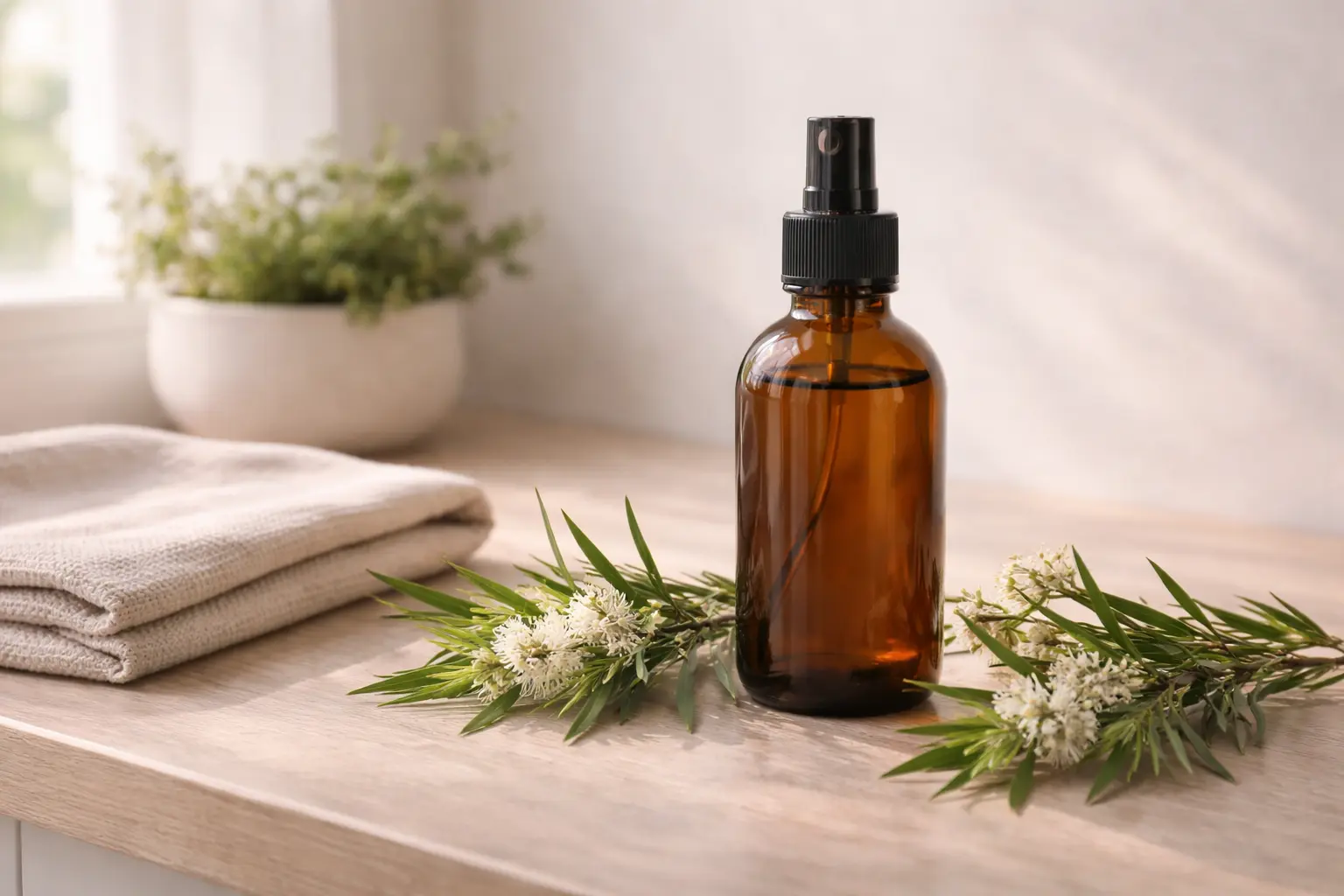
When using tea tree in a spray, avoid misting near children, pets, eyes, polished surfaces, food preparation areas, or delicate fabrics unless the formula is appropriate for that use. A fresh scent does not automatically mean a spray is safe for every surface or every person.
Diffuser Blends and Room Freshening
Tea tree can make a room smell clean, sharp, and refreshed. It is especially useful when blended with citrus or softer herbal oils that round out its medicinal edge.
For diffusion, use small amounts. Tea tree can feel strong in enclosed rooms, and not everyone enjoys its sharp aroma. Keep the space ventilated, use intermittent diffusion, and make sure children, pets, or scent-sensitive people can leave the room.
Outdoor, Travel, and Utility Blends
Tea tree often appears in practical “utility” blends: camping kits, gym bags, shoe sprays, travel soaps, hand-cleansing style products, and outdoor body-care routines. Its aroma feels functional and clean, which makes it easy to reach for in everyday situations.
Even in utility blends, it should not be treated carelessly. Keep it away from eyes and mucous membranes, dilute it for skin use, and avoid old oxidized oil.
Quick Tips for Using Tea Tree Essential Oil
Fresh Skin Blend
Dilute 1 drop tea tree essential oil in 1 teaspoon of jojoba or another carrier oil for a simple adult skin blend. Avoid the eyes, broken skin, and irritated areas.
Clean Room Aroma
Add 1 drop tea tree, 2 drops lemon, and 2 drops lavender to a diffuser for a clean herbal-citrus room scent. Keep the room ventilated and diffuse briefly.
Foot-Care Routine
Use tea tree in a well-diluted foot oil or balm with cedarwood atlas or peppermint. Do not apply to cracked, inflamed, or open skin.
How to Use Tea Tree Essential Oil Safely
Tea tree essential oil is often treated as a household staple, but it is still a concentrated essential oil. Its strong reputation can make people use too much, apply it undiluted, or keep old bottles for years. Those are the habits most worth avoiding.
The main safety themes for tea tree are dilution, skin sensitivity, oxidation, internal use avoidance, children, pets, and proper storage.
Simple Dilution Guidance
For general adult topical use, a 0.5% to 2% dilution is a reasonable beginner range depending on the purpose, skin sensitivity, and frequency of use. For a gentle 1% dilution, use about 1 drop of tea tree essential oil per teaspoon of carrier oil. For facial use or sensitive skin, use less.
Tea tree is not a good oil for casual undiluted application. Some people tolerate it well, but others develop redness, burning, itching, dryness, or allergic contact dermatitis. The risk may increase when tea tree oil is old, oxidized, or poorly stored.
Oxidation and Storage
Tea tree essential oil is especially important to store well. Exposure to heat, light, oxygen, and time can change the oil. As it oxidizes, it may become more irritating to the skin.
Store tea tree essential oil tightly closed, away from heat and direct light. A cool, dark place is best. If the bottle is nearly empty, oxidation can happen faster because there is more air in the bottle. If the oil smells stale, harsh, sticky, unusually unpleasant, or no longer fresh, avoid using it on skin.
Diffusion Guidance
For a standard room diffuser, tea tree usually works best as one part of a blend rather than the whole blend. Start with 1 drop tea tree combined with softer oils such as lavender, lemon, sweet orange, cedarwood, or frankincense.
Diffuse intermittently and keep the room ventilated. Avoid strong diffusion in small closed spaces, and use extra caution around children, pets, people with asthma, respiratory sensitivity, or fragrance sensitivity.
Topical Guidance
For skin use, dilute tea tree essential oil in a carrier oil, unscented lotion, gel, balm, cleanser, or properly formulated product. Good carrier choices include jojoba, sunflower oil, grapeseed oil, sweet almond oil, apricot kernel oil, or fractionated coconut oil.
Avoid applying tea tree essential oil near the eyes, inside the ears, inside the nose, around the mouth, on mucous membranes, or on broken and irritated skin. Patch testing is a smart habit, especially if you have sensitive skin, eczema, allergies, or a history of fragrance reactions.
Children, Pets, Pregnancy, and Nursing
Use extra caution with children. Keep tea tree essential oil out of reach, avoid use near the face, and choose very low dilutions only when appropriate. Do not let children handle essential oil bottles.
Do not apply tea tree essential oil directly to pets. Cats, birds, small animals, young pets, and animals with health conditions can be especially sensitive. If diffusing in a home with pets, keep the amount low, ventilate well, and make sure the animal can leave the room.
During pregnancy or nursing, tea tree in properly diluted topical products may be acceptable for some people, but personal health context matters. Avoid casual internal use, avoid application where an infant could contact or inhale it, and consult a qualified professional if unsure.
Tea Tree Diffuser Blends
Tea tree can make a blend smell clean and practical, but it is strongest when used as an accent. Pair it with citrus, woods, soft florals, or fresh herbs to keep the aroma balanced.
Clean Slate
- 1 drop tea tree
- 3 drops lemon
- 1 drop cedarwood atlas
A crisp, practical blend with a clean citrus-wood finish.
Fresh Linen Herb
- 1 drop tea tree
- 2 drops lavender
- 2 drops sweet orange
A softer clean blend that makes tea tree feel less sharp and more rounded.
Green Reset
- 1 drop tea tree
- 2 drops eucalyptus radiata
- 2 drops frankincense
A fresh, resinous-herbal blend for a clear and airy room atmosphere.
Tea Tree Essential Oil in DIY Recipes
Tea tree essential oil can be useful in DIY recipes when the goal is a fresh, clean, herbal aroma. It appears often in adult skin-care blends, scalp products, foot balms, shoe sprays, room sprays, hand-cleansing style products, and cleaning-adjacent recipes.
For beginner DIY, keep formulas simple. Tea tree is strong enough that a small amount can shape the whole blend. If the recipe also includes peppermint, eucalyptus, rosemary, thyme, oregano, clove, cinnamon, or other strong oils, the overall formula may become too intense for casual use.
Tea tree is usually not the best choice for leave-on products for babies or young children, sensitive facial products, eye-area products, intimate products, or products used on broken skin. For skin concerns that are painful, spreading, infected, or persistent, seek appropriate professional care.
Frequently Asked Questions
Can tea tree essential oil be applied directly to skin?
It is better to dilute tea tree essential oil before applying it to skin. Undiluted use can cause irritation, dryness, burning, or allergic reactions, especially with repeated use or sensitive skin.
Can tea tree essential oil help with acne?
Some research has explored topical tea tree oil preparations for acne, but that does not mean neat essential oil should be used directly on blemishes. Use properly diluted products, avoid the eyes, and seek professional advice for persistent, painful, or inflamed acne.
Can I swallow tea tree essential oil?
No. Tea tree essential oil should not be swallowed. Oral ingestion can cause serious adverse effects and should not be part of casual home use.
Is tea tree essential oil safe for pets?
Do not apply tea tree essential oil directly to pets. If diffusing in a home with pets, use very small amounts, keep the room ventilated, and make sure pets can leave. Avoid diffusion around birds, small animals, young pets, or animals with health problems.
Is tea tree essential oil safe for children?
Tea tree should be used cautiously around children. Keep bottles out of reach, avoid use near the face, use very low dilutions when appropriate, and do not let children apply essential oils themselves.
How can I tell if tea tree oil is old?
Fresh tea tree oil usually smells crisp, green, and clean. Old or oxidized tea tree may smell dull, harsh, stale, sticky, or unpleasantly medicinal. If the aroma has changed significantly, avoid using it on skin.
Is tea tree essential oil good for cleaning?
Tea tree is often used in fresh home-care recipes because of its clean herbal aroma. It should still be used thoughtfully, kept away from children and pets, and not sprayed near eyes, food surfaces, delicate materials, or poorly ventilated areas unless the recipe is appropriate for that use.
Tea Tree Essential Oil, Spirituality, and Symbolism
The main sections above focus on botanical information, practical use, dilution, and safety. Tea tree also has a symbolic and spiritual life, shaped by its associations with cleansing, resilience, renewal, and clear boundaries.
Cleansing and Clear Boundaries
Tea tree’s sharp, clean scent makes it symbolically connected with clearing, boundary-setting, and fresh starts. In reflective practices, it may represent the desire to remove what feels stale, heavy, or cluttered.
Resilience and Renewal
Because tea tree grows in wetland and coastal environments and carries a strong, practical character, it can symbolize resilience and renewal. The plant’s scent feels direct and purposeful rather than soft or decorative.
Energetic Housekeeping
In some contemporary aromatherapy and spiritual practices, tea tree is used symbolically for energetic housekeeping: refreshing a room, resetting a routine, or supporting a feeling of cleanliness and order. This is a symbolic use, not a medical or cleansing guarantee.
Safety Notes for Tea Tree Essential Oil
Tea tree essential oil should be diluted before topical use and kept away from the eyes, inner ears, nose, mouth, mucous membranes, and broken or irritated skin. It can cause skin irritation or allergic contact dermatitis, especially in sensitive people or when used too strongly.
Do not ingest tea tree essential oil. Swallowing tea tree oil can cause serious symptoms and is not appropriate for casual home use. Mouth rinses, oral products, and internal preparations require professional formulation and should not be improvised at home.
Oxidation is an important tea tree safety issue. Old or poorly stored tea tree oil may be more irritating to skin. Store it tightly closed, away from heat and light, and avoid using it topically if the aroma has become stale, harsh, sticky, or unpleasantly changed.
Use extra caution around children, pets, pregnancy, nursing, asthma, respiratory sensitivity, eczema, allergies, complex medical conditions, and medication use. Do not apply tea tree essential oil directly to pets, and keep diffusion light, brief, and well ventilated if animals are in the home.
If redness, itching, burning, stinging, headache, nausea, dizziness, breathing discomfort, or other unwanted symptoms occur, stop using the oil. Wash the skin with mild soap and carrier oil as appropriate, ventilate the room, and seek medical advice if symptoms are severe or persistent.
Further Reading and Sources
For a broader understanding of tea tree essential oil, topical safety, oxidation, and responsible aromatherapy practice, these resources are useful starting points:
- NCCIH: Tea Tree Oil
- Tisserand Institute: Tea Tree Oxidation and Safety
- PubMed: Melaleuca alternifolia Tea Tree Oil Review
- Systematic Review: Efficacy and Safety of Melaleuca alternifolia Oil
This article is educational and does not replace medical advice. If you are pregnant, nursing, taking medication, managing a medical condition, preparing essential oil products for children or pets, or considering internal use, consult an appropriately qualified professional.