
Eucalyptus Radiata Essential Oil
Essential Oils
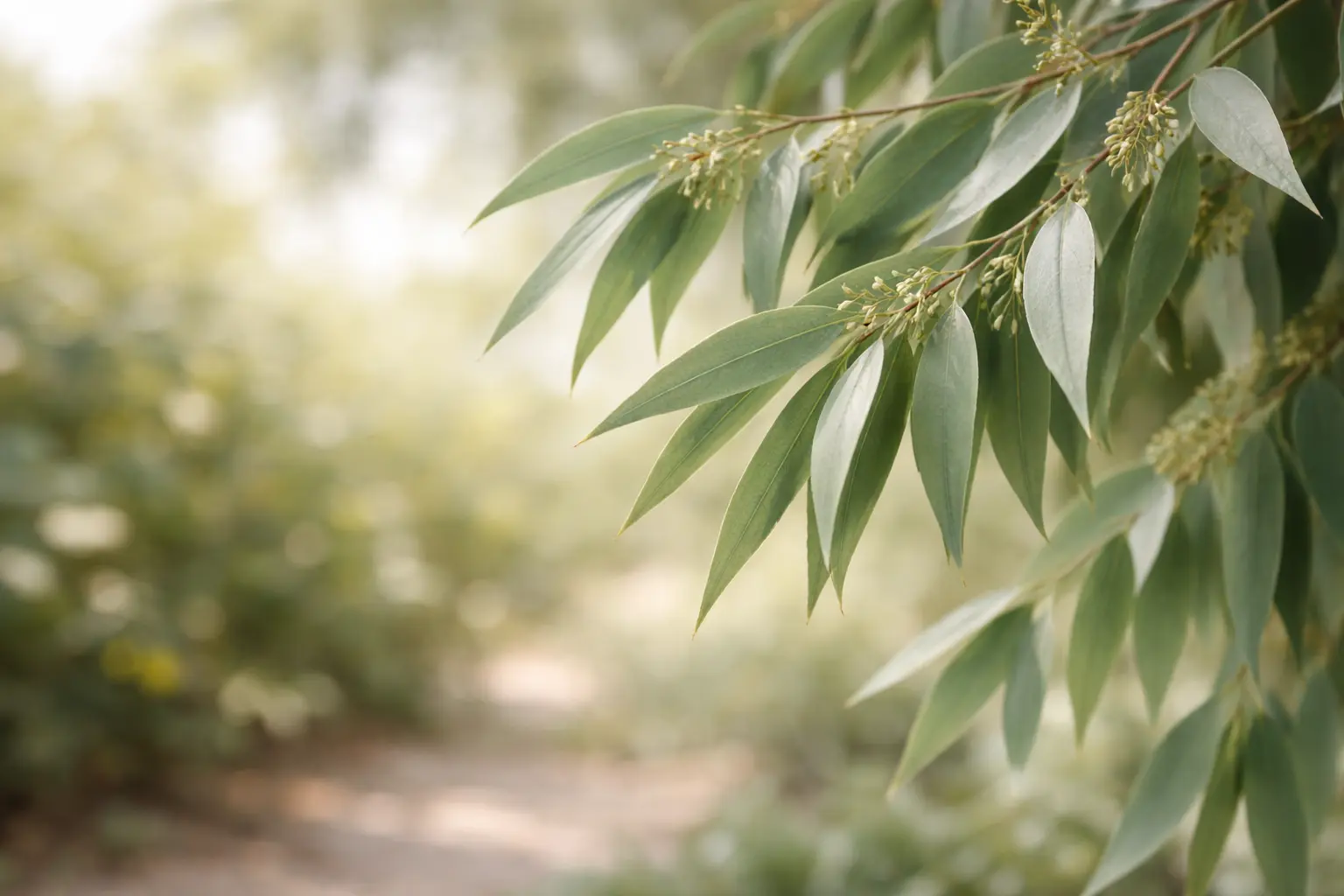
Eucalyptus radiata essential oil is a fresh, airy, cineole-rich essential oil steam distilled from the leaves of Eucalyptus radiata. It is often chosen for diffuser blends, clear-room routines, shower products, massage blends, and seasonal home fragrance when a bright, clean, eucalyptus aroma is wanted without the sharper edge often associated with eucalyptus globulus.
Although Eucalyptus radiata is often described as a softer or more approachable eucalyptus oil, it still needs careful use. Like other cineole-rich oils, it should be used moderately, diluted for topical use, kept away from the face of babies and young children, and diffused with good ventilation. It is not the same oil as eucalyptus globulus, eucalyptus smithii, or lemon eucalyptus.
Quick Answer
Eucalyptus radiata essential oil is a steam-distilled leaf oil from Eucalyptus radiata. It has a fresh, clean, airy, camphoraceous aroma and is commonly used in diffuser blends, shower products, massage oils, and seasonal fresh-air routines. It is often perceived as gentler in scent than eucalyptus globulus, but safety differences are not dramatic: use it sparingly, dilute it for skin, and avoid use near the face of infants and young children.
What Is Eucalyptus Radiata Essential Oil?
Eucalyptus radiata essential oil is distilled from the leaves and small branches of Eucalyptus radiata, an Australian eucalyptus species sometimes called narrow-leaved peppermint gum. The essential oil is part of the broader eucalyptus family of oils, but it should not be treated as interchangeable with every oil labeled “eucalyptus.”
The oil is usually rich in 1,8-cineole, also known as eucalyptol. This aromatic constituent contributes to the clear, fresh, penetrating eucalyptus scent that many people associate with open air, coolness, and seasonal diffuser routines. It also explains why eucalyptus radiata can feel powerful even when only a few drops are used.
Eucalyptus radiata belongs to the myrtle family, Myrtaceae. This connects it botanically with tea tree, myrtle, cajeput, niaouli, clove, and other aromatic trees and shrubs. Many plants in this family have strongly scented leaves, bark, flowers, or buds.
Eucalyptus radiata essential oil is not the same thing as eucalyptus leaves, eucalyptus tea, vapor rubs, cough drops, or medicinal eucalyptus preparations. It is a concentrated aromatic oil and should be used according to essential oil safety principles.
Eucalyptus Radiata vs. Eucalyptus Globulus
One of the most important things to understand is that “eucalyptus essential oil” is not a single precise botanical identity. Several eucalyptus species are used in aromatherapy, and they can differ in aroma, chemistry, traditional use, and safety nuance.
Eucalyptus globulus is often the sharper, stronger, more classic eucalyptus oil. It is sometimes described as bold, camphoraceous, and penetrating. Eucalyptus radiata is often perceived as softer, smoother, lighter, and more rounded, while still having a clear cineole-rich eucalyptus character.
That softer aroma does not mean eucalyptus radiata can be used casually or without safety awareness. The Tisserand Institute notes that eucalyptus radiata may have a softer odor and somewhat less 1,8-cineole than eucalyptus globulus, but the practical safety difference is small. In other words: eucalyptus radiata may smell gentler, but it should still be treated as a strong oil.
Other eucalyptus-type oils need their own profiles too. Eucalyptus smithii is another cineole-rich option sometimes described as gentle. Lemon eucalyptus, more correctly associated with Corymbia citriodora, has a very different lemony-citronella-like aroma and a different chemistry. These oils should not be swapped blindly in recipes or safety guidance.
Eucalyptus Radiata Plant History and Traditional Use
Eucalyptus radiata is native to Australia, where eucalyptus species are deeply woven into the landscape. Eucalyptus trees and shrubs grow across many Australian environments, from open woodland and forest to coastal and mountainous regions. Different species have different leaf shapes, bark textures, growth habits, and aromatic profiles.

Long before eucalyptus essential oils became global aromatherapy materials, eucalyptus leaves and related plant materials had a place in Aboriginal Australian plant knowledge. Uses varied by region, species, and community. It is important not to reduce this traditional knowledge to modern essential oil marketing claims. The historical plant context belongs to living cultural traditions and to the whole plant, not automatically to a bottle of concentrated essential oil.
European settlers in Australia later became interested in eucalyptus leaves and eucalyptus oils, especially for their strong scent and practical uses. Eucalyptus oil production expanded in the 19th and 20th centuries, and cineole-rich eucalyptus oils became widely used in household products, liniments, inhalation products, soaps, and aromatic preparations.
Today, eucalyptus radiata essential oil is used in aromatherapy for its fresh, open, clean aroma. Its popularity comes partly from the way it evokes air, coolness, and clarity, but responsible use requires understanding its strength.
What Does Eucalyptus Radiata Essential Oil Smell Like?
Eucalyptus radiata essential oil smells fresh, airy, clean, green, camphoraceous, and slightly sweet. It has the recognizable eucalyptus character, but many people find it smoother and less harsh than eucalyptus globulus.
The aroma opens quickly. It feels bright and expansive, with a cool, clear quality that can make a room feel more open. It is not floral, cozy, or sweet in the way that lavender or sweet orange can be. It is more like fresh air moving through green leaves.
Eucalyptus radiata blends well with lemon, peppermint, tea tree, rosemary, lavender, cedarwood atlas, frankincense, siberian fir, black spruce, and ravintsara. It can also be softened with citrus or grounded with woods and resins.
Common Uses of Eucalyptus Radiata Essential Oil
Eucalyptus radiata essential oil is often chosen when a blend needs to feel clear, fresh, cool, airy, or spacious. It is common in diffuser blends, shower products, seasonal room routines, chest-adjacent adult massage blends, bath products, fresh home fragrance, and outdoor-inspired formulas.
Because eucalyptus is so strongly associated with breathing and seasonal comfort, it is easy to overstate what it can do. The safest wording is to describe it as an aromatic support for a fresh, open atmosphere, not as a treatment for coughs, colds, asthma, sinus infections, or respiratory illness.
Fresh-Air Diffuser Routines
Eucalyptus radiata is often used in diffusers when a room feels stale, heavy, or closed in. Its aroma can make a space feel fresher and more open, especially when paired with citrus, conifers, herbs, or resinous oils.
For a simple diffuser routine, eucalyptus radiata usually works best as one part of a blend rather than the entire blend. One or two drops can be enough, especially in a small room. Pairing it with lemon, sweet orange, frankincense, or cedarwood atlas can make the aroma feel less medicinal and more balanced.
Seasonal Home Routines
Eucalyptus radiata is often used during colder months or seasonal transitions because the aroma feels crisp and clearing. It pairs naturally with peppermint, rosemary, tea tree, ravintsara, black spruce, siberian fir, and lemon.
This kind of use should be framed as scent and atmosphere, not medical treatment. If someone has a respiratory condition, severe congestion, asthma, wheezing, or difficulty breathing, essential oils are not a replacement for appropriate medical care.
Shower and Steam-Inspired Products
Eucalyptus radiata is popular in shower steamers and fresh shower products because steam can carry the aroma quickly. This can feel bright and expansive, but it also makes the oil feel more intense.
Keep eucalyptus away from the eyes and face in shower routines. Do not place neat essential oil directly on the shower floor where it can contact skin undiluted. Use properly formulated shower steamers or products designed for aromatic shower use.

Adult Massage and Chest-Adjacent Blends
In adult body-care, eucalyptus radiata is often used in well-diluted massage oils, especially when a cool, fresh aromatic impression is wanted. It may appear in back, shoulder, chest-adjacent, or post-exercise style blends, often with rosemary, peppermint, black spruce, cedarwood atlas, or frankincense.
Do not apply eucalyptus essential oil near the face of infants or young children. For adults, avoid the eyes, mucous membranes, broken skin, and sensitive areas. Use a conservative dilution and avoid large-area overuse.
Clean Home Fragrance
Eucalyptus radiata can make home fragrance blends smell clean, airy, and green. It is useful in room sprays, diffuser blends, and fresh home routines where lemon or sweet orange alone would feel too simple.
For home sprays, use caution around children, pets, delicate surfaces, polished wood, and food preparation areas. A fresh aroma does not mean a spray is safe for every person or surface.
Blending With Other Cineole-Rich Oils
Eucalyptus radiata shares aromatic territory with several cineole-rich oils, including eucalyptus globulus, eucalyptus smithii, ravintsara, cajeput, niaouli, rosemary cineole-type oils, and some myrtle oils. These oils can feel clear and expansive, but they can also become too intense when combined without restraint.
If a blend already includes eucalyptus radiata, use caution before adding peppermint, rosemary, ravintsara, cajeput, or niaouli. The total aromatic intensity matters, not just the number of drops from one bottle.
Quick Tips for Using Eucalyptus Radiata Essential Oil
Airy Room Blend
Add 1 drop eucalyptus radiata, 3 drops lemon, and 1 drop frankincense to a diffuser for a fresh, open room aroma. Keep the space ventilated.
Shower Freshness
Use eucalyptus radiata only in a properly formulated shower steamer or shower product. Keep the aroma away from the eyes and face, especially when steam is present.
Adult Massage Blend
Dilute 1 drop eucalyptus radiata in 1 teaspoon of carrier oil for a simple adult massage blend. Avoid use near children’s faces, sensitive skin, and broken skin.
How to Use Eucalyptus Radiata Essential Oil Safely
Eucalyptus radiata essential oil should be treated as a strong, cineole-rich oil. Its aroma may feel lighter than eucalyptus globulus, but it still needs careful dilution, moderate diffusion, and extra caution around children, pets, asthma, respiratory sensitivity, pregnancy, nursing, and medical conditions.
The most important safety themes are child safety, respiratory sensitivity, dilution, eye and face avoidance, diffusion moderation, and internal use avoidance.
Simple Dilution Guidance
For general adult topical use, a 0.5% to 1% dilution is a cautious beginner range. That means about 1 drop of eucalyptus radiata essential oil per 1 to 2 teaspoons of carrier oil. Use lower amounts for sensitive skin, frequent use, older adults, or blends that also contain peppermint, rosemary, ravintsara, cajeput, or other strong oils.
Do not use eucalyptus radiata undiluted on the skin. A cooling or clearing sensation is not proof that the oil is “working,” and stronger is not better.
Child Safety
Eucalyptus oils should not be applied to or near the face of infants or young children. The National Association for Holistic Aromatherapy specifically cautions against applying eucalyptus to or near the face of infants or children under 10 years of age.
For homes with children, keep diffusion light, brief, and well ventilated. Avoid strong diffusion in a closed bedroom, and do not use eucalyptus radiata on pillows, bedding, chest rubs, or facial products for young children unless guided by a qualified professional.
Diffusion Guidance
For a typical room diffuser, start with 1 drop eucalyptus radiata as part of a blend. A total diffuser blend of 3 to 5 drops may be enough for many rooms, depending on room size and sensitivity.
Diffuse intermittently rather than continuously. Thirty minutes can be enough, especially in a smaller room. Keep the space ventilated and stop diffusing if anyone notices headache, nausea, coughing, throat irritation, dizziness, breathing discomfort, or scent overwhelm.
Topical Guidance
For skin use, dilute eucalyptus radiata essential oil in a carrier oil, lotion, balm, or properly formulated product. Good carrier choices include jojoba, sunflower oil, sweet almond oil, apricot kernel oil, grapeseed oil, or fractionated coconut oil.
Avoid the eyes, inner ears, nose, mouth, mucous membranes, broken skin, irritated skin, and the face or chest area of young children. Patch testing is useful, especially if you have sensitive skin, allergies, eczema, asthma, or a history of fragrance reactions.
Pregnancy, Nursing, Pets, and Respiratory Sensitivity
During pregnancy or nursing, use eucalyptus radiata cautiously and in low amounts if appropriate. Avoid casual internal use and avoid applying products where an infant could inhale or contact them.
Do not apply eucalyptus radiata essential oil directly to pets. If diffusing in a home with animals, keep the amount low, ventilate well, and make sure the animal can leave the room. Cats, birds, small animals, young pets, and animals with health conditions may be especially sensitive.
People with asthma, chronic respiratory conditions, scent sensitivity, or a history of bronchospasm should approach eucalyptus oils carefully. Strong aromas can be irritating for some people, even when the oil is natural.
Eucalyptus Radiata Diffuser Blends
Eucalyptus radiata works best when blended with oils that soften, brighten, or ground its fresh cineole character. Use it as a clear accent rather than overwhelming the whole blend.
Open Window
- 1 drop eucalyptus radiata
- 3 drops lemon
- 1 drop cedarwood atlas
A bright, airy citrus-wood blend for a fresh room atmosphere.
Forest Air
- 1 drop eucalyptus radiata
- 2 drops black spruce
- 2 drops frankincense
A cool, resinous-green blend with a spacious woodland character.
Clean Green Reset
- 1 drop eucalyptus radiata
- 1 drop tea tree
- 3 drops sweet orange
A clean herbal-citrus blend that feels fresh without becoming too sharp.
Eucalyptus Radiata Essential Oil in DIY Recipes
Eucalyptus radiata essential oil can be useful in DIY recipes where a fresh, airy, clear aroma is wanted. It appears often in shower steamers, adult massage oils, room sprays, bath products, diffuser blends, and seasonal home fragrance recipes.
For beginner DIY, keep formulas simple. Eucalyptus radiata is strong enough that one drop can shape the whole blend. It combines well with lemon, sweet orange, lavender, frankincense, cedarwood atlas, rosemary, black spruce, ravintsara, and tea tree.
Avoid using eucalyptus radiata in DIY products for babies, young children, pets, facial products, eye-area products, or strong steam inhalation routines. If a recipe includes multiple cineole-rich or menthol-rich oils, such as eucalyptus radiata, peppermint, rosemary, ravintsara, cajeput, or niaouli, the overall intensity should be reduced.
Frequently Asked Questions
Is eucalyptus radiata the same as eucalyptus globulus?
No. Eucalyptus radiata and Eucalyptus globulus are different eucalyptus species. Eucalyptus radiata is often perceived as softer and smoother in aroma, while eucalyptus globulus is often sharper and more penetrating. They can have similar safety themes because both are commonly cineole-rich oils.
Is eucalyptus radiata safer than eucalyptus globulus?
Eucalyptus radiata is often described as gentler in scent, but that does not mean it can be used without caution. Safety differences between eucalyptus radiata and eucalyptus globulus are not dramatic. Use both oils moderately, especially around children and respiratory-sensitive people.
Can eucalyptus radiata essential oil be used around children?
Use great caution. Do not apply eucalyptus radiata to or near the face of infants or young children. Avoid strong diffusion in closed rooms with children, and consult a qualified professional before using eucalyptus oils in products for children.
Can eucalyptus radiata essential oil be applied directly to skin?
No. Eucalyptus radiata essential oil should be diluted before skin use. Undiluted use may irritate skin and is especially inappropriate near the face, eyes, mucous membranes, broken skin, or young children.
Can I put eucalyptus radiata essential oil in hot water and inhale the steam?
Be careful with steam inhalation. Steam can make essential oil vapors feel much stronger and may irritate the eyes, face, throat, or lungs. Avoid this method for children, asthma, respiratory sensitivity, and anyone who reacts strongly to aromas.
Is eucalyptus radiata essential oil safe for pets?
Do not apply eucalyptus radiata essential oil directly to pets. If diffusing in a home with animals, use very small amounts, ventilate well, and make sure pets can leave the room. Avoid diffusion around birds, small animals, young pets, or animals with health problems.
What oils blend well with eucalyptus radiata?
Eucalyptus radiata blends well with lemon, sweet orange, tea tree, rosemary, peppermint, lavender, frankincense, cedarwood atlas, black spruce, siberian fir, ravintsara, cajeput, and myrtle. Use caution when combining several strong cineole-rich or menthol-rich oils in one blend.
Eucalyptus Radiata Essential Oil, Spirituality, and Symbolism
The main sections above focus on botanical information, practical use, dilution, and safety. Eucalyptus radiata also has a symbolic and spiritual life, shaped by its associations with fresh air, spaciousness, release, renewal, and clear boundaries.

Fresh Air and Spaciousness
Eucalyptus radiata’s bright, airy scent makes it symbolically connected with spaciousness. In reflective routines, it can represent opening a window, clearing stale air, and creating more room to breathe emotionally and mentally.
Release and Renewal
Because eucalyptus leaves carry such a strong fresh scent, eucalyptus radiata can symbolize release and renewal. It may be used symbolically when someone wants to mark a reset, a seasonal shift, or a movement away from heaviness.
Throat and Heart-Space Associations
In some contemporary aromatherapy and energy-work traditions, eucalyptus is associated with the throat and chest area because of its symbolic connection with breath, expression, and openness. These are symbolic uses, not medical claims.
Safety Notes for Eucalyptus Radiata Essential Oil
Eucalyptus radiata essential oil is a strong, cineole-rich oil and should be used with care. Dilute it before topical use, avoid the eyes and mucous membranes, and do not apply it near the face of infants or young children.
Do not ingest eucalyptus radiata essential oil as a casual home practice. Internal use requires professional guidance, appropriate formulation, and dose control. Eucalyptus oil poisoning can be serious, especially in children.
Use extra caution around children, pets, pregnancy, nursing, asthma, respiratory sensitivity, epilepsy, allergies, complex medical conditions, and medication use. Avoid strong diffusion in closed rooms, and stop using the oil if it causes coughing, throat irritation, headache, nausea, dizziness, breathing discomfort, or scent overwhelm.
For skin use, patch test first and avoid broken, irritated, inflamed, or highly sensitive skin. Do not use eucalyptus radiata in facial products, children’s chest rubs, or steam routines unless guided by an appropriately qualified professional.
Store eucalyptus radiata essential oil tightly closed, away from heat and light, and out of reach of children and pets. If the oil smells stale, harsh, or noticeably changed, avoid using it on skin.
Basil Essential Oil
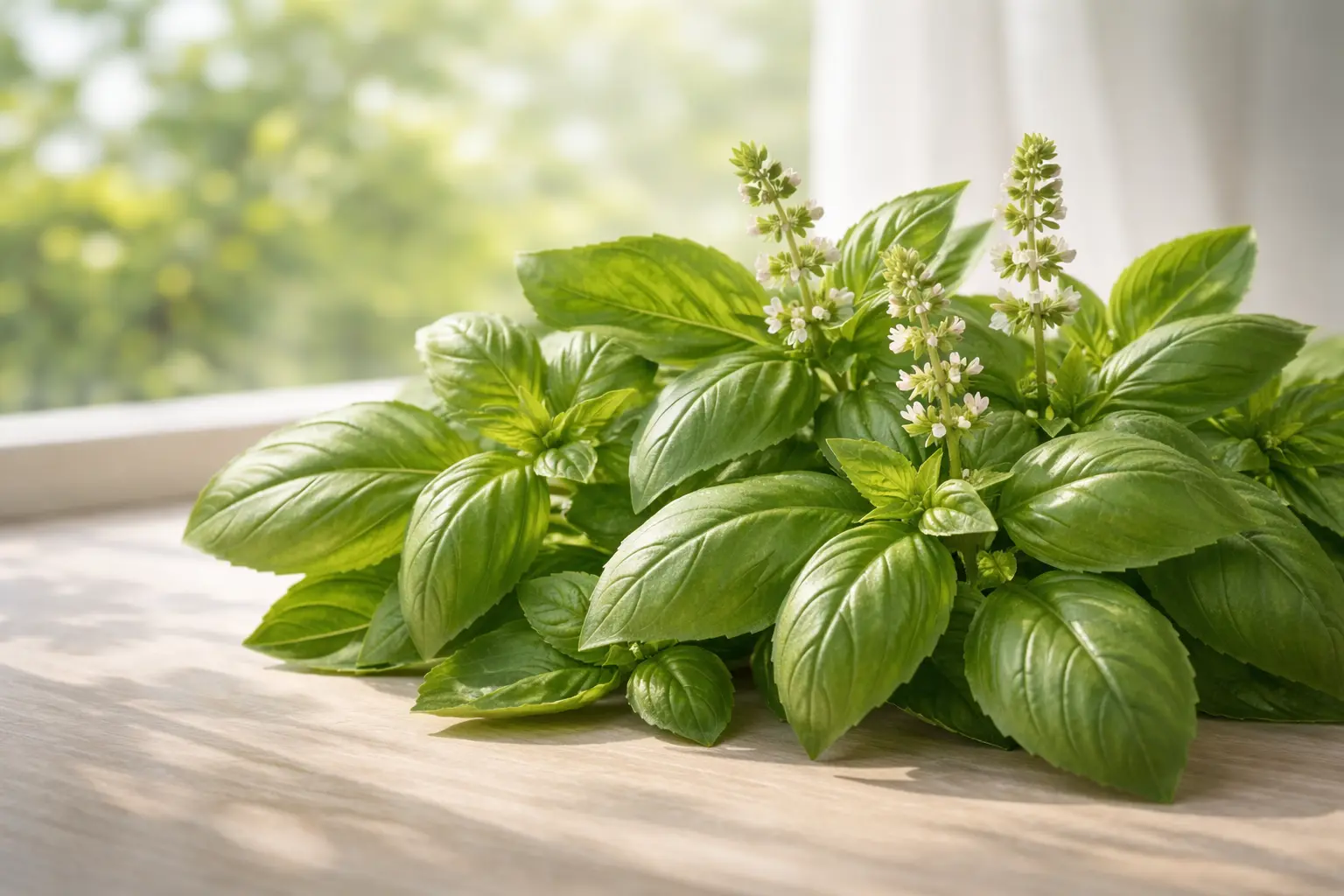
Basil essential oil is bright, green, sweet, and herbaceous: a familiar kitchen-garden aroma transformed into a concentrated aromatic oil with a crisp, lively personality. Steam distilled from the leaves and flowering tops of Ocimum basilicum, Basil essential oil is often used in diffuser blends, fresh herbal accords, natural perfumery, and carefully diluted body-care formulas. It can feel clear and uplifting in a room, especially when paired with citrus, mint, soft florals, or other Mediterranean herbs. Because basil oils vary widely in chemistry, this is also an oil where chemotype, dilution, and safety notes matter.

Bergamot Essential Oil
Bergamot essential oil is a bright, elegant citrus oil expressed from the peel of Citrus bergamia. It is best known for its fresh green-citrus aroma, soft floral undertone, connection to Earl Grey tea, and its long-standing role in perfumery, diffuser blends, emotional wellness rituals, and natural fragrance. Bergamot smells lighter and more complex than many familiar citrus oils. It has the sparkle of lemon, the gentle sweetness of sweet orange, a slightly bitter green edge, and a delicate floral quality that makes it blend beautifully with herbs, woods, resins, and florals.
Black Pepper Essential Oil
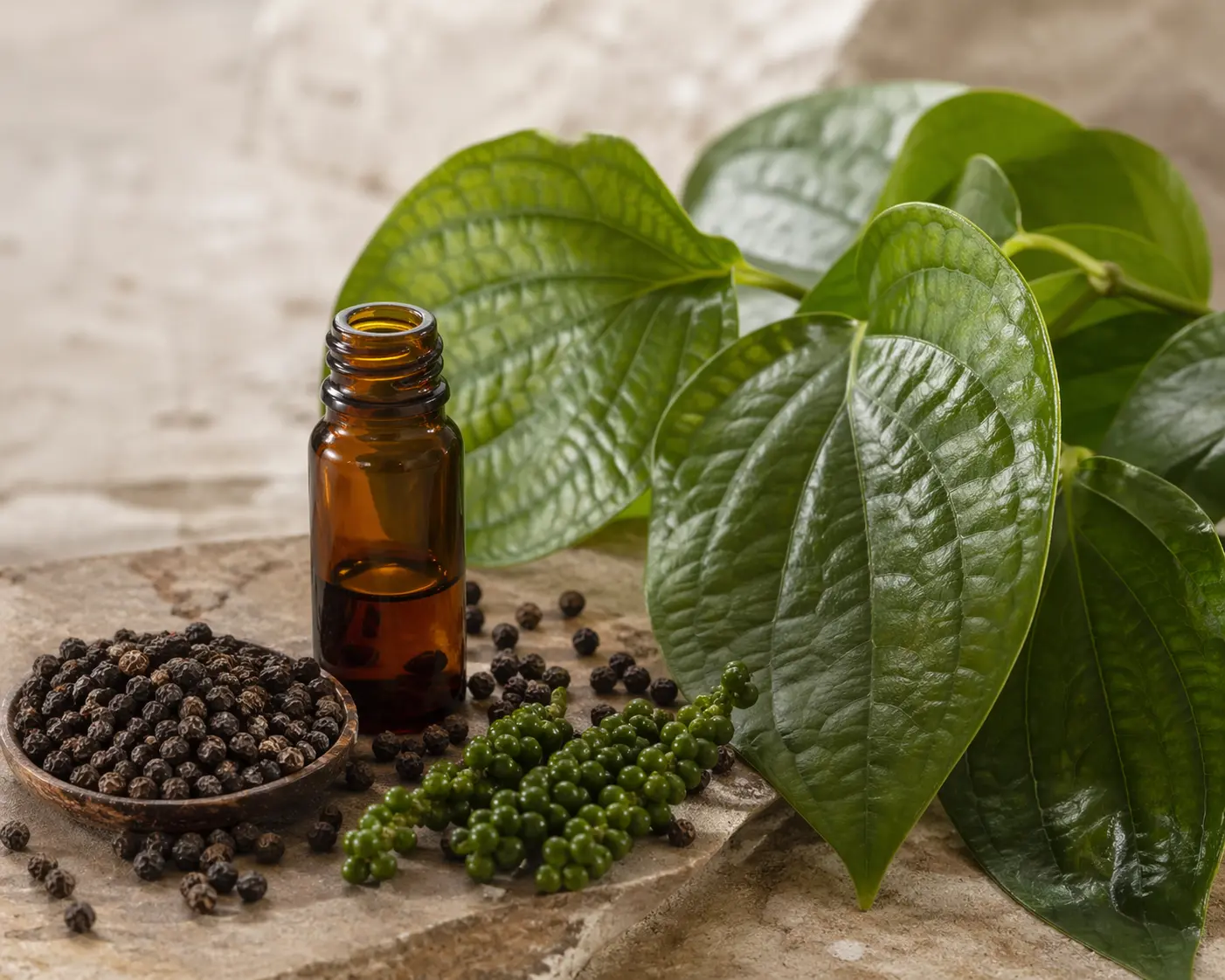
Black Pepper essential oil is warm, dry, spicy, and quietly energizing, with the familiar spark of cracked peppercorns softened into a smooth aromatic oil. Steam distilled from the fruits of Piper nigrum, Black Pepper essential oil is often used in diffuser blends, natural perfumery, warming-feeling massage oils, and cozy routines where a dry spice note is wanted. It smells recognizable, but it is not the same as sprinkling pepper on food. The essential oil is a concentrated aromatic extract, used by the drop, and it should be diluted carefully before topical use.
Cardamom Essential Oil
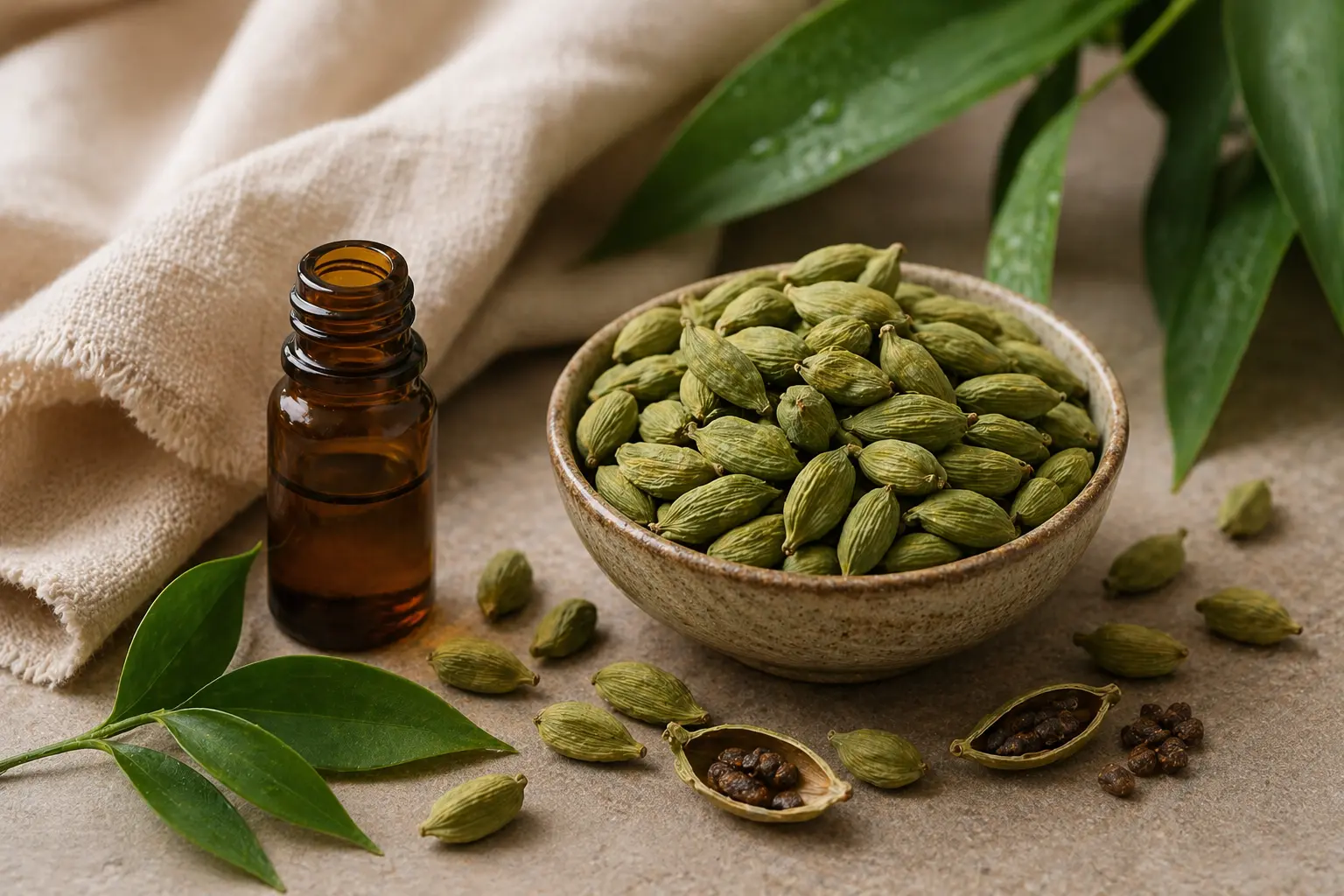
Cardamom essential oil is warm, sweet, spicy, and softly aromatic, with the elegant scent of green cardamom pods, citrus peel, fresh spice markets, and cozy kitchen rituals. Steam distilled from the seeds of Elettaria cardamomum, Cardamom essential oil is often used in diffuser blends, natural perfumery, massage oils at low dilution, and comforting home routines where a smooth spice note is wanted. It is gentler in aroma than many hot spice oils, but it is still a concentrated essential oil and should be diluted, diffused moderately, and used with care around sensitive people.
Further Reading and Sources
For a broader understanding of eucalyptus radiata, eucalyptus oil types, 1,8-cineole, and safe aromatherapy practice, these resources are useful starting points:
- Tisserand Institute: Types of Eucalyptus - Uses and Safety
- NAHA: Eucalyptus
- PubMed: 1,8-Cineole Review
- PubMed: Cineole-Rich Eucalyptus Essential Oils
This article is educational and does not replace medical advice. If you are pregnant, nursing, taking medication, managing a medical condition, preparing essential oil products for children or pets, or considering internal use, consult an appropriately qualified professional.