
Essential Oil Dilution
Essential oil dilution means mixing a small amount of essential oil into a larger amount of carrier oil, lotion, cream, balm, or another suitable base before applying it to the skin. Dilution helps make topical use more measured, more skin-aware, and easier to adjust for the person, oil, body area, and purpose.
This guide explains the basics of essential oil dilution for careful home use. You will learn what dilution percentages mean, how to estimate drops, why “more” is not always better, and when to use lower amounts for facial care, sensitive skin, children, pregnancy, or stronger oils.
Quick Answer
For general adult body use, many beginner topical blends stay around 1% to 2% dilution. A simple 1% starting point is about 1 drop of essential oil per teaspoon of carrier oil, while 2% is about 2 drops per teaspoon. Use lower dilutions for facial products, sensitive skin, frequent use, children, pregnancy, older adults, and oils with stronger safety cautions.
What Does Essential Oil Dilution Mean?
Dilution is the percentage of essential oil in the finished blend. If a body oil is 1% essential oil, the remaining 99% is carrier oil or another base. If a lotion is 2% essential oil, the rest of the formula is the lotion base and other ingredients.
In everyday home blending, people often estimate dilution by drops because they do not have a scale suitable for tiny amounts. This can be useful for simple blends, but it is not perfectly precise. Drop size changes depending on the bottle reducer, oil thickness, temperature, and how the bottle is held. For advanced formulation, measuring by weight is more accurate.
Simple idea: Dilution is not about weakening an oil until it is useless. It is about using enough aroma for the purpose while reducing unnecessary skin risk.
Why Dilution Matters
Essential oils are concentrated aromatic extracts. Even oils that smell gentle can irritate skin when used too strongly, used too often, or used on sensitive areas. Dilution lowers the concentration of essential oil on the skin, which can reduce the chance of irritation and make the blend easier to spread evenly.
Dilution also helps you use essential oils more thoughtfully. A well-made body oil, massage oil, balm, or perfume oil should not rely on a heavy dose of essential oil to feel effective. In many cases, a lower dilution is more pleasant, more sustainable, and easier for the body to tolerate.
How to Calculate Essential Oil Dilution
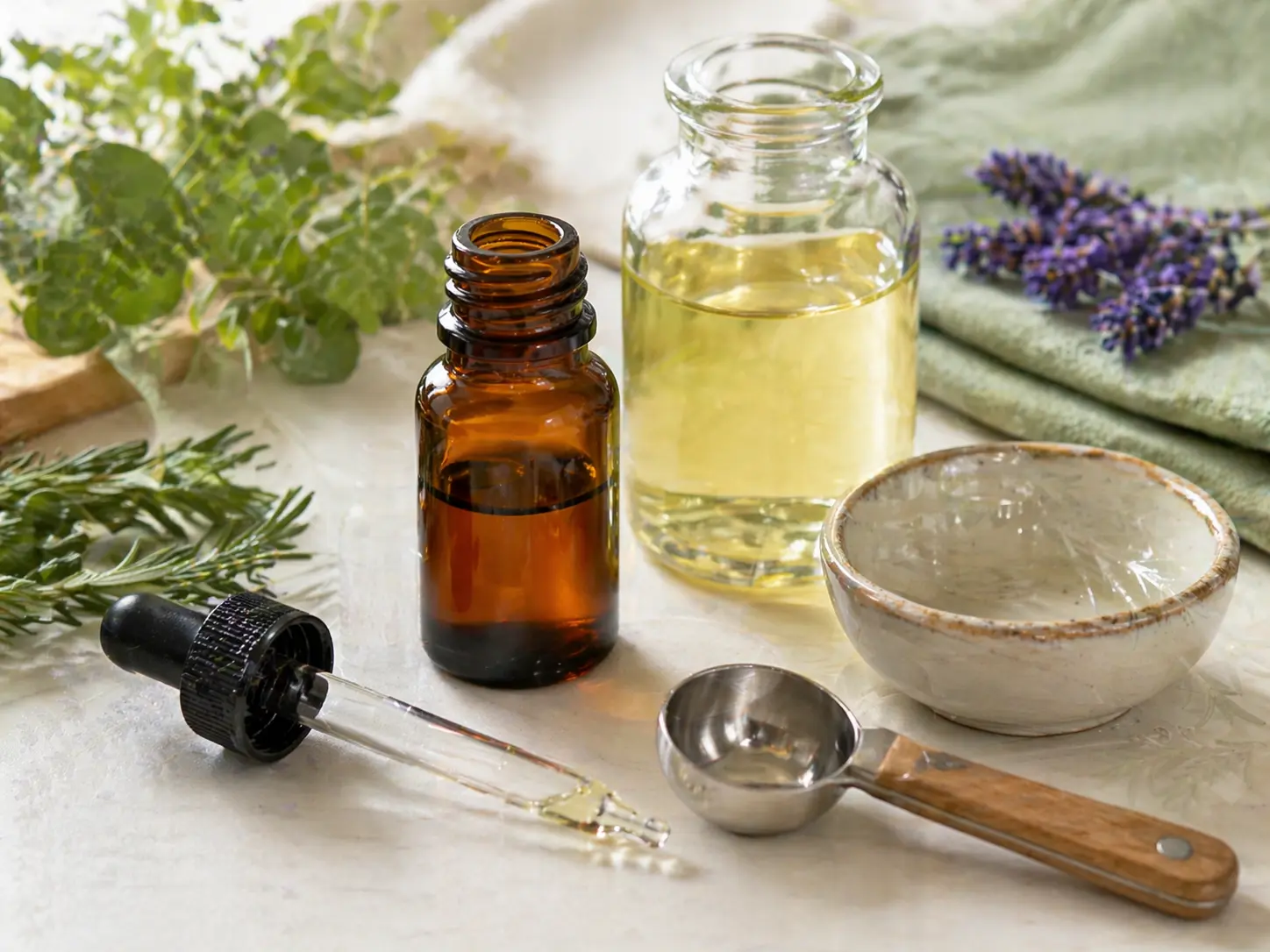
A practical beginner calculation starts with the amount of carrier oil or product base, then adds a small number of essential oil drops. For simple home use, a teaspoon is often treated as about 5 ml. Using that rough measure, 1 drop of essential oil in 1 teaspoon of carrier oil is commonly estimated around 1% dilution, and 2 drops in 1 teaspoon is commonly estimated around 2% dilution.
This is an approximation, not a laboratory formula. Different essential oils and droppers produce different drop sizes. Still, this rule of thumb is useful because it encourages measured, low-dose blending instead of guessing freely.
Simple Dilution Examples
0.5% Dilution
Use about 1 drop of essential oil in 2 teaspoons of carrier oil. This is a cautious range for sensitive skin or frequent use.
1% Dilution
Use about 1 drop of essential oil in 1 teaspoon of carrier oil. This is a common gentle starting point for adult body use.
2% Dilution
Use about 2 drops of essential oil in 1 teaspoon of carrier oil. This is often used for short-term adult body blends when appropriate.
Basic Adult Dilution Chart
The chart below is a general educational guide for adult topical blending. It does not override oil-specific safety limits, phototoxicity guidance, pregnancy cautions, medical advice, or professional formulation requirements.
| Dilution | Approximate Drops | Common Use Context |
|---|---|---|
| 0.25% | About 1 drop per 4 teaspoons carrier | Very cautious facial or sensitive-skin use when the oil is appropriate |
| 0.5% | About 1 drop per 2 teaspoons carrier | Sensitive skin, frequent use, or a conservative adult blend |
| 1% | About 1 drop per 1 teaspoon carrier | Gentle adult body oils, massage oils, and beginner blends |
| 2% | About 2 drops per 1 teaspoon carrier | General adult body use when the oil and person are suitable |
| 3% | About 3 drops per 1 teaspoon carrier | More focused adult use, usually short term and not for sensitive situations |
Important: Some essential oils have dermal maximums below common dilution ranges. Lemongrass, cinnamon bark, clove, some thyme chemotypes, and phototoxic citrus oils are examples where oil-specific guidance matters.
Facial Use and Sensitive Skin
The face, neck, underarms, and other sensitive areas usually need lower dilution than general body use. Facial blends often stay around 0.25% to 1%, and many people do best with no essential oils at all in facial products. Sensitive skin, eczema-prone skin, impaired skin barrier, recent shaving, sunburn, irritation, and active flare-ups all call for extra caution.
For facial use, avoid the eyes, eyelids, lips, nostrils, and mucous membranes. Do not use strong spice oils, harsh phenolic oils, oxidized citrus oils, or unknown essential oils in facial blends. If a product stings, burns, itches, or causes redness, stop using it.
Children, Pregnancy, and Higher-Caution Situations
Children are not small adults. They usually need much lower amounts, fewer oils, and more conservative choices. Babies and toddlers need especially careful guidance, and many essential oil uses are not appropriate for them. Avoid casual topical use on children without checking age-appropriate safety guidance first.
Pregnancy and breastfeeding also require care. Some oils are not appropriate, some methods are too strong, and timing matters. People with asthma, allergies, migraines, seizure history, medication use, chronic illness, older age, sensitive skin, or complex medical situations should use lower amounts and seek qualified guidance when needed.
When in doubt, go lower: A lower dilution, fewer oils, and simpler formula are usually better than a complex blend with too many moving parts.
How to Dilute Essential Oils Step by Step
For a simple adult body oil, begin with a clean bottle, a carrier oil, and one or two essential oils with appropriate safety profiles. Decide on the total amount of carrier oil first, then choose the dilution percentage. Start low, especially if the oil is new to you.
Simple Body Oil Method
1. Choose a Base
Use a suitable carrier oil such as jojoba, fractionated coconut oil, sweet almond oil, sunflower oil, or another skin-friendly base.
2. Add Essential Oil
For a 1% blend, add about 1 drop of essential oil per teaspoon of carrier oil. Use less for sensitive skin.
3. Label and Patch Test
Label the bottle with the oils and date. Patch test before wider use, and stop using the blend if irritation occurs.
Carrier Oils and Bases
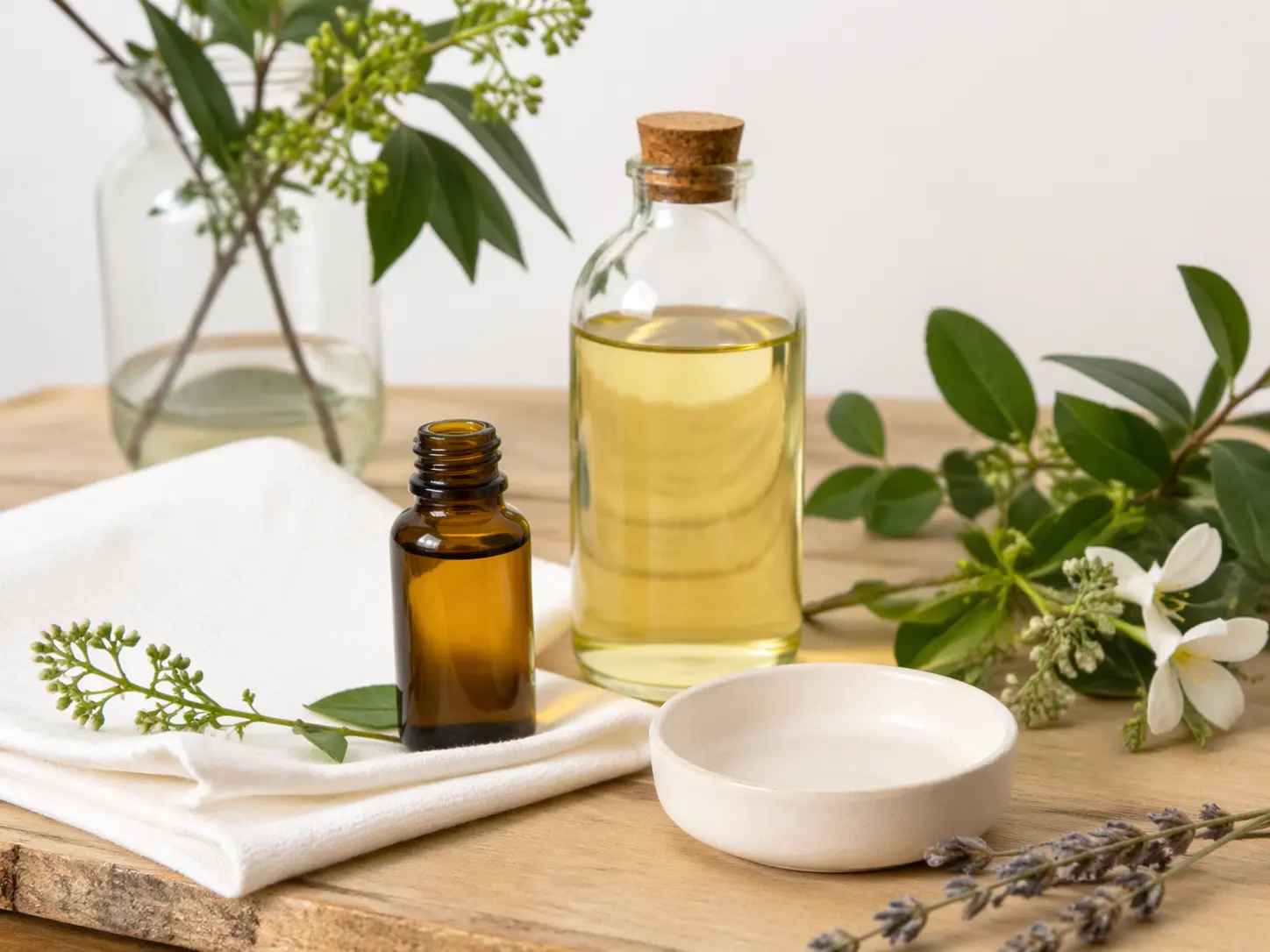
A carrier oil is a fatty plant oil used to dilute essential oils for topical use. Common examples include jojoba, sweet almond oil, sunflower oil, olive oil, grapeseed oil, apricot kernel oil, and fractionated coconut oil. Each carrier has its own texture, absorption feel, shelf life, and skin compatibility.
Carrier oils are not just “fillers.” They make the blend easier to apply, spread the essential oil more evenly, and can support the skin barrier in their own right. For beginners, a simple, mild carrier oil is usually better than a complicated formula.
Popular Carrier Oils for Essential Oil Dilution
Carrier oils differ in texture, absorption, scent, shelf life, and skin feel. There is no single best carrier oil for everyone. A good choice depends on the person’s skin, the body area, the purpose of the blend, allergies, budget, and how quickly the finished product will be used.
For beginners, it is usually best to start with one simple carrier oil rather than building a complicated formula. If you have sensitive skin, allergies, acne-prone skin, nut allergies, or a history of reactions to cosmetics, patch test the carrier oil by itself before adding essential oils.
Common Carrier Oil Options
Fractionated Coconut Oil
Fractionated coconut oil is light, clear, nearly odorless, and stays liquid at room temperature. It has a smooth, dry-feeling glide and is popular for roller blends, body oils, massage oils, and simple beginner formulas. It is useful when you want the essential oil aroma to stay prominent without much carrier scent.
Sweet Almond Oil
Sweet almond oil has a soft, medium-weight texture and a gentle skin feel. It is often used in massage oils, body oils, bath oils, and everyday body-care blends. It may not be suitable for people with almond or tree nut allergies, so allergy context matters.
Apricot Kernel Oil
Apricot kernel oil is usually light to medium in texture, with a smooth, elegant feel on the skin. It is often chosen for facial oils, body oils, massage blends, and products where a softer, less heavy carrier is wanted. It can be a good option when sweet almond oil feels too rich.
Avocado Oil
Avocado oil is richer, heavier, and more nourishing-feeling than many lighter carriers. It is often used for dry skin, body oils, balms, salves, and small amounts in richer blends. Because it can feel heavy, many people blend it with a lighter carrier rather than using it alone.
Jojoba Oil
Jojoba is technically a liquid wax rather than a typical plant oil. It has a long shelf life, a smooth skin feel, and is often used in facial oils, beard oils, perfume oils, scalp blends, and minimalist formulas. It is especially useful when stability and a light, polished finish matter.
Grapeseed Oil
Grapeseed oil is light, thin, and quick-spreading, which makes it popular for massage oils and lightweight body blends. It can feel less greasy than heavier oils, but it may have a shorter shelf life than more stable carriers, so it should be stored carefully and used while fresh.
How to Choose a Carrier Oil
Choose a carrier oil by matching its texture to the use. For quick everyday body oils, fractionated coconut oil, grapeseed oil, or apricot kernel oil can feel light and easy. For massage, sweet almond oil, apricot kernel oil, grapeseed oil, or blends of several carriers can give good glide. For richer dry-skin blends, avocado oil can be used in small amounts alongside a lighter oil.
For facial blends, keep the formula simple and use very low essential oil dilution, or skip essential oils entirely if your skin is reactive. Jojoba and apricot kernel oil are often chosen for facial oils because they feel smooth and not overly heavy, but personal skin response matters more than general reputation.
Carrier Oil Safety Notes
Carrier oils can also cause reactions. Nut and seed allergies, acne-prone skin, fragrance sensitivity, oxidized oils, and individual skin conditions can all affect whether a carrier oil is a good fit. If an oil smells rancid, feels sticky in an unusual way, or has changed noticeably, do not use it on skin.
Store carrier oils away from heat, light, and air. Some carriers are more oxidation-prone than others, and freshness matters in topical products. Label homemade blends with the carrier oil, essential oils, dilution percentage, and date so you can track what you made.
Can I Dilute Essential Oils in Water?
No, not for topical use. Essential oils do not dissolve in water. If you add drops of essential oil to water, bathwater, or a water-based spray without a proper solubilizer or emulsifier, the oil can remain as concentrated droplets. Those droplets may contact skin or mucous membranes undiluted and increase irritation risk.
Bath and Shower Dilution
Bath use needs special caution because essential oils do not mix with water. Do not drop essential oils directly into bathwater. They can float on the surface and contact the skin as undiluted droplets, especially in warm water. Instead, essential oils should be properly dispersed in a suitable bath product, emulsifier, or professionally formulated base.
For shower products, body washes, scrubs, and bath oils, dilution still matters. Wash-off products are not automatically risk-free, especially with strong oils, sensitive skin, or frequent use.
Common Dilution Mistakes
Most dilution mistakes are easy to avoid once you slow the process down. The goal is not to make perfect formulas from day one. The goal is to avoid high-risk habits and build a steady, measured approach.
Mistakes to Avoid
Guessing Drops
Do not free-pour essential oils into a blend. Count drops carefully, or measure by weight for more precise formulation.
Using Too Many Oils
Large blends are harder to troubleshoot. If irritation happens, you may not know which oil caused the problem.
Ignoring Oil-Specific Limits
A general dilution chart is not enough for every oil. Check each oil’s safety profile, especially phototoxic, spicy, phenolic, or sensitizing oils.
Essential Oil Dilution FAQ
What is the safest dilution for beginners?
For general adult body use, 1% is often a sensible starting point when the oil is appropriate. Use lower amounts for sensitive skin, facial products, children, pregnancy, frequent use, or oils with stronger cautions.
How many drops of essential oil are in 1% dilution?
A common rough estimate is about 1 drop of essential oil per teaspoon of carrier oil. This is approximate because drop size varies by bottle, oil, and temperature.
Is 2% dilution safe?
A 2% dilution is commonly used for adult body oils and massage blends when the oil and person are suitable. It is not automatically safe for every oil, every body area, or every user. Some oils require lower limits.
Can I use essential oils undiluted?
Undiluted essential oil use is not a good beginner habit. It can increase the chance of irritation, sensitization, and other adverse reactions. For home use, dilute before applying essential oils to skin.
Can I dilute essential oils with coconut oil?
Yes, many people use fractionated coconut oil as a carrier oil. Regular coconut oil is solid at cooler room temperatures, while fractionated coconut oil stays liquid and is often easier to use in body oils and roll-ons.
Can I dilute essential oils in lotion?
Sometimes, if the lotion is suitable and the finished blend is used promptly and safely. However, adding essential oils to a finished commercial product can affect preservation and stability. For best results, use a properly formulated unscented base or make small amounts.
Do I need a different dilution for children?
Yes. Children need more conservative dilution, age-appropriate oil choices, and careful safety checks. Babies and toddlers require especially cautious guidance, and many essential oil uses are not appropriate for them.
Should I patch test a diluted blend?
Yes, especially if the oil, carrier, or finished product is new to you. Patch testing does not guarantee that a reaction will never happen, but it can help identify obvious irritation before wider use.
Further Reading and Sources
These resources offer useful background on essential oil dilution, dermal maximums, topical safety, baths, diffusion, and general aromatherapy safety.
- Tisserand Institute: Dilution for Essential Oils
- Tisserand Institute: Safety Guidelines
- Tisserand Institute: Q&A Safety Maximums for Dermal Application
- NAHA: General Safety Guidelines
- NCCIH: Aromatherapy
This guide is educational and does not replace medical advice. If you are pregnant, breastfeeding, using medication, managing a medical condition, or using essential oils around children or pets, consult a qualified professional before use.