
Peppermint Essential Oil
Essential Oils
Peppermint essential oil is a bright, crisp, menthol-rich essential oil known for its fresh green aroma and cooling sensory character. It is often used in daytime diffuser blends, focus-friendly room routines, refreshing body-care formulas, foot massage oils, shower products, and clean home fragrance blends.
Peppermint is more intense than many beginner oils. Its aroma can feel clear and energizing, but the same menthol-rich quality that makes it feel refreshing also means it needs more caution than softer oils such as lavender. Use small amounts, dilute well for topical use, avoid the eyes and face, and take extra care around children, pets, pregnancy, nursing, asthma, respiratory sensitivity, and scent-sensitive people.
Quick Answer
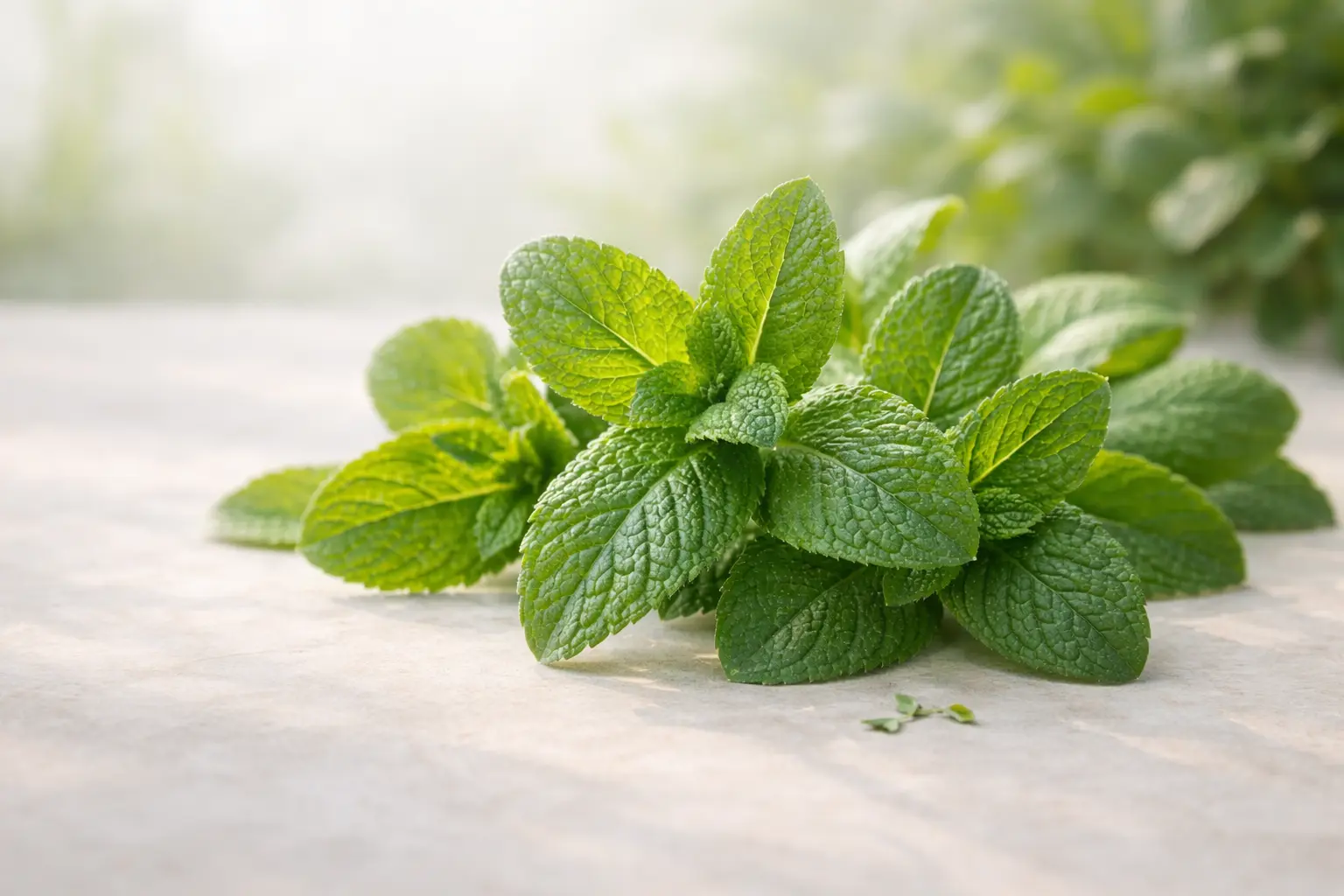
Peppermint essential oil is a concentrated aromatic oil distilled from the leaves and flowering tops of Mentha x piperita. It has a strong minty, cooling, menthol-rich aroma and is commonly used in diffuser blends, fresh home routines, massage oils, foot-care blends, shower products, and daytime focus rituals. It should be used in small amounts, diluted before skin use, and avoided near the face of infants and young children.
Quick Facts
Common name:
Peppermint
Botanical name:
Mentha x piperita
Plant family:
Lamiaceae
Plant part:
Leaves and flowering tops
Extraction:
Steam distillation
Aroma:
Minty, fresh, cooling
Aroma note:
Top to middle note
What Is Peppermint Essential Oil?
Peppermint essential oil is usually steam distilled from the leaves and flowering tops of the peppermint plant, Mentha x piperita. Peppermint is a natural hybrid of water mint and spearmint, and it is now widely cultivated in many parts of the world. The essential oil captures the plant’s characteristic fresh, penetrating, minty aroma.
Peppermint belongs to the mint family, Lamiaceae, the same plant family as lavender, rosemary, basil, oregano, sage, thyme, and many other aromatic herbs. This family is rich in plants with fragrant leaves and long histories of culinary, household, herbal, and aromatic use.
The essential oil is especially associated with menthol and menthone, two naturally occurring aromatic constituents that contribute to peppermint’s cooling scent and strong sensory character. This does not make peppermint oil a treatment or cure, but it helps explain why even a small amount can feel powerful in a diffuser, massage blend, or shower product.
Peppermint essential oil is not the same thing as peppermint tea, fresh mint leaves, dried peppermint herb, peppermint extract, or peppermint flavoring. The essential oil is much more concentrated and needs more careful handling.
Peppermint Plant History and Traditional Use
Mint plants have been used for thousands of years in culinary, household, fragrant, and traditional herbal contexts. Historical references to mint appear in ancient Greek, Roman, and Egyptian traditions, where mint plants were valued for their scent, flavor, and refreshing qualities. Peppermint as Mentha x piperita is a later-recognized hybrid, but it belongs to this much older cultural world of aromatic mints.
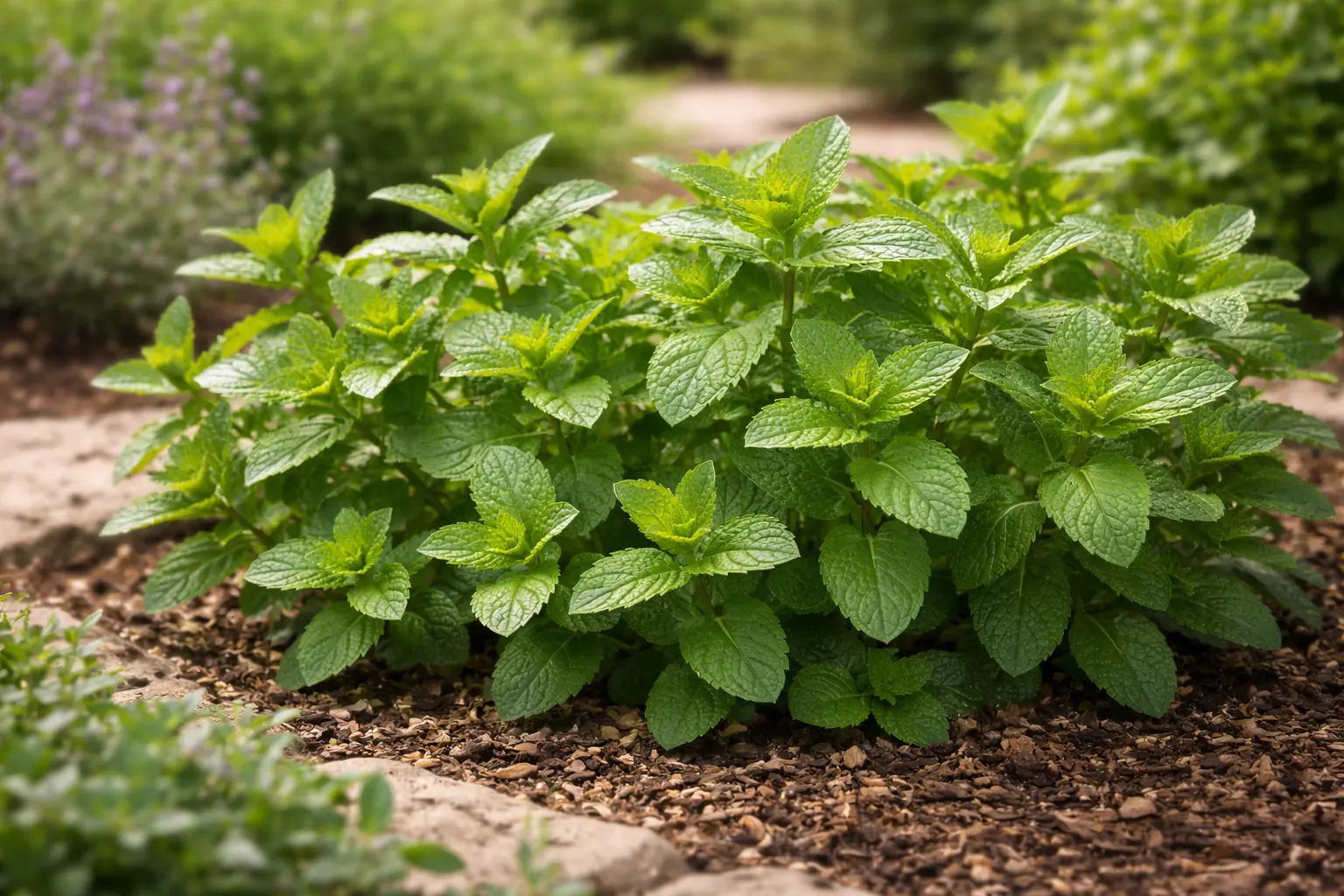
In Greek and Roman households, mint plants were used to scent rooms, flavor foods, and freshen the atmosphere around dining and hospitality. Mint was also associated with cleanliness and refreshment, partly because crushed mint leaves release a strong, immediate fragrance.
Broader references to mint also appear in religious and cultural texts. In the New Testament, mint is mentioned among garden herbs in a passage about tithing. This does not refer specifically to modern peppermint essential oil, and it should not be read as an essential oil reference. It does show that mint-like herbs were familiar enough in the ancient Mediterranean world to carry everyday cultural meaning.
Peppermint became especially important in European and later North American herbal and culinary traditions. The leaves were used in teas, sweets, sauces, digestive-style preparations, garden plantings, and household scenting. These traditional uses belong to the plant itself, not necessarily to the modern concentrated essential oil.
Today, peppermint remains one of the most recognizable aromatic herbs. Its scent is linked with freshness, clarity, clean breath, cooling sensations, and bright green energy. In essential oil form, that familiar plant character becomes much more concentrated.
What Does Peppermint Essential Oil Smell Like?
Peppermint essential oil smells fresh, minty, cool, green, and penetrating. It usually has a bright top note that reaches the nose quickly, followed by a slightly sweet, herbaceous, and sometimes sharp menthol body.
Compared with spearmint, peppermint is usually stronger, cooler, sharper, and more mentholated. Spearmint often smells sweeter and softer, while peppermint feels brighter and more forceful. Compared with lavender, peppermint is much less floral and much more stimulating to the senses.
A little peppermint goes a long way. In blends, it can quickly dominate softer oils. One drop may be enough to make a diffuser blend feel fresh, minty, and cooling.
Common Uses of Peppermint Essential Oil
Peppermint essential oil is often chosen when a blend needs to feel fresh, clear, bright, or cooling. It is especially useful in daytime routines, clean home fragrance, foot-care blends, post-workout-style massage oils, and formulas where a crisp green top note is wanted.
Because peppermint is intense, common use does not mean casual overuse. It should be approached as a strong oil, especially in topical products and enclosed spaces.
Daytime Freshness and Focus-Friendly Routines
Peppermint is often used in daytime diffuser blends when the desired atmosphere is clear, awake, and fresh. Its scent can make a room feel brighter and more open, especially when paired with citrus oils, rosemary, eucalyptus, or conifer aromas.
For focus-friendly routines, peppermint works best as part of a broader habit rather than as a magic fix. A short diffusion session, fresh air, hydration, a clean workspace, and a clear task list can all work together. The scent becomes a cue for alertness and attention.
Use a light hand. Peppermint can become overwhelming if too many drops are added to a diffuser, especially in a small office, bedroom, or closed room.
Diffuser Blends and Clean Home Fragrance
Peppermint can make diffuser blends feel clean and bright. It pairs well with lemon, sweet orange, grapefruit, rosemary, eucalyptus, cedarwood, frankincense, and other mint-family or forest-like aromas.
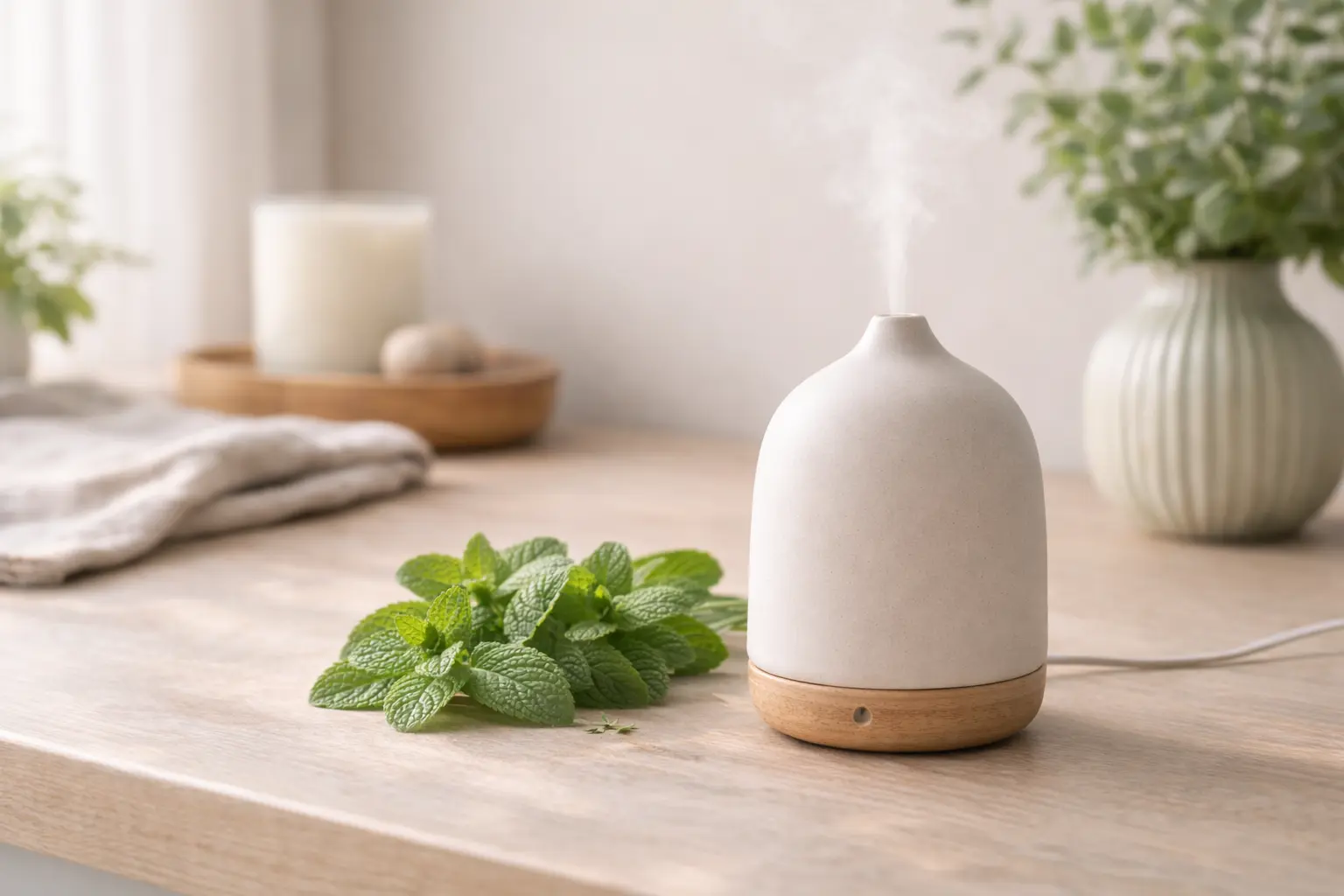
In home fragrance, peppermint can be useful when a space feels stale or heavy. It gives a quick impression of freshness, especially with citrus or herbal oils. However, it is not ideal for every room. Avoid strong peppermint diffusion around babies, young children, pets, or anyone who dislikes mentholated aromas.
Shower and Steam-Inspired Routines
Peppermint is popular in shower steamers and fresh morning shower products because heat and steam can amplify its aroma. This can feel bright and invigorating, but it also means the oil should be used carefully.
Avoid placing peppermint essential oil where it can run into the eyes, face, or sensitive areas. In shower products, the formula should be designed so the oil is properly dispersed and not sitting in concentrated drops on the skin or shower floor.
Massage and Cooling Body-Care Blends
When properly diluted, peppermint essential oil is sometimes used in massage oils, foot oils, and body-care blends where a cooling sensory effect is desired. It is commonly paired with carrier oils and used in small amounts because it can feel strong on the skin.
Peppermint should not be used over large areas of the body at high dilution. Avoid sensitive skin, broken skin, the face, the chest area of young children, and any area where a strong cooling sensation would be uncomfortable.
Foot Care and Tired Feet Routines
Peppermint is a classic choice for foot-care blends because its cooling scent and sensation pair well with end-of-day foot massage, foot balms, and refreshing foot soaks. A small amount in a well-diluted blend can make a foot-care routine feel clean and revived.
For foot use, dilution still matters. The skin on the feet may be thicker than facial skin, but irritation can still happen, especially if the oil is used too strongly or too often.
DIY Cleaning and Fresh Room Sprays
Peppermint’s sharp green scent can work well in DIY room sprays and cleaning-adjacent aromatic blends. It pairs naturally with lemon, rosemary, eucalyptus, pine, or tea tree for a bright, clean-smelling profile.
Room sprays should be formulated carefully and shaken well if they are temporary water-based sprays. Avoid spraying near pets, children’s faces, polished wood, delicate fabrics, eyes, or food preparation surfaces unless the formula is designed for that purpose.
Digestive Associations and Traditional Plant Use
Peppermint has a long association with digestive comfort in herbal traditions, especially as peppermint leaf tea or professionally prepared peppermint products. Some clinical research has also studied specific oral peppermint oil preparations, particularly enteric-coated capsules, for digestive concerns.
This does not mean that casual internal use of peppermint essential oil is appropriate. Essencyclopedia does not recommend adding peppermint essential oil to water, tea, or food as a casual home practice. Internal use belongs under the guidance of an appropriately qualified professional and depends on formulation, dose, health context, and product type.
Quick Tips for Using Peppermint Essential Oil
Fresh Desk Blend
Add 1 drop peppermint, 2 drops lemon, and 2 drops rosemary to a diffuser for a bright daytime workspace aroma. Use less in a small room and keep the space ventilated.
Cooling Foot Massage
Dilute 1 drop peppermint essential oil in 1 teaspoon of carrier oil and massage into the feet. Avoid broken skin, sensitive skin, and use around young children.
Morning Shower Aroma
Use peppermint only in a properly formulated shower product or shower steamer. Keep it away from the eyes and face, because steam can make the aroma feel much stronger.
How to Use Peppermint Essential Oil Safely
Peppermint essential oil deserves more caution than its familiar scent might suggest. Many people know peppermint from tea, candy, toothpaste, or chewing gum, but the essential oil is much more concentrated than those everyday forms.
The main safety themes for peppermint are intensity, menthol content, skin sensitivity, respiratory sensitivity, and child safety. Use less than you think you need, especially at first.
Simple Dilution Guidance
For general adult body use, peppermint is often best kept around 0.5% to 1% in a simple home blend. That means about 1 drop of peppermint essential oil per 2 teaspoons of carrier oil for a gentle 0.5% dilution, or about 1 drop per 1 teaspoon for roughly 1%. Use lower amounts for sensitive skin or frequent use.
Peppermint can feel cooling, tingling, or sharp on the skin. That sensation is not proof that it is “working,” and stronger is not better. If the skin burns, stings, reddens, itches, or feels uncomfortable, stop using the blend.
Diffusion Guidance
For a typical room diffuser, start with 1 drop of peppermint as part of a blend rather than using several drops of peppermint alone. A total blend of 3 to 5 drops may be enough for many rooms, with peppermint making up only part of that total.
Diffuse intermittently rather than continuously. Thirty minutes can be enough for peppermint, especially in a smaller space. Keep the room ventilated, and make sure people and pets can leave the room if the aroma is too strong.
Avoid strong peppermint diffusion around babies, young children, pets, people with asthma, and anyone who reacts poorly to mentholated aromas.
Topical Guidance
For topical use, dilute peppermint essential oil in a carrier oil or finished product. Good carrier options include jojoba, fractionated coconut oil, sunflower oil, sweet almond oil, grapeseed oil, or apricot kernel oil.
Avoid applying peppermint essential oil near the eyes, inside the nose, inside the ears, around mucous membranes, or on the face of children. Do not use peppermint on broken, inflamed, irritated, or highly sensitive skin.
Patch testing is especially useful with peppermint because the oil can feel strong even when diluted. If you are scent-sensitive or prone to skin reactions, start very low or choose a gentler oil.
Children, Pregnancy, Nursing, and Pets
Peppermint essential oil should not be used casually around infants and young children. Menthol-containing oils can be problematic if applied near the face or inhaled strongly by babies or small children. Keep peppermint away from children’s faces, pillows, bedding, and chest rubs unless guided by a qualified professional.
During pregnancy or nursing, use extra caution. Peppermint leaf in food or tea is not the same as concentrated peppermint essential oil. If nursing, avoid applying peppermint products where an infant could inhale or contact them, and seek professional guidance for any use beyond ordinary food amounts.
Pets may be sensitive to essential oils, especially cats, birds, and small animals. Do not apply peppermint essential oil directly to pets. If diffusing at home, keep it light, ventilated, and optional for the animal by allowing them to leave the room.
Peppermint Diffuser Blends
Peppermint blends best when it is treated as a bright accent, not the whole personality of the blend. One drop can add freshness, lift, and clarity without overwhelming the room.
Fresh Start
- 1 drop peppermint
- 3 drops sweet orange
- 1 drop rosemary
A bright, optimistic blend for a fresh daytime atmosphere.
Clear Desk
- 1 drop peppermint
- 2 drops lemon
- 2 drops frankincense
A crisp, clean blend with a grounded base for work or study spaces.
Mint Forest
- 1 drop peppermint
- 2 drops cedarwood
- 2 drops black spruce
A cool green woodland aroma with a fresh, steady character.
Peppermint Essential Oil in DIY Recipes
Peppermint essential oil can be useful in DIY products when a formula needs freshness, lift, and a cooling sensory impression. It appears often in foot balms, massage oils, shower steamers, room sprays, scalp-care products, and fresh body-care blends.
Because peppermint is strong, DIY recipes should use it sparingly. In many formulas, one drop is enough. If a recipe uses peppermint alongside other strong oils such as eucalyptus, rosemary, tea tree, or wintergreen, the overall intensity and safety profile should be considered carefully.
Peppermint is usually not the best choice for leave-on facial products, children’s products, sensitive skin blends, or products used close to the eyes. It can be excellent in adult foot-care products, short-use shower products, and well-diluted massage blends when used thoughtfully.
Frequently Asked Questions
Can peppermint essential oil be applied directly to skin?
No, peppermint essential oil should be diluted before skin use. Undiluted peppermint can irritate the skin and may feel intensely cold, hot, or burning. Dilution is especially important for sensitive skin and repeated use.
Can I put peppermint essential oil in water or tea?
Essencyclopedia does not recommend casual internal use of peppermint essential oil. Peppermint tea and peppermint essential oil are not the same thing. Internal essential oil use requires appropriate formulation, dose control, and professional guidance.
Is peppermint essential oil safe for children?
Peppermint needs special caution around children, especially infants and young children. Avoid applying it near a child’s face, nose, chest, or bedding. Do not diffuse strongly in a closed room with young children.
Is peppermint essential oil safe for pets?
Do not apply peppermint essential oil directly to pets. If diffusing in a home with pets, use very small amounts, ventilate well, and make sure the animal can leave the room. Cats, birds, and small animals can be especially sensitive.
Can peppermint essential oil help with headaches?
Some research has explored topical peppermint oil preparations for tension-type headache, but this does not mean undiluted home use is appropriate. Avoid the eyes and face, use only diluted products, and seek medical care for severe, frequent, unusual, or persistent headaches.
Is peppermint essential oil good for focus?
Peppermint’s bright aroma is often used in focus-friendly routines, but it should be understood as an aromatic cue, not a treatment for attention difficulties. It may help a workspace feel fresh and alert when used lightly and safely.
Does peppermint essential oil repel insects?
Peppermint is often used in folk and DIY insect-related recipes, but it should not be treated as a reliable replacement for tested insect protection when protection matters. Use caution with pets, children, skin exposure, and surfaces.
Peppermint Essential Oil, Spirituality, and Symbolism
The main sections above focus on botanical information, practical use, dilution, and safety. Peppermint also has a symbolic and spiritual life, shaped by its associations with freshness, clarity, alertness, and renewal.
Clarity and Fresh Perspective
Peppermint is often symbolically connected with mental clarity and fresh perspective. Its aroma feels quick, bright, and direct, which makes it a natural fit for rituals of beginning again, clearing a workspace, or marking a shift into focused attention.
Renewal and Clean Energy
Because peppermint is strongly associated with freshness, it can symbolize renewal and clean energy. In reflective practices, the plant may represent the moment when stale air is replaced by fresh air, or when a cluttered mind begins to feel more awake.
Throat and Third Eye Associations
In some contemporary aromatherapy and energy-work traditions, peppermint is associated with the throat chakra because of its connection with clear expression, and with the third eye because of its symbolic link to alertness and perception. These are symbolic uses, not medical claims.
Safety Notes for Peppermint Essential Oil
Peppermint essential oil is strong, menthol-rich, and more stimulating than many beginner oils. It should be diluted before topical use, used sparingly in diffusers, and kept away from the eyes, inner ears, nose, mucous membranes, and the face of infants or young children.
Do not ingest peppermint essential oil unless you are working with an appropriately qualified professional. Peppermint oil products used in clinical or digestive contexts are specific preparations, often formulated and dosed very differently from casual home essential oil use.
Use extra caution during pregnancy, nursing, with children, around pets, and for people with asthma, respiratory sensitivity, reflux, allergies, epilepsy, complex medical conditions, or medication use. If you are nursing, avoid applying peppermint products where an infant could inhale or contact them.
For skin use, patch test first and avoid broken, irritated, inflamed, or highly sensitive skin. If peppermint causes burning, redness, itching, headache, nausea, dizziness, breathing discomfort, or an overwhelming cooling sensation, stop using it. For diffusion, keep sessions short, ventilate the room, and use fewer drops than you would with softer oils.
Store peppermint essential oil tightly closed, away from heat and light, and out of reach of children and pets. Oxidized or old essential oils may be more irritating, so pay attention to storage time and aroma changes.
Further Reading and Sources
For a broader understanding of peppermint, essential oil safety, dilution, and responsible aromatherapy practice, these resources are useful starting points:
- NCCIH: Peppermint Oil
- NAHA: Aromatherapy Safety
- NAHA: Peppermint Essential Oil
- Tisserand Institute: Safety Guidelines
This article is educational and does not replace medical advice. If you are pregnant, nursing, taking medication, managing a medical condition, preparing essential oil products for children or pets, or considering internal use, consult an appropriately qualified professional.