
How to Use Essential Oils in a Diffuser
Know-How
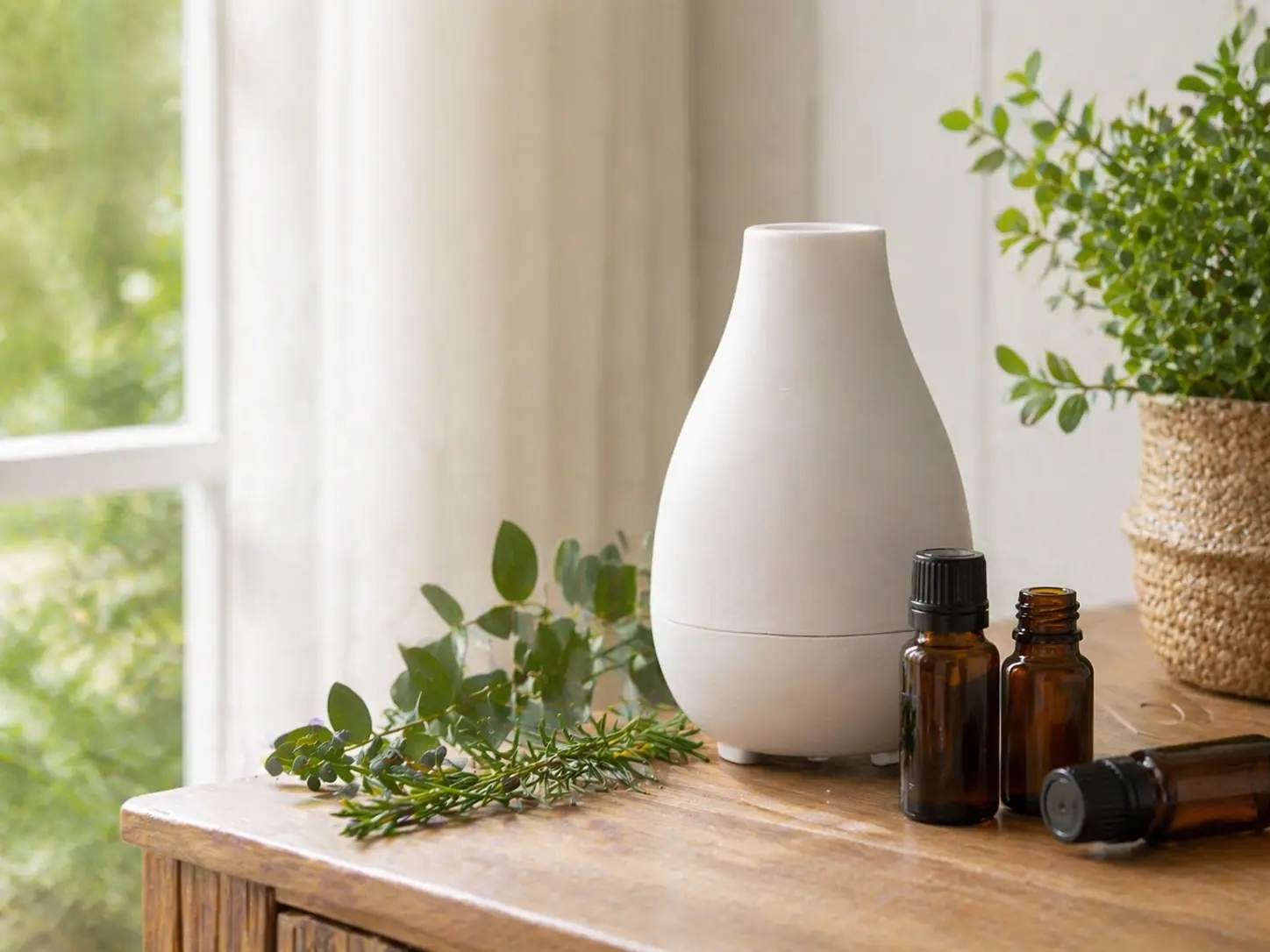
An essential oil diffuser can make a room feel brighter, quieter, fresher, or more settled, but it works best when the aroma remains a background layer. The useful skill is not learning how to make the strongest possible cloud. It is learning how little oil the room actually needs, how long the scent should run, and when fresh air is the better choice.
This guide covers ultrasonic diffusers, practical drop ranges, room size, timing, ventilation, placement, cleaning, and the situations in which diffusion needs extra caution. It is written for ordinary home atmosphere, not for treating illness or changing indoor air quality.
Quick Answer
Fill the diffuser with water according to its instructions, add about 3 to 6 total drops for a typical adult room, and begin lower in small or shared spaces. Run it for roughly 20 to 40 minutes, then turn it off and reassess. Keep some airflow, place it away from faces and delicate surfaces, and clean it regularly.
More oil and longer runtime do not automatically create a better blend. They usually increase scent fatigue, surface residue, irritation risk, and the chance that other people or pets find the room uncomfortable.
What an Ultrasonic Diffuser Actually Does
An ultrasonic diffuser uses water and vibration to release a fine aromatic mist. It is not the same as a humidifier, even though it adds a small amount of moisture to the immediate area, and it is not an air purifier. It cannot remove smoke, mold, carbon monoxide, pathogens, allergens, or persistent odor sources. Ventilation, cleaning, source control, and appropriate professional help still do those jobs.
Because the mist carries tiny droplets, placement matters. Keep the unit on a stable, water-resistant surface and away from walls, books, untreated wood, screens, and other materials that may collect moisture or oil residue. Do not place it directly beside a pillow, pet bed, cot, or workstation where the mist repeatedly reaches one person's face.
Step-by-Step Diffuser Routine
- Start with a clean diffuser. Old water and residue can distort a new blend and make the mist smell stale.
- Add fresh water. Follow the fill line and water guidance supplied with the device.
- Add fewer drops first. Three total drops can be enough in a small room; a larger adult room may suit four to six.
- Run a short session. Begin with 20 minutes and notice how the whole room feels, not only the area beside the diffuser.
- Turn it off before adjusting. Leave the room briefly, return with a fresher nose, and only then decide whether the next session needs a change.
- Empty and wipe the reservoir. Do not leave old scented water sitting for days.
Important: stop diffusion if anyone develops coughing, wheezing, headache, nausea, dizziness, watery eyes, throat irritation, agitation, or discomfort. An unscented room is always an acceptable choice.
How Room Size Changes the Amount
A drop range is only a starting point. Ceiling height, open doorways, upholstery, curtains, heating, airflow, and the diffuser output all change how quickly scent accumulates. A compact bedroom with closed windows may hold three drops more strongly than an open-plan living room holds six. Winter rooms and fabric-heavy spaces often retain aroma longer than expected.
Do not compensate for a large room by pouring in a large amount immediately. Place the diffuser where air can move the aroma naturally, use a modest blend, and see whether the room needs a second short session later. This usually smells more balanced than one long, concentrated run.
Building a Simple Three-Part Blend
A practical beginner formula uses one bright or opening note, one middle note, and one quieter base. For example, lemon can bring brightness, lavender can round the center, and cedarwood can give the blend a dry finish. The categories are not rigid rules, but they make troubleshooting easier.
Four Beginner Blend Directions
Bright and Clear
- 3 drops lemon
- 2 drops rosemary
- 1 drop frankincense
Useful for a freshly aired daytime room.
Soft Evening
- 3 drops lavender
- 2 drops bergamot
- 1 drop cedarwood atlas
Rounded and low-contrast without becoming heavy.
Fresh Home
- 3 drops sweet orange
- 2 drops cypress
- 1 drop spearmint
A clean-feeling finish after actual cleaning and ventilation.
Quiet and Grounded
- 2 drops petitgrain
- 2 drops frankincense
- 2 drops cedarwood atlas
Dry and restrained for people who dislike floral blends.
Children, Pets, and Shared Rooms
Children are not simply smaller adults, and pets have different respiratory and metabolic vulnerabilities. Age, species, health status, oil choice, concentration, ventilation, and the ability to leave the room all matter. Avoid continuous diffusion, do not diffuse beside sleeping children or confined animals, and do not apply diffuser recipes to skin or fur.
Shared-space courtesy matters even when no one has a diagnosed sensitivity. Ask before diffusing, use a clear off-switch, and give guests access to unscented air. Pregnancy, asthma, migraine, allergies, medication use, and previous reactions are all reasons to simplify the routine or skip it.
Cleaning the Diffuser
Empty the reservoir after use and wipe it with a soft cloth according to the manufacturer instructions. Periodically clean the ultrasonic plate and reservoir with the method approved for the device; some manufacturers permit diluted white vinegar, while others specify a different process. Never immerse the electrical base, and do not scrape the plate with metal tools.
A blend that suddenly smells muddy, sour, or harsh may be interacting with residue from earlier oils. Cleaning before judging the recipe is more useful than adding extra citrus or mint to overpower the problem.