
Essential Oil Dilution Guide
Know-How
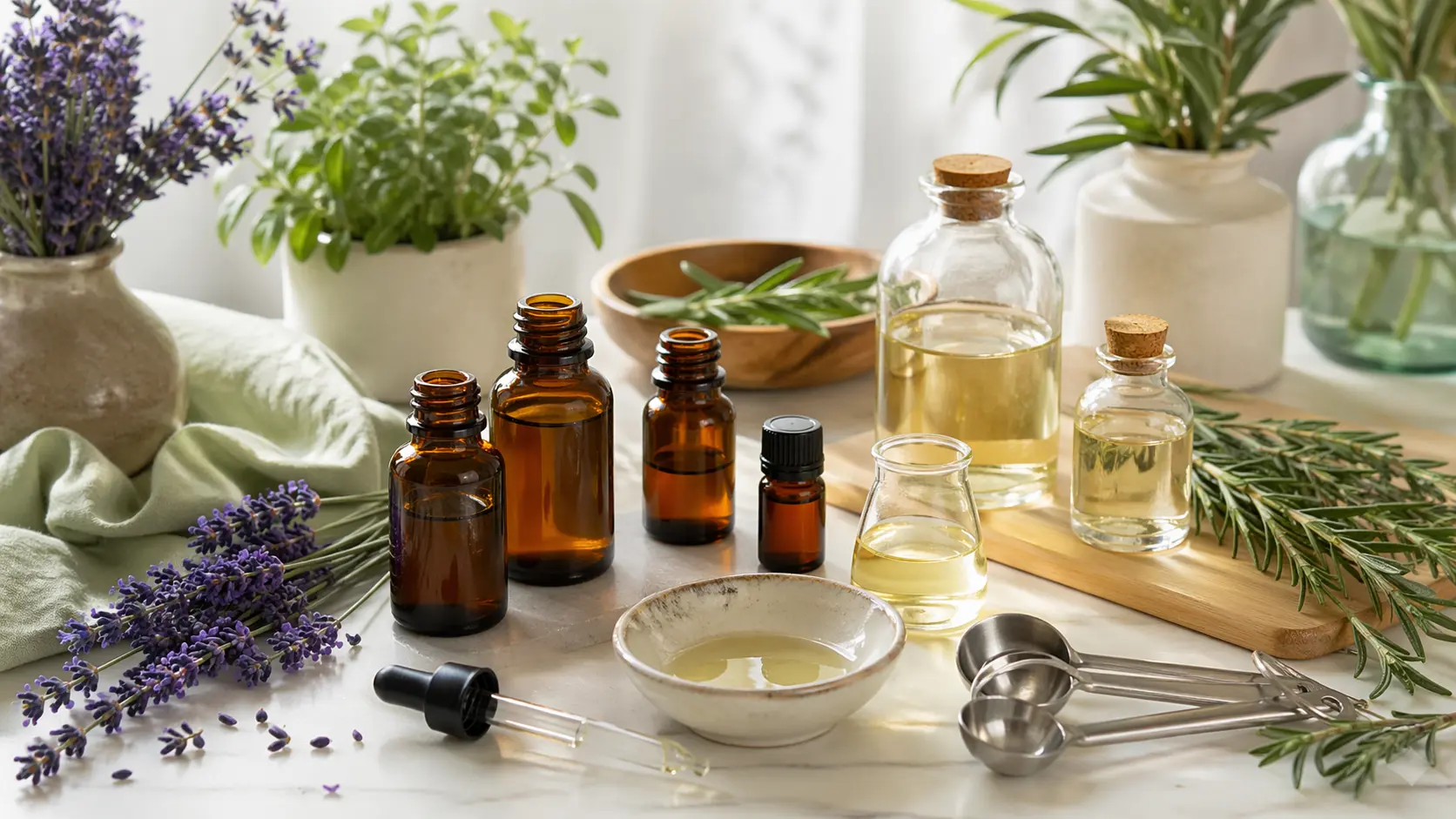
Dilution turns a concentrated essential oil into a topical product that is easier to spread, measure, and use carefully. It does not make every oil safe for every person, but it reduces the amount of essential oil placed on a given area of skin and is one of the most important habits in home aromatherapy.
This guide explains common percentages, approximate drop counts, carrier oils, patch testing, dermal limits, phototoxicity, and how to choose a lower or higher concentration based on the person, product, body area, and frequency of use.
Quick Answer
For a simple adult body oil, 1% dilution is a cautious starting point: approximately 2 drops of essential oil in 10 mL of carrier oil, or about 6 drops in 30 mL. Drop size varies, so scales and weight-based formulation are more accurate for professional products.
Use less for the face, sensitive skin, frequent application, older adults, and other higher-caution situations. Oil-specific dermal maximums can override a general chart, and phototoxic citrus oils need separate sun-exposure limits.
Why Dilution Matters
Essential oils are volatile aromatic concentrates. A single drop spreads poorly on skin and can create a small area of high exposure. A carrier oil distributes that drop across a larger amount of product, making the application more even and reducing the concentration touching the skin at one time.
Dilution can reduce irritation risk, but it cannot guarantee that a reaction will not happen. Sensitization, allergy, oxidized oil, damaged skin, excessive frequency, and an unsuitable ingredient can still cause problems. The safest percentage is therefore not just a number; it depends on what is being used, where, how often, and by whom.
Approximate Dilution Chart
The table below uses the common approximation of 20 drops per milliliter. Real droppers and oil viscosities vary, so treat these as practical home estimates rather than laboratory measurements.
| Dilution | 10 mL carrier | 30 mL carrier | Typical direction |
|---|---|---|---|
| 0.5% | 1 drop | 3 drops | Very low adult use, sensitive or frequent routines. |
| 1% | 2 drops | 6 drops | Cautious general adult body-use starting point. |
| 2% | 4 drops | 12 drops | Stronger adult body use when the oils permit it. |
| 3% | 6 drops | 18 drops | More concentrated adult use requiring clearer justification. |
Calculation: carrier volume in milliliters x 20 approximate drops per milliliter x desired percentage. For 30 mL at 1%, the estimate is 30 x 20 x 0.01 = 6 drops.
How to Choose a Percentage
Lower concentrations make sense when the product covers a large area, stays on the skin, is used repeatedly, or is intended for a more sensitive body area. Facial oils and daily products generally require more restraint than an occasional adult body oil. A small roller used once in a while is different from a massage oil spread across the whole body.
Children, pregnancy, breastfeeding, older adults, sensitive skin, eczema-prone skin, asthma, allergies, medication use, and complex health conditions require more than simply choosing the lowest line in a chart. Oil selection may need to change, and some situations are better handled with no essential oil at all or with guidance from an appropriately qualified professional.
Choosing a Carrier Oil
A carrier oil is a non-volatile fixed oil used to dilute and spread essential oils. Jojoba is oxidation-resistant and useful for small rollers. Sunflower and grapeseed feel lighter but may have shorter shelf lives. Sweet almond and apricot kernel feel comfortable in body oils but are not appropriate for everyone with seed or nut sensitivities. Fractionated coconut oil is light and stable, while avocado is richer and more noticeable on skin.
The carrier affects texture, absorption, shelf life, cost, and allergy considerations, but it does not neutralize an unsuitable essential oil. Read the full carrier oils guide before choosing a base for frequent use or sensitive skin.
Step-by-Step: Make a Simple Body Oil
- Choose the finished volume. A 30 mL bottle is large enough for a body oil but still easy to finish while fresh.
- Select the percentage. For a cautious adult starting point, choose 1% unless an oil-specific limit requires less.
- Check every ingredient. Review botanical identity, extraction method, dermal maximum, phototoxicity, age cautions, and oxidation.
- Add the essential oil. For 30 mL at approximately 1%, use about 6 total drops across the whole blend.
- Add the carrier oil. Fill to the intended volume, close, and mix gently.
- Label the bottle. Include ingredients, dilution, and preparation date.
- Patch test. Test a small amount on intact skin before wider use.
Three Simple Adult Examples
1% Evening Body Oil
- 4 drops lavender
- 2 drops frankincense
- Carrier oil to make 30 mL
A low adult body-use example for occasional evening application.
1% Dry Citrus-Wood Oil
- 4 drops FCF bergamot
- 2 drops cedarwood atlas
- Carrier oil to make 30 mL
Using FCF bergamot removes the main bergamot phototoxicity concern, but normal skin cautions still apply.
Low 10 mL Roller
- 1 drop lavender
- 1 drop petitgrain
- Carrier oil to make 10 mL
A simple close-wearing example at roughly 1% total concentration.
Dermal Maximums Override General Charts
Some essential oils have constituent-based topical limits that are lower than the general percentage you intended to use. Cinnamon bark, clove bud, lemongrass, and several other strong oils are examples where a generic 2% formula may be inappropriate. A blend is limited by the most restrictive relevant ingredient, not by the average strength of the whole aroma.
Botanical identity and chemotype matter. Common names can cover different species or chemical profiles, so the label and supplier documentation should provide enough information to identify the exact oil.
Phototoxicity and Leave-On Products
Certain expressed citrus peel oils can react with UVA exposure and cause a severe sunburn-like skin reaction. Cold-pressed bergamot and expressed lime are classic concerns; some lemon, grapefruit, and bitter orange products also require attention. Extraction method and furanocoumarin reduction matter, so do not apply a general "all citrus" rule in either direction.
If the finished product will be used on sun-exposed skin, choose a clearly non-phototoxic option, stay within recognized limits, cover the area, or avoid UV exposure for the specified period. Diffusion does not carry the same skin phototoxicity issue, but topical roll-ons, perfumes, lotions, and body oils do.
Common Dilution Mistakes
- Counting each oil at the full percentage. The target percentage applies to the total essential oil content of the blend.
- Using water as a carrier. Essential oils do not dissolve in water, so the concentrated droplets can still contact skin.
- Ignoring frequency. A product used several times every day creates different exposure than an occasional application.
- Using old oxidized oils. Dilution does not restore an oil that has degraded or become more irritating.
- Skipping labels. Unlabeled bottles make ingredients, dilution, age, and safe use impossible to track.