
How to Use Gentle Bedroom Aromas in Family Evening Routines
Children
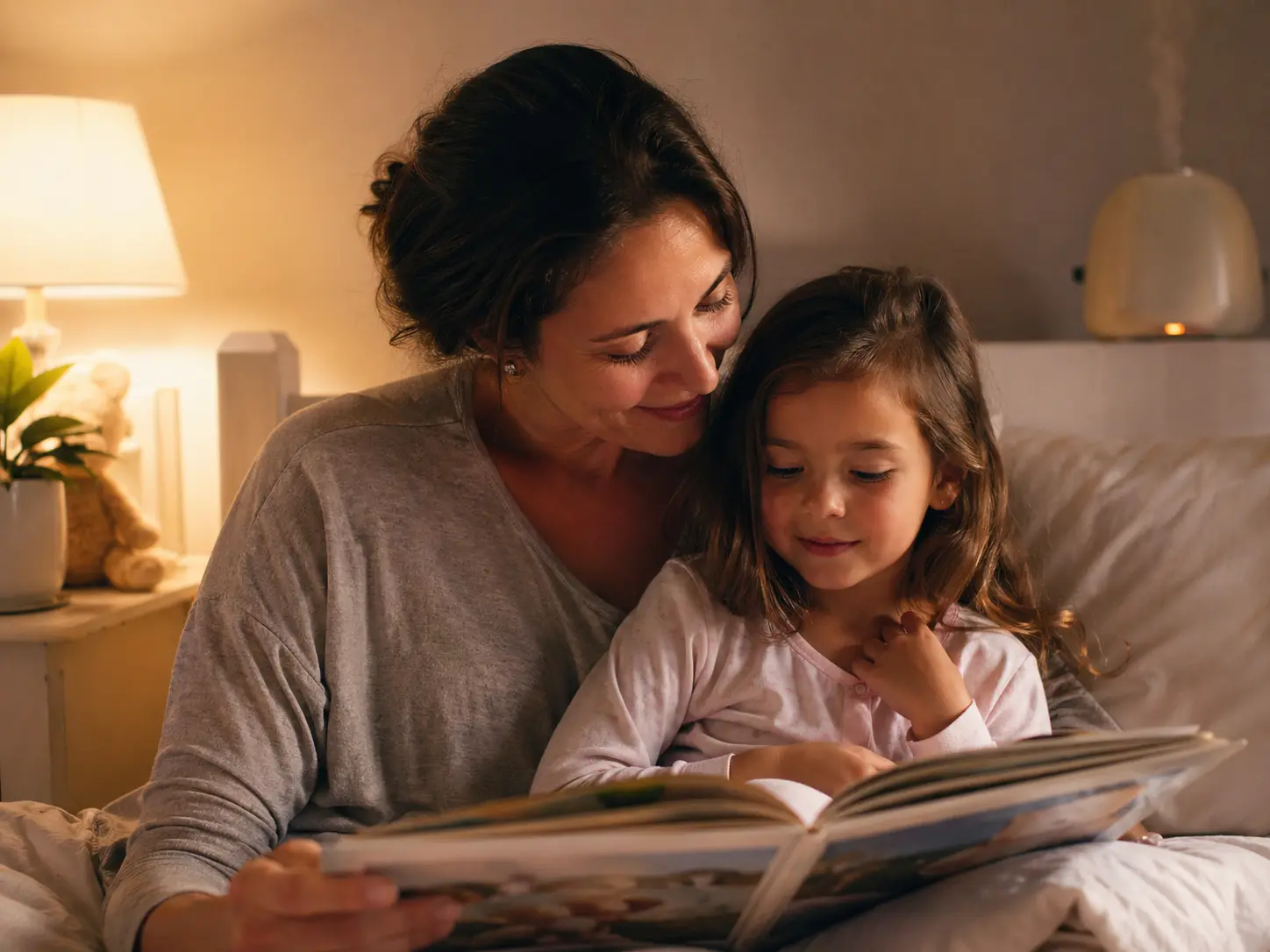
Family evening routines often work best when they feel softer, simpler, and more predictable than the rest of the day. The bedroom does not need to become a perfectly styled sleep sanctuary to support that transition. Very often, it is enough for the room to feel a little quieter, a little dimmer, and a little more settled than everything that came before it.
Gentle bedroom aromas can support that rhythm when they are used with a light hand and a safety-first mindset. The most helpful scent in a family evening routine is usually not one that stands out. It is one that quietly supports the room while story time, pajamas, dim lights, and slower voices do most of the work.
Quick Answer
Gentle bedroom aromas can work well in family evening routines when the goal is atmosphere rather than obvious scent. Soft oils such as lavender, roman chamomile, red mandarin, and sometimes a little cedarwood atlas can help a room feel calmer when they are used lightly and briefly.
The key is to avoid intensity. A family bedroom routine usually needs a subtle aromatic cue, not a strong ongoing diffuser session. The gentlest approach is often the most effective because it lets the room feel softer without turning scent into the main event.
Why the Bedroom Responds So Strongly to Small Changes
Bedrooms are usually smaller, quieter spaces, which means even a gentle aroma can feel more noticeable there than it would in a larger shared room. That is part of why they can work well for evening routines. You do not need much. A subtle shift in atmosphere is often enough to help the room feel ready for bedtime cues like bath, pajamas, a book, or a slower voice.
It is also why restraint matters so much. A scent that feels light and pleasant in a living room can feel too present in a child’s bedroom, especially if the room is already warm, enclosed, or full of soft fabrics that hold the mood of the space. In bedrooms, less is usually more.
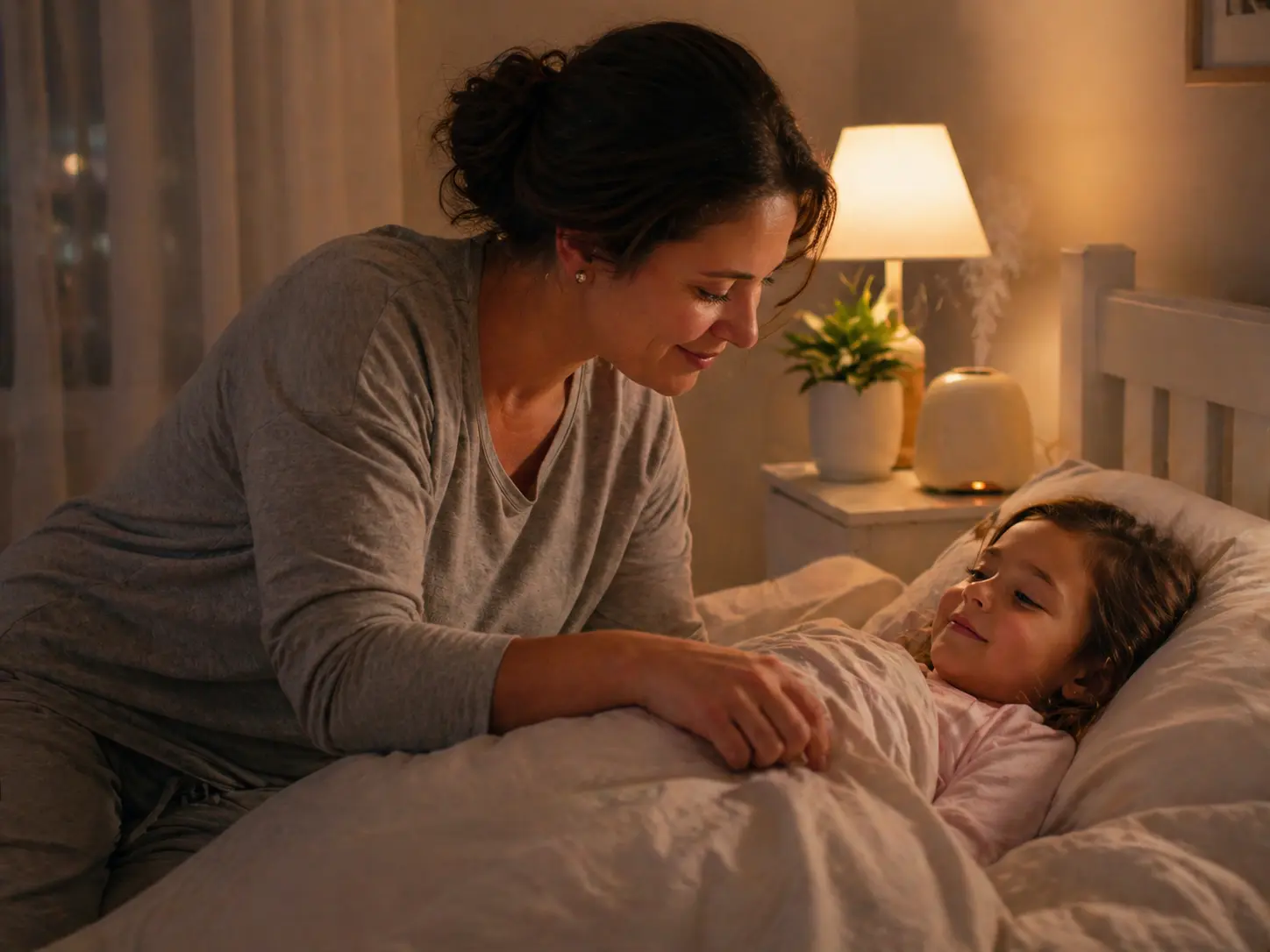
Build the Routine Around Calm, Not Around the Oil
Aroma is only one part of a good family evening rhythm. The room usually settles best when scent arrives alongside other cues that already suggest transition: lower light, less screen brightness, warm pajamas, clean sheets, a quieter voice, and a consistent order of events. When those things are present, aroma can reinforce the mood without having to carry the whole experience.
That is why the most useful approach is usually to think in sequence. If the bedroom still feels bright, busy, and rushed, no amount of lavender will fix that. But if the routine is already slowing down, a small aromatic cue can help the room feel noticeably more settled.
Gentle Evening Aroma Directions
Soft floral calm
Lavender with a little roman chamomile for a familiar soft evening tone.
Warm and gentle
Red mandarin can make the room feel softer without becoming too sharp or bright.
Grounded finish
A tiny amount of cedarwood atlas can help a bedroom feel quieter and more settled.
Where the Aroma Should Sit in the Room
In family bedrooms, the placement of the aroma matters almost as much as the oil itself. The closer the scent is to the bed or the person, the more noticeable it tends to feel. That is one reason why many evening routines work better with a light pre-room scent or a small background diffuser window rather than something close, strong, or continuous through the night.
Sometimes the gentlest solution is not a full diffuser session at all. A softly scented room before bedtime and then a quieter bedroom afterward may feel more comfortable than keeping the aroma going for the whole evening.
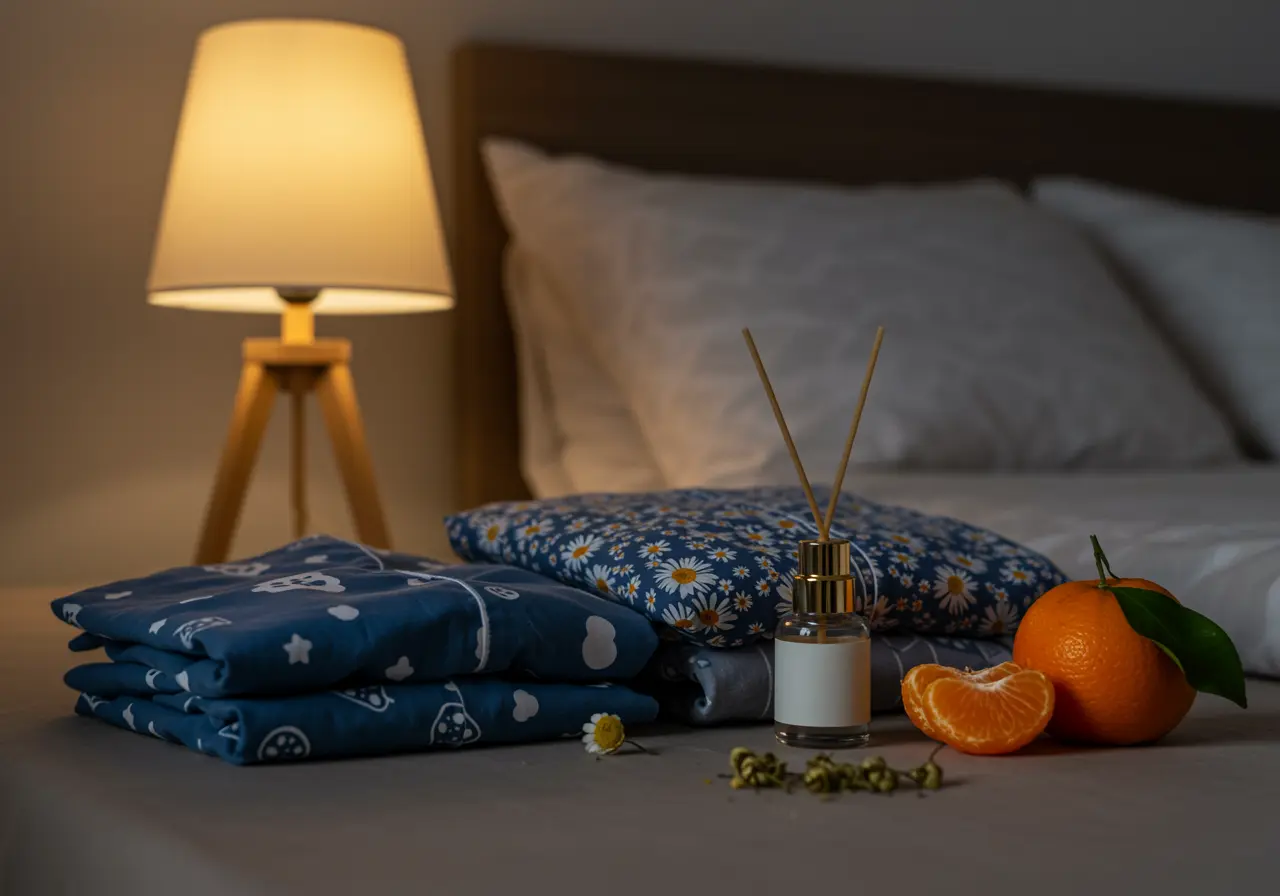
Consistency Often Matters More Than Complexity
Children usually respond well to routines that feel familiar. The same is often true for aroma. A simple, repeatable scent mood is often more useful than frequently changing blends. If the room already has a bedtime feeling that works, keeping the aroma predictable may help it feel even more reassuring.
This is one reason gentle bedroom aromas connect so naturally to a broader bedtime atmosphere. The more stable the overall rhythm feels, the less pressure there is for any one detail to do too much.
Family bedtime reminder: In children’s bedrooms, softer and shorter is usually safer and more comfortable than stronger and longer. Aroma should support the evening, not dominate it.

Children
Calmer Bedtime Atmosphere for Children with Gentle Aromas
Create a softer family evening atmosphere with gentle aromas, lighter diffuser habits, and routines built around calm rather than intensity.
Children
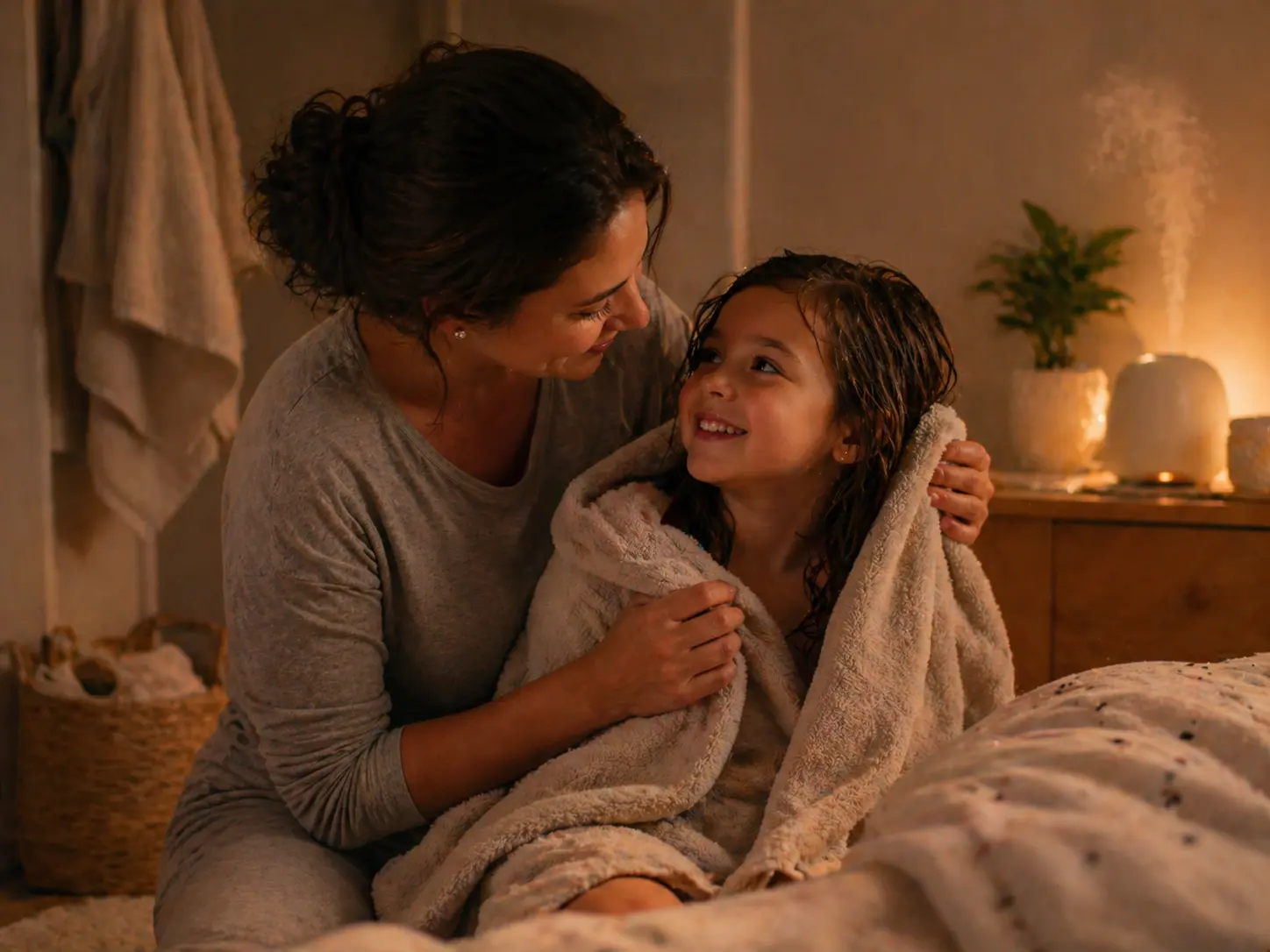
A Soft Post-Bath Essential Oil Atmosphere for Children
A calm, practical look at how to create a softer post-bath atmosphere for children with gentle room scent choices, lower intensity, and safety-first routines.
Further Reading and Sources
These related pages help build a fuller picture of children’s evening routines, softer home scent, and safety-first aroma choices.