
Essential Oils for a Calmer Evening Wind-Down Routine
Wellness
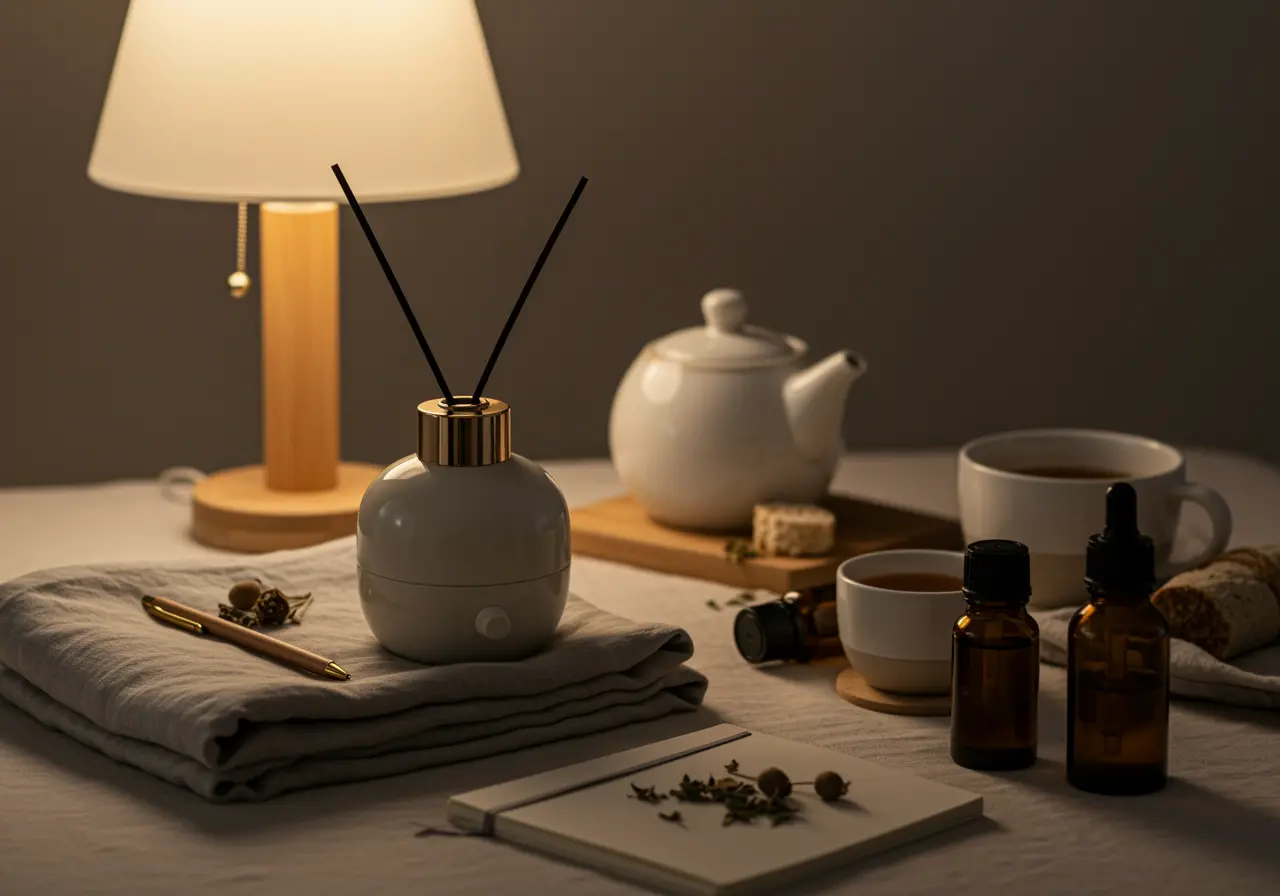
An evening wind-down routine does not need to feel like a full bedtime protocol to be useful. Often the most valuable part is simply creating a softer transition out of the day. Lower light, less stimulation, quieter tasks, and a gentler aroma can all help the nervous system understand that the pace is changing.
Essential oils can support that transition when they are used lightly and on purpose. This is not really about forcing sleep. It is about helping the room, the body, and the evening routine move toward a slower tone. The effect usually feels best when it comes from one or two simple aromatic cues rather than a complicated ritual.
Quick Answer
For a calmer evening wind-down routine, choose essential oils that soften the room instead of energizing it. Gentle florals, quieter citrus notes, and grounding woods often work well, especially when used in short diffuser sessions, a low-key shower, or a simple bedside atmosphere. Lavender, roman chamomile, red mandarin, cedarwood atlas, and frankincense are all useful options.
The best wind-down routine is usually simple enough to repeat. A dimmer room, a short diffuser window, a slower shower, a book instead of one more screen, and a scent that feels calm rather than sugary or dramatic often do more than trying to assemble a long, perfect checklist.
Think Transition, Not Perfection
Evening routines can become oddly stressful when they try to do too much. A calmer wind-down does not require a perfect bedtime formula. It only needs a few signals that tell your body the active part of the day is ending. Aroma is useful here because it changes the feel of a room quickly and quietly.
This is one reason softer oils tend to work so well in evening spaces. They do not demand attention. They help the room feel more settled while other things are also slowing down. If the lights are still bright, the laptop is still open, and the to-do list is still running in your head, no oil is going to fix that on its own. But scent can support the transition once the rest of the routine starts to quiet down too.
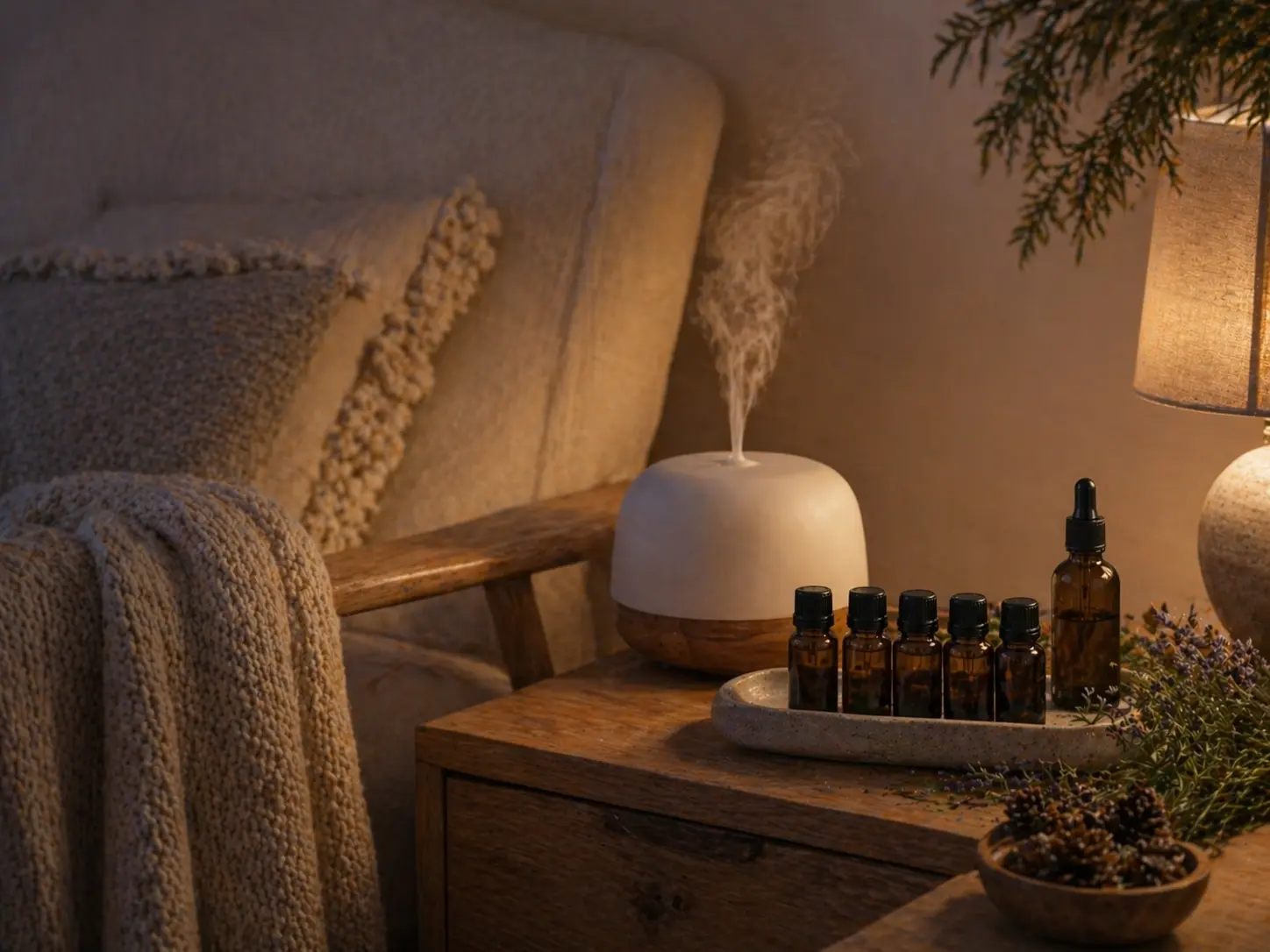
Which Scent Directions Work Best in the Evening?
Evening blends usually feel better when they are rounder, softer, and less sparkling than daytime blends. Lavender is a familiar choice because it sits easily in many routines, but it does not need to be used alone. Roman chamomile can make a blend feel gentler, while red mandarin adds a quiet sweetness without becoming sharp like some brighter citrus oils.
Woods and resins can help create a grounded finish. Cedarwood atlas and frankincense are especially useful when you want the room to feel still, warm, and settled. They are often more useful in the evening than strongly fresh or minty oils, which can push the room back toward alertness.
Easy Wind-Down Directions
Soft floral calm
Lavender with roman chamomile for a gentle evening tone.
Quiet citrus evening
Red mandarin with lavender for a warmer, softer citrus feel.
Grounded and still
Cedarwood atlas with frankincense when the room needs a slower, steadier mood.
Keep the Ritual Repeatable
The best evening routines are the ones you will actually use. A short diffuser session while you dim the lights, tidy one small area, or step into the shower can be enough. A beautifully planned routine means very little if it feels too elaborate to repeat on a normal weekday.
This is why small anchors matter: one lamp instead of overhead light, one softer scent direction, one room that feels calmer than the rest of the house. Aroma works best when it is supporting these cues rather than trying to carry the whole evening alone.
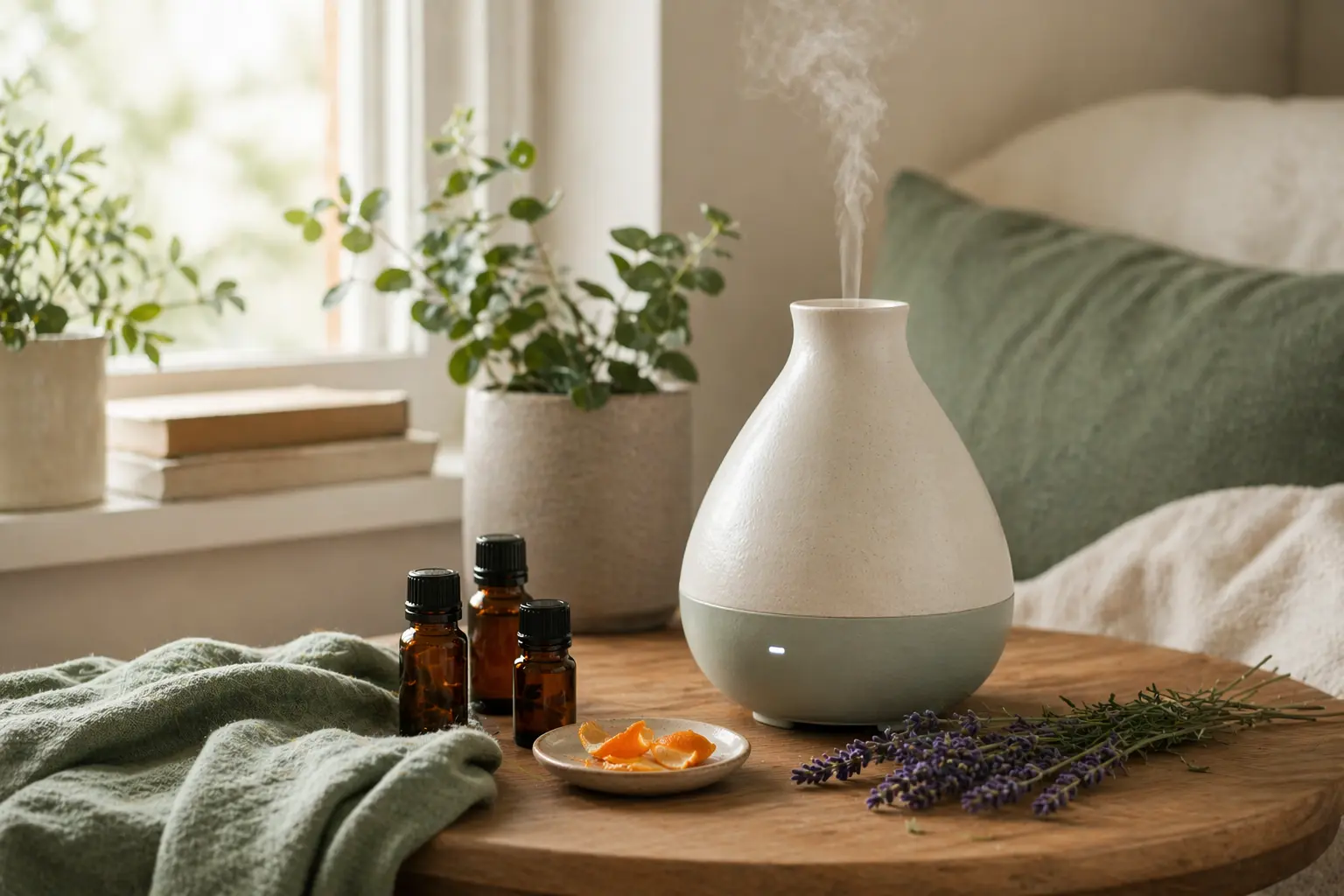
Do Not Turn Wind-Down into Overstimulation
If an evening blend is too sweet, too sharp, or too strong, it can feel surprisingly busy. The same is true if diffuser use runs too long in a small room. Shorter sessions and fewer oils often create a calmer result than trying to layer multiple scent ideas at once.
It also helps to keep evening scent in conversation with the rest of the room. If the space is bright, noisy, and cluttered, a soft aroma may not be enough to shift the feeling on its own. But when the room is already quieter, the effect can be surprisingly powerful.
Evening reminder: Wind-down scent should soften the room, not dominate it. Gentle routines, lower intensity, and shorter diffuser use usually create the most livable result.
Wellness
A Simple Aromatic Reset for Slow Weekend Mornings
A calm, readable guide to shaping a slow weekend morning with lighter scent, open windows, tea, journaling, and a home atmosphere that feels restorative instead of rushed.

Wellness
How to Choose the Lavender Mood That Actually Fits Your Routine
A practical guide to the different roles lavender can play in evening, linen, study, bedroom, and shared-space routines so it feels well-placed instead of automatic.
Wellness
12 Low-Effort Ways to Bring Lavender Essential Oil into Your Evening Routine
A lighter, more everyday guide to the small places lavender can fit into an evening routine when you want atmosphere, softness, and less friction instead of a complicated ritual.
Wellness
Peppermint Essential Oil for Real-Life Reset Moments, Not Just Energy
A practical lifestyle take on peppermint as a reset oil for stale rooms, tired afternoons, desk breaks, and quick fresh-start moments rather than generic hype about energy.
Further Reading and Sources
These related pages help connect evening routines with softer blends, calmer rooms, and practical scent habits.