
Calmer Bedtime Atmosphere for Children with Gentle Aromas
Children

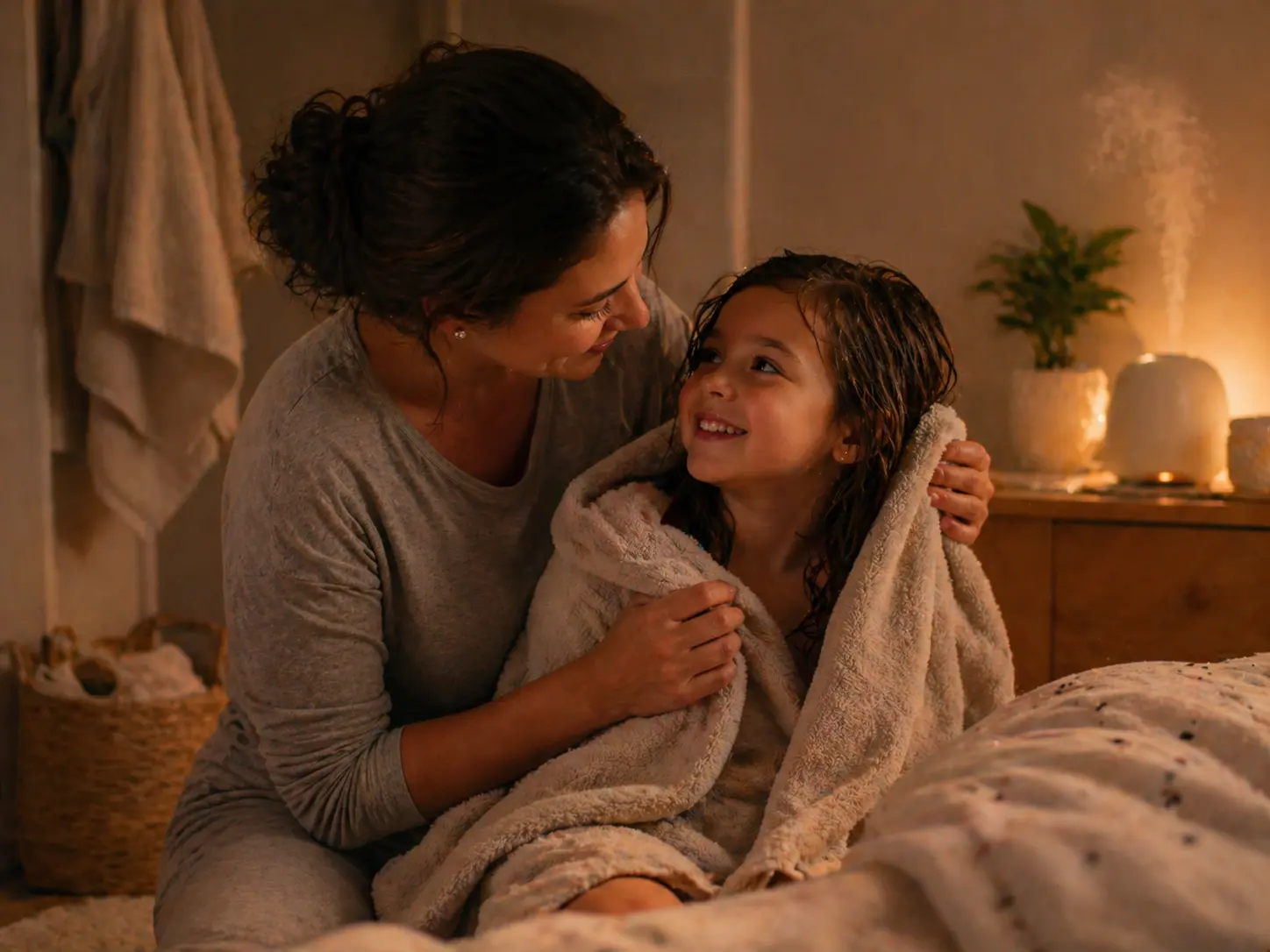
A calmer bedtime atmosphere for children is usually built from routine, tone, lighting, and predictability first. Gentle aroma can sometimes support that rhythm, but it should stay in the background. The aim is not to make the room smell strong. It is to make the whole evening feel softer, steadier, and less overstimulating.
That is why child-friendly aroma routines work best when they are simple and conservative. A short, lightly scented diffuser session before sleep, or a gentle family evening atmosphere with familiar oils like lavender, red mandarin, or roman chamomile, is usually more useful than intense blends or late-night experimentation.
Quick Answer
If essential oils are part of a child’s bedtime atmosphere, keep them gentle, short, and optional. The room should stay ventilated, the diffuser should not run all night, and the aroma should never feel stronger than the rest of the bedtime routine itself.
The safest bedtime aroma setup is one that supports books, dim lights, quiet voices, and predictable steps. Essential oils should never replace calming structure, and they should be used even more carefully around babies, very young children, asthma, fragrance sensitivity, or complex medical situations.
Bedtime Starts Before the Diffuser
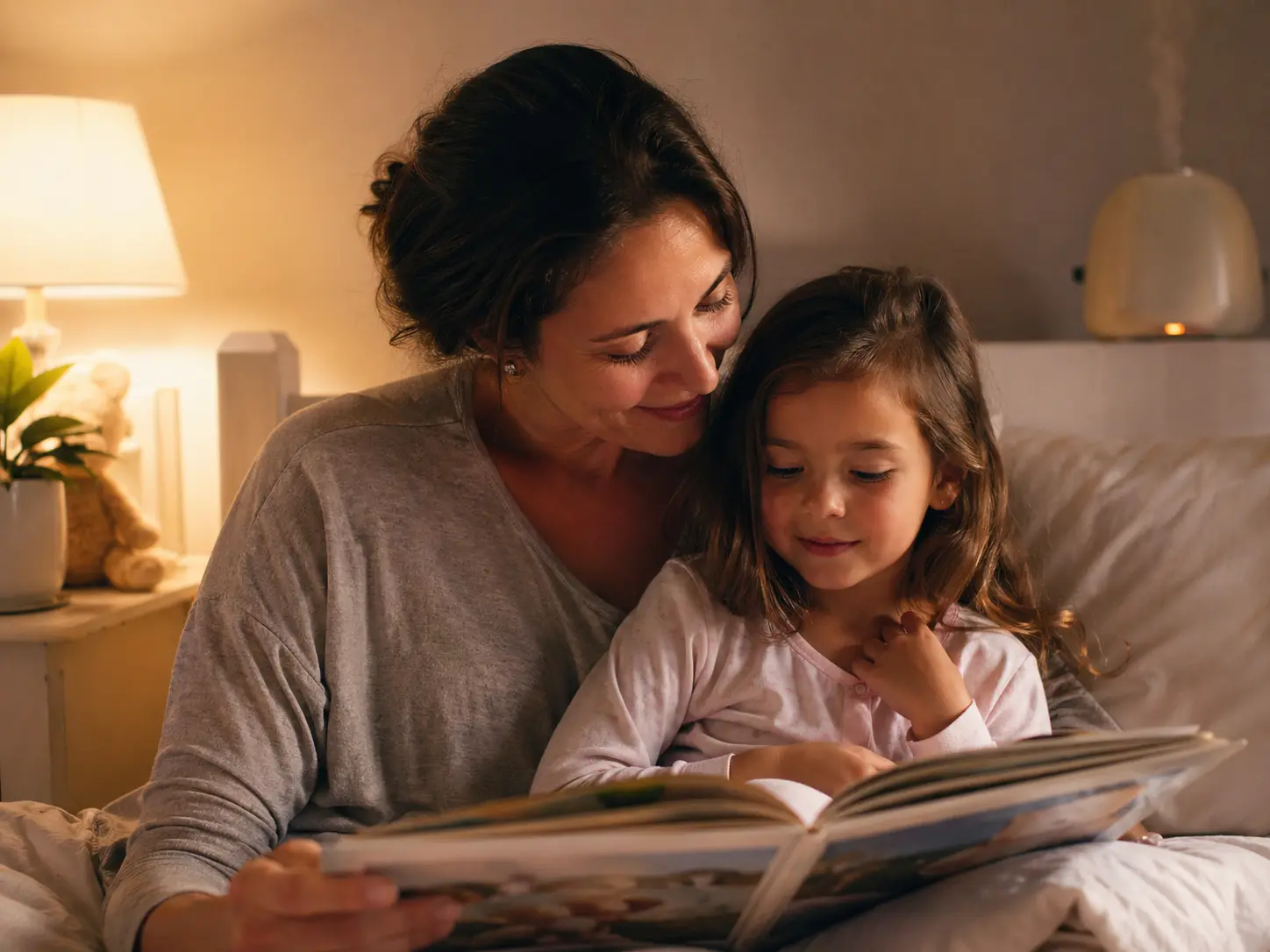
The most effective child bedtime routines are usually sensory in a broad way, not just aromatic. Dimmer light, slower pacing, fewer screens, quieter voices, familiar books, and a predictable order of events all help the nervous system settle. If you use aroma, it should join that rhythm rather than trying to do all the work on its own.
This is also why lighter use tends to work better. A room that smells sharply of essential oil can feel more activating than soothing. A bedtime aroma should feel soft enough that the child notices the overall mood, not just the scent.
Choosing Gentle Aromas
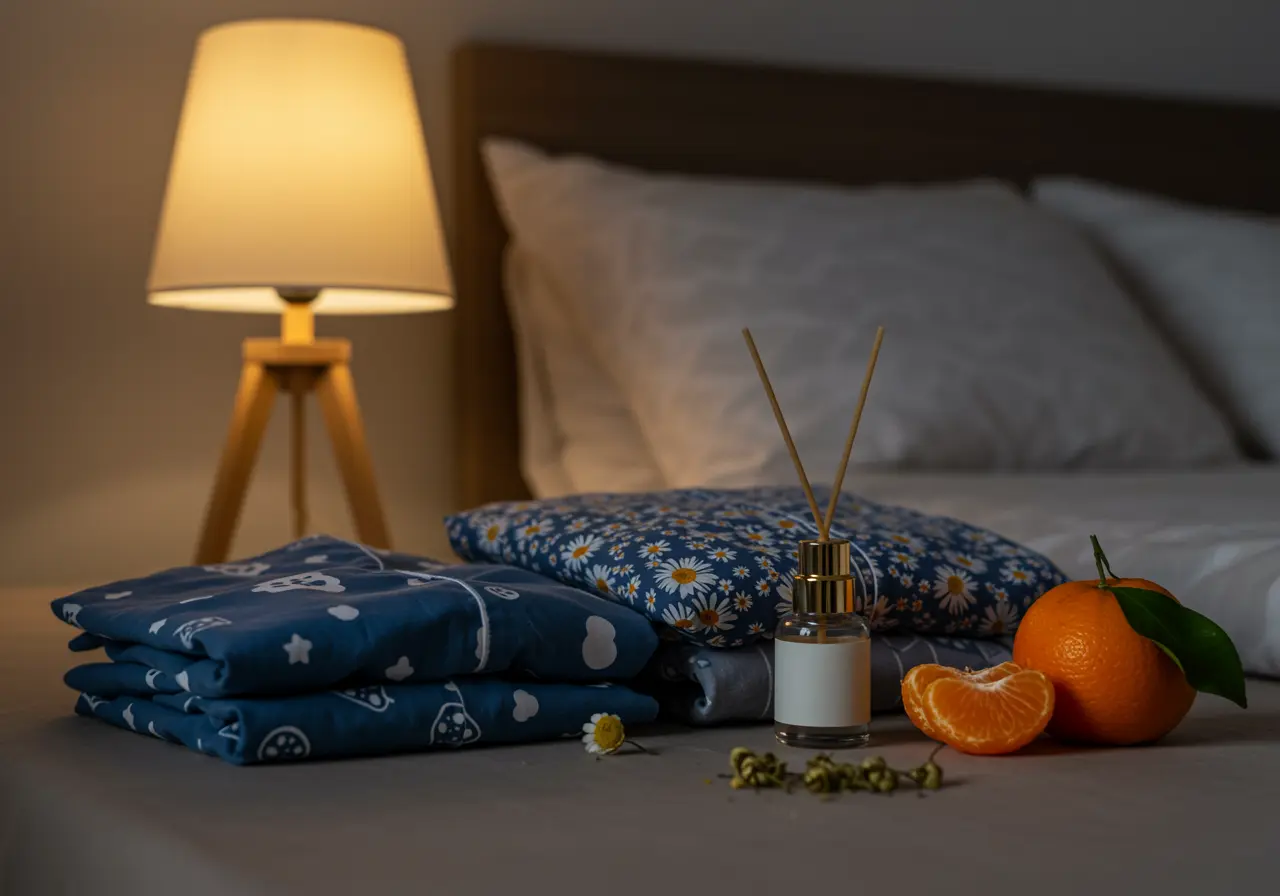
Some oils naturally suit family-evening moods better than others. Lavender is a common starting point because it feels soft, familiar, and flexible. Red mandarin can add a cozy fruit warmth. Roman chamomile can bring a gentle apple-like softness.
Even with gentler oils, it is still wise to keep the blend simple. Two or three oils are usually enough. The goal is calm atmosphere, not aromatic complexity.
Simple Bedtime Blend Directions
Soft floral evening
Lavender with roman chamomile for a gentle, quiet tone.
Warm family comfort
Red mandarin with lavender for a softer fruit-floral bedtime mood.
Low-intensity reset
A single-oil diffuser session can be enough. Do not assume a blend must be complicated to feel effective.
Short Sessions Are Better Than All-Night Diffusion
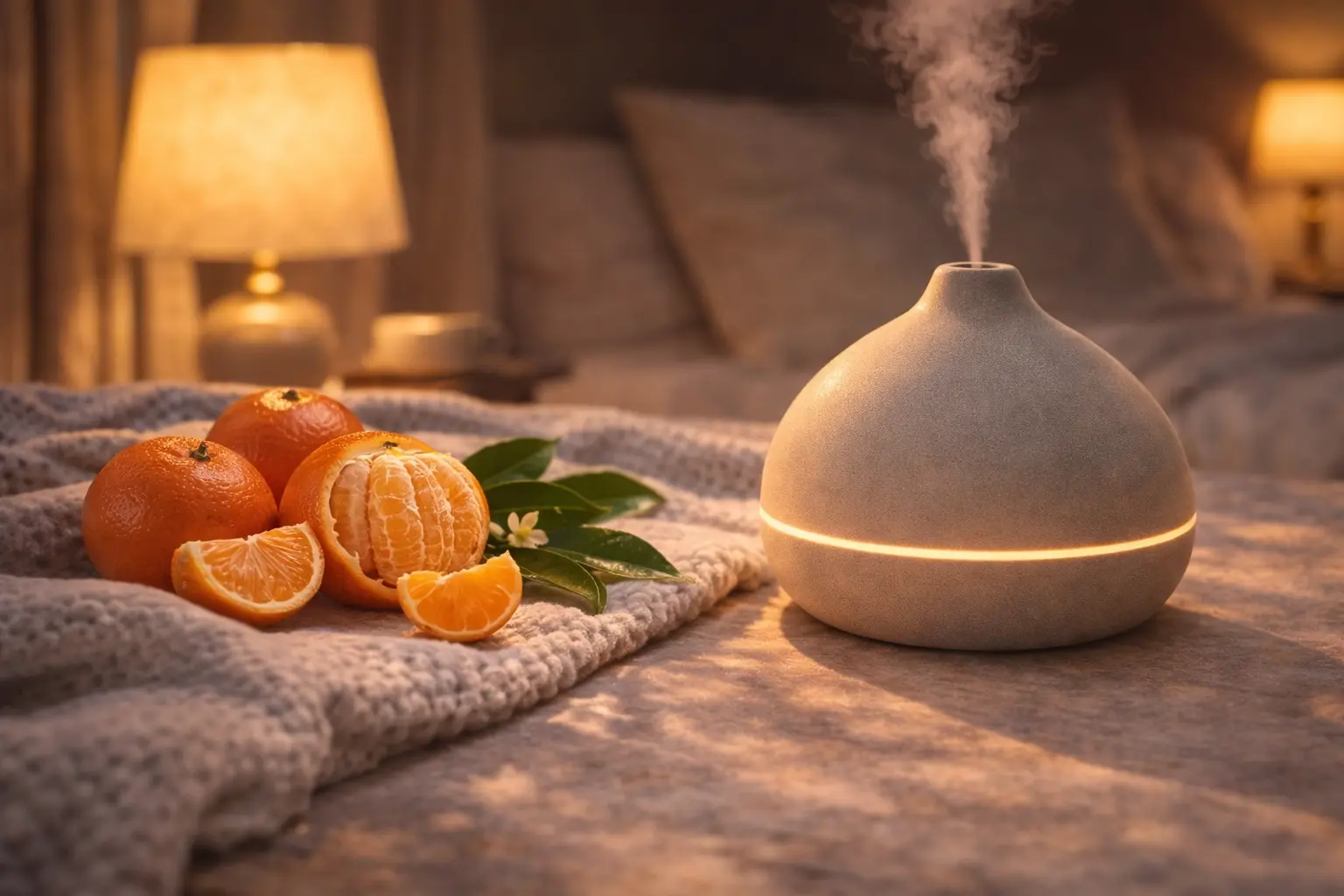
A diffuser does not need to run throughout the night to shape the mood of bedtime. In many homes, a short session during the winding-down part of the routine is enough. Once the room feels settled, it is often better to turn the diffuser off rather than keep scent in the air for hours.
This matters even more in smaller bedrooms, shared sleeping spaces, or homes with children who are scent-sensitive. Fresh air and a restful room usually matter more than keeping the aroma going.
When to Be More Cautious
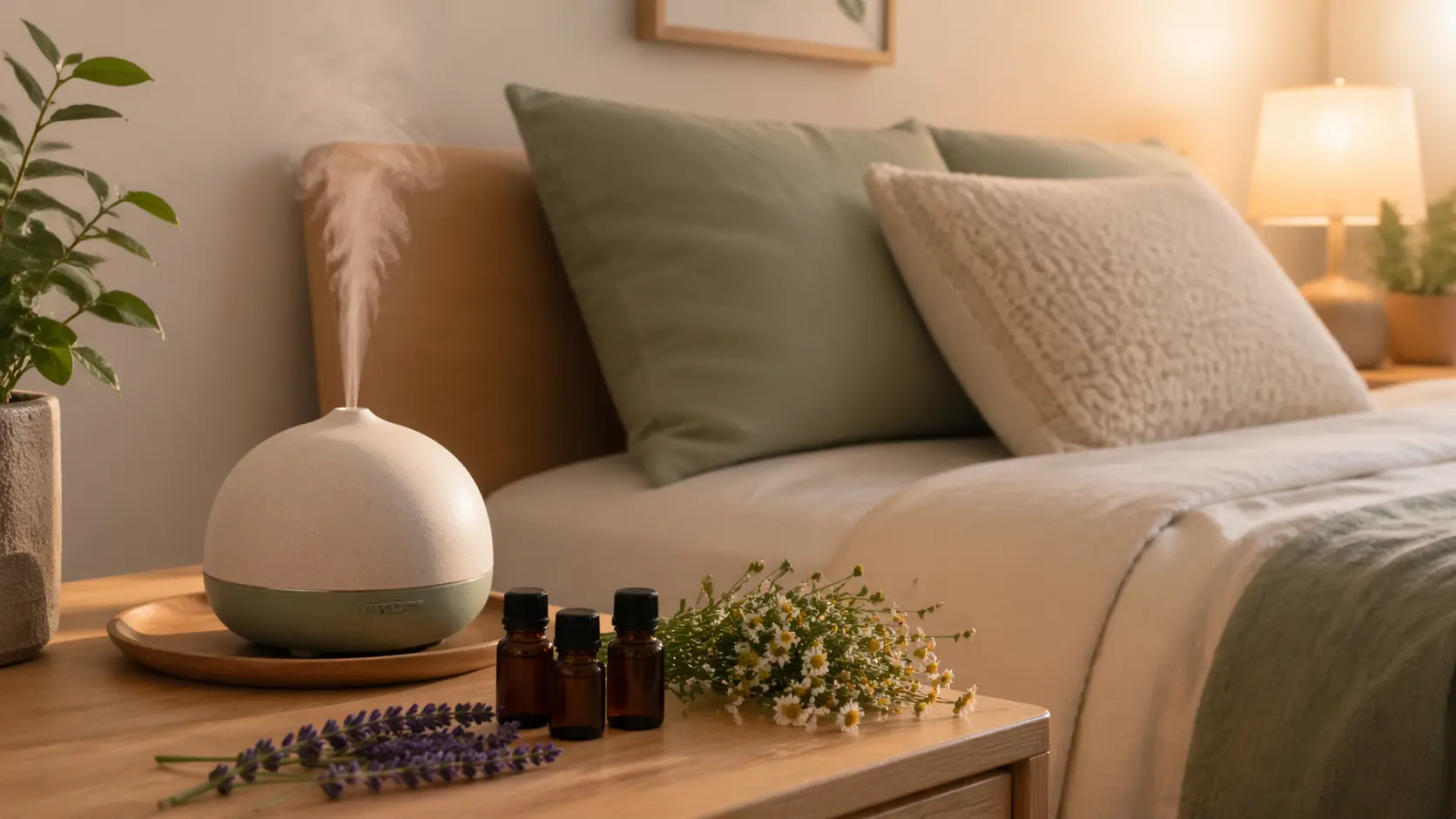
Some situations call for extra restraint or for skipping aroma entirely. Babies, very young children, asthma, allergies, scent sensitivity, chronic respiratory issues, pets in the same sleeping area, and complex medical contexts all raise the bar for caution. If you are unsure, simplify the routine and lean on the non-aromatic parts of bedtime instead.
The safest bedtime atmosphere is still a quiet room, a calm adult presence, and consistent routine. Essential oils should remain optional and secondary.
Family safety reminder: Never assume that a bedtime aroma that feels gentle to adults is automatically appropriate for every child. Start lower than you think you need, and stop if the room feels too scented.
Children
How to Use Gentle Bedroom Aromas in Family Evening Routines
A safety-first guide to using very gentle bedroom aroma cues as part of family evening routines, with an emphasis on calm atmosphere rather than strong scent.
Children
A Soft Post-Bath Essential Oil Atmosphere for Children
A calm, practical look at how to create a softer post-bath atmosphere for children with gentle room scent choices, lower intensity, and safety-first routines.
Further Reading and Sources
These guides help place child bedtime aroma into a bigger safety-first routine.