
Diffuser Blends for Sleep
Diffuser Blend
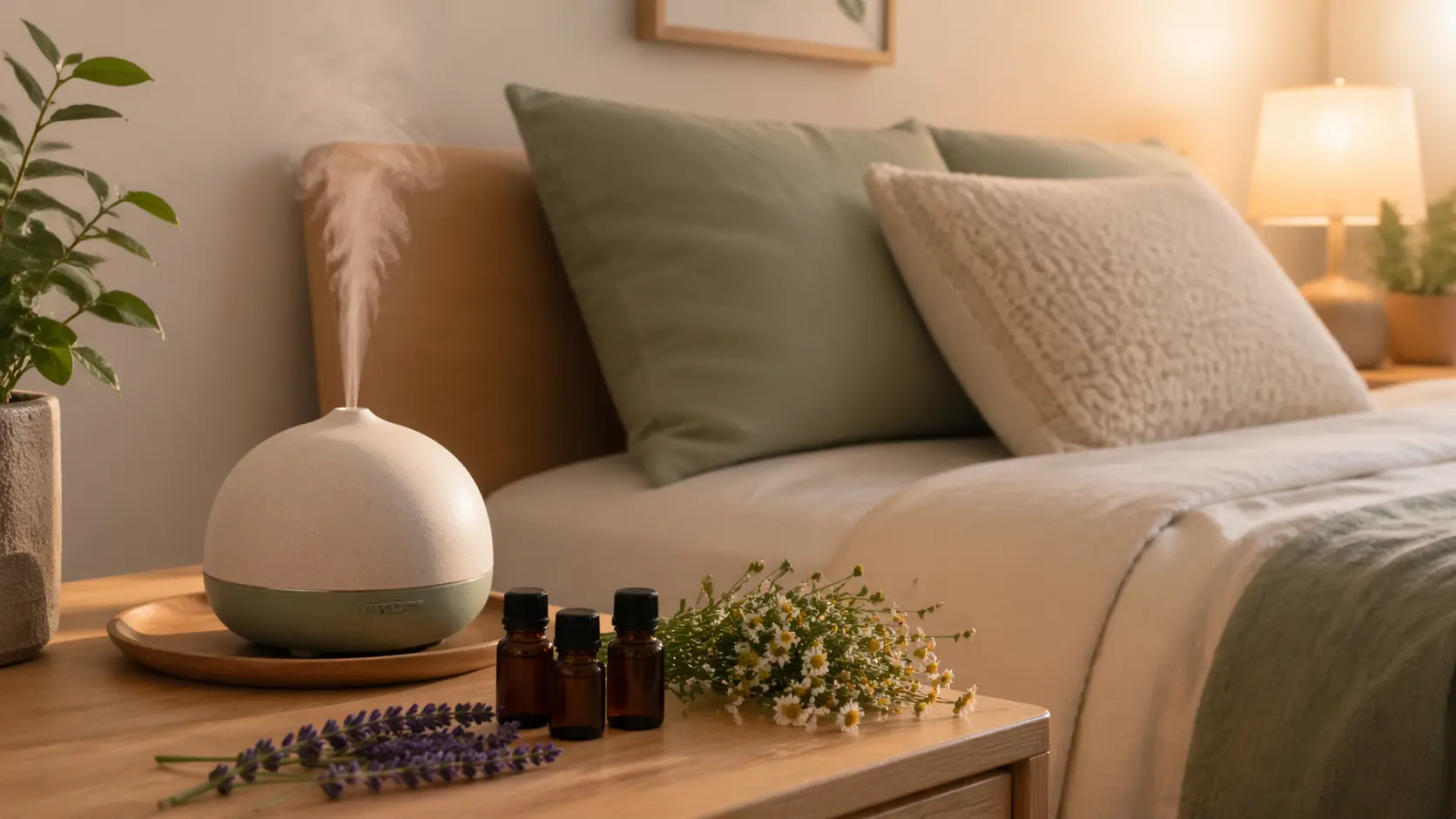
A sleep-oriented diffuser blend is most useful as part of a repeatable evening cue. It cannot treat insomnia, but a familiar low-intensity aroma can help distinguish the last part of the evening from work, screens, chores, and daytime stimulation.
Use soft florals, gentle citrus, woods, and small amounts of earthy base notes. Run the diffuser before bed, then turn it off rather than diffusing continuously beside a sleeping person. The room should still feel fresh and breathable when the session ends.
Quick Answer
Start with 3 to 6 total drops in a standard room diffuser, use fewer in a small or shared room, and run it for a short session with some airflow. These recipes are atmosphere ideas, not medical treatments or substitutes for cleaning and ventilation.
How to Use These Diffuser Blends
Choose one recipe, add the drops to the water reservoir according to the diffuser manufacturer instructions, and begin at the low end if the room is small or unfamiliar. Twenty to forty minutes is enough for many routines. After that, turn the diffuser off and reassess the room with fresh air rather than immediately adding more oil.
Nose blindness can make a blend seem to disappear even while everyone else can still smell it. If you stop noticing the aroma, step outside the room briefly before changing the formula. A blend that needs constant topping up is often too familiar, not too weak.
Diffusion reminder: use less around children, pets, pregnancy, asthma, migraine, allergies, and scent-sensitive guests. Make sure people and animals can leave the room, and stop if anyone develops coughing, headache, nausea, eye irritation, or discomfort.
Start Here: Balanced Diffuser Blends for Sleep
These first recipes stay close to the core theme and make useful reference points before you start substituting oils.
1. Lavender Night
- 3 drops lavender
- 2 drops roman chamomile
- 1 drop cedarwood atlas
A soft floral-wood blend that feels familiar without becoming overly sweet.
2. Quiet Citrus
- 3 drops sweet orange
- 2 drops lavender
- 1 drop vetiver
Warm and gentle with a very small amount of earthy depth.
3. Soft Resin
- 2 drops frankincense
- 3 drops lavender
- 1 drop bergamot
Airy resin and soft floral notes with a light citrus opening.
4. Low-Stimulation Bedroom
- 2 drops cedarwood atlas
- 2 drops petitgrain
- 2 drops lavender
Dry, green, and quiet for people who dislike sweet bedtime blends.
More Ways to Shape the Mood
The second group shifts the same idea toward greener, warmer, brighter, or more grounded territory without simply increasing the total amount.
5. Chamomile Linen
- 2 drops roman chamomile
- 2 drops sweet orange
- 1 drop frankincense
A rounded blend for the hour before bed, not for all-night diffusion.
6. Evening Ground
- 3 drops lavender
- 2 drops cedarwood atlas
- 1 drop vetiver
A more grounded option when light floral blends disappear too quickly.
7. Gentle Dusk
- 2 drops bergamot
- 2 drops lavender
- 2 drops frankincense
Balanced and spacious for dim-light reading or journaling.
8. Floral-Free Wind Down
- 2 drops petitgrain
- 2 drops cedarwood atlas
- 2 drops frankincense
A dry green-wood alternative when lavender and chamomile feel too floral.
How to Adjust a Blend Without Making It Stronger
If the blend feels too sharp, reduce mint, eucalyptus, rosemary, basil, tea tree, or bright peel oils before adding anything else. Lavender, sweet orange, frankincense, cedarwood, or petitgrain can soften an edge, but the total drop count does not need to rise. If the blend feels too sweet or vague, one dry green or woody note is usually more useful than another citrus layer.
Change one ingredient at a time and record the result. That makes it easier to understand whether the blend needed more air, more structure, or simply less fragrance. Substitution also requires a fresh safety check: similar-smelling oils may have different topical limits, age cautions, oxidation patterns, or phototoxicity concerns.
When a Diffuser Is Not the Right Tool
Skip diffusion when someone in the room is already unwell, nauseated, wheezing, scent-fatigued, or unable to leave comfortably. Fresh air, a clean diffuser, and an unscented room are often the better reset. Do not use diffusion to cover smoke, gas, mold, dampness, pet accidents, or persistent odors that need a practical source-level solution.
Further Reading and Sources
Use these resources for general safety context, then check the individual oil profile for the exact ingredient you plan to use.