
How to Store Essential Oils More Safely in a Home with Pets
Animals
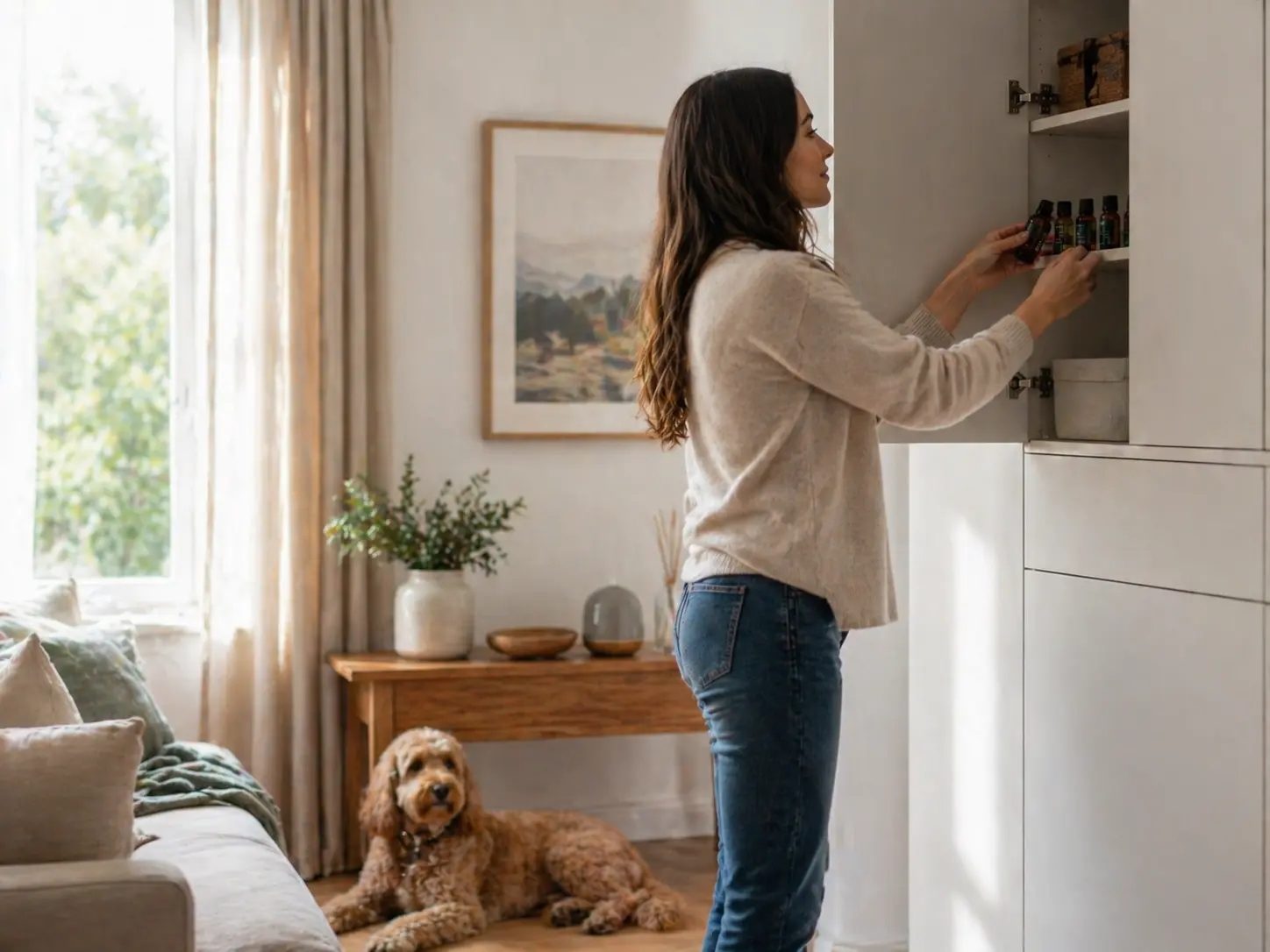
In a home with pets, storage is not a background detail. It is one of the main safety decisions you make every single day. A bottle left on a low shelf, an uncapped blend on a bathroom counter, or a diffuser reservoir left within easy reach can all turn a simple routine into a preventable problem.
The good news is that safer storage does not require a complicated system. It usually comes down to height, containment, consistency, and thinking ahead about curiosity. Dogs, cats, and other animals do not need much access for an accident to happen. A calmer, more deliberate storage setup often removes the risk long before scent use even begins.
Quick Answer
To store essential oils more safely in a home with pets, keep them high, sealed, upright, and out of daily traffic zones. A closed cabinet is better than an open shelf, and a high cabinet is better than a low drawer that may be nudged open or explored. The safest setup makes accidental access difficult even on a busy day.
This also applies to DIY ingredients, open blending bottles, diffuser reservoirs, room sprays, and body oils. Safety in pet homes is rarely just about which oil you own. It is also about whether a curious animal can sniff it, lick it, knock it over, or walk through it after a spill.
Why Storage Becomes More Important in Pet Homes
Pets move differently through a house than people do. They explore with noses, paws, tongues, and repeated familiarity. Something that feels safely put away to a person may still be very much part of a pet’s world if it sits low, smells interesting, or can be knocked loose. That is why storage deserves more attention than it often gets.
It also helps to remember that accidents rarely happen at the most intentional moment. They happen when you are distracted, putting groceries away, tidying the bathroom, blending something quickly before leaving, or assuming you will come back to cap the bottle in a minute. Better storage protects you from the ordinary rushed moments, not just from big mistakes.
Choose Height First, Organization Second
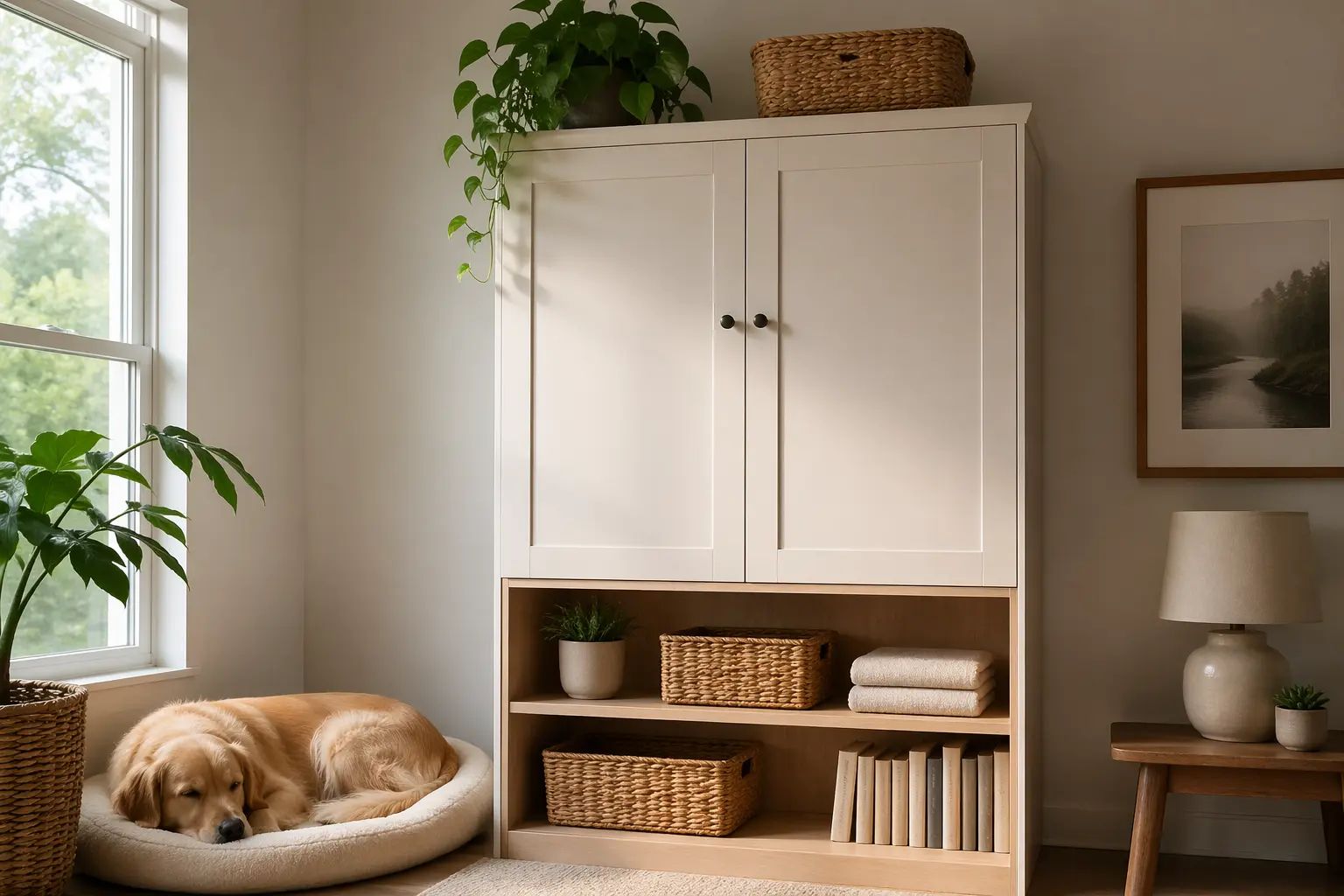
If you are redesigning your oil storage in a pet home, start with height. A tidy tray on a low shelf may look beautiful, but it is still low. A more practical setup is a closed cupboard, a wall cabinet, or a dedicated high shelf that stays out of normal sniffing and pawing range. Once height is handled, then think about labels, drawers, and how attractive the setup looks.
Closed storage also helps with visual discipline. It becomes less tempting to leave several oils open just for a minute when the system naturally encourages you to take one out, use it, and put it away again. That rhythm matters more than having a display-style arrangement.
Pet-Home Storage Habits
Store high by default
If you have to decide between convenience and height, choose height first and build convenience around it.
Cap immediately
Even a short pause with an open bottle can become a risk if a pet enters the space unexpectedly.
Keep one-use zones clear
Diffuser refill areas, vanity counters, and bedside tables are often where good habits break down.
Think Beyond Bottles: Blends, Roll-Ons, and Diffuser Water Count Too
When people think about storage, they often picture only their amber bottles. But finished roll-ons, room sprays, roller bottles, body oils, diffuser blends, and leftover reservoir water all matter too. If you use essential oils in several forms, all of those forms should follow the same household logic.
That is especially useful in family homes where multiple people touch the same surfaces. A low basket with a body oil, a room spray, and a reed diffuser may look harmless, but from a pet-safety point of view it is still an accessible scent station. The cleaner rule is simple: if it contains essential oils and you would not want a pet licking or spilling it, store it with the same caution as the main bottle collection.
What to Do About Spills, Leaks, and Almost Empty Bottles
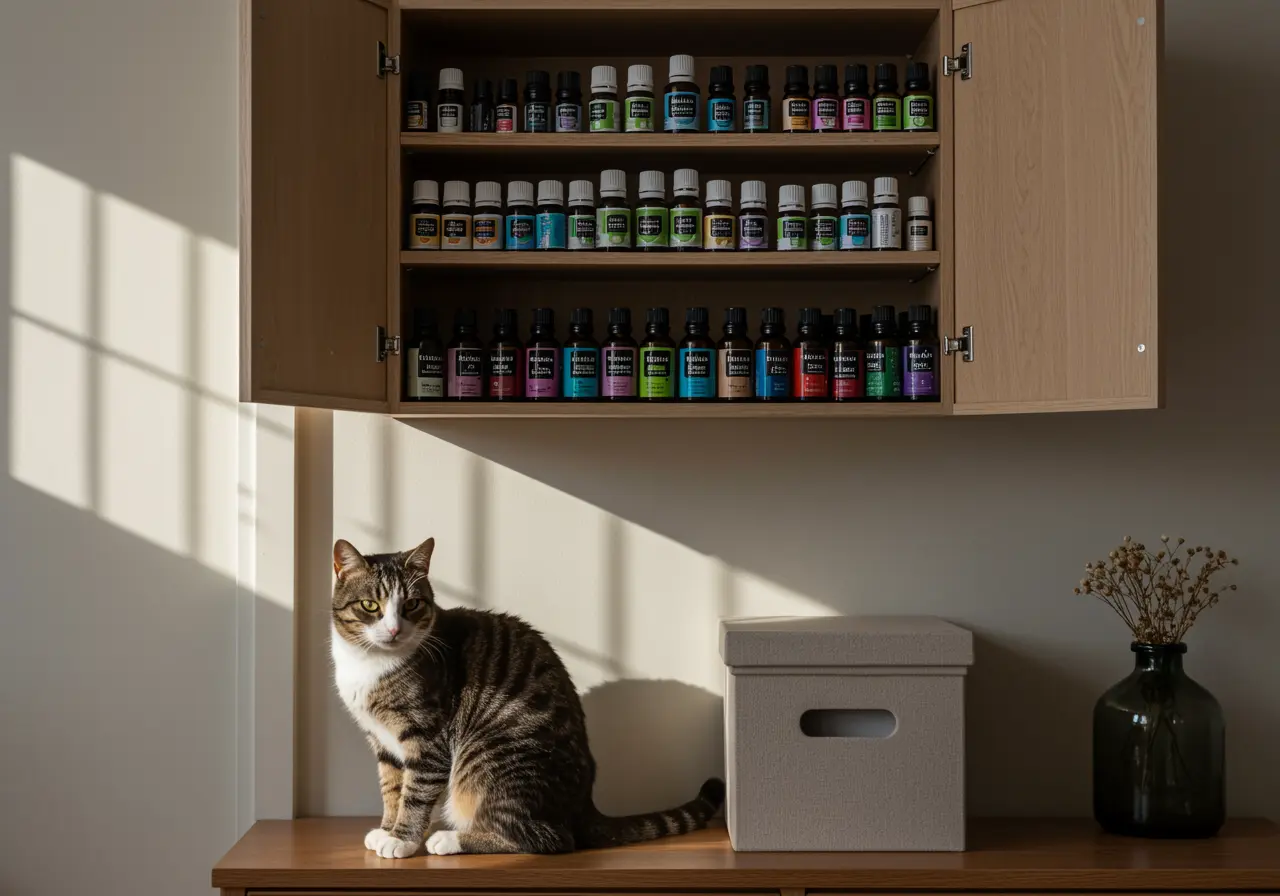
A bottle that leaks a little, has a cracked cap, or sits uncapped because it is almost empty still deserves full attention. In homes with pets, a small leak can be more important than an expensive bottle because exposure happens through proximity, residue, and contact. If an oil spills, clean it immediately and fully. Do not leave tissues, cotton pads, or used paper towels where an animal might investigate them later.
It is also worth checking storage areas now and then for slow problems: sticky bottle shoulders, loose lids, pooling in trays, or oil-darkened paper inserts. A safer setup is not just where you place the oils. It is also whether the whole area stays clean and contained over time.
Pet-home reminder: The safest essential oil storage is the setup that still works when you are distracted, guests are over, or the day is moving fast.
Storage Supports Better Diffuser Decisions Too
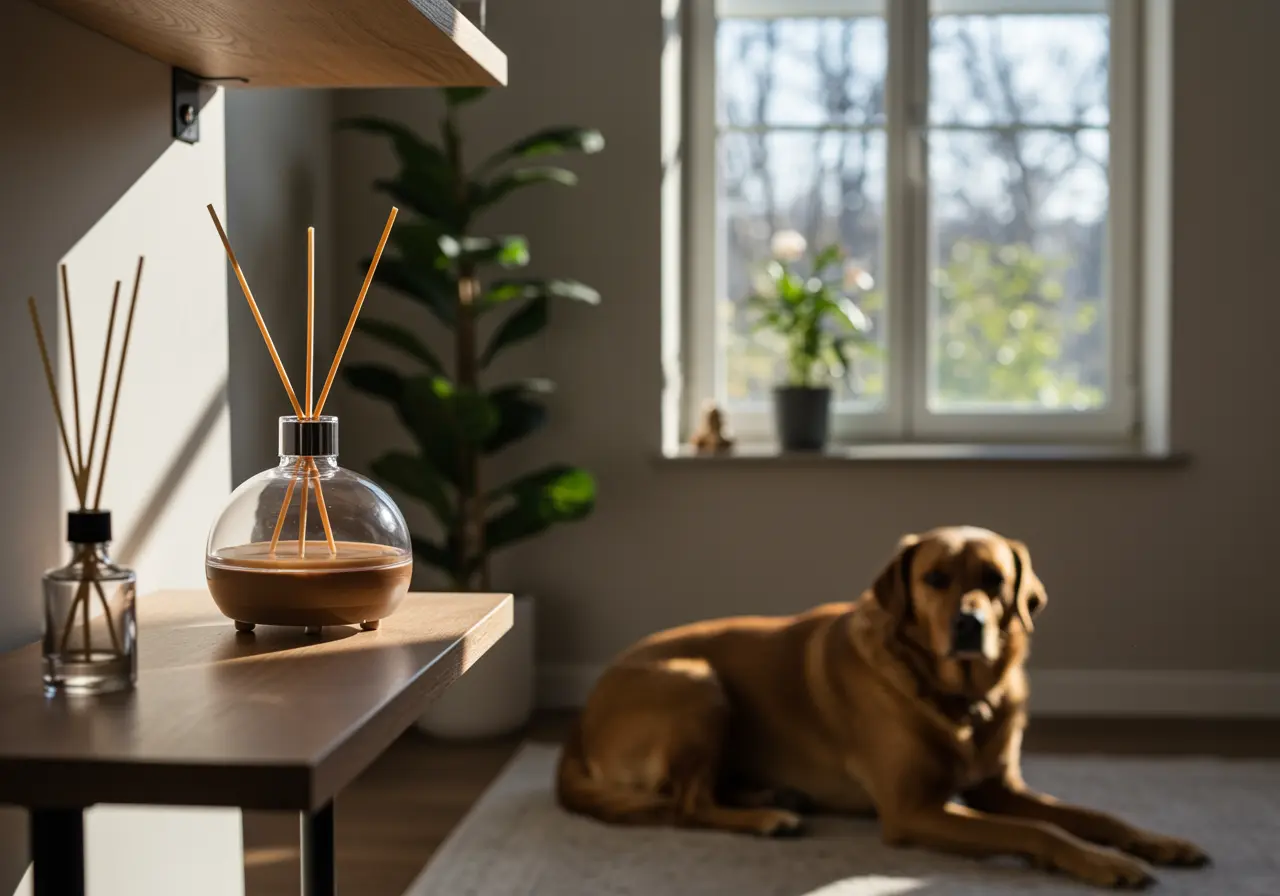
Storage and diffusion belong to the same conversation. A calmer diffuser habit usually starts with not keeping oils out all day. If you have to consciously take an oil out, open it, use it, and return it to a high closed space, you are already less likely to overuse scent in a shared pet home.
That is one reason storage systems can quietly improve safety across the whole house. They reduce impulsive use, improve cap discipline, and make it easier to notice when something is leaking or lingering where it should not be.
If you want a fuller picture of shared-space scent habits, pair this with Essential Oils and Pets: A Safety-First Home Guide and Diffusing Essential Oils in a Home with Cats. Together, they make it easier to think beyond the bottle and toward the whole home routine.
Animals
Essential Oils and Pets: A Safety-First Home Guide
A calm, practical overview of safer essential oil habits in homes with pets, including ventilation, storage, diffusion limits, and shared-space awareness.
Animals
Diffusing Essential Oils in a Home with Cats
How to think about airflow, cat choice, lighter blends, and practical storage when essential oils and feline households share the same home.
Further Reading and Sources
These related pages help extend the same safety-first storage mindset.