
Diffusing Essential Oils in a Home with Cats
Animals
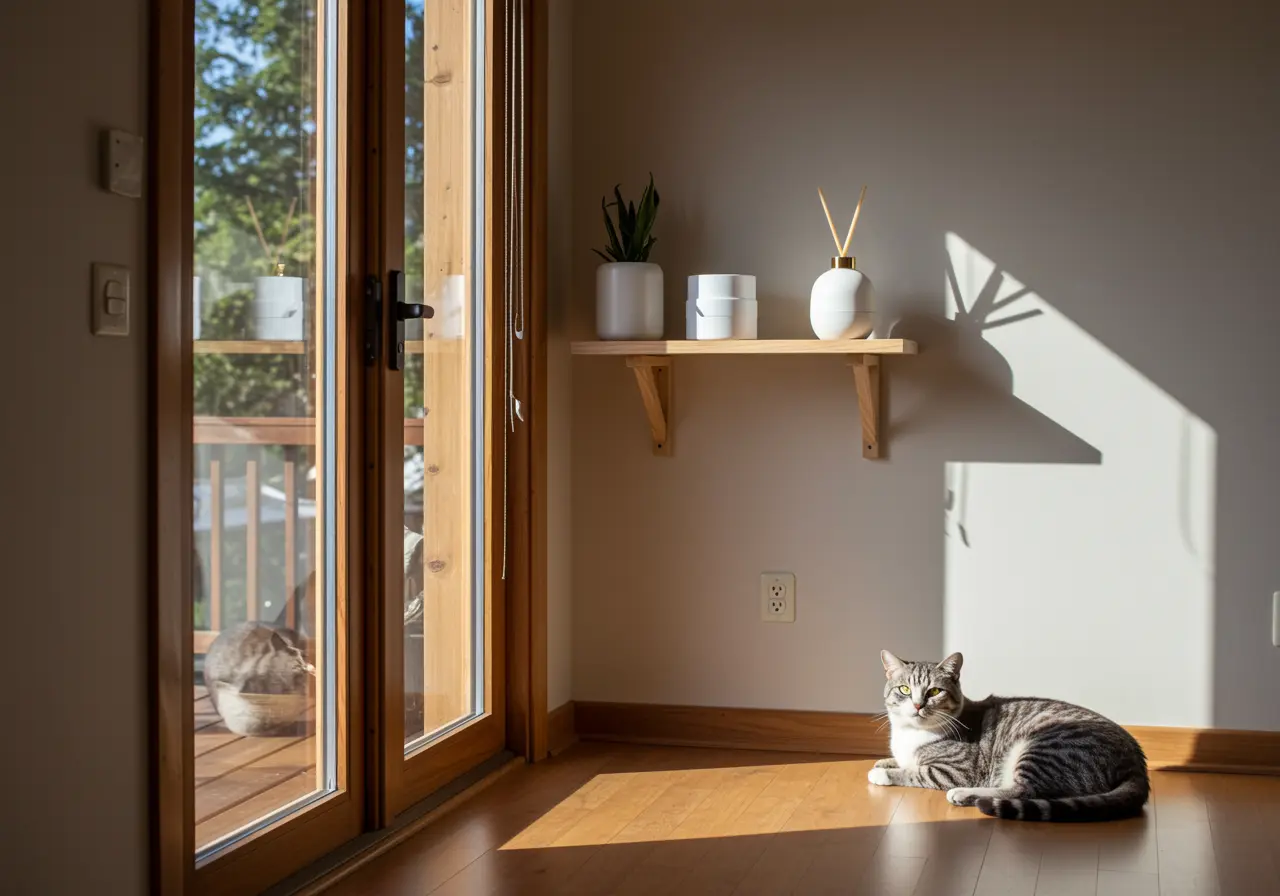
Diffusing essential oils in a home with cats deserves more caution than a generic diffuser guide. Feline households need lighter aromatic habits, better ventilation, cleaner storage, and more respect for the cat’s ability to choose distance from the scent.
Rather than asking “Which oil is completely safe?” the better question is “How can the whole setup become lower-risk?” In most cases, that means fewer drops, shorter sessions, open pathways, and a willingness to skip diffusion if the room or the cat makes the answer unclear.
Quick Answer
If you diffuse in a home with cats, do it lightly, briefly, and only in spaces with easy airflow and open exits. A cat should never be forced to remain in the scented room, and all oils should be stored securely after use.
The safest diffuser setup in a cat home is one that remains optional from the cat’s point of view. The room should stay ventilated, the blend should stay simple, and the humans should pay attention to how the cat behaves before, during, and after the scent enters the space.
Why Cats Need Special Caution
Cats are not just smaller people living in the same room. They experience scent intensely, move through spaces differently, and cannot explain discomfort in words. That is why diffuser advice that sounds reasonable in a general adult setting can still be too casual in a feline household.
The most useful shift is to stop thinking about how the blend feels to you and start thinking about what the cat can control. Can the cat move away? Is the room airy? Is the scent light enough that the cat is not trapped in it? Those questions matter more than whether the diffuser blend sounds relaxing.
Room Setup Matters More Than the Blend Name
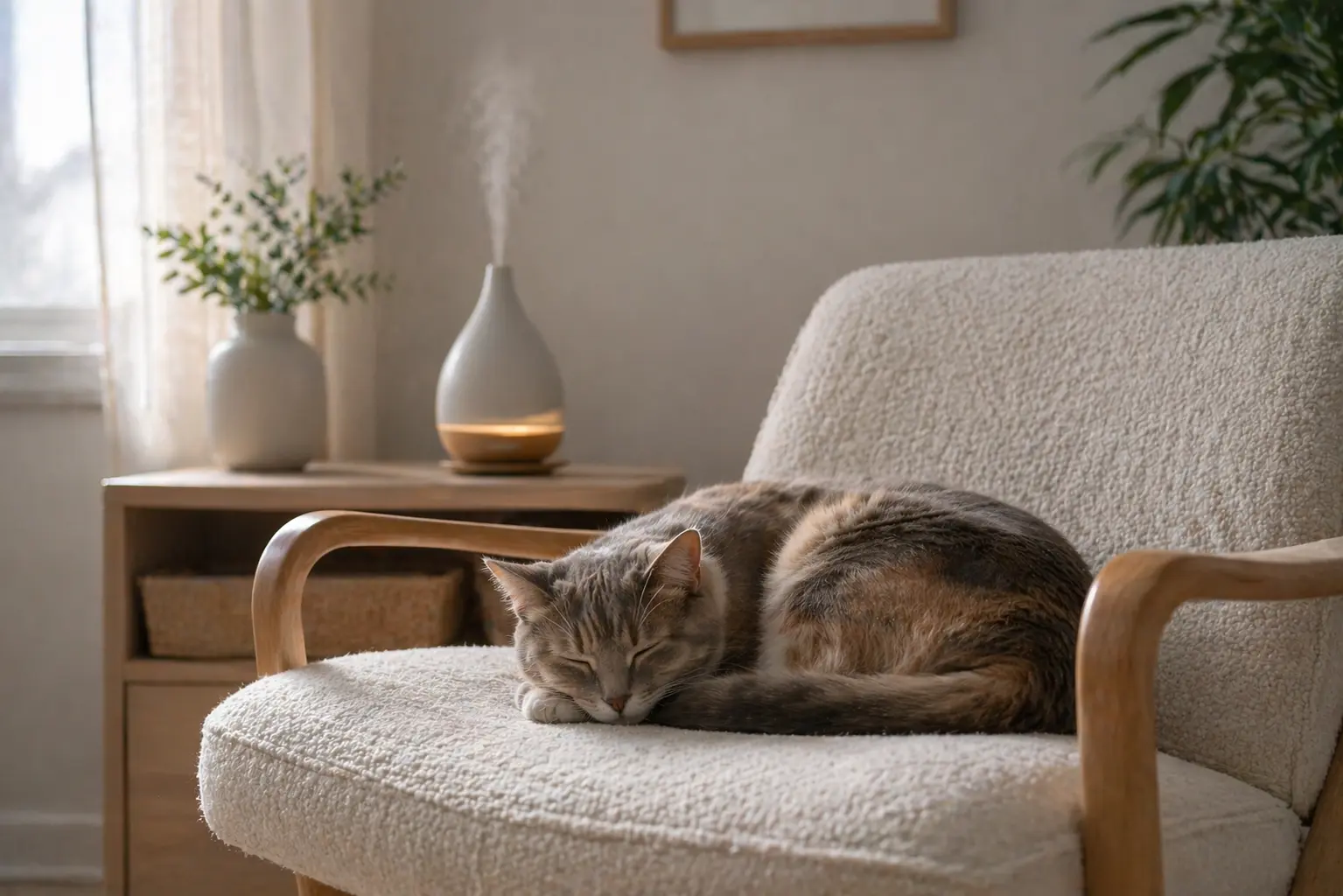
In a cat household, the diffuser setup is often more important than the exact oil list. A lightly scented room with open airflow and an easy exit is very different from a closed bedroom with a diffuser running beside the cat’s favorite nap spot.
If you do diffuse, use the lightest version of the blend. Keep doors open, let air move, and avoid small closed rooms. In many cases, a short diffuser session in a larger shared area is safer than trying to scent a cat’s sleeping space directly.
Cat-Home Diffuser Habits
Start with less
Use fewer drops than you would in a human-only household and avoid heavy or overly sharp blends.
Choose open spaces
Diffuse where the cat can move away, not in a closed room where scent builds up.
Keep the session short
A limited session is easier to stop, reassess, and adjust than all-day aromatic background.
What to Watch For
In a cat home, behavior is information. If the cat consistently leaves the room, seems restless, hides, grooms excessively, or shows any unusual breathing or stress signs around scent, stop the diffuser and reassess the setup. The point of a scent routine is not to prove the blend works. It is to keep the whole space comfortable and low-risk.
Even if the cat stays in the room, that is not the same as proof that the aroma is ideal. Use observation over assumption, and remember that “less often” is often the better choice.
Storage and Spill Prevention Matter Too
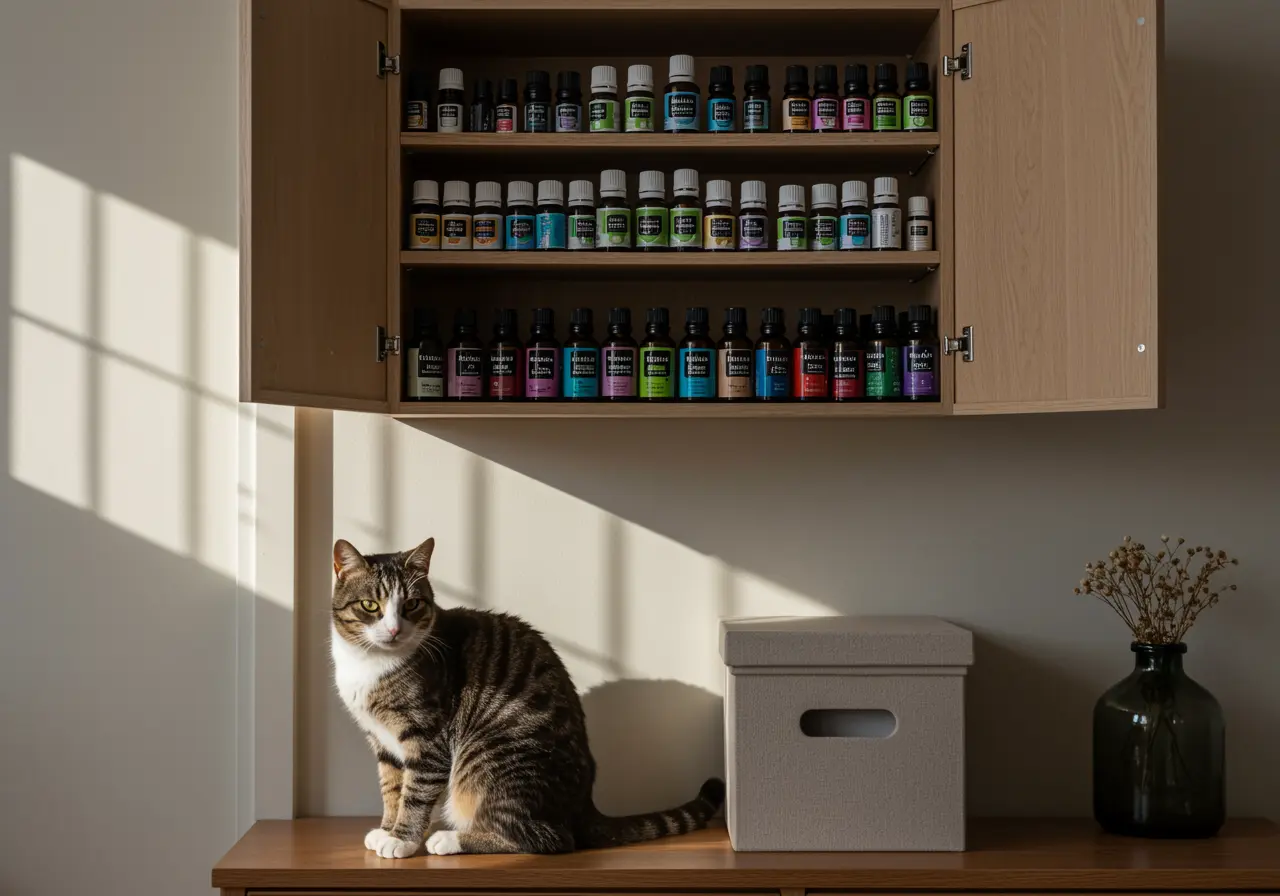
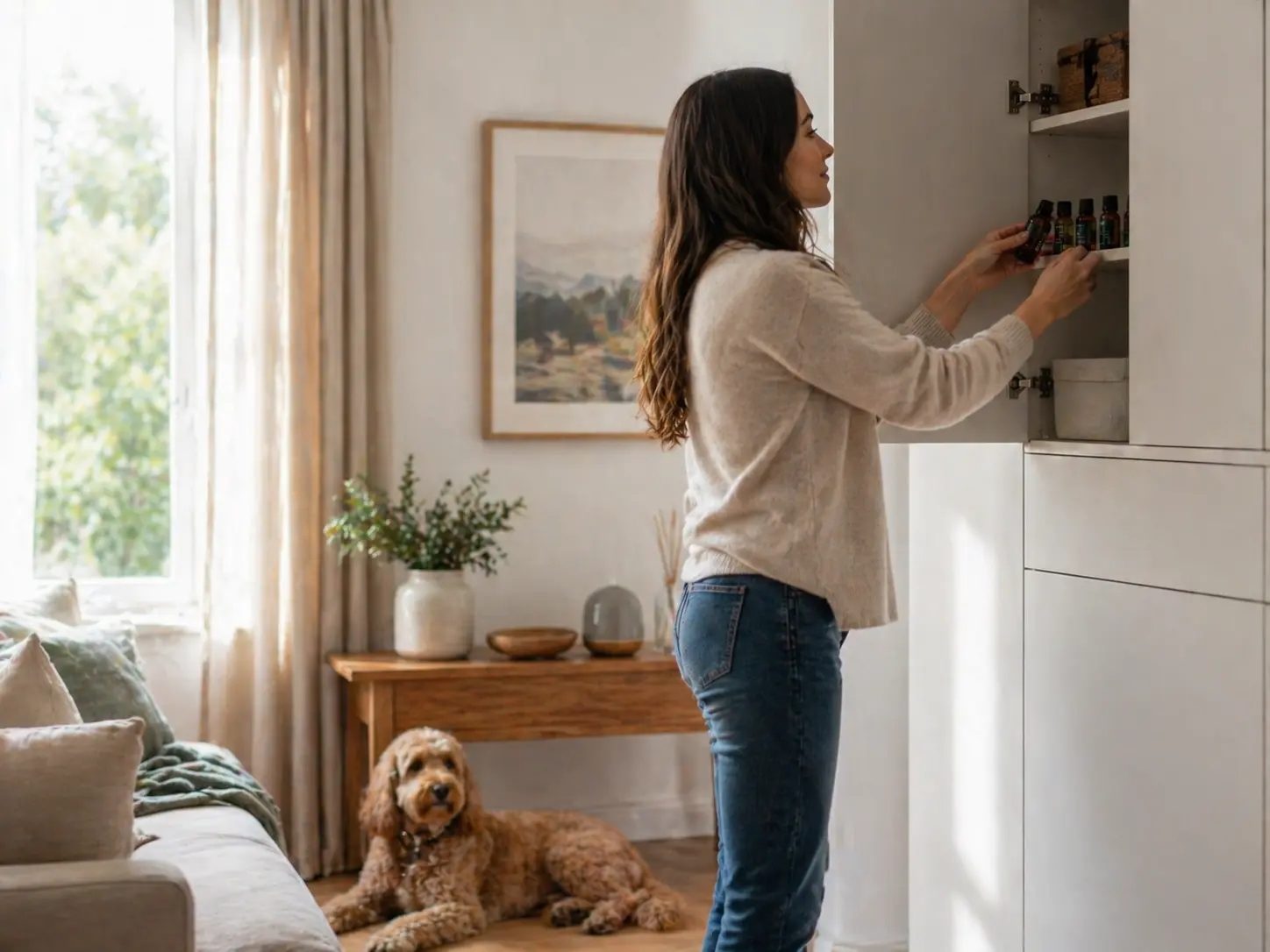
Cat-safe diffuser habits are not only about airborne aroma. Oils on low tables, open bottles, diffuser reservoirs, and unattended blends can all become part of the problem. Cats jump, investigate, and move through spaces in ways that make casual storage a bigger issue than many people expect.
Keep all essential oils tightly closed, upright, and out of reach. Clean spills promptly. Do not leave uncapped bottles out while adjusting blends, and do not assume that “just a minute” is safe enough if a cat can reach the surface.
Cat-home reminder: If you are not sure a diffuser setup is worth the question mark, skip it. Fresh air, good cleaning habits, and a calm room are already enough in many homes.
When a Scent-Free Choice Is the Better Choice
Not every room in a cat home needs aroma. In many households, the simplest answer is also the most comfortable one: scent the home less often, use fragrance only in larger ventilated spaces, or save diffuser use for times when the cat is elsewhere by choice.
If you want the bigger context around pets in general, read Essential Oils and Pets: A Safety-First Home Guide next. Cat homes benefit from that wider framework, but they also deserve this extra layer of restraint.
Animals
Essential Oils and Pets: A Safety-First Home Guide
A calm, practical overview of safer essential oil habits in homes with pets, including ventilation, storage, diffusion limits, and shared-space awareness.
Animals
How to Store Essential Oils More Safely in a Home with Pets
A practical pet-home guide to storing essential oils more safely, with attention to height, containment, leakage, access, and the small household habits that prevent bigger mistakes.
Further Reading and Sources
These pages help build a more cautious diffuser routine around cats and shared household air.