
Essential Oils and Pets: A Safety-First Home Guide
Animals
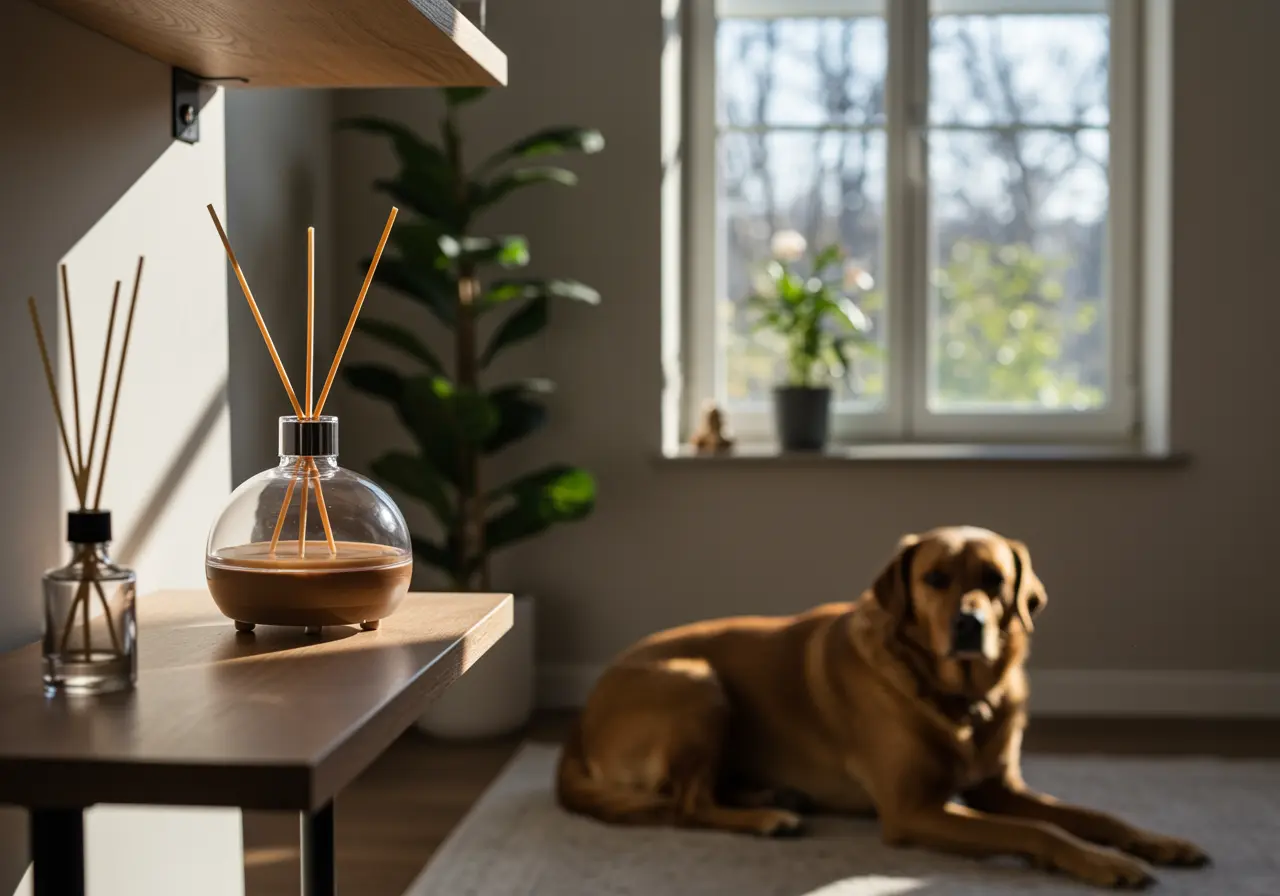
Essential oils and pets can share the same home more thoughtfully when the approach is calm, conservative, and built around shared-space awareness. The most important shift is to stop thinking only about what smells pleasant to people and start thinking about ventilation, choice, storage, and how much aroma an animal is actually being exposed to.
This guide is not a substitute for veterinary advice, but it does offer a safer framework for daily home life. If your household includes dogs, cats, or other animals, the goal is not “use more carefully than usual.” The goal is “use much more thoughtfully than you would in a human-only home.”
Quick Answer
A safety-first pet home uses essential oils lightly, with airflow, choice, and distance. Avoid forced exposure, avoid treating pets with essential oils as a casual routine, and avoid assuming that an oil that feels gentle to a person is automatically fine in a shared animal space.
Storage matters just as much as diffusion. Open bottles, countertop blends, and easy-to-reach oils are part of the risk picture. In homes with pets, safer essential oil use usually means fewer oils, shorter diffusion sessions, and more attention to exits, open doors, and how the animal behaves around scent.
Why Pets Change the Safety Conversation
Pets experience the home differently from people. They are smaller, spend more time close to floors, may groom themselves after contact, and cannot explain whether a room feels overwhelming. That changes the way you think about diffusion, spills, residue, and proximity.
For many people, the most helpful mindset is to treat essential oils as optional background elements rather than a default part of pet wellness. If the home feels pleasant without heavy aroma, that is often a better outcome than trying to make every room smell strongly “fresh.”
Diffusion Should Be Lighter and More Optional
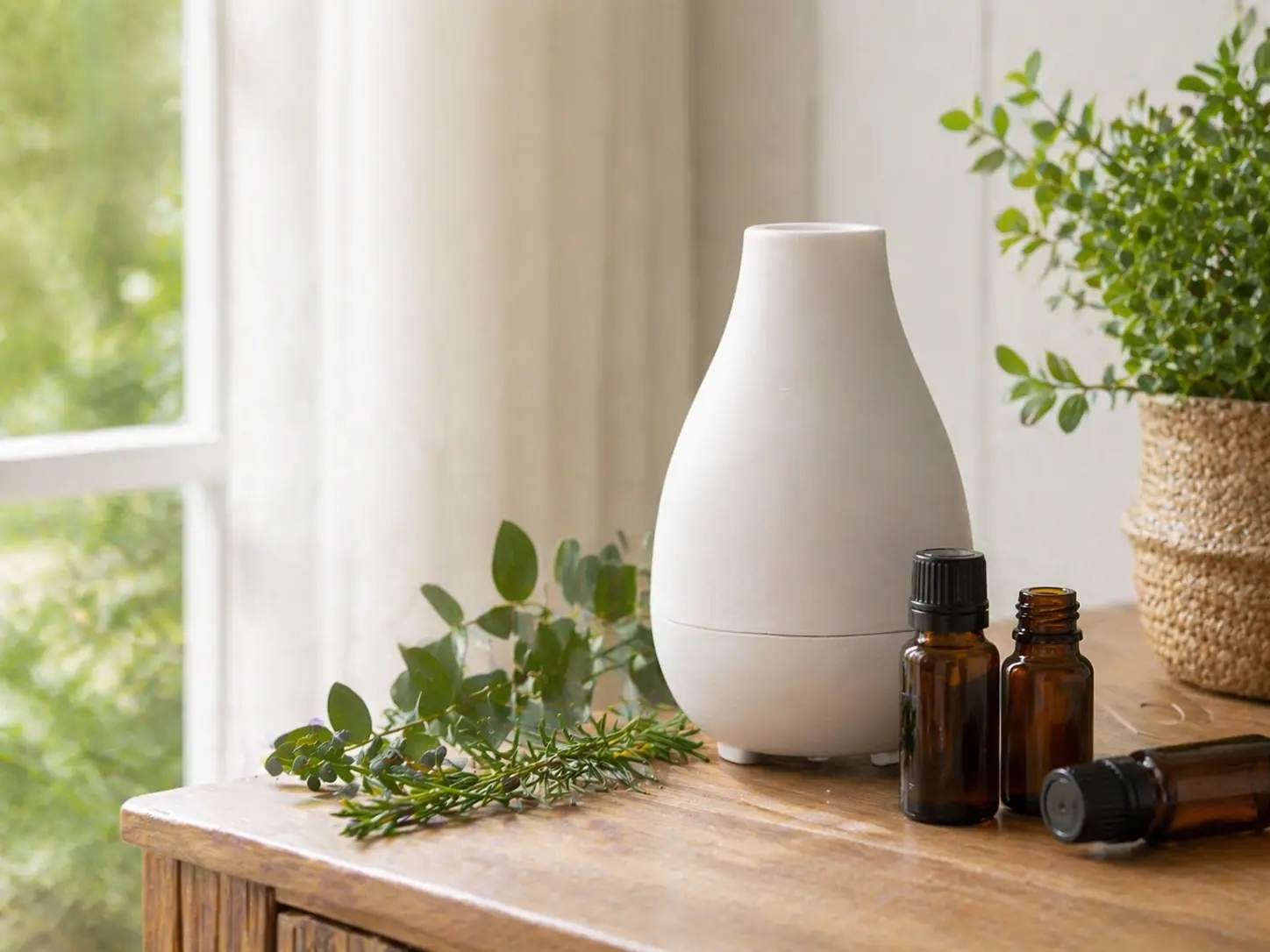
If you diffuse in a home with pets, choose lighter blends, shorter sessions, and rooms with easy airflow. The animal should be able to move away from the scent instead of being stuck in a closed space. Open doors and windows when practical, and avoid long continuous diffusion sessions.
This is especially true with stronger oils or sharper profiles. Even a blend that feels refreshing to you may be too much for an animal in the same room. If you want aroma after cleaning or during a quiet evening, err on the side of fewer drops and more fresh air.
Pet-Home Aroma Habits
Diffuse with exits open
Never make a pet stay in the scented room just because the diffuser looks gentle.
Use fewer drops
The lightest version of a blend is usually the best place to start in a shared animal home.
Watch behavior changes
Leaving the room, restlessness, excessive grooming, or unusual breathing patterns are signals to stop and reassess.
Topical Use Around Pets Needs Extra Restraint
Casual essential oil use directly on pets is not a beginner practice. Animals metabolize aromatic compounds differently, and grooming can increase ingestion risk after skin or fur exposure. For most homes, the safest rule is not to treat pets with self-made essential oil products unless a properly qualified professional has guided that exact use.
That also means thinking about residue. If you apply a strongly scented body oil or perfume to yourself and then cuddle a pet immediately, the exposure is still happening in a shared way. The same goes for heavily scented blankets, cushions, or carrier fabrics.
Storage Is Part of Safety Too
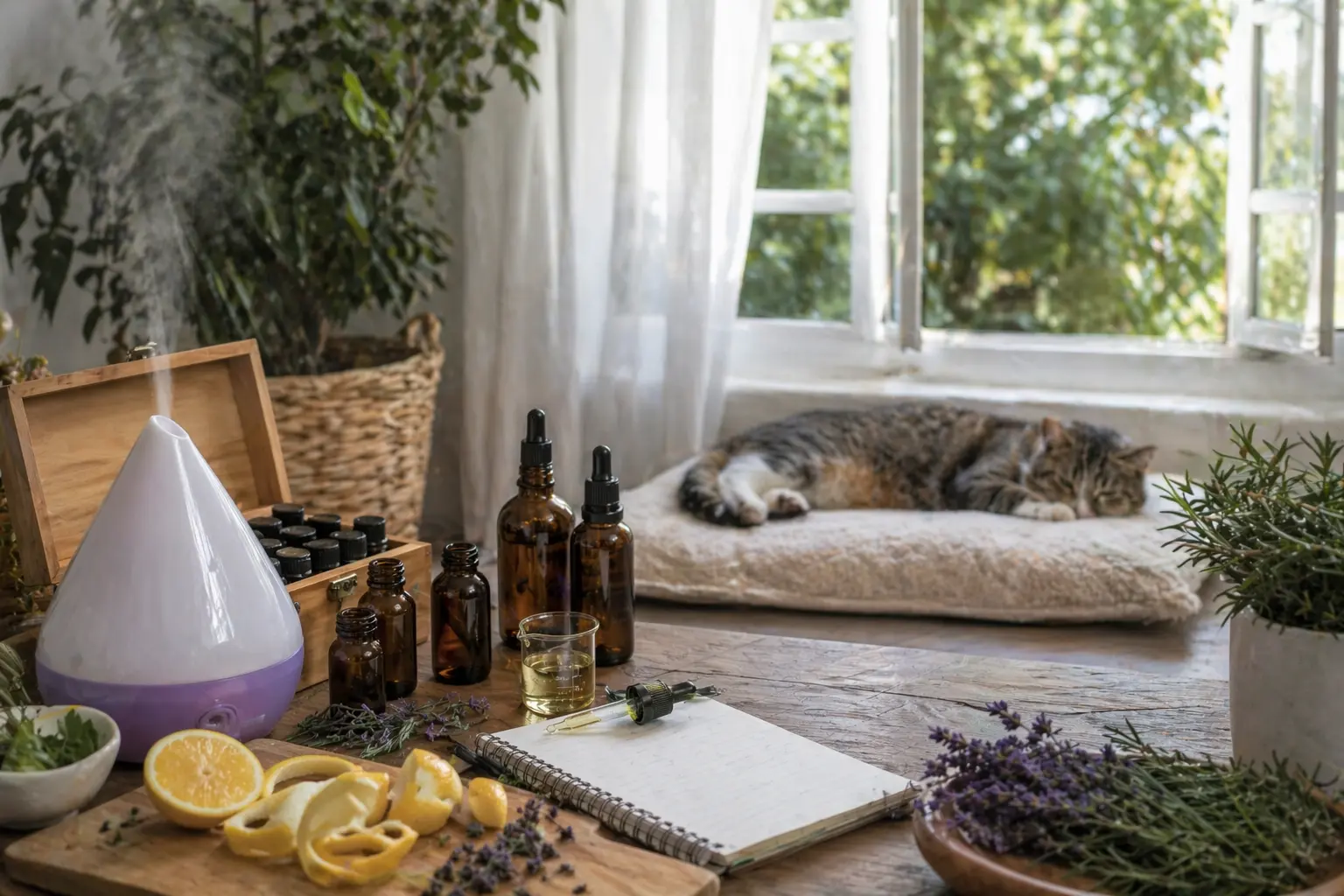
Some of the biggest essential oil risks in pet homes are simple ones: a dropped bottle, a leaking cap, a diffuser reservoir left accessible, or an open blend sitting on a low table. A curious animal does not need to understand essential oils for a problem to happen. It only needs access.
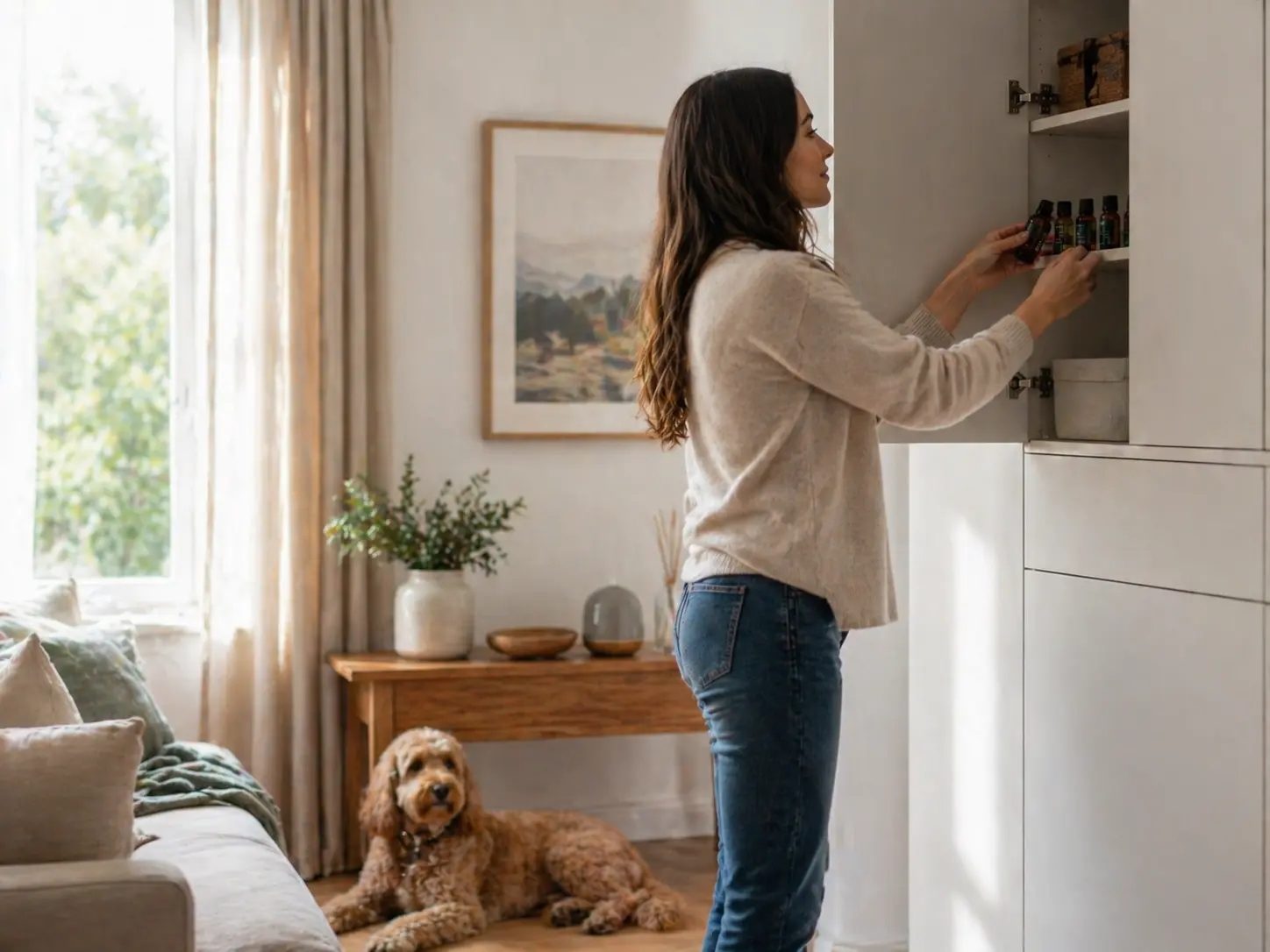
Keep bottles high, sealed, labeled, and away from pet traffic. Clean spills immediately. Do not leave open oils unattended during DIY projects, blending sessions, or cleaning routines. If you use oils in a home where pets move through the same surfaces, think one step ahead about what they can lick, brush against, or knock over.
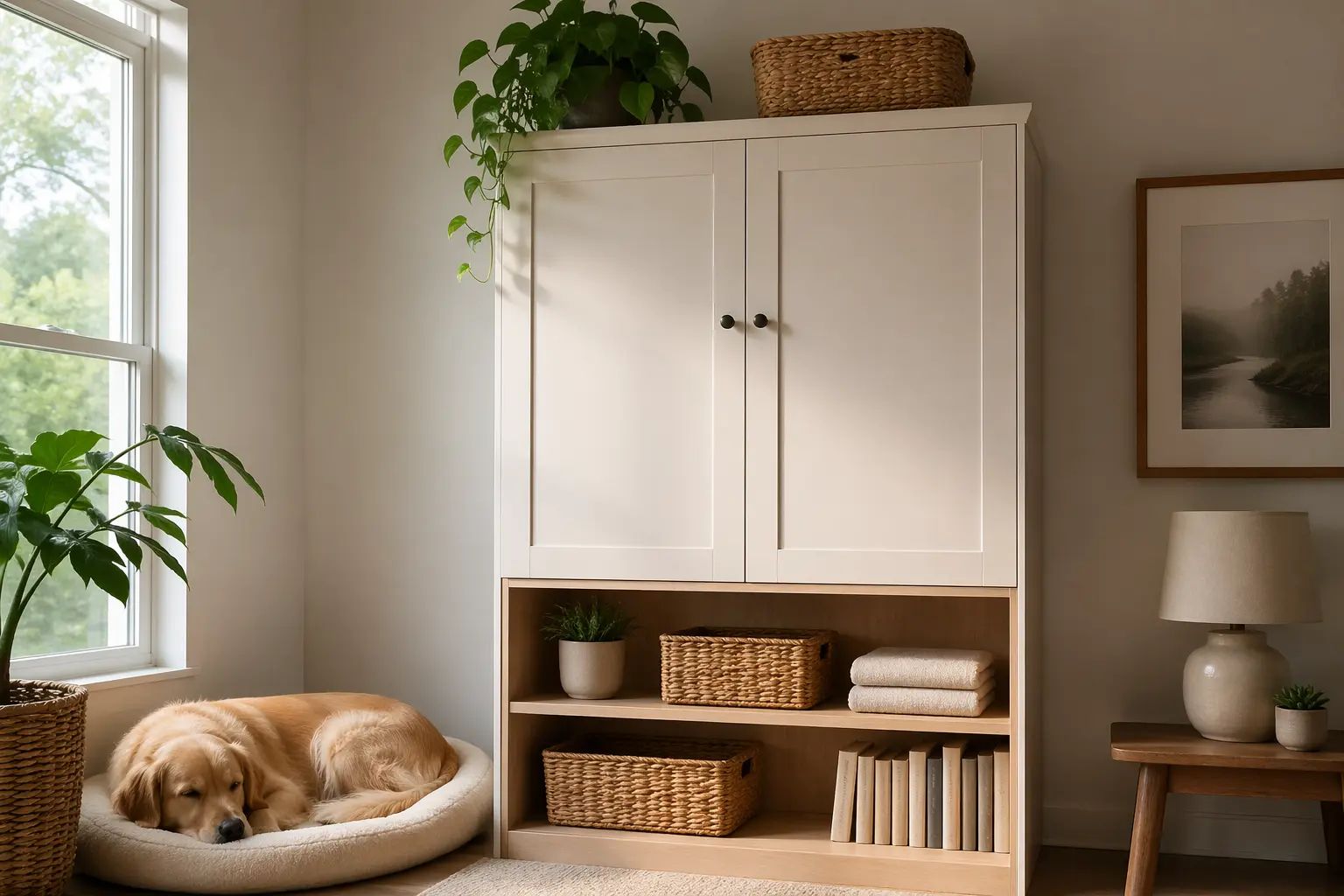
Practical home rule: In a pet household, essential oil safety starts before the diffuser turns on. Storage, surface residue, and room access are all part of the same decision.
When in Doubt, Use Less or Skip It
If you are uncertain whether a blend is worth using around pets, the safest answer is usually to reduce it or skip it. Essential oils are not essential to a healthy pet home. A clean room, open window, good storage, and a calm routine already do a lot.
If you still want scent in a pet-friendly household, gentler rhythms work best: lighter diffusion, shorter sessions, and plenty of choice. And if cats are part of the home, it is worth reading Diffusing Essential Oils in a Home with Cats separately, because feline households deserve even more caution.
Animals
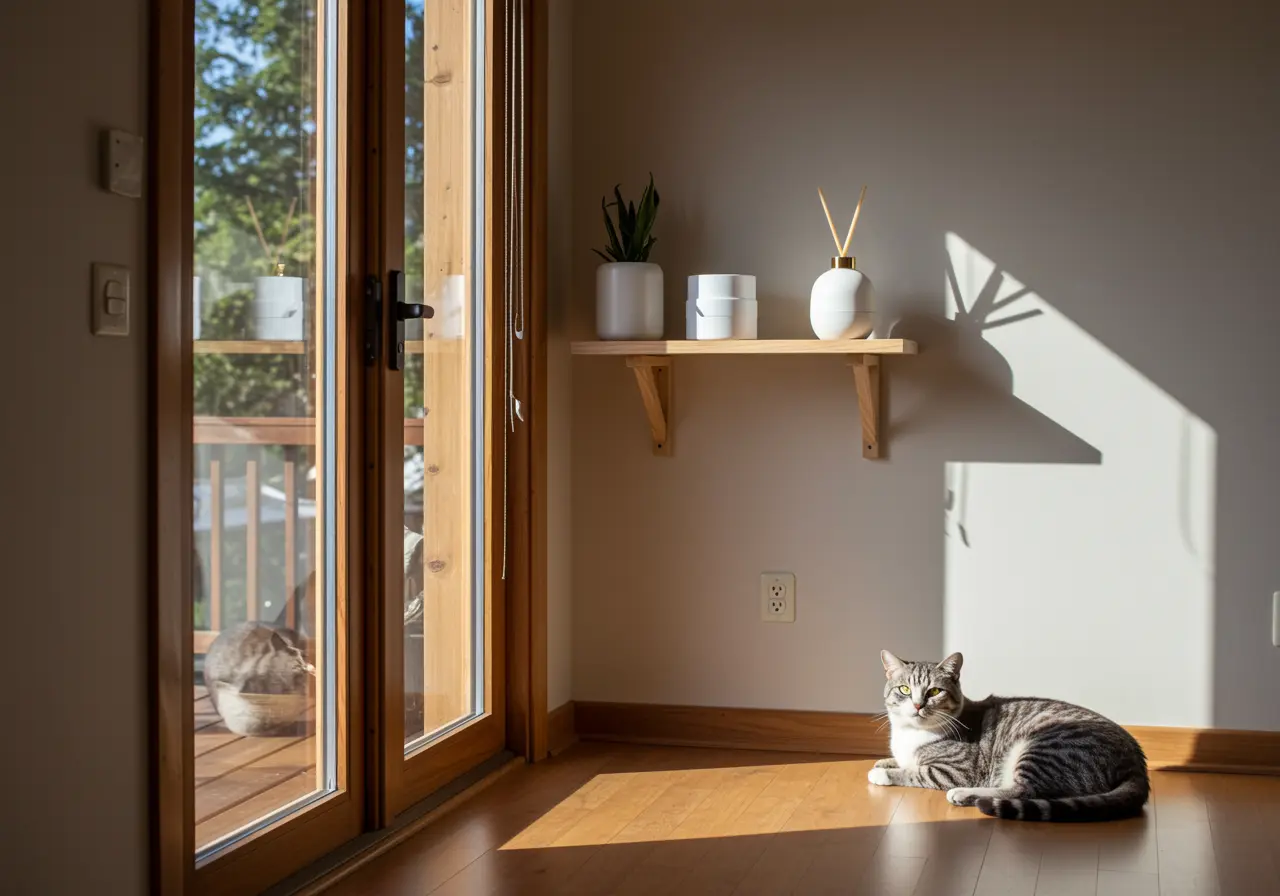
Diffusing Essential Oils in a Home with Cats
How to think about airflow, cat choice, lighter blends, and practical storage when essential oils and feline households share the same home.
Animals
How to Store Essential Oils More Safely in a Home with Pets
A practical pet-home guide to storing essential oils more safely, with attention to height, containment, leakage, access, and the small household habits that prevent bigger mistakes.
Further Reading and Sources
These internal pages help extend the same safety-first thinking.