
Natural Antimicrobial Claims: What They Actually Mean in Real Home Use
Cleaning
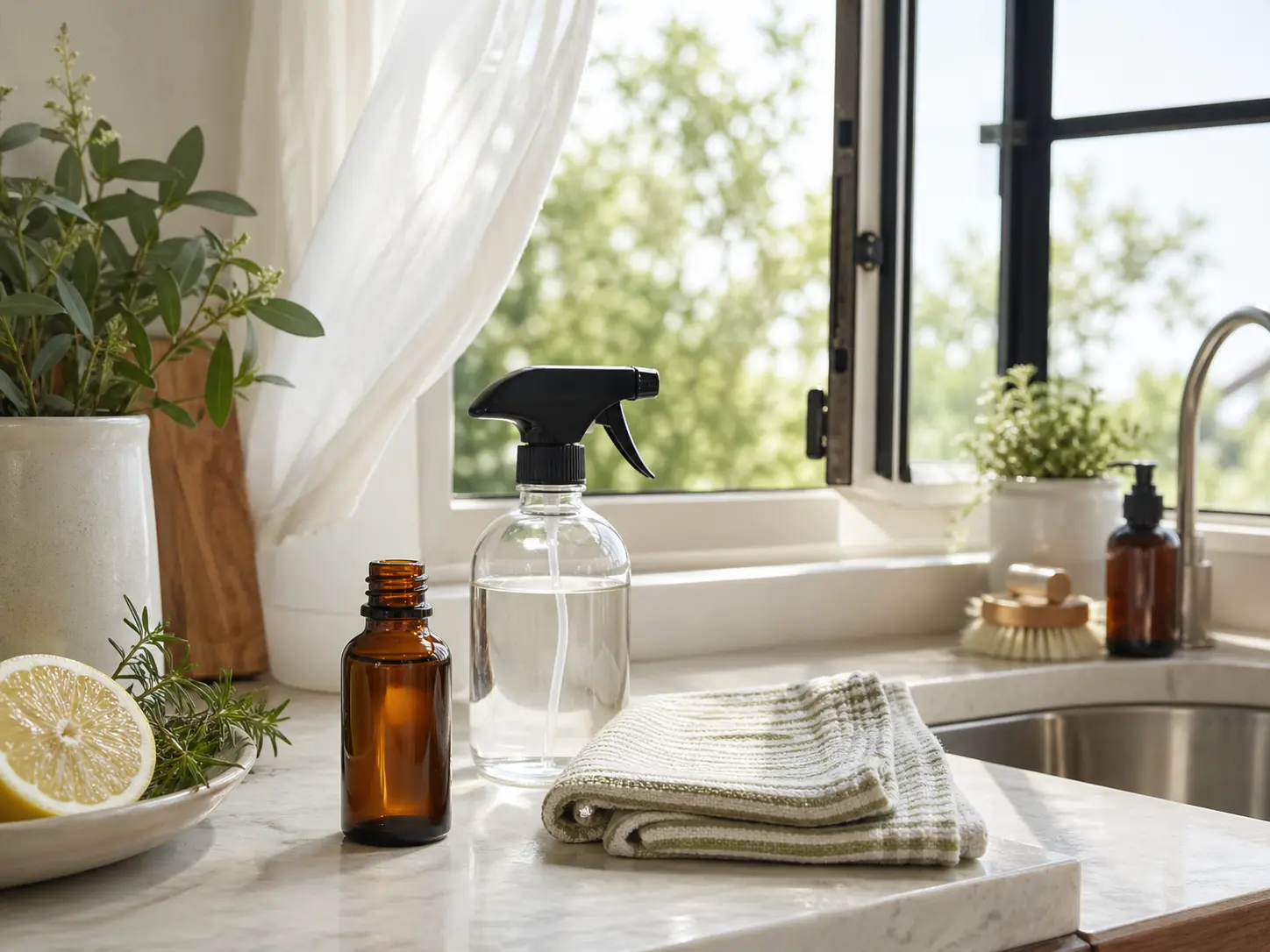
"Natural antimicrobial" is one of those phrases that sounds reassuring long before it becomes specific. In essential oil content, it often gets used as if lab activity automatically proves practical household usefulness. But the step from antimicrobial potential in a paper to meaningful home cleaning value is larger than marketing usually admits.
This does not mean essential oils are irrelevant in cleaning. It means the claim needs better boundaries. An oil may contain constituents with interesting antimicrobial activity and still be a weak substitute for the things that actually matter most in home hygiene: friction, dilution, dwell time, surface compatibility, ventilation, and realistic cleaning goals. This guide is about separating those layers so a pleasant, thoughtful cleaning routine does not get mistaken for a stronger disinfecting claim than the evidence can support.
Quick Answer
When essential oils are described as "natural antimicrobial," the most accurate reading is usually that some oils or constituents have shown antimicrobial activity in controlled lab contexts. That is a real scientific point, but it does not automatically mean a casual DIY spray, a few drops on a cloth, or a nice-smelling surface wipe will behave like a validated disinfectant in ordinary home use.
For most households, essential oils make more sense as scent-shaping additions to a broader cleaning routine than as a stand-alone hygiene strategy. The strongest home results still come from removing dirt, using enough product, giving it enough time, and matching the method to the surface and the real mess.
Why the Phrase Sounds Stronger Than It Usually Is
The word "antimicrobial" sounds broad, technical, and decisive. But it can refer to many different kinds of activity under many different conditions. A compound that inhibits certain microbes in a lab setup may still be difficult to use well on a real countertop, in a sink area, on fabric, or in a bathroom routine where oils are diluted, wiped away quickly, mixed with other ingredients, or applied unevenly.
This is where many readers get misled. The phrase may start with a real scientific basis, but it often ends in a much stronger practical implication than the evidence actually supports.
Lab Activity and Home Cleaning Are Not the Same Category
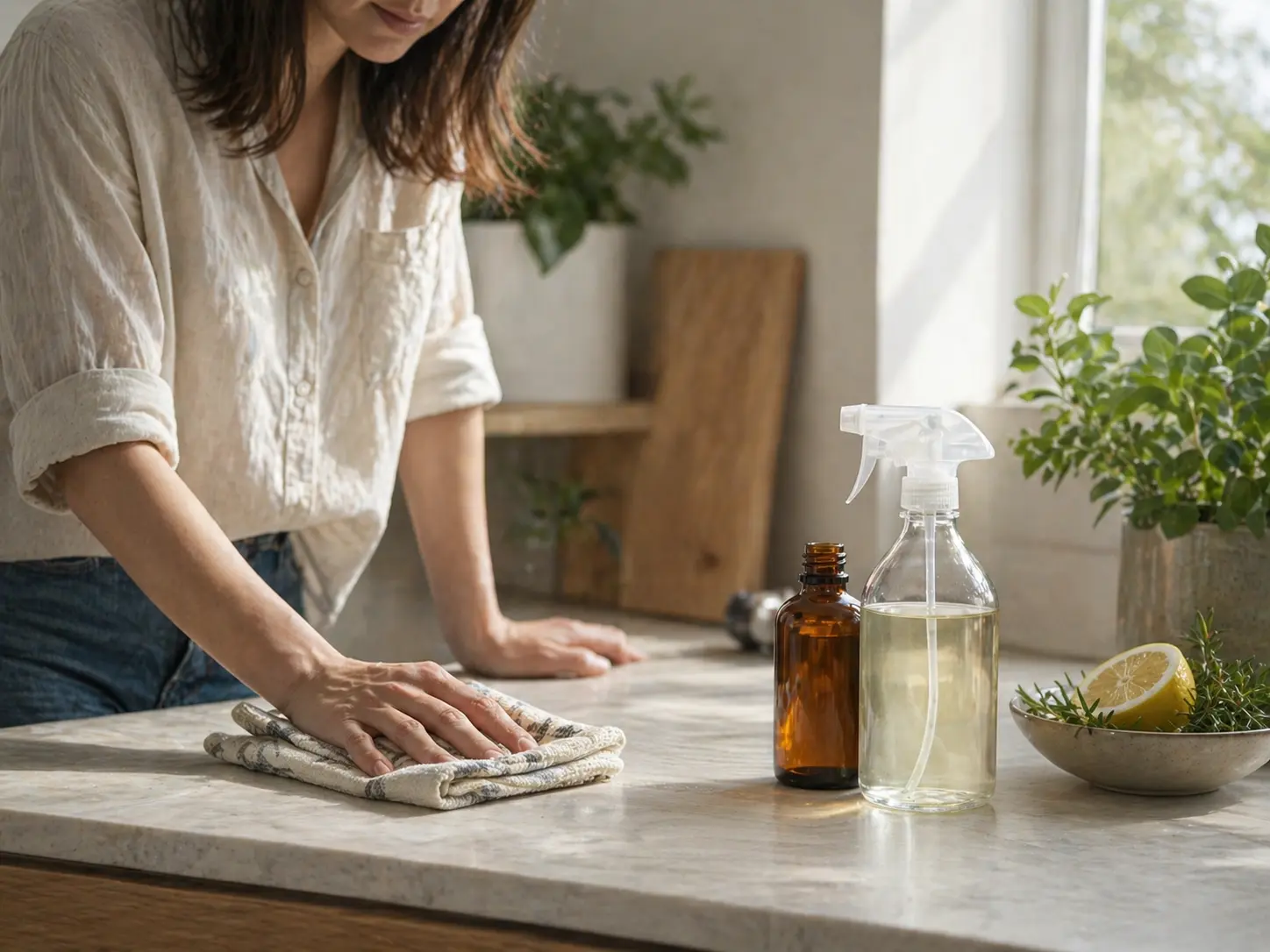
One of the most important distinctions is the difference between antimicrobial activity and useful household cleaning performance. Lab studies often focus on isolated organisms, controlled concentrations, specific contact conditions, and outcome measures that do not fully resemble a normal home. Kitchen counters, bathroom handles, laundry-related surfaces, and sink edges are messier and more variable environments.
At home, the question is rarely "Does this molecule show activity under study conditions?" The more practical question is "Will this whole routine reduce grime, odors, residue, and ordinary household contamination in a believable way?" Those are not identical questions.
Where Home Cleaning Usually Succeeds or Fails
Mechanical cleaning still matters most
Wiping, rinsing, washing, and removing visible residue usually do more for real-world cleanliness than aromatic additives alone.
Concentration changes the picture
A few drops in a large DIY spray may smell satisfying without meaningfully reproducing study conditions.
Contact time is easy to underestimate
If a product is sprayed and wiped away immediately, its real effect can be very different from what readers imagine.
Why DIY Sprays Often Overpromise
DIY culture encourages the idea that a pleasant-smelling all-purpose spray can do everything: freshen, sanitize, deodorize, and replace harsher products. Sometimes it can be genuinely useful as a light surface refresher or odor-reset tool. But those uses should not automatically be confused with stronger anti-pathogen claims.
This is one reason it helps to separate your goals. If the goal is "make the room smell cleaner," essential oils can contribute to that. If the goal is "disinfect this high-risk surface to a standard I can rely on," the bar is much higher. A nice-smelling spray and a dependable hygiene intervention are not the same product category.
Why Real Home Use Needs More Modesty
Even when essential oils are promising in the antimicrobial literature, real home use introduces dilution, evaporation, incompatibility with some surfaces, scent sensitivity, pets, children, and the normal tendency to underdose a mixture because too much oil would smell overpowering. All of that narrows what a household oil blend can realistically claim.
That does not make the routine pointless. It simply means the best description is often more modest: supportive, freshening, lower-toxicity-feeling, or useful for light routine cleaning. Those are good outcomes. They just are not the same as broad-spectrum home disinfection promises.
Some Oils Get More Attention for a Reason, But That Still Has Limits
Oils like tea tree, thyme-type oils, oregano-type oils, clove-rich materials, and certain citrus or spice profiles often appear in antimicrobial conversations because their constituents are studied frequently. That does not mean they automatically belong in every household spray. Stronger chemistry can also mean stronger scent, more irritation risk, and more caution around surfaces, skin, children, and animals.
The better takeaway is not "stronger oil equals better home cleaner." It is that any serious antimicrobial claim needs to be balanced against tolerability, safety, and the very ordinary question of whether a person can realistically use the product well in a shared home.
Safety-first reminder: if a cleaning blend is strong enough to raise irritation, scent-sensitivity, pet, or surface-compatibility concerns, it may already be a poor fit for casual everyday use even if its ingredient story sounds impressively "natural."
What a More Honest Essential-Oil Cleaning Routine Looks Like
A more honest routine is usually simpler. You clean first. You use enough product. You ventilate the room. You match the method to the task. You keep fragrance at a tolerable level. And you let essential oils play a supporting role where they actually add value: light deodorizing, emotional freshness, and a cleaner-feeling atmosphere that makes routine tasks more pleasant to keep up with.
That is often where essential oils shine best in the home. Not as a magical loophole around evidence-based sanitation, but as part of a routine people can actually sustain.
Why This Topic Needs Precision, Not Cynicism
The answer is not to sneer at every antimicrobial claim. Some essential oils and constituents are legitimately interesting from a microbiology perspective. The better response is precision. Ask what was tested, how it was tested, at what concentration, in what delivery system, and under what conditions. Then ask whether your actual home routine resembles that enough to justify the stronger implication.
Precision is what keeps the conversation honest. It lets you keep the useful parts of essential-oil cleaning culture without turning fragrance and optimism into a substitute for clear thinking.
Cleaning
How to Use Essential Oils in Natural Cleaning Routines
A safety-first guide to using essential oils in home cleaning routines, from scent goals and simple spray habits to ventilation and pet-aware choices.
Cleaning
Essential Oils for a Fresh-Smelling Bathroom
A practical guide to creating a bathroom that smells fresh, clean, and spa-like with lighter diffuser habits, cleaning-friendly blends, and restrained aromatic finishing touches.
Cleaning
Quick Bathroom Reset Before Guests
A fast, safety-first bathroom refresh routine for guest-ready moments, using clean towels, airflow, and light essential oil finishing touches.
Cleaning
Small Home Odor Hotspots: Trash Can, Sink, Vacuum, and Entryway
A practical guide to the small odor hotspots that change how a home feels, with simple essential-oil-friendly routines for trash cans, sinks, vacuums, and entryways.
Further Reading and Sources
These are strong starting points for understanding the gap between lab findings, topical evidence, and real-world use claims.
- Essential oils as topical anti-infective agents: A systematic review and meta-analysis
- Antibacterial Activity of Selected Essential Oil Components and Their Derivatives: A Review
- Essential oils and their active components applied as: free, encapsulated and in hurdle technology to fight microbial contaminations. A review
- Essential Oil Disinfectant Efficacy Against SARS-CoV-2 Microbial Surrogates