
What a GC/MS Report Still Cannot Tell You About an Essential Oil
Science

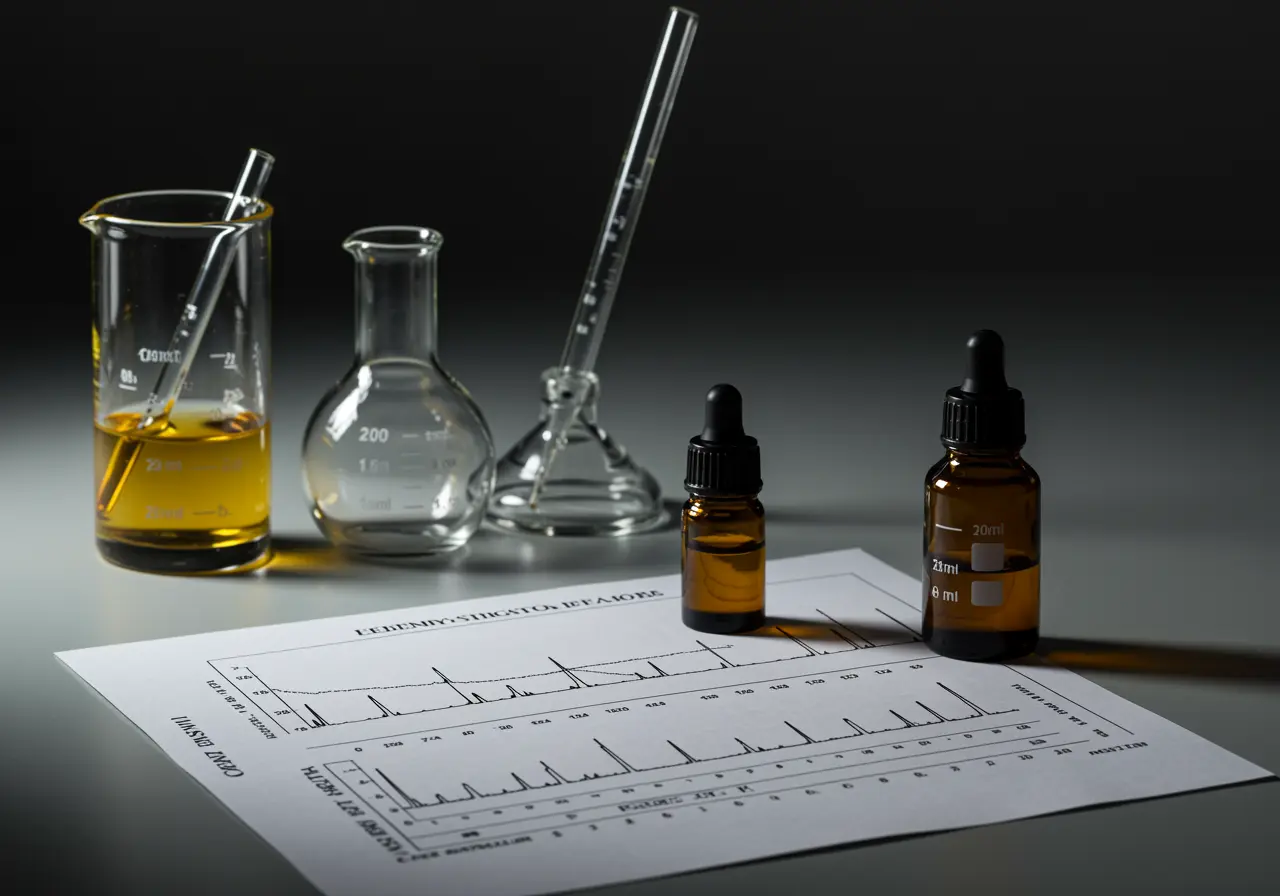
A GC/MS report can make an essential oil feel impressively transparent. There is a chart, a constituent list, percentages, technical language, and the sense that something objective has been pinned down. All of that is useful. But a report that looks scientific can still be interpreted far more confidently than the evidence actually allows.
This article picks up where What Is a GC/MS Test in Essential Oils? leaves off. The first guide explains what a report does. This one explains what it still does not tell you on its own: whether an oil is fresh in use, whether the sample represents the entire lot, whether adulteration has been ruled out in every meaningful way, whether the storage chain was good, or whether the oil is even the right fit for the kind of routine you want to build.
Quick Answer
A GC/MS report can tell you a lot about the volatile chemistry of one tested sample, but it cannot settle every question that matters to a careful buyer. It does not automatically prove freshness, storage quality, ethical sourcing, lot-wide consistency, sensory elegance, or freedom from every kind of adulteration.
The better way to use GC/MS is as one strong layer inside a bigger quality picture. It should sit beside botanical identity, extraction context, aroma realism, oxidation awareness, practical safety, and the more ordinary question of whether the oil actually behaves well in your real routine.
A Clean Report Is Not the Same Thing as a Complete Story
One of the most common misunderstandings in essential oil buying is that a report settles the entire trust question. In reality, the report usually settles a much narrower question: what the volatile chemistry of the tested sample looked like at the time it was run. That is already valuable, but it is still only part of the picture.
Buyers often care about much more than that. They care whether the oil smells alive or flat, whether it has oxidized badly in storage, whether the batch is commercially honest, whether the aroma behaves well in a diffuser or diluted leave-on product, and whether the company’s transparency actually extends beyond a PDF attachment.

What GC/MS Still Cannot Prove About Freshness
A report can describe constituents. It cannot fully recreate the lived storage history of the bottle that eventually reaches your shelf. Heat, oxygen exposure, light, time since bottling, headspace, and how the bottle was handled after testing all matter to freshness in use. That is one reason two bottles associated with the "same" oil story can behave differently in a real room.
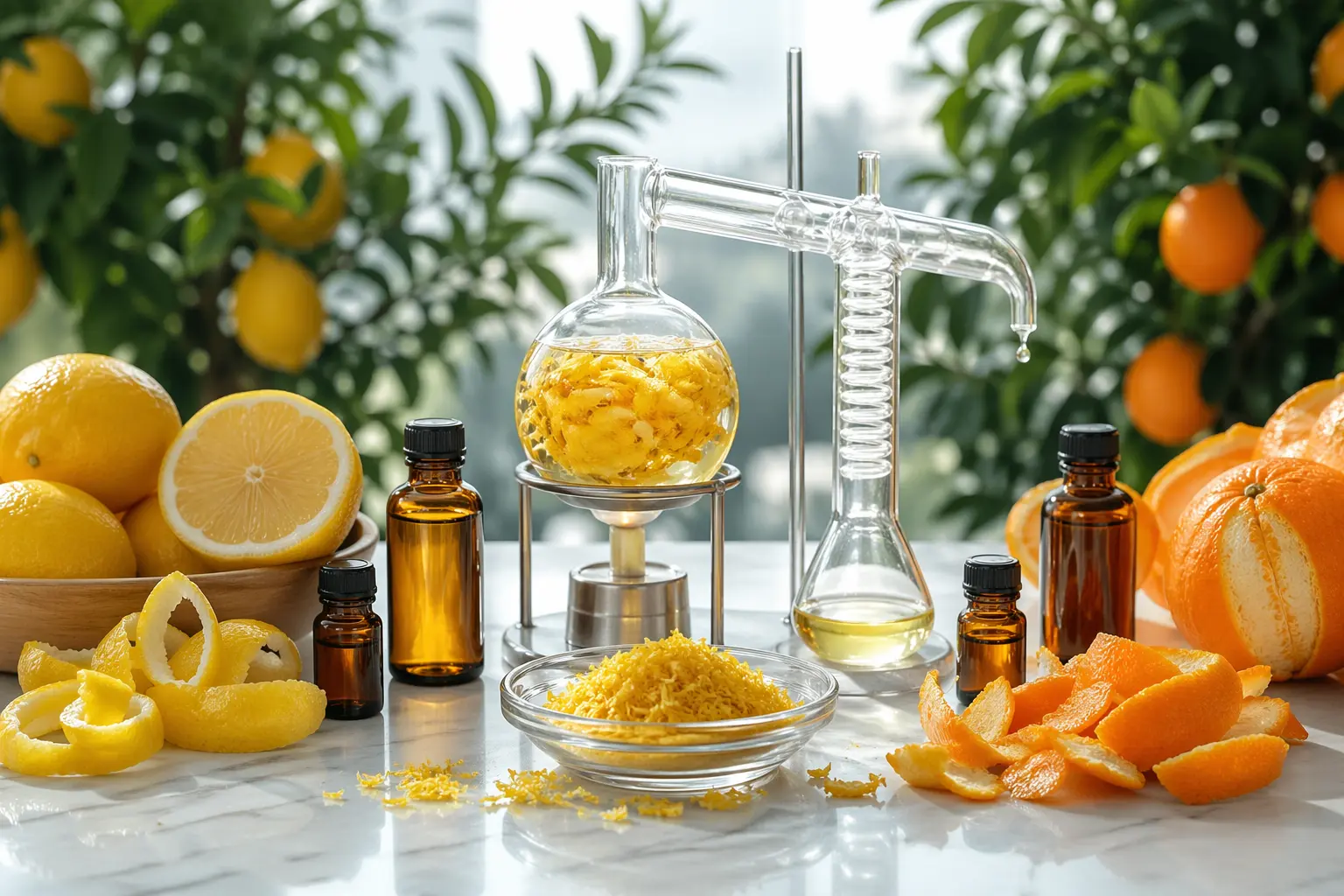
This matters especially with more oxidation-prone profiles, including many citrus oils and some aroma directions that shift noticeably over time. If you want the practical side of that issue, the best companion read is Why Oxidized Essential Oils Smell and Behave Differently. A chemistry report can support freshness questions, but it does not permanently solve them.
Questions a Report Does Not Answer by Itself
Did the bottle age well?
Storage, oxygen, transport, and time can change lived quality after testing.
Is the whole lot equally good?
One tested sample is not the same thing as perfect uniformity across all bottles.
Does it smell convincing in use?
Chemistry matters, but sensory realism and actual behavior still need to be judged in practice.
Why Representativeness Matters More Than Many Buyers Realize
Even when a report itself is genuine, the next question is whether the tested sample truly represents what is being sold. Was it drawn from the same lot? Was it handled the same way? Was the sample prepared carefully for transparency, while the commercial stock had more variation? These are not conspiracy questions. They are simply normal quality-control questions.
This is one reason consistent batch culture matters. A company that shares lot-linked reports, harvest or sourcing context, and realistic product timelines is usually offering a better trust environment than one that treats the lab sheet as if it ends all inquiry.

Adulteration Is More Complicated Than a Single Tool Suggests
GC/MS is extremely useful, but not every quality problem looks the same analytically. Some adulterants are volatile and show up more clearly in chromatography-based interpretation. Others are harder to detect cleanly with one method alone. Some questions become clearer when other analytical approaches, including NMR-based methods, are brought into the conversation.
The practical takeaway for readers is simple: a GC/MS report is not worthless because it has limits, and it is not omniscient because it looks technical. Good quality work often comes from layered methods and careful interpretation rather than from one magical report format.
What It Cannot Tell You About Ethics, Labor, or Brand Culture
A lab report cannot tell you whether the growing or harvesting relationships were responsible, whether the brand’s marketing language is honest, or whether the company has a habit of stretching claims in other parts of its business. Chemistry and ethics are different categories of knowledge. Both matter, but they are not interchangeable.
This is important because buyers sometimes confuse analytical transparency with total moral transparency. A company can share useful testing information and still leave unanswered questions about sourcing culture, educational honesty, or how carefully it talks about safety.
It Also Cannot Decide Whether an Oil Is Right for You
An oil can have a respectable report and still be the wrong fit for your routine. Maybe it is too sharp in a bedroom, too heavy for a body oil, too unstable for your storage habits, or simply not a scent profile you actually enjoy living with. This is why internal quality and practical fit should not be collapsed into one idea.
For example, a technically solid citrus oil may still require the kind of caution discussed in Cold Pressed vs Steam Distilled Citrus Oils. A beautiful floral may still be too strong for scent-sensitive guests. A strong mint may still be wrong for a child’s room. The report cannot live your routine for you.
Safety-first reminder: no lab report removes the need for dilution, ventilation, phototoxicity awareness, oxidation awareness, or ordinary sensory judgment in the home.
What More Mature Buying Looks Like
The most mature use of GC/MS is neither blind trust nor cynical dismissal. It is context-building. Look at the report. Learn from it. Compare broad chemistry patterns. Notice whether a company is specific or vague. Then bring that information back into the rest of the evaluation: aroma, storage, labeling clarity, internal consistency, and realistic safety communication.
That approach is slower than screenshot-driven buying, but it is much more useful. The point of technical transparency is not to end your judgment. It is to give your judgment something better to work with.
Science
What Is a GC/MS Test in Essential Oils?
A practical, plain-English guide to what GC/MS reports show, what they do not prove, and how to read them without overestimating what a lab sheet can tell you.
Science
Cold Pressed vs Steam Distilled Citrus Oils
Learn how extraction changes aroma, phototoxicity concerns, and practical home use when comparing cold pressed and steam distilled citrus essential oils.

Science
Why Oxidized Essential Oils Smell and Behave Differently
A plain-English guide to what oxidation does to essential oils over time, why aroma changes matter, and how storage habits shape how an oil smells and behaves later on.

Science
Migraine and Essential Oils: Why the Evidence Is More Mixed Than the Internet Suggests
A plain-English look at what migraine research on essential oils actually suggests, where the evidence is thin, and why a soothing ritual is not the same thing as a proven migraine treatment.
Further Reading and Sources
These papers are especially useful for understanding why authenticity and quality assessment often need more than one analytical angle.
- Is Low-field NMR a Complementary Tool to GC-MS in Quality Control of Essential Oils? A Case Study: Patchouli Essential Oil
- Differential NMR and chromatography for the detection and analysis of adulteration of vetiver essential oils
- Metabolic composition and authenticity evaluation of bergamot essential oil assessed by nuclear magnetic resonance spectroscopy
- What Is a GC/MS Test in Essential Oils?