
Essential Oils and Anxiety: What Inhalation May Help With, and What It Probably Does Not
Mental Health
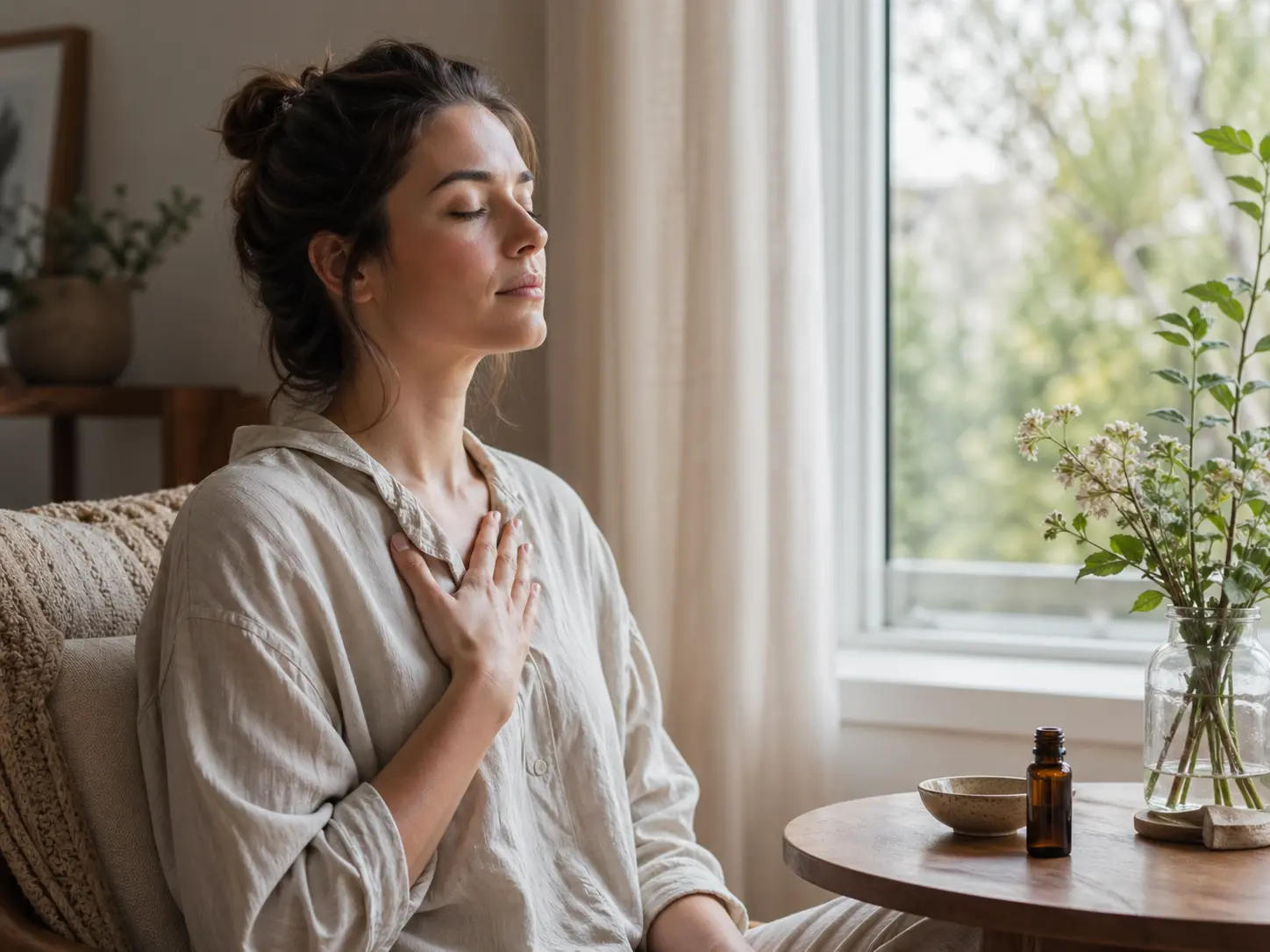
Essential oils and anxiety are often discussed in language that is either too dismissive or far too confident. One side treats aromatherapy as fluff. The other side talks as if inhaling the right oil can reliably solve an anxious nervous system. The research picture sits somewhere in between: there are real signals worth taking seriously, but there is also a big gap between "may support calm" and "works like treatment."
This article focuses on inhalation, because that is where most home use actually lives: diffusers, brief bottle inhalation, low-intensity room scent, and environmental aroma routines. The goal is not to flatten the subject into hype or cynicism. It is to explain what inhalation may realistically help with, where the evidence still has limits, and why a soothing atmosphere is not the same thing as comprehensive anxiety care.
Quick Answer
Inhaled essential oils may help some people feel calmer, more settled, or less stressed in the moment, especially when the aroma is light, familiar, and paired with a low-stimulation routine. That can be meaningful. But it is not the same as saying inhalation reliably treats anxiety disorders, prevents anxious episodes, or replaces broader mental-health support.
The most accurate way to think about inhaled oils is as context-shaping tools. They may support breathing pauses, quiet room transitions, gentler evening routines, and a sense of sensory containment. They are strongest when used modestly and weakest when asked to carry unrealistic expectations.
Why the Topic Gets Overstated So Easily
Anxiety is emotionally loaded, and smell changes how a room feels very quickly. That combination makes essential oils easy to overpromise. If an aroma softens a person’s shoulders, makes a room feel quieter, or gives them a familiar sensory anchor, it is tempting to describe that as strong therapeutic proof. But a felt shift and a clinically robust outcome are not the same category.
This is especially important because anxiety itself is not one neat experience. There is situational stress, anticipatory tension, panic-like escalation, chronic background unease, sensory overload, and the more general need to feel less keyed up at the end of a day. A scent may help with one layer and do very little for another.

What Inhalation May Actually Help With
For some people, inhaled aroma may help with downshifting. A familiar scent can make it easier to move from alert mode into a slower pace. A lighter room atmosphere may support a breathing break. A simple scent ritual can also work as a cue, telling the body that a transition is happening: work is ending, the lights are softer, the room is quieter, the nervous system does not have to stay at full volume.
Those benefits are worth respecting. They are not imaginary just because they are modest. But they are also different from claiming that inhalation changes every layer of anxious experience in a reliable, treatment-level way.
Where Inhalation Often Makes the Most Sense
Transition moments
After work, before bed, or before a short reset, scent can help mark a calmer shift in pace.
Low-stimulation pauses
A brief inhalation practice may support a breathing or grounding moment when the aroma stays light.
Environmental softening
Some rooms simply feel less harsh with a very restrained scent structure in the background.
What It Probably Does Not Do on Its Own
Inhalation is unlikely to carry the full weight of meaningful anxiety care by itself. It does not automatically address deeper drivers of anxiety, nor does it guarantee durable changes in thought patterns, panic cycles, sleep disruption, or the wider context that keeps someone activated. If a person is in a rough season, the right oil may help the edges feel softer, but it is rarely the whole intervention.
This distinction matters because disappointment often comes from asking too much of a modest tool. Essential oils tend to work best when they are allowed to stay small, practical, and honest.
Why More Scent Usually Makes the Logic Worse
When people are anxious, the instinct is often to intensify the thing that feels helpful: more drops, longer diffusion, richer blends, stronger floral or resin notes. But anxiety and sensory overload frequently overlap. A scent that begins as comforting can become oppressive if it fills the room, lingers too long, or becomes one more input the body has to process.
That is why restrained routines usually outperform dramatic ones. A cleaner air pattern, a shorter diffuser session, or a brief bottle inhalation often makes more sense than trying to create an all-evening scented atmosphere.
Safety-first reminder: if inhalation starts to feel heavy, headachy, irritating, or emotionally claustrophobic, the right next step is usually less scent or no scent, not a stronger blend.
Which Oils Get Mentioned Most, and Why That Still Needs Nuance
Lavender is frequently discussed because it appears often in the anxiolytic literature and is widely associated with calm. Bergamot, frankincense, sweet marjoram, and selected floral-citrus combinations also come up in calmer-routine writing. But no single oil solves the interpretation problem. Being often mentioned is not the same thing as being universally appropriate or strongly proven in every context.
The better question is not "Which oil treats anxiety best?" but "Which scent direction, if any, helps this person feel less activated without making the room too full?" That question is more modest and much more useful.
What a Better Home Routine Looks Like
The most believable anxiety-supporting aroma routine is usually small. One scent direction. One clear purpose. One low-stimulation context. That may look like a softly ventilated bedroom, a brief pause by a window, or a short evening diffuser session with a familiar oil you already know you tolerate well.
Routines like calmer evening wind-downs, lighter focus routines, and guest- or sensitivity-aware scent habits are often better models than anything framed like an instant cure.
Why the Middle Position Is the Most Honest One
The middle position is not weak. It is careful. Inhalation may help some people feel calmer in the moment. That matters. It may also do much less than wellness language implies. That matters too. A research-respecting home routine should be able to hold both truths at once.
That is the best way to protect the useful part of essential oil practice: not by inflating it, but by describing it accurately enough that people can use it well.
Further Reading and Sources
These are the most useful evidence-level starting points behind the cautious, middle-ground framing in this article.