
Pregnancy and Smell Sensitivity: Why Scent Routines Often Need to Change
Safety
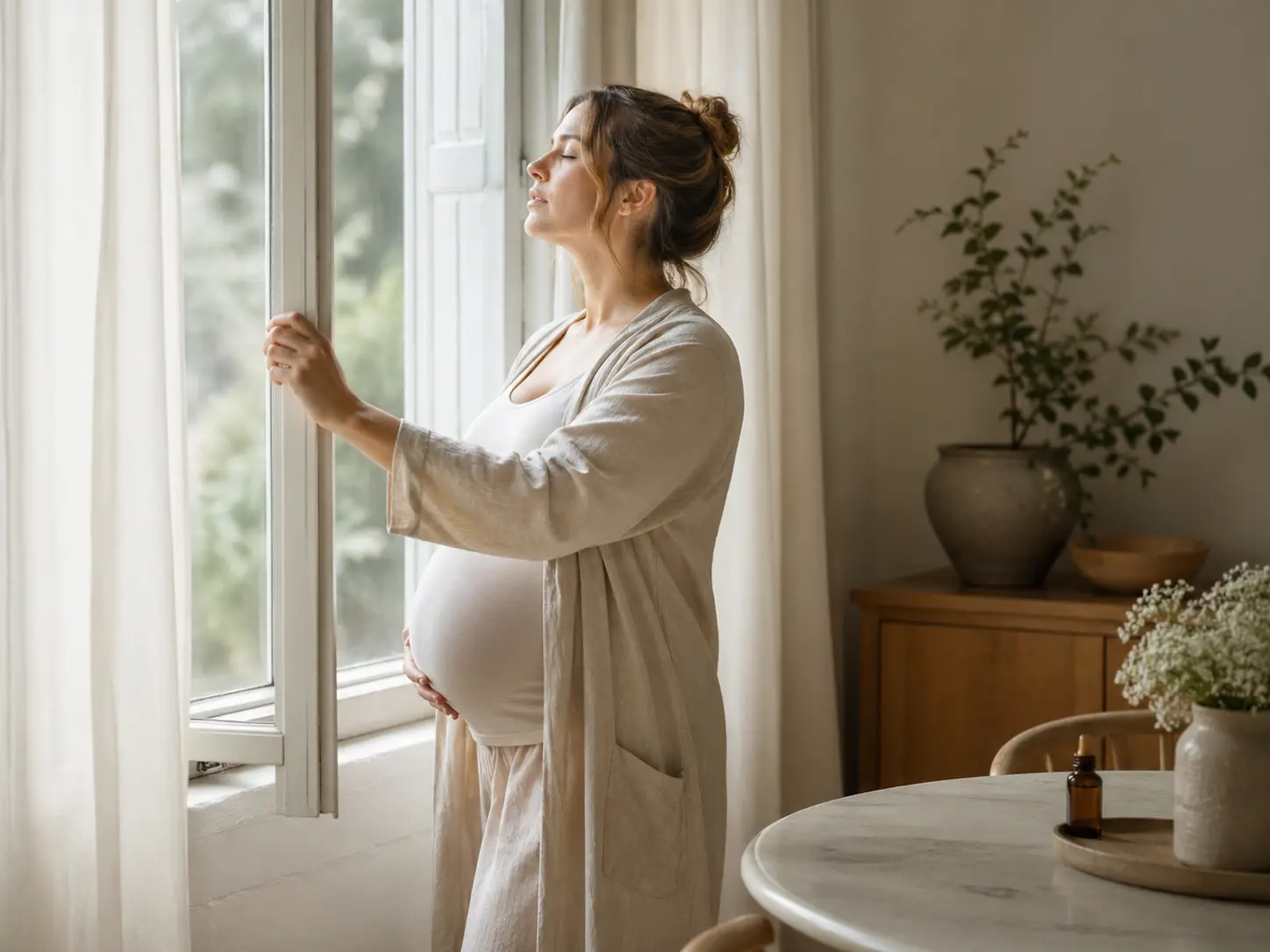
Pregnancy advice around scent often becomes strangely absolute. One side acts as if every essential oil belongs in a danger category by default. The other side acts as if a familiar diffuser routine should continue unchanged as long as the oils themselves are technically considered acceptable. Real life is usually less dramatic and more sensory than either version suggests.
For many people, the biggest shift in pregnancy is not a neat list of "safe" versus "unsafe" aromas. It is that smell itself starts behaving differently. Familiar oils can suddenly feel too strong. A room that normally smells pleasant can feel close, heavy, or nausea-inducing. A routine that once felt calming can start to feel intrusive. This article is about that practical middle ground: why scent tolerance often changes, and how to adapt without turning everyday aromatic life into a constant source of friction.
Quick Answer
Pregnancy can change how smells are noticed, tolerated, and emotionally processed. Even scents that were previously comfortable may feel sharper, heavier, or more nausea-linked for a while. That does not automatically mean every essential oil routine must disappear, but it often means the routine needs to get smaller, gentler, more ventilated, and easier to stop.
The most useful mindset is not "push through because it is natural" and not "panic because everything scented is wrong." It is to treat smell sensitivity as real feedback. If a routine feels off, reduce the amount, increase the airflow, switch to a lighter method, or pause it altogether.
Why Smell Can Feel Different in Pregnancy
Pregnancy is often discussed in terms of nausea, fatigue, food aversions, and changing preferences, but smell sits quietly underneath many of those experiences. Even when research does not show a simple, universal increase in objective smell performance, many pregnant people still report that odors feel more intrusive, more emotionally charged, or simply harder to ignore. In practice, that is what changes routines.
The result is not always classic "hyperosmia" in a dramatic sense. Sometimes it is more specific than that. A bright citrus like sweet orange may suddenly feel harsh. A sweet floral such as ylang ylang may feel cloying. A diffuser that used to create calm may begin to feel like too much atmosphere in too small a space.
Why an Old Routine Can Suddenly Stop Working
One of the most frustrating parts of pregnancy-related smell sensitivity is that the problem may not be the oil itself. The problem may be the routine scale. A normal room diffusion length, a familiar body oil, or a once-loved bedtime blend can become too present simply because the body is processing scent differently for a while.
This is why "but I have always used this one" is not very useful as a decision rule. The routine needs to match the current sensory moment, not the version of you that existed before the shift. Pregnancy can make aroma feel less like a background detail and more like a foreground event.
What Usually Helps First
Reduce intensity before changing oils
Fewer drops, shorter sessions, and more distance often solve more than buying a new bottle does.
Choose airflow over saturation
An open window and a lighter room setup often matter more than the blend itself.
Respect aversion quickly
If a scent starts to feel wrong, do not force it because it used to be your favorite.
Diffusers Usually Need to Get Smaller, Not More Clever
When a person becomes more smell-sensitive, the instinct is often to search for a "pregnancy-safe blend." But in many homes, the first better step is not a better blend. It is a smaller scent footprint. Shorter diffuser runs, lower drop counts, better ventilation, and more willingness to skip the diffuser entirely on sensitive days usually help more than a complicated aroma formula.
This is especially true in bedrooms, bathrooms, and other enclosed spaces. If a room traps scent, the oil does not need to be dangerous to feel overwhelming. It just needs to linger too long. In some homes, a passive diffuser or no diffuser at all may simply make more sense for a while.
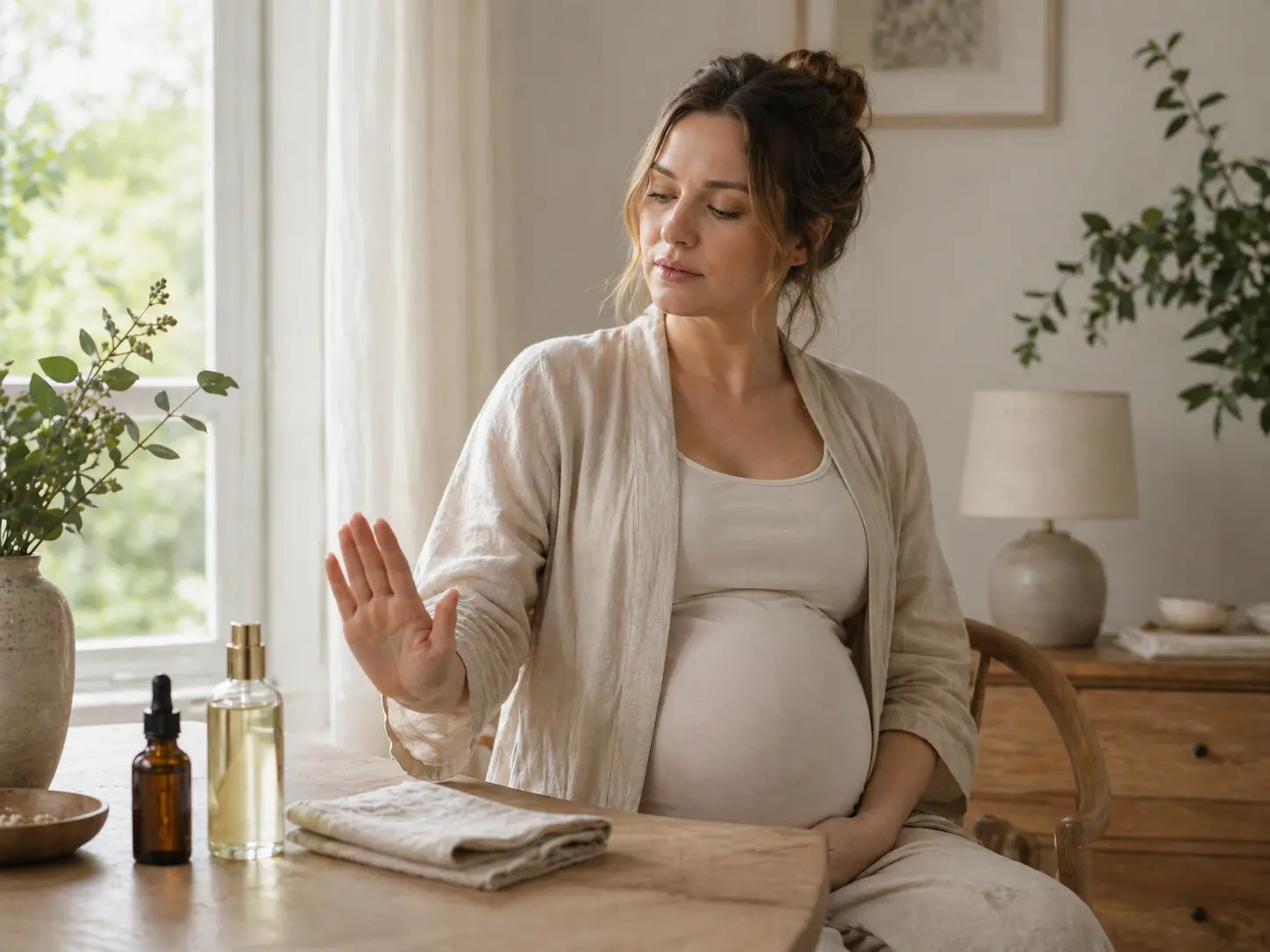
Body Oils, Roll-Ons, and Skin-Applied Fragrance Need Reconsidering Too
Pregnancy smell sensitivity does not only show up in room air. It also shows up when scent is attached to the body for hours. A roller that once felt elegant can become inescapable if the aroma stays under the nose all day through skin warmth, clothing, and repeated movement.
This is one reason many people do better with lower dilution, less frequent application, or a temporary pause in leave-on scent products. If the purpose is comfort, the routine should stay easy to live with. If the oil becomes something you have to endure, it has already missed the point. If you do keep any leave-on product, it should usually sit much closer to the logic in the dilution guide than to a perfume-style approach.
Nausea Changes the Whole Conversation
Nausea makes aroma judgment less abstract and more immediate. The question stops being "Is this oil generally fine?" and becomes "Can I tolerate this smell right now?" During nausea-prone windows, even previously pleasant scents can feel too sweet, too warm, too sharp, or simply too memorable once the body starts linking them to discomfort.
This is why flexibility matters. A scent that felt fine last week may not feel fine this week. A room spray that works in the afternoon may be a mistake first thing in the morning. Pregnancy routines often improve when they are treated as adjustable rather than fixed.
Safety-first reminder: if a scent reliably makes you feel worse, you do not need to keep using it just because it appears on someone else's "gentle oils" list.
What "Gentle" Really Means Here
In pregnancy writing, "gentle" should usually describe the whole routine, not only the oil family. Gentle means low saturation, clear air, easy escape, lighter dilution, and permission to stop. An oil is not truly gentle in context if it is diffused heavily in a shut room or worn so close to the face that the smell becomes unignorable.
This is why many people do better with quieter directions like soft citrus, very light florals, or familiar low-dose woods, but only if those are still personally tolerable. For some homes that may mean something closer to lavender, roman chamomile, or a restrained citrus, while for others it may mean taking a full break from fragrance. The body decides whether the routine is gentle, not the marketing language.
A Better Goal Than "Keep the Routine Going"
The most useful goal in this season is not continuity for its own sake. It is to keep the home feeling supportive without turning scent into another demand. Sometimes that means using one oil instead of four. Sometimes it means choosing passive aroma over active diffusion. Sometimes it means stepping away from essential oils for a while and returning later. The same low-pressure mindset also helps if you are already adapting routines around other scent-sensitive people in the home.
That is not failure. It is good sensory judgment. Pregnancy often asks routines to become more honest, and scent routines are no exception.
Safety
How to Store Essential Oils So They Last Longer
Learn how light, heat, oxygen, storage habits, and household safety affect essential oil shelf life so your bottles stay more stable and usable for longer.
Safety
How to Tell When an Essential Oil No Longer Smells Right
A plain-English safety article on how to notice when an essential oil smells noticeably off, what may have changed, and why that matters in real home use.

Safety
How to Use Essential Oils More Carefully Around Sensitive Guests
A practical guide to using essential oils more thoughtfully when visitors, family members, or overnight guests may be more sensitive to scent than you are.
Safety
Why Some People Suddenly Stop Tolerating a Favorite Oil
A practical guide to why a once-loved essential oil can suddenly start feeling wrong, including oxidation, routine overload, hormonal shifts, room context, and the difference between quality and tolerability.
Further Reading and Sources
These are the most relevant reading paths behind the smell-sensitivity and adaptation logic in this article.