
Cedarwood Atlas Essential Oil for a Home That Feels More Settled
Wellness
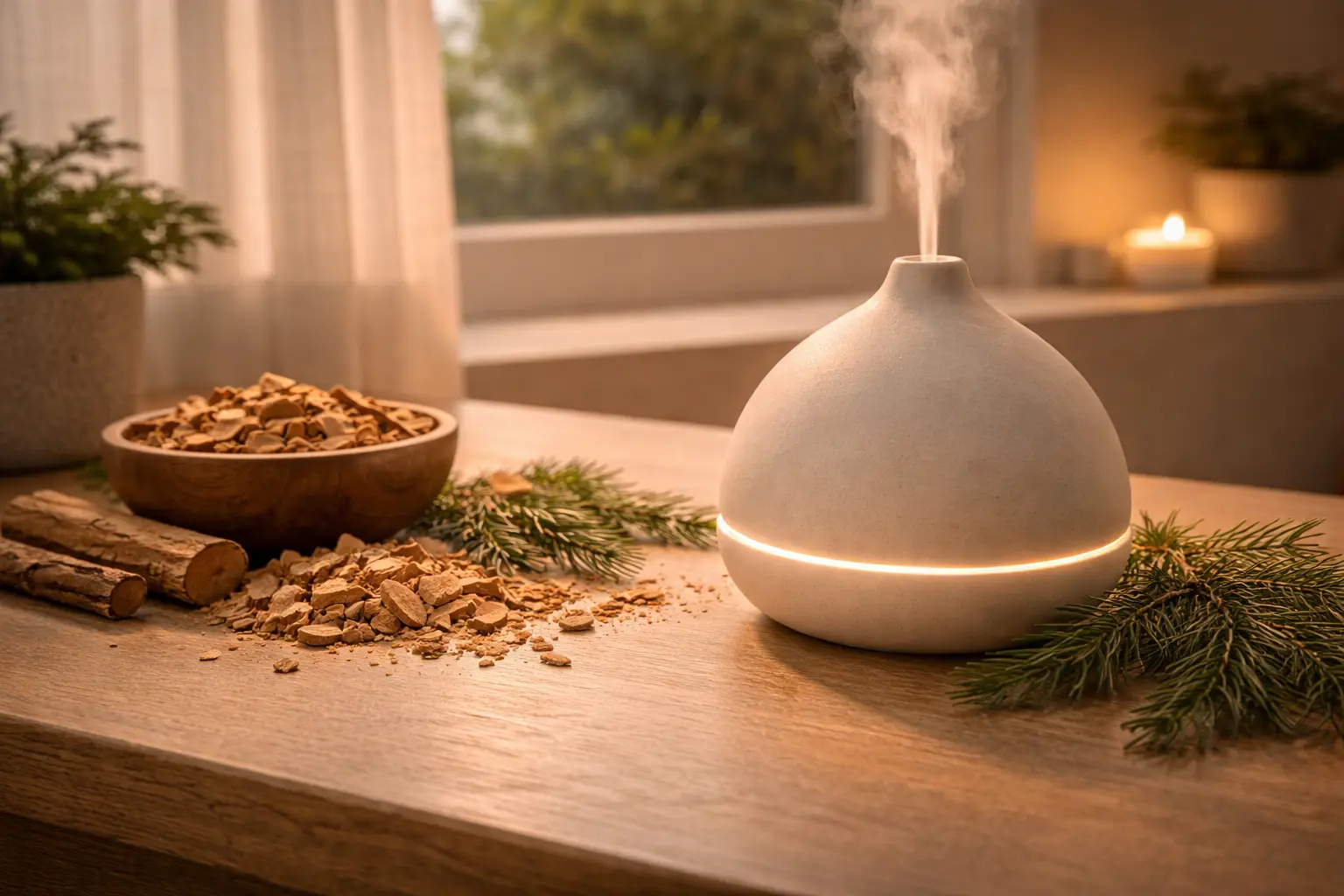
Cedarwood Atlas is one of those oils that rarely needs to announce itself loudly to change the feeling of a room. It does not sparkle, rush, or ask for attention in the way a bright citrus or sharp herb might. Instead, it tends to lower the emotional ceiling of a space. A room that felt scattered can feel more gathered. A corner that felt temporary can feel more lived-in. A home that has been full of movement can begin to feel like it has a floor again.
That makes Cedarwood Atlas Essential Oil especially useful when you want atmosphere without performance. It belongs in the quiet work of making a home feel settled: evening resets, reading corners, entryways that need a warmer landing, bedrooms that should feel calm without smelling sweet, and shared rooms that need depth without becoming heavy.
Quick Answer
Cedarwood Atlas works best when a home needs more grounding, warmth, and visual calm in aromatic form. It is not the oil to reach for when you want a sparkling fresh start. It is the oil to reach for when a room already feels clean enough, but still does not feel settled.
Use it lightly with citrus, lavender, frankincense, or soft herbaceous notes when you want the room to feel more anchored without turning the scent into a cabin, incense shop, or heavy evening blend.
Cedarwood Atlas Is a Room-Settling Oil
Some homes do not need more fragrance. They need more coherence. The cushions are straight, the dishes are done, the diffuser is clean, but the room still feels slightly unfinished. Cedarwood Atlas is useful in that exact gap because it does not simply make the air smell nice. It gives the air a base note. It can make the room feel as though the furniture, textiles, light, and end-of-day mood finally agree with each other.
This is why cedarwood often works better in small amounts than in big statements. Too much can make the room feel dry, woody, or overly serious. Just enough can create a sense of weight that lets lighter notes behave better. If a citrus blend keeps disappearing too quickly, cedarwood can give it a quieter foundation. If a lavender blend feels too airy or too familiar, cedarwood can make it feel more adult and room-shaped.

Where It Fits in Everyday Home Routines
A good cedarwood moment often starts with a physical reset. Fold the throw blanket, clear the coffee table, dim the room slightly, or open a window for five minutes before you diffuse. Cedarwood does not need a dramatic ritual around it, but it benefits from a room that is being asked to slow down. In that sense, it belongs near the same home logic as Why One Good Room Routine Beats Five Random Scent Habits.
It can also be a useful bridge between daytime and evening. If a room still feels mentally busy after work, cedarwood can help shift it toward a more settled register without making it sleepy right away. Paired with bergamot, it becomes more polished. Paired with lavender, it becomes softer. Paired with frankincense, it can become deeper, though that combination usually needs restraint in small rooms.
How to Keep Cedarwood from Feeling Too Heavy
The trick is to avoid asking cedarwood to do every job at once. If the room needs freshness, give cedarwood a bright partner. If the room needs softness, give it something more rounded. If the room needs air, keep the session short and let the window do part of the work. Cedarwood is wonderful at grounding, but grounding without air can become dull.
For shared spaces, cedarwood often works beautifully as a background note rather than as the main event. One drop beside citrus or a soft floral-green note can make the whole room feel more intentional. That is the difference between a room that smells woody and a room that feels quietly well-composed.
When Cedarwood Is the Wrong Answer
If the room already feels dark, still, or airless, cedarwood may not be the first move. In that case, start with airflow, a lighter citrus, or a green note before adding depth. Cedarwood can support a home beautifully, but it cannot replace ventilation or basic room reset habits. This matters especially in bedrooms and small apartments, where base notes tend to linger longer in textiles.
Used well, though, Cedarwood Atlas becomes one of the easiest ways to make a home feel less temporary. It is not fancy in a loud way. It is useful in a deeply domestic way: it helps a room feel like somewhere you can actually land.
Wellness
Essential Oils for a Calmer Evening Wind-Down Routine
A gentle, practical guide to using essential oils in an evening wind-down routine that softens the transition out of the day without turning bedtime into a big project.

Wellness
A Simple Aromatic Reset for Slow Weekend Mornings
A calm, readable guide to shaping a slow weekend morning with lighter scent, open windows, tea, journaling, and a home atmosphere that feels restorative instead of rushed.

Wellness
How to Choose the Lavender Mood That Actually Fits Your Routine
A practical guide to the different roles lavender can play in evening, linen, study, bedroom, and shared-space routines so it feels well-placed instead of automatic.
Wellness
12 Low-Effort Ways to Bring Lavender Essential Oil into Your Evening Routine
A lighter, more everyday guide to the small places lavender can fit into an evening routine when you want atmosphere, softness, and less friction instead of a complicated ritual.