
Why a Beautiful Oil Can Still Be the Wrong Oil for Your Room
Home
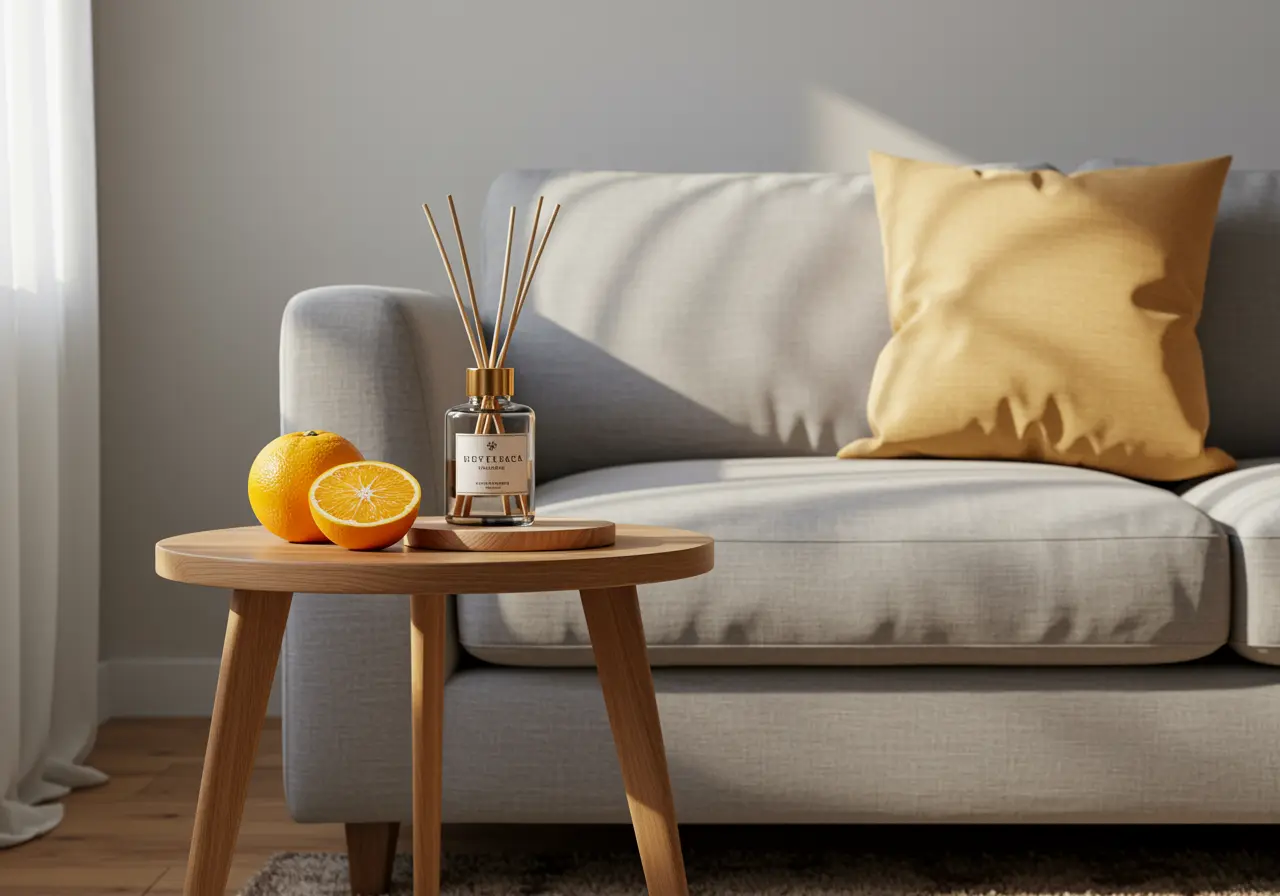
An essential oil can be objectively beautiful and still be completely wrong for a particular room. That is one of the most useful lessons in home scenting, and one of the easiest to miss. People often judge oils by the bottle, the blotter, or the memory of how lovely they smelled somewhere else. But rooms are not blank spaces. They have size, light, fabrics, traffic, airflow, daily functions, and people who have to live inside the aroma once it expands.
This is why a stunning floral may feel oppressive in a small bedroom, why a resin that smells elegant on a strip can feel heavy in a low-ventilation office, or why a sparkling citrus that seems almost too simple can turn out to be exactly right in a bathroom or entryway. Home scenting gets much easier once you stop asking only “Is this a beautiful oil?” and start asking “Is this the right oil for this room?”
Quick Answer
A beautiful oil can still be the wrong oil for your room because scent quality and room suitability are not the same thing. A room changes the way an oil behaves. Airflow, room size, heat, fabric absorption, social use, sensitivity of the people in the space, and the purpose of the room all shape whether a scent feels elegant, distracting, stale, heavy, flat, or just out of place.
The best room scent choices are not always the most luxurious or complex oils. They are the ones that fit the room’s function and scale. Often that means simpler, cleaner, more breathable choices than people first expect.
Why Bottle Beauty and Room Beauty Are Different Problems
When you smell an oil directly, you are judging its aroma in a concentrated, short-window way. You notice richness, elegance, complexity, freshness, texture, and the feeling it creates in the moment. But a room turns that quick experience into an atmosphere. Suddenly persistence matters. Projection matters. How the scent sits in textiles matters. How it interacts with daylight, heat, and movement matters.
That is why room scenting can feel counterintuitive at first. Some of the most impressive oils are actually harder to place well in ordinary spaces, while some of the simpler, cleaner oils are much easier to live with for an hour or two.
Room Function Changes Everything
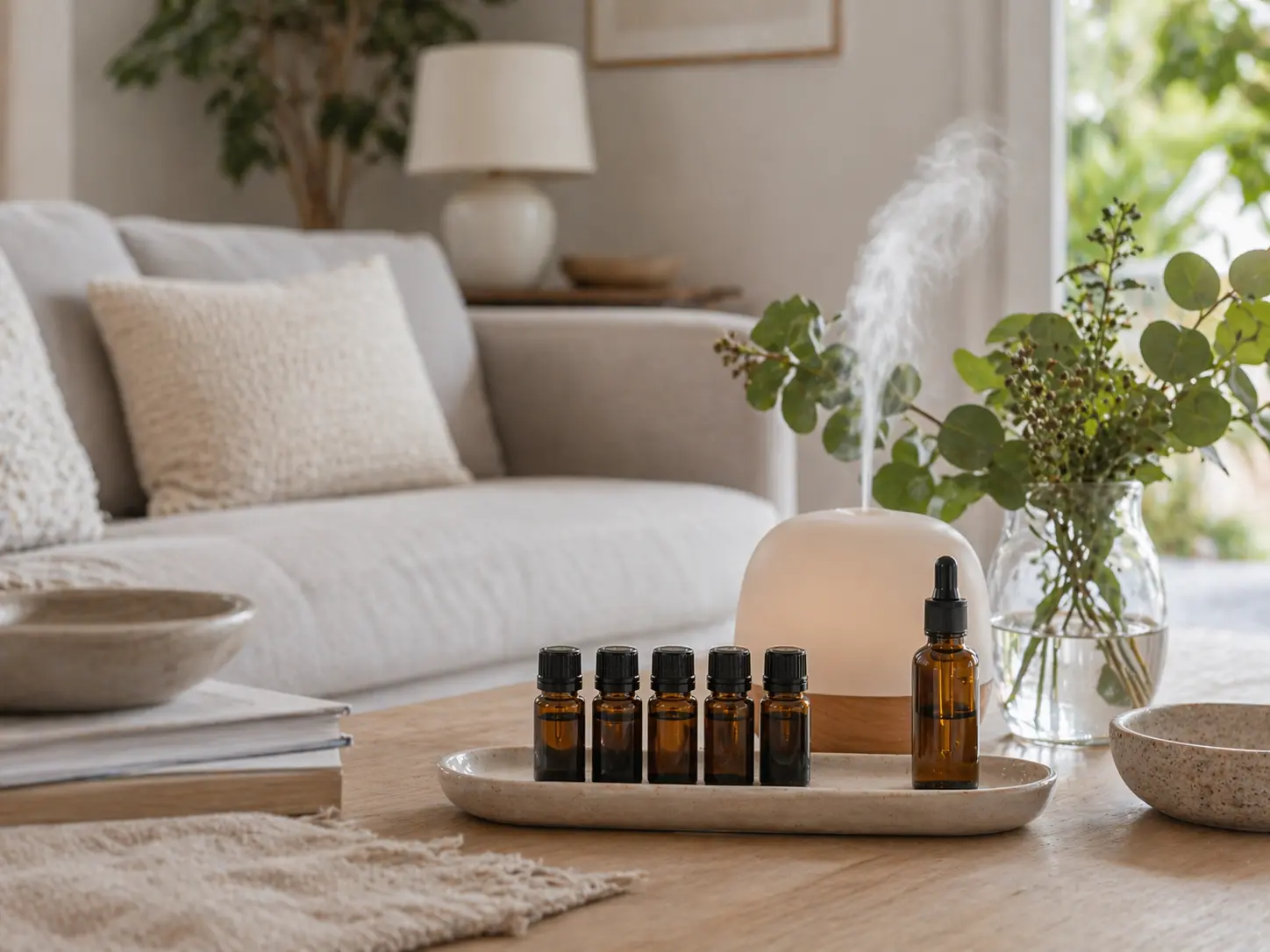
A bedroom, a bathroom, a guest-facing living room, and a work desk all ask for different aromatic behavior. Bedrooms usually need softness and restraint. Bathrooms can handle fresher, crisper profiles. Living rooms often benefit from polish and livability. Work areas tend to need clarity without sensory clutter. The same oil can move from perfect to completely wrong just by changing rooms.
This is why room-by-room thinking matters so much more than “best oils” lists. A resin, floral, or spice note that feels luxurious in a loungey evening corner may feel unworkable in a narrow hallway or a sunny kitchen.
Common Room Mismatch Patterns
Too rich for the space
Dense woods, resins, or sweet florals can feel beautiful in theory but claustrophobic in smaller rooms.
Too sharp for the purpose
A bright, alert scent may smell excellent but still work badly in a room meant for winding down.
Too distinctive for a shared room
A very characterful scent can dominate a social or family space even if it is gorgeous on its own.
Airflow and Fabric Quietly Rebuild the Scent
Rooms do not receive aroma evenly. Curtains, rugs, bedding, upholstery, and even wall closeness change the read. A cleaner citrus-wood blend may stay airy in an open, bright space, while a richer floral-amber direction can collect in fabric and feel heavier than intended. Limited airflow exaggerates this. So does heat.
This is one reason an oil that feels subtle during a quick test can become far more present after twenty minutes in a closed room. It has not only diffused. It has started interacting with the space.
The Most “Luxurious” Choice Is Often Not the Most Elegant Choice
People understandably assume that expensive florals, rare woods, or deep resin notes will create the most sophisticated room. Sometimes they do. But elegance in a room often comes from fit, not prestige. A finely judged bergamot, petitgrain, or cedarwood atlas direction can feel more refined in a shared space than a richer oil that is technically more “special.”
Real room elegance often comes from the scent that leaves the least friction behind.

Social Rooms Usually Need More Restraint than Personal Rooms
One of the clearest room questions is: who has to share this space? A scent that feels intimate and grounding when you are alone can feel too personal or too insistent in a room with guests, family, or coworkers. Social spaces usually reward fresher, drier, more breathable blends over heavy signature moods.
This is where articles like Essential Oils for a Guest-Ready Living Room and How to Use Essential Oils More Carefully Around Sensitive Guests become more useful than a generic ranking of oils by beauty alone.
Why Bedrooms and Workspaces Fail in Opposite Ways
Bedrooms usually fail when the scent is too present. What seemed calming in the evening can feel close, stale, or tiring once you are lying inside it. Workspaces often fail in the opposite direction: a scent may be too soft to shape the room at all, or so distinctive that it steals attention from the task.
That is why bedtime spaces often do better with low-intensity routines like calmer wind-down atmospheres, while desk or study spaces need something cleaner and more mentally quiet, as in study-support scent routines.
Room-fit reminder: if a scent keeps feeling too much for a room, the answer is usually not to prove the oil is good. It is to admit the room wants something else.
How to Judge Fit More Accurately
The best test is simple: smell the oil in the actual room, in the actual way you plan to use it, for a realistic amount of time. Not from the cap only. Not on a strip only. Notice what happens after fifteen or twenty minutes. Does the room feel clearer, heavier, sweeter, more social, calmer, sharper, or oddly crowded?
That is much more useful than trying to decide from bottle beauty alone. Good room scenting is applied judgment.
The Real Question Is Not “Is This Oil Good?”
The real question is whether this aroma helps this room feel more like itself at its best. If the answer is no, that does not diminish the oil. It simply means the room needs another kind of support. Once you start thinking that way, home scenting becomes much easier and much less romanticized.
You stop trying to force beloved oils into the wrong spaces, and start building rooms that actually feel better to inhabit.
Home
How to Choose the Right Diffuser for Each Room
A practical room-by-room guide to choosing diffuser size, intensity, timing, and placement for bedrooms, living rooms, work corners, entryways, and bathrooms.
Home
How to Freshen Laundry and Linens with Essential Oils
Freshen laundry, bed linens, towels, closets, and fabric routines with essential oils in a simple, clean-feeling, safety-first way.
Home
Essential Oils for a Guest-Ready Living Room
Create a welcoming living-room atmosphere with essential oils that feel polished, lived-in, and guest-ready without turning the room overly sweet or heavy.
Home
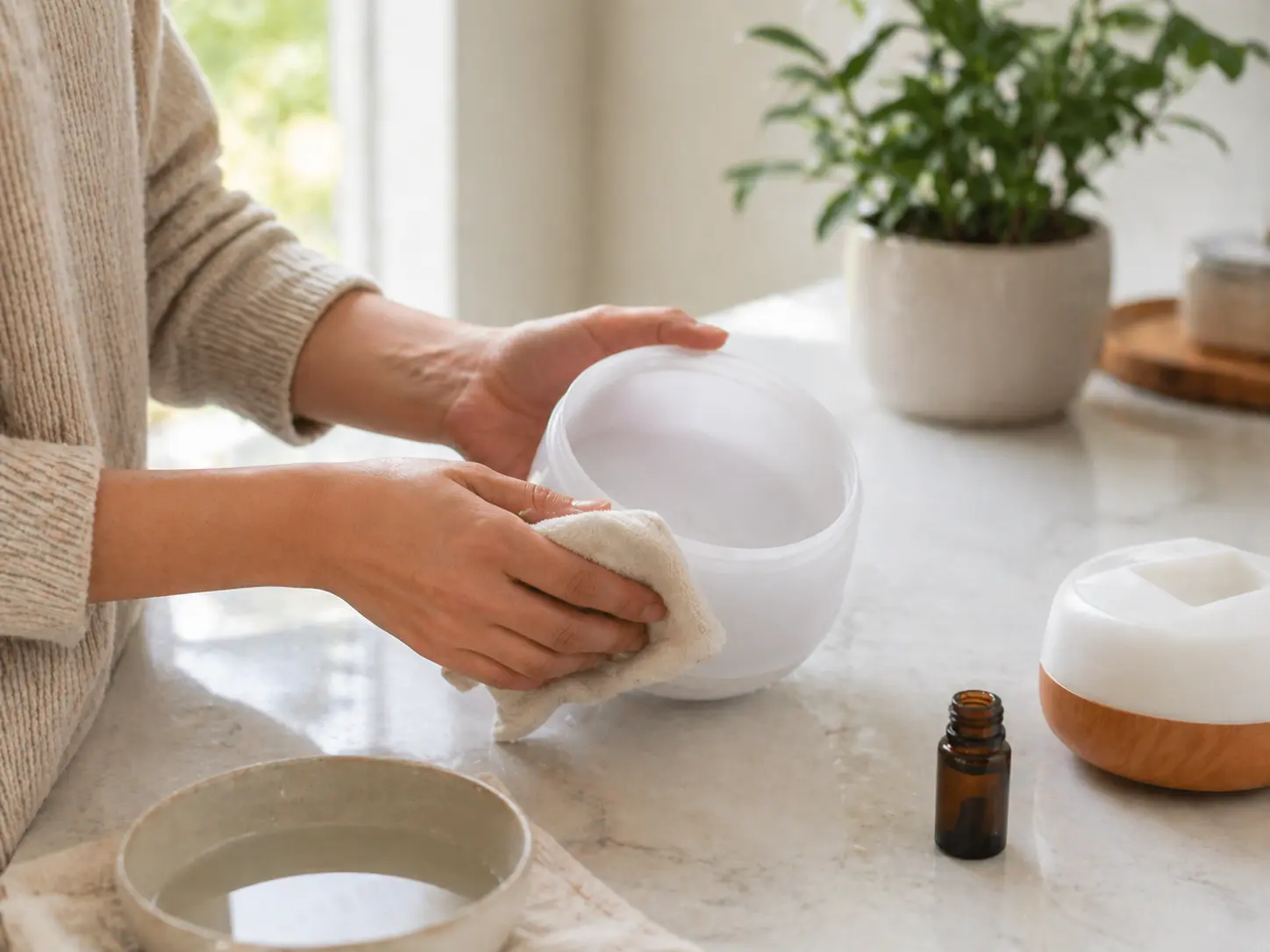
How to Clean an Essential Oil Diffuser
A practical, safety-first guide to cleaning an essential oil diffuser so it runs better, smells fresher, and fits cleanly into a real home routine.
Further Reading and Sources
These internal reads are the best next step if you want to think more practically about room-by-room scent fit and atmospheric restraint.