
How Scent Fatigue Changes the Way You Judge a Blend
Science

One of the easiest ways to misjudge a blend is to keep smelling it past the point where your nose is giving you good information. A blend that felt nuanced ten minutes ago can suddenly seem flat, too sweet, oddly sharp, or disappointing. Many people interpret that shift as proof that the blend itself is weak or wrong. Very often, though, the bigger story is scent fatigue.
Scent fatigue is not a sign of inexperience. It is part of how olfaction works. The nose and brain adapt quickly, especially when a smell stays present in one space for too long or when multiple aromatic decisions are being made back to back. If you love blending, evaluating oils, or tuning diffuser formulas, this matters a lot. A tired nose can make good blends seem dull and unbalanced ones seem temporarily acceptable.
Quick Answer
Scent fatigue changes the way you judge a blend because your smell system adapts fast. After repeated or continuous exposure, a blend may seem weaker, blurrier, sweeter, harsher, or less interesting than it actually is in a fresh-smelling moment. That does not always mean the formula is poor. It may mean your sensory read is no longer clean.
The best response is not to keep adding more oils. It is to reset. Step away, ventilate the room, drink water, smell something neutral, and return later. Many blend problems are made worse by trying to solve them with an already fatigued nose.
Why the Nose Stops Reading a Blend Cleanly
Olfaction is highly adaptive. That is helpful in daily life because it keeps us from being overwhelmed by every stable smell in the room. But the same feature makes blend judgment slippery. The longer you stay inside the same aromatic field, the less reliable your internal “what is happening here?” meter becomes.
In practice, this means a blend may lose sparkle simply because your perception is normalizing it. Top notes seem to disappear first. Soft transitions become harder to notice. The whole structure can collapse into a general feeling of “less interesting” even when the blend itself has not materially changed.

Why Good Blends Often Get Over-Edited
This is one of the most common blend-making traps: the first version is balanced, but after repeated smelling it starts to seem too soft or incomplete. So you add another drop. Then another. Then perhaps a brighter top note, a deeper base, or a sharper herbal lift. By the end, the blend no longer resembles the thing that felt elegant at the start.
The irony is that the early version may have been the better one. What changed was not necessarily the formula. It was the evaluator. Scent fatigue encourages “fixing” a blend that is already close to right.
Signs You May Be Smelling with a Tired Nose
Everything starts feeling weak
If every blend suddenly seems underpowered, the problem may be your sensory threshold, not the formulas.
You keep chasing the top notes
Citrus and light herbal openings often feel like they vanished first, even when they were present at the start.
You make bigger changes than necessary
If you are tempted to overhaul the blend after many repeated sniffs, pause before editing further.
Room Context Can Distort the Read Too
A blend is never judged in perfect isolation. The room matters. If the space is already carrying yesterday’s diffuser notes, laundry fragrance, body oil residue, or cooking smell, your perception is working through layers. That can make a clean blend feel muddier, or a subtle one feel harder to read.
This is part of why some people think a blend “fails at home” after loving it on a blotter or in a fresh studio setup. The problem may not be the blend. It may be the accumulated scent context around it.
Scent Fatigue Is Different from Truly Stopping Tolerating an Oil
It is worth separating these two experiences. In scent fatigue, the blend becomes hard to evaluate accurately because your nose has adapted. In tolerance problems, a scent may start to feel oppressive, headachy, emotionally tiring, or physically unwelcome. The overlap is real, but the response is slightly different.
If you suspect the issue is broader than mere adaptation, the companion read is Why Some People Suddenly Stop Tolerating a Favorite Oil. That article looks at oxidation, sensitivity shifts, hormone change, and overload. This one is more about perception drift during evaluation itself.
Blends Are Especially Vulnerable Because They Have Structure
Single oils can fatigue the nose too, but blends are more complicated because they rely on relationships between notes. A blend may open brightly, settle into a floral or herbal heart, then lean into wood or resin. When your perception adapts unevenly, that structure can become difficult to read. Suddenly the blend seems too base-heavy, too sweet, or strangely hollow.
That does not always mean the composition failed. It may mean your brain is no longer reading the transitions with the same clarity it had at the beginning.
Blend-making reminder: if a room starts feeling full, stale, or vaguely irritating, do not keep compensating by adding more drops. A fresher nose is usually more helpful than a stronger formula.
How to Reset Before Judging Again
The most useful reset is simple. Step away from the blend. Open a window or move to a neutral room. Let a few minutes pass without more smelling. Drink water. Avoid stacking another intense aroma on top in the name of “clearing” your nose. Then return and smell once or twice, not twenty times in a row.
This matters whether you are evaluating a diffuser blend, a room spray direction, or a perfume-style composition. Fresh judgment nearly always beats persistent judgment.
Why Simpler Comparison Habits Usually Work Better
If you are comparing blends, keep the test narrow. Two versions are easier than five. A clean room is better than a layered room. Short notes are better than trying to hold everything in memory. If you want to know whether one version is actually better, make the comparison easier on your perception, not harder.
Many blend problems become clearer when the process becomes quieter. That is one of the recurring lessons across good home scent work: less noise, better decisions.
The Best Blending Discipline Is Often Restraint
People usually imagine creative scent work as a matter of adding. Very often, though, the real discipline is stopping. Stop smelling for a minute. Stop editing for one round. Stop assuming that weaker means worse. Stop trying to force a tired nose into certainty.
Once you work that way, blend judgment often becomes more accurate and much less frustrating. You start evaluating what is really in front of you instead of what your adapted nose happens to be missing.
Science
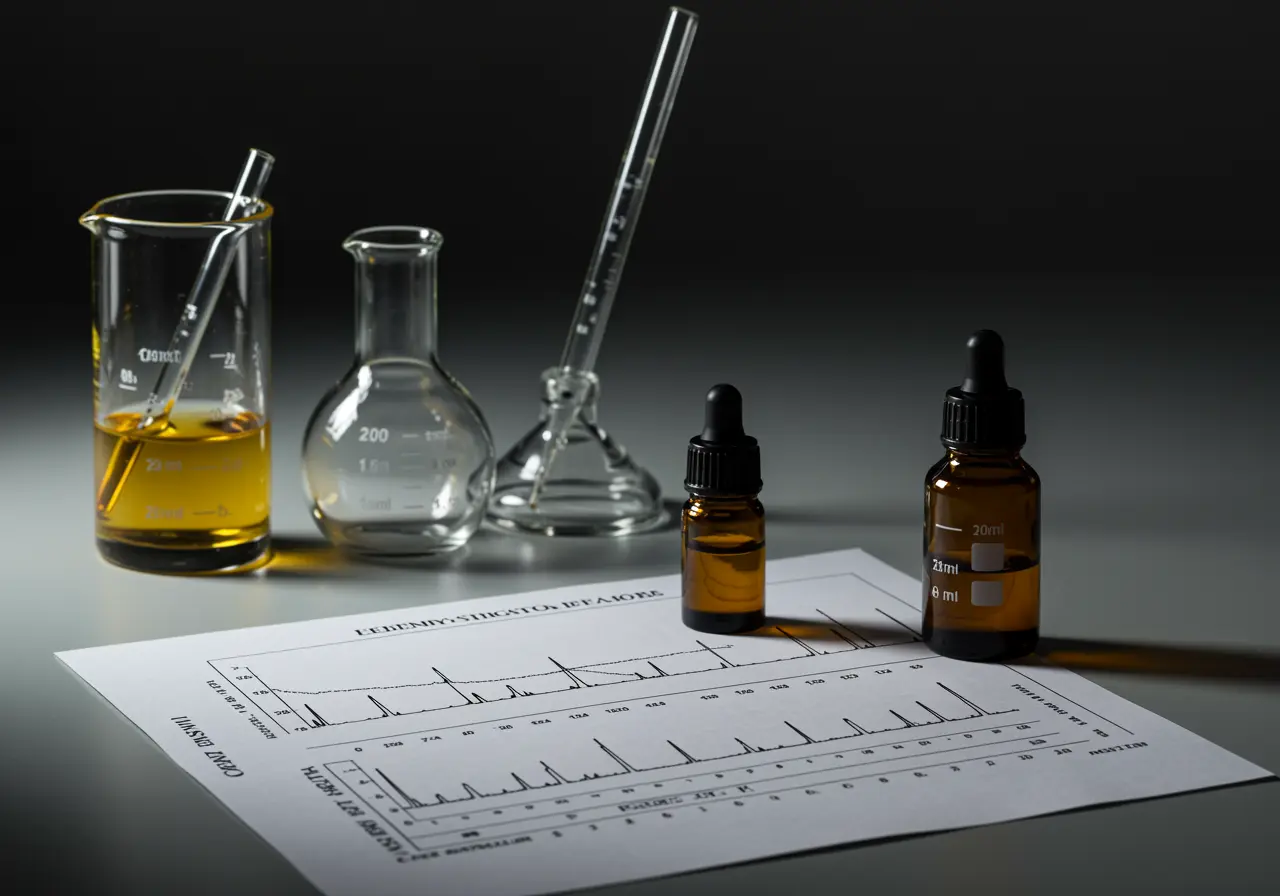
What Is a GC/MS Test in Essential Oils?
A practical, plain-English guide to what GC/MS reports show, what they do not prove, and how to read them without overestimating what a lab sheet can tell you.

Science
Cold Pressed vs Steam Distilled Citrus Oils
Learn how extraction changes aroma, phototoxicity concerns, and practical home use when comparing cold pressed and steam distilled citrus essential oils.

Science
Why Oxidized Essential Oils Smell and Behave Differently
A plain-English guide to what oxidation does to essential oils over time, why aroma changes matter, and how storage habits shape how an oil smells and behaves later on.

Science
Migraine and Essential Oils: Why the Evidence Is More Mixed Than the Internet Suggests
A plain-English look at what migraine research on essential oils actually suggests, where the evidence is thin, and why a soothing ritual is not the same thing as a proven migraine treatment.
Further Reading and Sources
These related reads help place scent fatigue inside the bigger picture of practical aroma judgment, oxidation, and tolerance.