
Roll-on Blends for a Fresh Start
Roll-on Blend
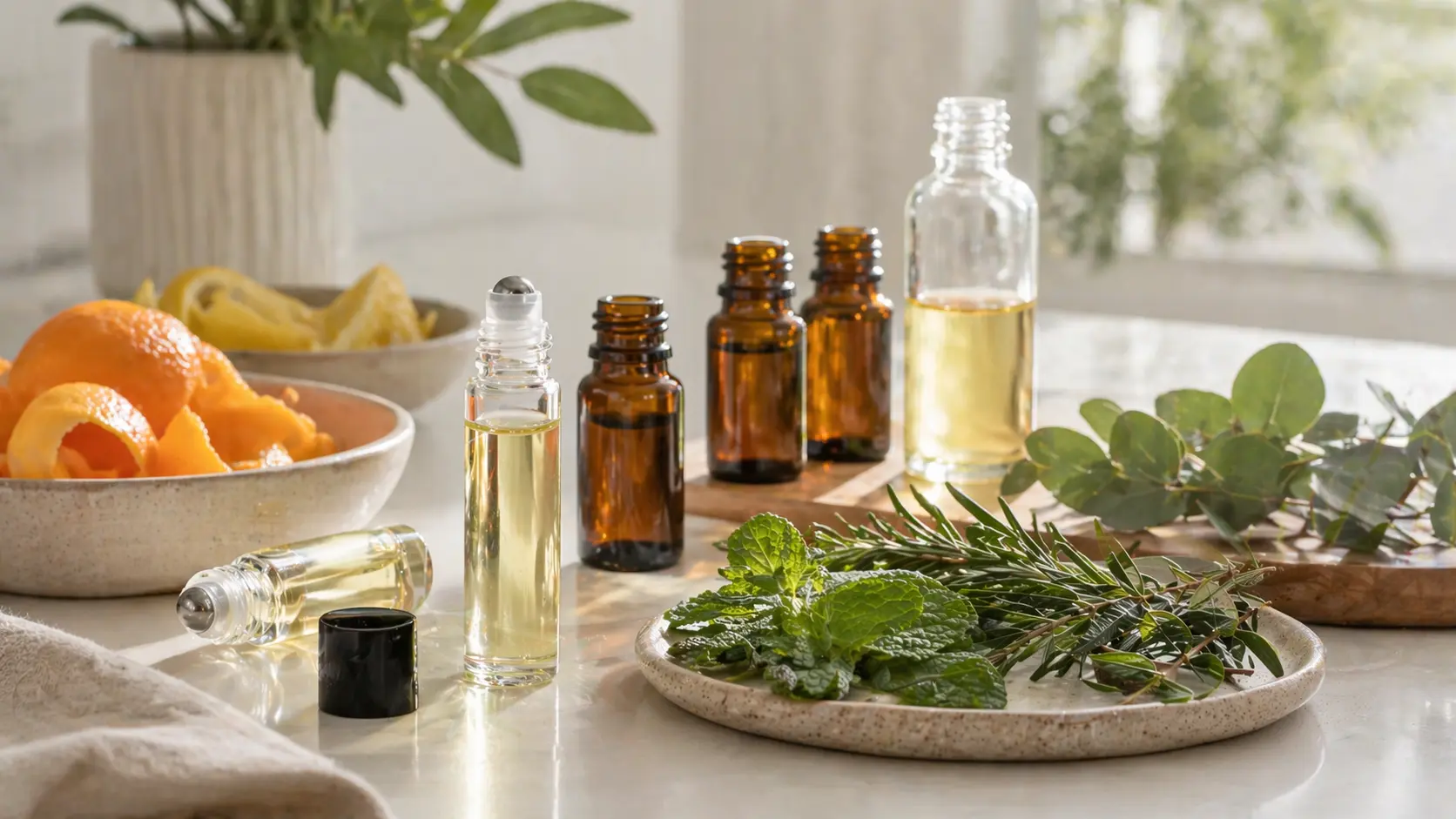
Fresh-start roll-ons are useful when you want a small ritual for changing context: leaving home, beginning a new task, resetting after travel, or returning to a routine. They should feel bright and clean without becoming a strong fragrance cloud around other people.
Citrus works naturally here, but topical citrus safety matters. Choose non-phototoxic options where possible, check the extraction method, and protect applied skin from UV when using phototoxic expressed oils.
Quick Answer
Each recipe below is written for a 10 mL roller bottle. Add the listed essential oils, fill the rest with a suitable carrier oil, cap, label, and patch test. The recipes use 3 to 4 total drops, which is roughly a low adult dilution because drop size varies.
How to Make a 10 mL Roll-on Safely
Add the listed drops to a clean 10 mL roller bottle, then fill the bottle with a carrier such as jojoba, fractionated coconut, sunflower, or another carrier that suits your skin and storage needs. Fit the roller insert, close the bottle, roll it gently between your hands, and label it with the ingredients and date.
Patch test before wider use. Apply only to intact skin, keep the blend away from eyes, eyelids, nostrils, lips, mucous membranes, and freshly shaved or irritated areas, and wash your hands after handling. A roller is a leave-on topical product, so oil-specific dermal limits and citrus phototoxicity still apply.
Topical reminder: these are conservative adult examples, not formulas for babies or children. Pregnancy, breastfeeding, medication use, allergies, sensitive skin, and medical conditions may require different oils or professional guidance.
Start Here: Balanced Roll-on Blends for a Fresh Start
These first recipes stay close to the core theme and make useful reference points before you start substituting oils.
1. Clean Start
- 2 drops lemon
- 1 drop rosemary
- 1 drop frankincense
- Carrier oil to fill a 10 mL roller bottle
Bright and structured; check the lemon extraction method for topical use.
2. Green Morning
- 2 drops petitgrain
- 1 drop spearmint
- 1 drop cedarwood atlas
- Carrier oil to fill a 10 mL roller bottle
Fresh without a peel-oil focus and easy to keep subtle.
3. Sunny Reset
- 2 drops sweet orange
- 1 drop rosemary
- 1 drop frankincense
- Carrier oil to fill a 10 mL roller bottle
Warm citrus for a friendly, low-pressure start.
4. Fresh Page
- 2 drops bergamot
- 1 drop basil
- 1 drop cedarwood atlas
- Carrier oil to fill a 10 mL roller bottle
A polished citrus-herb blend; use FCF bergamot for sun-exposed skin.
More Ways to Shape the Mood
The second group shifts the same idea toward greener, warmer, brighter, or more grounded territory without simply increasing the total amount.
5. Light Step
- 2 drops pink grapefruit
- 1 drop spearmint
- 1 drop frankincense
- Carrier oil to fill a 10 mL roller bottle
Bright, soft-minty, and grounded enough for close use.
6. Crisp Transition
- 2 drops lime
- 1 drop cypress
- 1 drop cedarwood atlas
- Carrier oil to fill a 10 mL roller bottle
Sparkling and dry; distilled lime is the simpler topical choice.
7. Clear Air Cue
- 1 drop eucalyptus radiata
- 2 drops lemon
- 1 drop frankincense
- Carrier oil to fill a 10 mL roller bottle
A stronger adult blend that should stay well away from eyes and nostrils.
8. Gentle Restart
- 1 drop lavender
- 2 drops sweet orange
- 1 drop rosemary
- Carrier oil to fill a 10 mL roller bottle
A softer reset for days when mint and sharp citrus feel like too much.
How to Adjust a Blend Without Making It Stronger
If the blend feels too sharp, reduce mint, eucalyptus, rosemary, basil, tea tree, or bright peel oils before adding anything else. Lavender, sweet orange, frankincense, cedarwood, or petitgrain can soften an edge, but the total drop count does not need to rise. If the blend feels too sweet or vague, one dry green or woody note is usually more useful than another citrus layer.
Change one ingredient at a time and record the result. That makes it easier to understand whether the blend needed more air, more structure, or simply less fragrance. Substitution also requires a fresh safety check: similar-smelling oils may have different topical limits, age cautions, oxidation patterns, or phototoxicity concerns.
Citrus and Sun Exposure
Several roll-on recipes use citrus oils. Cold-pressed bergamot and expressed lime are important phototoxicity concerns, and some lemon or grapefruit products also require care depending on extraction and concentration. FCF bergamot and steam-distilled lime can simplify formulation, but always check the exact bottle and supplier documentation. When uncertain, apply the blend to a covered area or choose a non-phototoxic alternative.
Further Reading and Sources
Use these resources for general safety context, then check the individual oil profile for the exact ingredient you plan to use.