
How to Make an Entryway Smell Better Without Using Constant Fragrance
Home
.webp)
Entryways are one of the easiest places in a home to get scent wrong. Because they are transitional, people often try to make them welcoming with constant fragrance. But what an entryway usually needs more than perfume is relief: less trapped outdoor smell, less stale fabric air, less shoe-and-coat buildup, and a faster reset after the door has been opened and closed all day.
That is why the best-smelling entryways often feel fresher, not stronger. They smell like air movement, edited fabric, and a light aromatic signal placed carefully enough that it helps the space instead of coating it.
Quick Answer
If you want an entryway to smell better, start with the real odor load: shoes, outerwear, trapped fabric air, dampness, and low airflow. Then use a very restrained scent layer, often passive rather than constant, to support the reset.
The goal is not to create a fragranced threshold. It is to make the first air in the house feel cleaner, lighter, and more put together.
Entryways Carry More Than One Smell at a Time
This is what makes them tricky. An entryway does not usually have a single odor problem. It has a stack: outside air, shoe materials, coats, humidity, dust, sometimes pet traffic, sometimes vacuum or cleaning smells, and the simple fact that the area often has less glamorous storage pressure than the rest of the home.
If you try to solve all of that with constant fragrance, the result usually feels more crowded instead of more welcoming. The first task is reducing the stack, not perfuming it into silence.
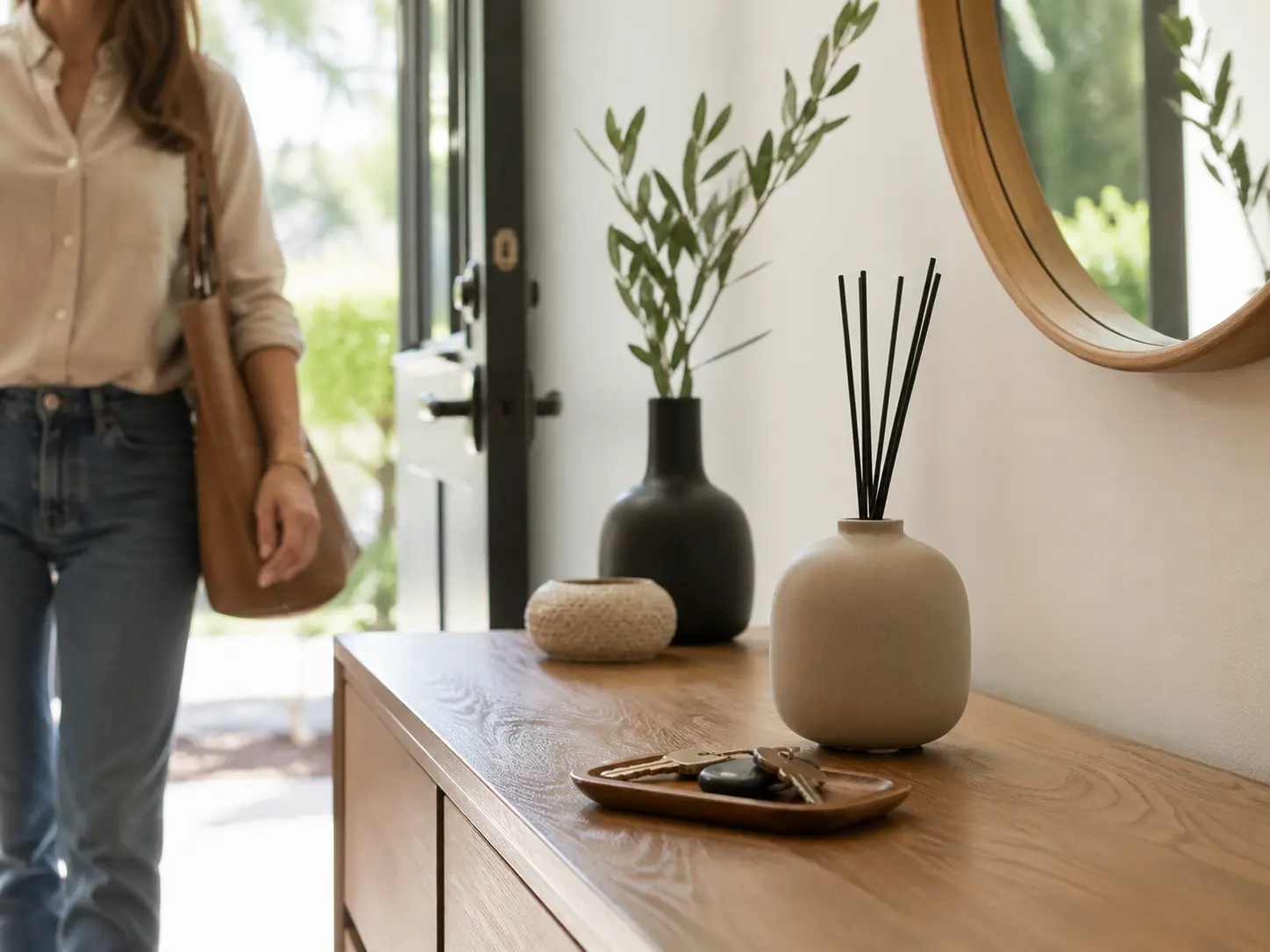
Airflow Does More Than Most Entry Fragrance Products
Because entryways are transitional spaces, they often benefit from quick resets instead of permanent scenting. A few minutes of airflow, especially after people come in with coats, shoes, or damp air, can do more for the space than a stronger oil blend does. The reason is simple: the room needs its stale edge reduced before a clean-smelling aromatic layer has any chance to read well.
This is why entryway fragrance works best when it follows ventilation and tidying, not when it replaces them. A lightly aired space plus one subtle scent direction feels composed. A closed, fabric-loaded entry plus constant fragrance usually feels coated.
The Best Entryway Scent Often Is Not a Full Diffuser
Entryways are one of the places where a passive setup can make more sense than continuous diffusion. A small passive vessel, a scent sachet placed wisely, or a short freshening moment before guests often fits the space better than asking the entrance to behave like a lounge.
That is exactly the kind of reasoning behind Passive Diffusers for Small Spaces. Not every square meter of a home needs the same delivery method.
Easy Entryway Improvements That Usually Matter
Edit the shoe zone
Fewer exposed pairs and a faster reset around the floor usually change the entryway immediately.
Refresh fabric regularly
Coats, bags, runners, and baskets often decide the mood more than the scent product does.
Use one clean scent direction
Try something citrus-green or airy-wood instead of mixing bright and sweet at the threshold.
What Works Well in an Entryway
Entryways usually do best with scents that feel quick, clean, and alert. Lemon, petitgrain, rosemary, eucalyptus radiata, or a little cedarwood atlas can all work depending on the mood of the rest of the home.
What usually works less well is anything too sweet, powdery, or lounge-like. Entry scent has a functional job. It introduces the house, clears the threshold, and then gets out of the way.
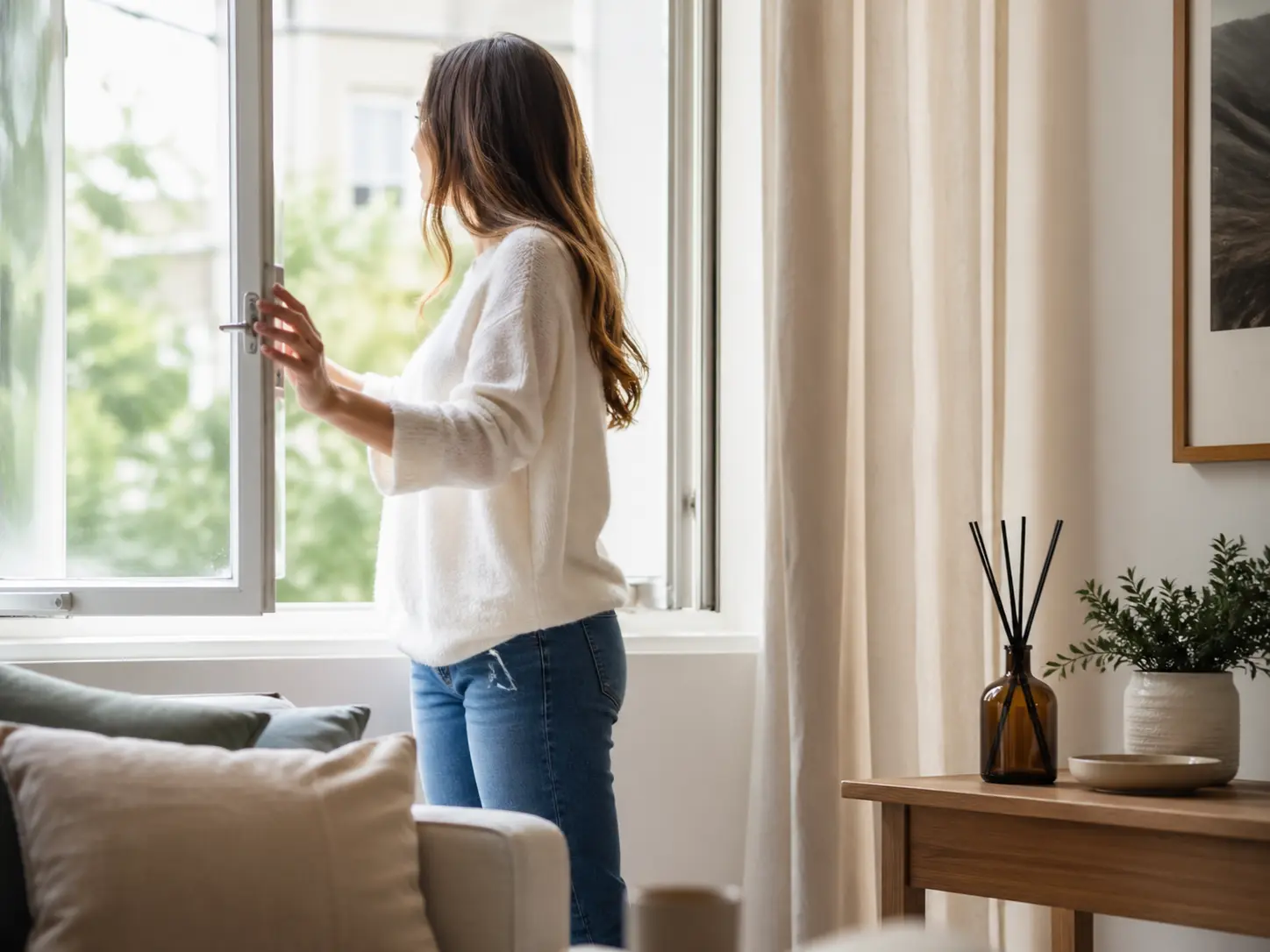
An Entryway Should Feel Reset, Not Perfumed
That may be the simplest rule worth keeping. A good entryway does not greet people with a wall of fragrance. It lets them feel that the home is cared for. The air is lighter. The fabric pressure is lower. The space is edited enough that one small aromatic cue can feel tasteful instead of corrective.
Once you aim for reset instead of perfume, entryway scent becomes much easier to place well.
Home
How to Choose the Right Diffuser for Each Room
A practical room-by-room guide to choosing diffuser size, intensity, timing, and placement for bedrooms, living rooms, work corners, entryways, and bathrooms.
Home
How to Freshen Laundry and Linens with Essential Oils
Freshen laundry, bed linens, towels, closets, and fabric routines with essential oils in a simple, clean-feeling, safety-first way.
Home
Essential Oils for a Guest-Ready Living Room
Create a welcoming living-room atmosphere with essential oils that feel polished, lived-in, and guest-ready without turning the room overly sweet or heavy.
Home
How to Clean an Essential Oil Diffuser
A practical, safety-first guide to cleaning an essential oil diffuser so it runs better, smells fresher, and fits cleanly into a real home routine.
Further Reading and Sources
These related reads help treat the entryway as a real scent environment rather than just a place to hide odor.