
Season-by-Season Home Scent Shifts
Seasonal
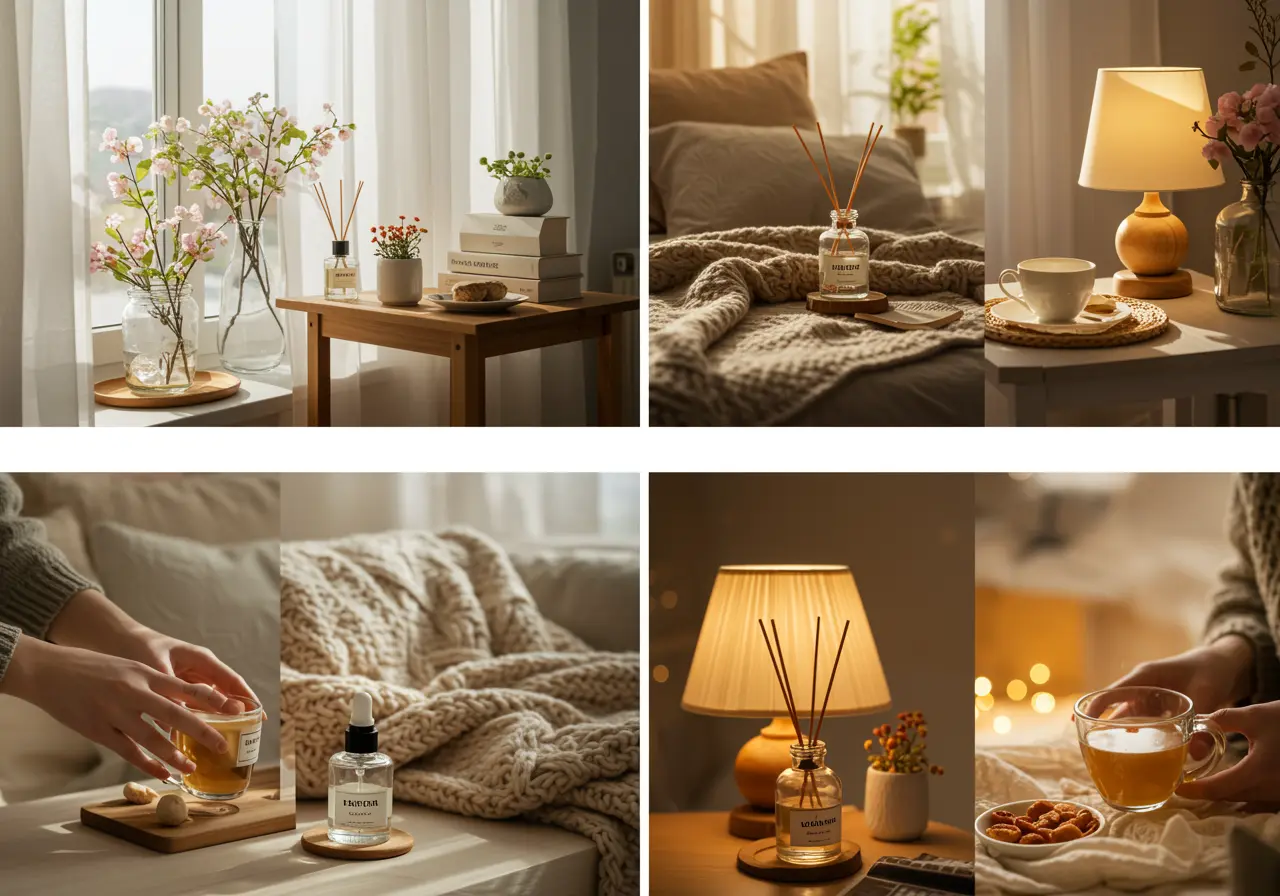
Home scent usually feels best when it changes with the season instead of staying exactly the same all year. The light, pace, fabrics, and routines of spring are not the same as autumn or winter, so the aromas that feel natural in those spaces often shift too. This does not need to mean buying entirely new collections. It usually means changing direction with more intention.
Some seasons want more air and brightness. Others want quiet softness, warmth, or cleaner structure. When scent follows the season, the whole home feels more in tune with the way people are actually living in it.
Quick Answer
Season-by-season scent shifts work best when you adapt the mood of the home rather than replacing everything at once. Spring often suits brighter fresh blends, summer leans airy and clean, autumn usually wants more warmth and structure, and winter often feels best with calmer, softer depth. The shift can be subtle, but it often changes the entire feel of a room.
A good seasonal scent routine is not about chasing novelty. It is about letting the home feel aligned with the time of year. Open-window citrus in spring, light herbs in summer, woods in autumn, and deeper comforting notes in winter are often enough to make the whole atmosphere feel more natural.
Why Seasonal Scent Feels More Natural
The home changes with the season even before scent is involved. Light enters differently, fabrics get heavier or lighter, windows open or stay shut, and routines shift with weather, work, and time indoors. Aroma feels more believable when it responds to those changes instead of staying fixed.
This is why a blend that feels perfect in March may feel too sharp in late November, and a warm winter blend may feel too dense on a bright summer morning. Seasonal scent is less about rules and more about noticing what the room already wants.
Spring and Summer Usually Want More Air
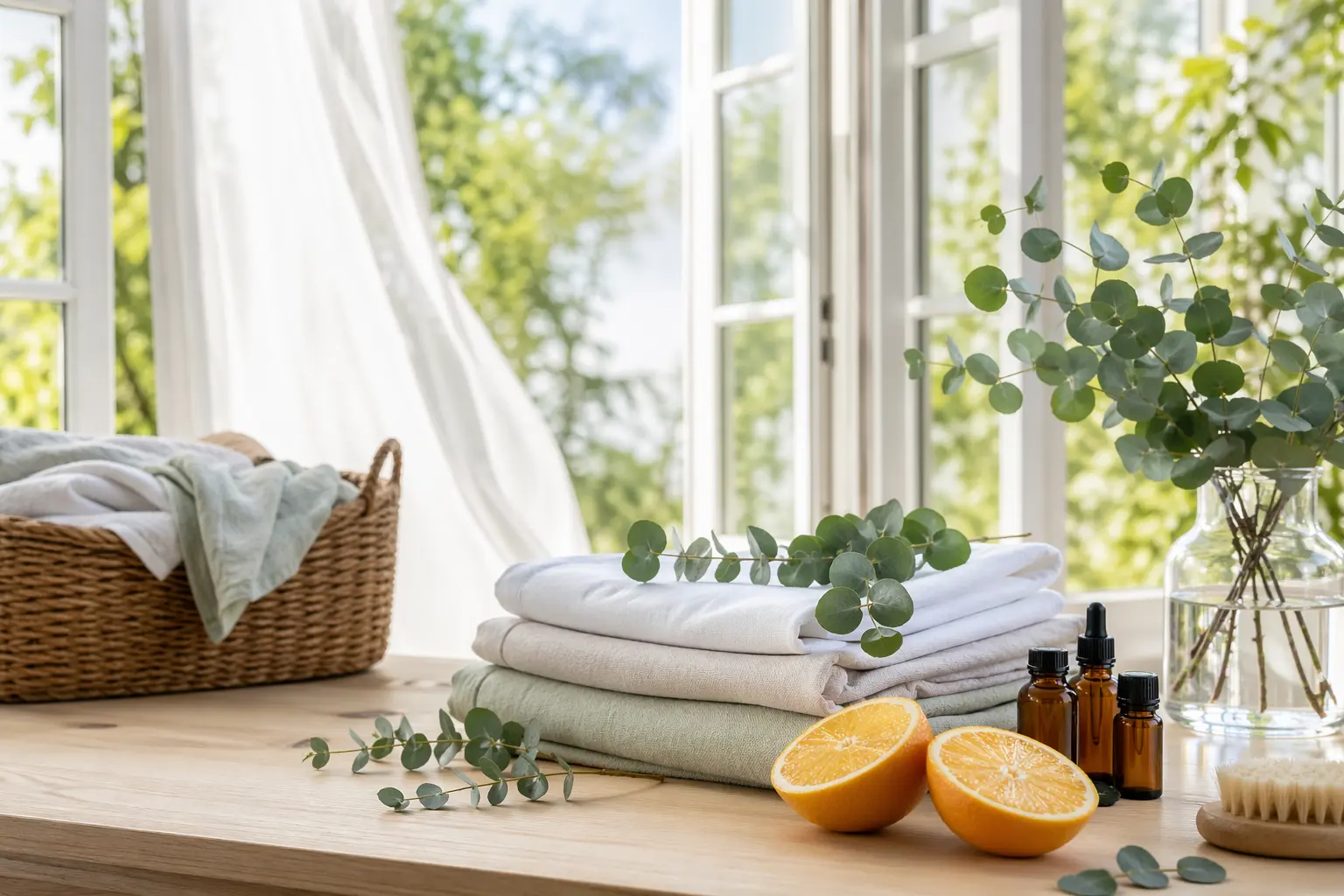
Spring often suits the freshest blends: open-window citrus, clean linen mood, green herbal brightness, and a sense of movement through the room. Lemon, rosemary, eucalyptus radiata, and pink grapefruit often feel especially natural here.
Summer usually wants brightness too, but often with a little more calm and less “just cleaned” energy. That may mean lighter citrus, fresh herbs, or breathable blends that do not feel too dense in warmer air.
Seasonal Mood Directions
Spring refresh
Think open windows, citrus, linen, and clean green movement through the room.
Summer clarity
Keep it bright and airy without making the home feel over-perfumed in warm weather.
Autumn into winter
Shift gradually toward woods, resins, and softer grounding blends rather than making a sudden jump.
Autumn and Winter Usually Want More Structure
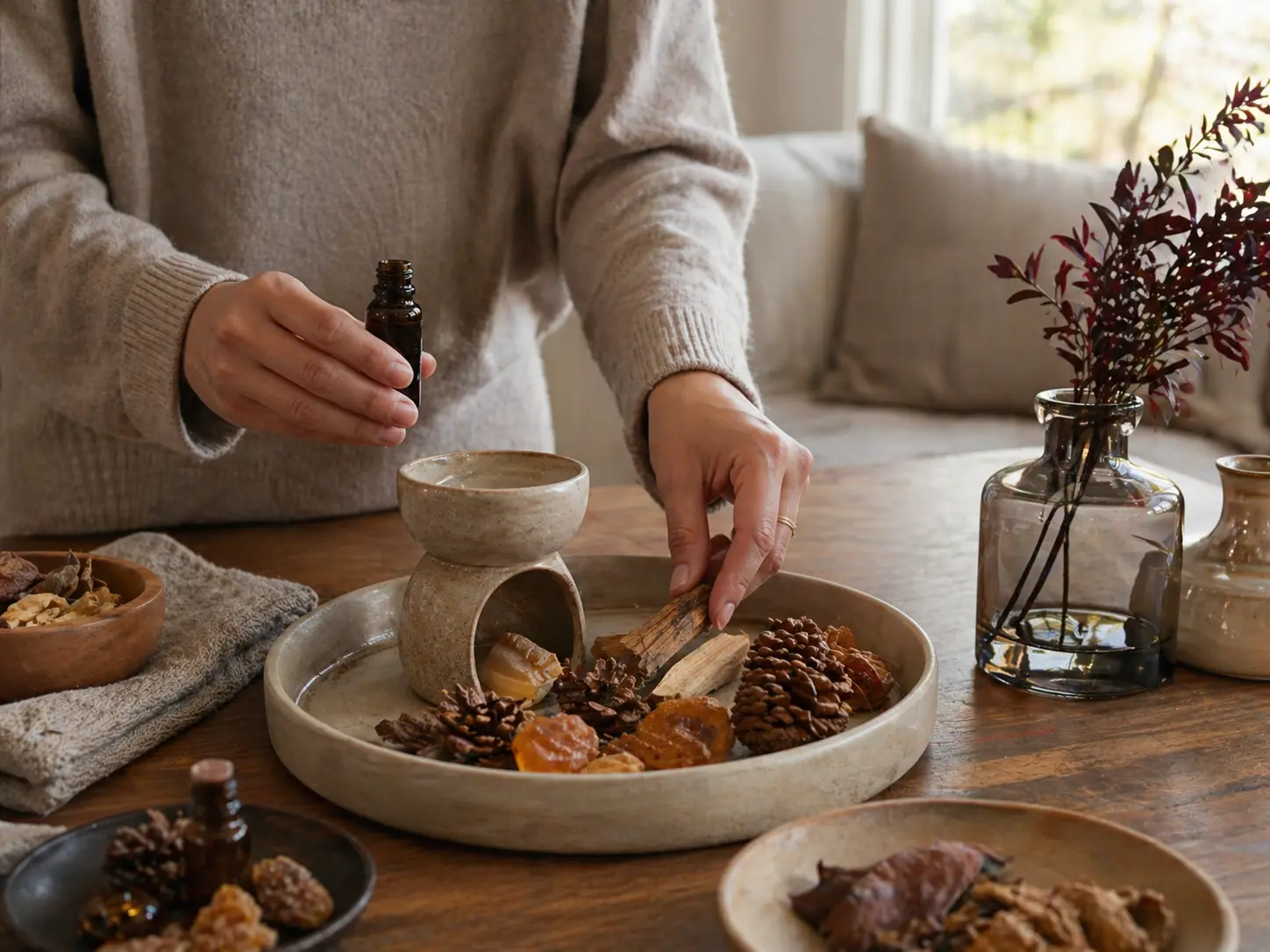
As the year gets darker and the home closes in a little more, many spaces feel better with warmer and more grounded aromatic structure. Cedarwood atlas, frankincense, and softer evening oils can make a room feel quieter and more settled without turning it heavy.
Winter especially benefits from restraint. Comfort does not have to mean intensity. Often the nicest winter scent is just a calm, slower room rather than something very strong or obviously seasonal.
Shift Slowly, Not All at Once
The easiest way to handle seasonal scent is to move gradually. A spring home does not need every winter note removed at once, and autumn does not need the whole room turned into a spice cabinet overnight. Small shifts in blend direction often feel far more elegant.
This also makes it easier to work with the oils you already have. A collection can feel more versatile when you think in seasonal mood changes instead of fixed formulas. A citrus can be spring-fresh in one blend and winter-bright in another. A wood can feel grounding in autumn and quietly supportive in summer if it is used differently.
Seasonal reminder: The most believable seasonal scent changes are usually modest ones. Let the room lead, and use aroma to support the season rather than forcing it.
Seasonal
Open-Window Spring Scent Ideas for a Lighter Home Mood
A spring scent guide built around open windows, lighter blends, green freshness, and room moods that feel brighter without tipping into sharp or soapy territory.
Seasonal
How to Build a Spring Home Mood Without Making It Floral
A practical spring guide for people who want brightness, air, and reset in the room without leaning too hard on obvious floral sweetness.
Further Reading and Sources
These related pages help extend seasonal scent planning into blends, room routines, and home atmosphere.