
Pink Grapefruit Essential Oil for Bright Home Moments That Do Not Feel Too Sweet
Wellness
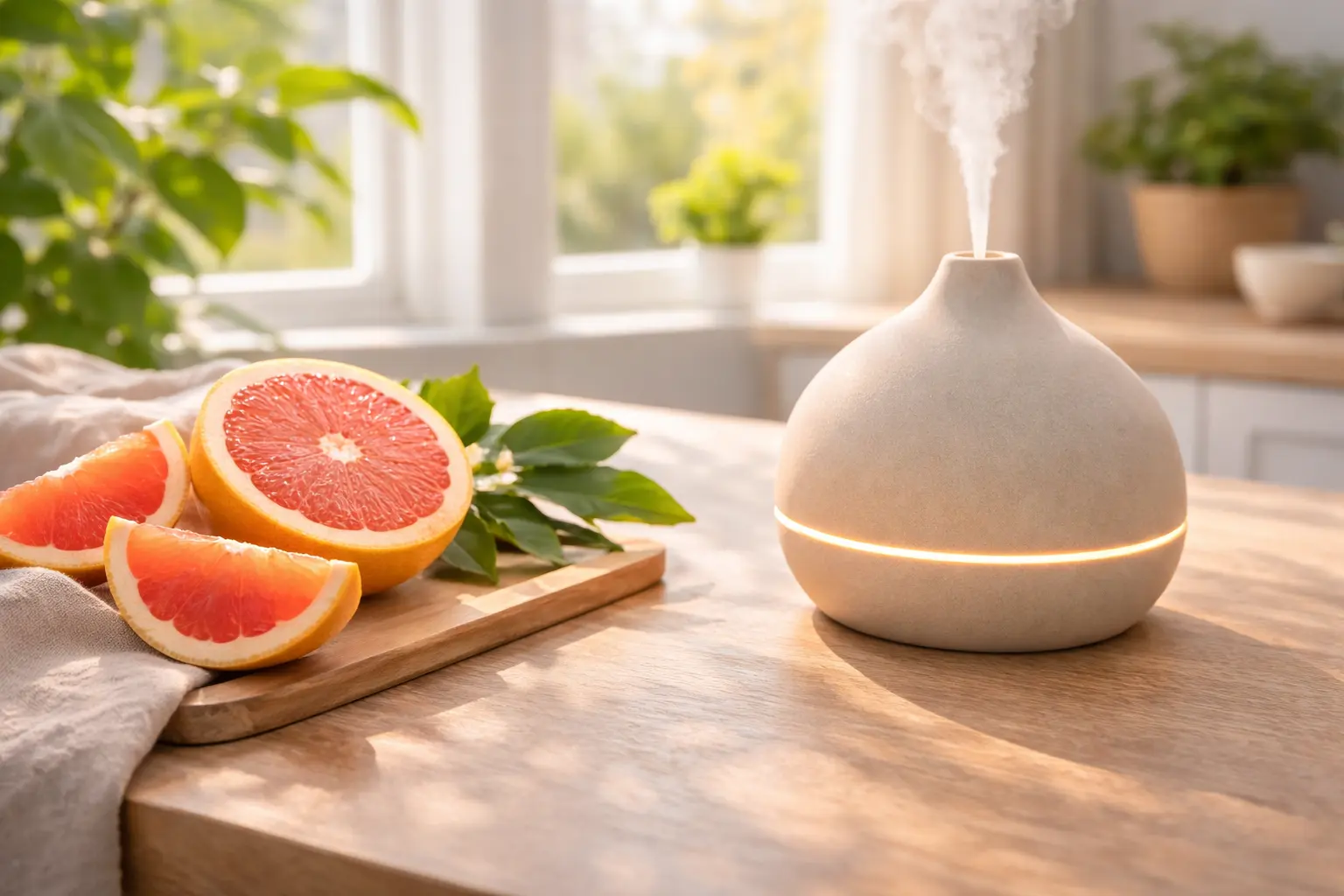
Pink grapefruit is one of the easiest oils to like and one of the easiest oils to misuse. Its brightness is cheerful, but not as clean-lined as lemon. Its sweetness is friendly, but not as round as sweet orange. That in-between quality can make it feel wonderfully fresh in a home, especially when a room needs lift without becoming sugary.
Pink Grapefruit Essential Oil belongs in bright moments that still need taste. It can make a room feel clearer, lighter, and more awake, but it usually works best when it is balanced with green, herbal, or woody notes that keep the citrus from feeling like a fruit bowl.
Quick Answer
Pink grapefruit is useful when a room needs brightness, buoyancy, and a cleaner emotional lift, but you do not want sharp lemon or candy-like orange. It works well in morning kitchens, desk resets, open-window routines, and fresh weekend starts.
Pair it with rosemary, petitgrain, cedarwood, bergamot, or eucalyptus radiata when you want grapefruit to feel fresh and grown-up rather than sweet and obvious.
Pink Grapefruit Gives Lift Without the Lemon Edge
Lemon is excellent when a room needs clean brightness, but it can sometimes feel too direct. Pink grapefruit is softer and more buoyant. It makes the room feel awake without always making it feel freshly scrubbed. That makes it useful for spaces that need mood lift rather than cleaning energy: a desk at midday, a kitchen after breakfast, a living room before friends come over, or a weekend morning that should feel light but not rushed.
The challenge is that grapefruit can become too simple if it is treated as the whole idea. A grapefruit-only room may smell pleasant at first, then fade into something thin or sweet. The best grapefruit blends usually give it a little structure. Rosemary gives it clarity. Petitgrain gives it green air. Cedarwood gives it a quieter base. Bergamot makes it more polished.

Where Pink Grapefruit Fits Best
Pink grapefruit is especially useful in transitional routines. It can help a room move from stale to awake, from sleepy to social, or from closed-up to open-window. It often makes more sense in short, fresh sessions than in all-day diffusing. That keeps the brightness lively instead of letting it flatten into background citrus.
It also belongs in the small rituals that make a home feel easier to restart: wiping the table, opening curtains, filling a water glass, clearing a desk, or resetting the entryway. In those moments, grapefruit is not pretending to solve your life. It simply makes the next small step feel lighter. That kind of realism is why it pairs naturally with A Simple Aromatic Reset for Slow Weekend Mornings.
How to Make Grapefruit Feel More Grown-Up
The easiest way is to avoid pairing it only with other sweet citrus oils. Sweet orange and grapefruit can be lovely, but the result may become too round and cheerful for some rooms. If you want a more adult grapefruit mood, add one note that edits the sweetness. Petitgrain is excellent because it brings citrus leaf instead of citrus juice. Rosemary makes the blend cleaner. Cedarwood makes it more grounded. Eucalyptus radiata can make it feel more open, especially in warm weather.
Grapefruit also benefits from restraint around food spaces. It can be beautiful in kitchens, but it should not fight with actual cooking smells. Use it after the room has aired and settled, not while everything else is competing.
Use Pink Grapefruit When the Room Needs a Better Start
Pink grapefruit is not the deepest oil in the cabinet, and that is not a flaw. Its job is often to make a room feel more possible. A little brighter. A little less stale. A little easier to enter. When used with structure, it can feel fresh without being childish and cheerful without becoming sticky.
That makes it one of the most useful oils for everyday home moments: not because it changes everything, but because it changes the first impression of the room.
Wellness
Essential Oils for a Calmer Evening Wind-Down Routine
A gentle, practical guide to using essential oils in an evening wind-down routine that softens the transition out of the day without turning bedtime into a big project.

Wellness
A Simple Aromatic Reset for Slow Weekend Mornings
A calm, readable guide to shaping a slow weekend morning with lighter scent, open windows, tea, journaling, and a home atmosphere that feels restorative instead of rushed.

Wellness
How to Choose the Lavender Mood That Actually Fits Your Routine
A practical guide to the different roles lavender can play in evening, linen, study, bedroom, and shared-space routines so it feels well-placed instead of automatic.
Wellness
12 Low-Effort Ways to Bring Lavender Essential Oil into Your Evening Routine
A lighter, more everyday guide to the small places lavender can fit into an evening routine when you want atmosphere, softness, and less friction instead of a complicated ritual.