
Rosemary Essential Oil for Clearer Mornings, Sharper Rooms, and Better Rhythm
Wellness
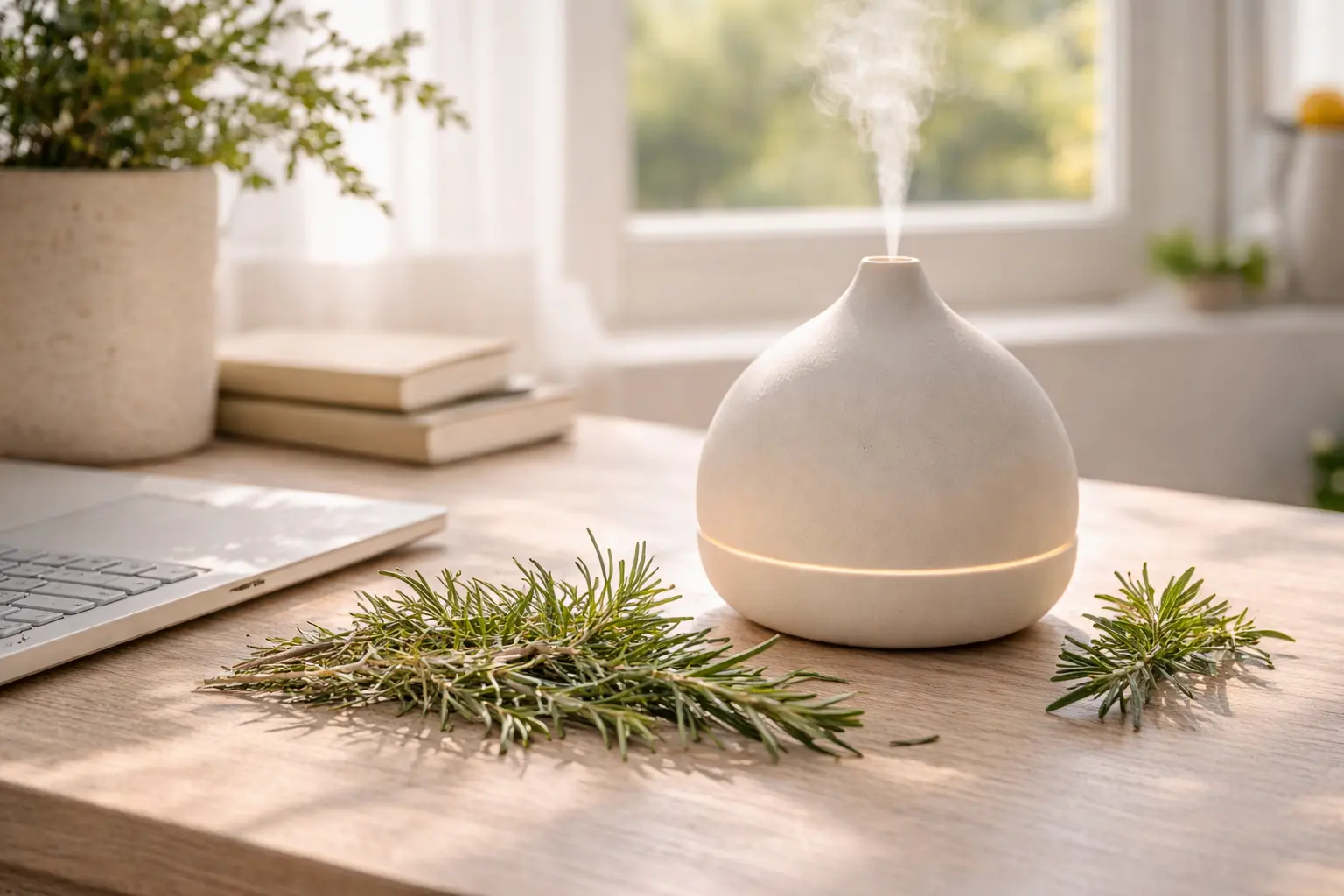
Rosemary often gets introduced with a single word: focus. That is not wrong, but it is thinner than the oil deserves. In real home life, rosemary does not just help a person concentrate in the abstract. It can make a room feel cleaner in its thinking, a little more awake in its posture, and more capable of moving into the day without dragging yesterday's fog behind it. That is why rosemary often works best not as a dramatic performance oil, but as a rhythm oil.
When people start using rosemary this way, they usually enjoy it more. Instead of expecting a magical productivity switch, they begin to notice how it behaves in small morning transitions: a desk that needs resetting, a kitchen corner that feels flat, a work-from-home room that needs a brighter outline, or a routine that keeps starting half-awake. Rosemary can support those moments beautifully because its cleanness is not merely fresh. It is directional.
Quick Answer
Rosemary essential oil works especially well in mornings, work resets, and rooms that feel a little dull, sleepy, or shapeless. It helps create a cleaner line through the atmosphere, which is why it often fits routines built around opening windows, clearing surfaces, and re-establishing momentum.
If you want an oil that feels brighter and more structured than lavender, but less icy than mint-heavy blends, rosemary often lands in exactly the right place.
Rosemary Is Excellent for Rooms That Need Better Timing
A surprising number of scent problems are really timing problems. The room is not necessarily dirty or unattractive. It just feels out of step with what you need from it. Maybe the morning never quite starts. Maybe the desk still feels like yesterday's unfinished work. Maybe the kitchen is tidy but emotionally flat. Rosemary helps in these spaces because it introduces movement without noise. It wakes the room up, but in a more adult, structured way than the cheerful burst you might get from a sweeter citrus.
That is why rosemary often feels so satisfying next to small physical actions. Open the window. Make the bed. Put away the mug from yesterday. Clear one corner of the table. In a setting like that, rosemary does not need to perform alone. It simply gives those actions a sharper aromatic frame. Once you notice that, it becomes much easier to understand why it keeps appearing in pieces like How Scent Can Support a Study Session Without Overpowering It and Get Closer to Lemon Essential Oil Through Fresh, Bright Home Habits.

It Makes Mornings Feel Cleaner, Not Just More Alert
This is an important distinction. Plenty of oils can make a room feel stronger or more stimulating. Rosemary often does something better: it makes the atmosphere feel more resolved. That can be ideal if you dislike very sugary morning scents or blends that shout freshness without actually improving the room's emotional texture. Rosemary tends to feel cleaner in line, more herbaceous in posture, and more believable in a lived-in home.
It also combines beautifully with air. If you diffuse it in a room that is still closed and sleepy, you may get only half of what makes it interesting. If you pair it with fresh movement through the space, the effect becomes more architectural. The room seems to stand up straighter. This is one reason rosemary often shines in spring and early-autumn morning routines, and why it can work so naturally beside ideas explored in Open-Window Spring Scent Ideas for a Lighter Home Mood.
Rosemary Is Also a Good Editing Partner
Some oils carry a strong emotional identity on their own. Rosemary is often more useful because of how well it edits and sharpens other notes. A citrus blend can feel less vague with rosemary. A mint blend can feel less cold. A room that is starting to drift toward cozy heaviness can be pulled back into clearer shape by a very small rosemary accent. That makes it useful not only as a starring note, but as a corrective one.
If you have ever had a blend that smelled pleasant but slightly sleepy, too sweet, or just a little too rounded, rosemary may be part of the answer. It can create definition where the blend currently has none. This is also why rosemary belongs in conversations about room rhythm more than in simplistic conversations about brain power. It improves transitions.
Where Rosemary Works Best at Home
Rosemary tends to shine in rooms and routines that already lean toward usefulness: desks, kitchen-adjacent zones, morning bathrooms, entry-adjacent spaces, and work corners that need a cleaner start. It is often less convincing in spaces asking for full emotional softness. A bedroom that wants deep evening quiet may do better with lavender or woods. A very social, guest-ready living room may prefer bergamot or petitgrain. Rosemary is at its best when the room needs lift and definition more than friendliness.
That does not make it cold. It simply means rosemary is generous in a different way. It gives shape. It gives edge. It gives the sense that the room knows what part of the day it is in. For many real households, that is more valuable than sweetness.
Wellness
Essential Oils for a Calmer Evening Wind-Down Routine
A gentle, practical guide to using essential oils in an evening wind-down routine that softens the transition out of the day without turning bedtime into a big project.

Wellness
A Simple Aromatic Reset for Slow Weekend Mornings
A calm, readable guide to shaping a slow weekend morning with lighter scent, open windows, tea, journaling, and a home atmosphere that feels restorative instead of rushed.

Wellness
How to Choose the Lavender Mood That Actually Fits Your Routine
A practical guide to the different roles lavender can play in evening, linen, study, bedroom, and shared-space routines so it feels well-placed instead of automatic.
Wellness
12 Low-Effort Ways to Bring Lavender Essential Oil into Your Evening Routine
A lighter, more everyday guide to the small places lavender can fit into an evening routine when you want atmosphere, softness, and less friction instead of a complicated ritual.
Further Reading and Sources
These reads help place rosemary inside real morning routines, room rhythm, and brighter home habits.