
Roman Chamomile Essential Oil
Essential Oils
Roman chamomile essential oil is a soft, sweet, apple-like floral oil steam distilled from the flowers of Chamaemelum nobile. It is one of the gentlest-smelling oils in aromatherapy and is often used in calming diffuser blends, bedtime routines, diluted massage oils, skin-care blends, bath products, and quiet emotional support rituals.

Roman chamomile has a tender, rounded aroma that feels more like a soft blanket than a bright spotlight. It is fruity, herbaceous, lightly floral, and subtly honeyed, with the famous apple-like note that has been associated with chamomile for centuries. In blends, Roman chamomile is especially useful when a formula needs softness, comfort, and a peaceful emotional tone.
Quick Answer
Roman chamomile essential oil is commonly used for relaxation, bedtime diffuser blends, gentle massage oils, bath rituals, sensitive-skin-friendly aromatic products, and emotional comfort routines. It blends beautifully with lavender, bergamot, clary sage, frankincense, cedarwood atlas, sweet orange, mandarin red, and geranium.
Roman chamomile is often described as gentle, but gentle does not mean risk-free. It should still be diluted before topical use, avoided around the eyes, used cautiously during pregnancy, and approached carefully by people with allergies to plants in the Asteraceae family.
What Is Roman Chamomile Essential Oil?
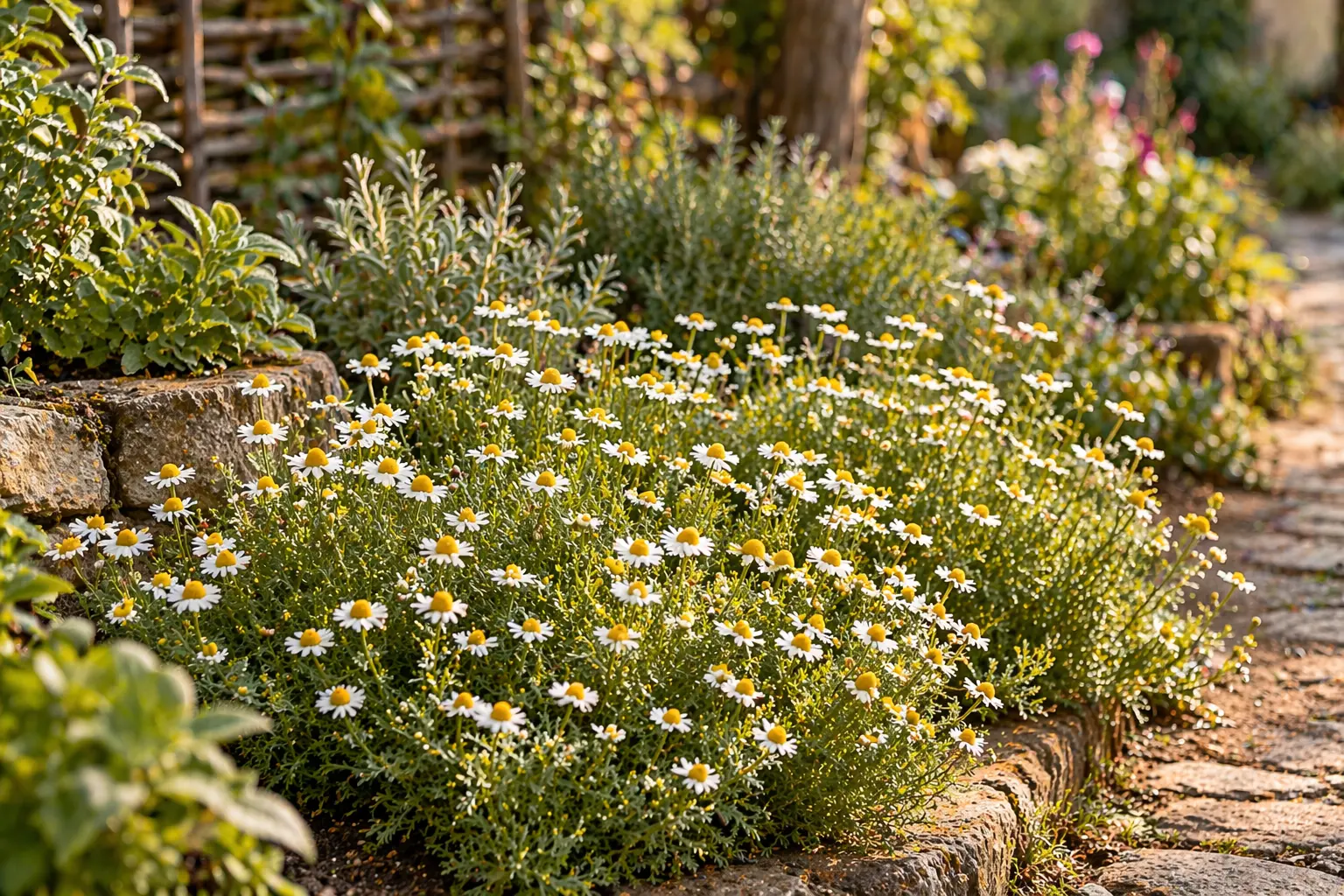
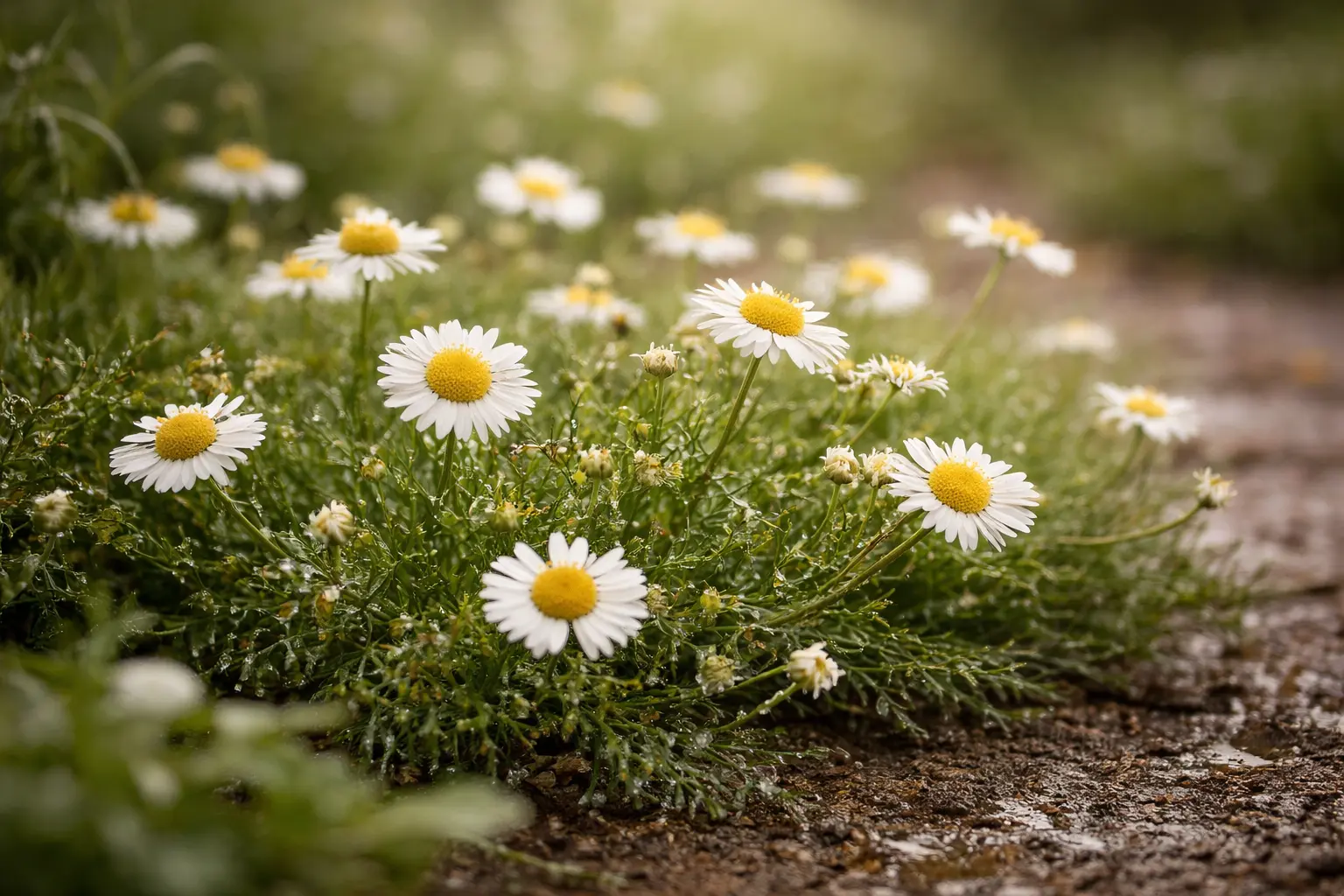
Roman chamomile essential oil is steam distilled from the daisy-like flowers of Chamaemelum nobile, a low-growing perennial plant in the Asteraceae family. The plant has finely divided leaves, white petals, yellow centers, and a soft apple-like fragrance that becomes especially noticeable when the plant is touched or crushed.
Roman chamomile is not the same as German chamomile. Roman chamomile usually refers to Chamaemelum nobile, while German chamomile usually refers to Matricaria chamomilla or Matricaria recutita. Both plants are called chamomile, both belong to the Asteraceae family, and both have long histories in herbal traditions, but their essential oils differ in aroma, color, chemistry, and typical use.
Roman chamomile essential oil is often associated with ester-rich chemistry, especially angelate esters such as isobutyl angelate and 2-methylbutyl angelate. These natural aromatic compounds help give Roman chamomile its distinctive fruity, gentle, apple-like scent. As with all essential oils, composition can vary depending on origin, growing conditions, harvest timing, distillation, and storage.
Roman Chamomile vs. German Chamomile
Roman chamomile and German chamomile are often confused because both are sold as “chamomile,” both have daisy-like flowers, and both are connected with calming herbal traditions. For essential oil use, however, they should be treated as different oils.
Roman chamomile essential oil is usually pale yellow, pale blue-green, or very light in color, depending on the oil and distillation. Its aroma is sweet, fruity, soft, apple-like, and herbaceous. It is commonly used in blends for relaxation, emotional comfort, children’s spaces when appropriate, delicate skin aromas, and bedtime routines.
German chamomile essential oil is often deep blue because it can contain chamazulene, a blue compound formed during distillation. Its aroma is usually stronger, more herbaceous, heavier, and more medicinal-smelling than Roman chamomile. It is often chosen for different skin-care and therapeutic-style formulations.
If a recipe simply says “chamomile essential oil,” check which botanical name is intended before using it. For Essencyclopedia profiles, Roman chamomile means Chamaemelum nobile, and German chamomile means Matricaria chamomilla or Matricaria recutita.
What Does Roman Chamomile Essential Oil Smell Like?
Roman chamomile smells sweet, fruity, floral, herbaceous, and apple-like. It has a gentle roundness that makes it feel comforting rather than sharp. Compared with lavender, Roman chamomile is softer and fruitier. Compared with bergamot, it is less sparkling and more cushiony. Compared with clary sage, it is less musky and more innocent, almost like a warm cup of herbal tea translated into scent.
In blends, Roman chamomile can soften sharper oils and make a formula feel more emotionally gentle. It works beautifully with calming florals, soft citrus oils, light woods, and quiet resins. It is especially lovely with lavender, mandarin red, sweet orange, bergamot, frankincense, cedarwood atlas, geranium, and rose absolute.
Common Uses of Roman Chamomile Essential Oil
Roman chamomile essential oil is most often chosen when a blend needs to feel gentle, soothing, emotionally soft, and safe-feeling. It belongs naturally to evening routines, bedtime rituals, quiet bedrooms, bath blends, comfort massage, sensitive skin aromas, and restorative spaces. It is not usually the oil you reach for when you want a crisp, energizing atmosphere. It is the oil you reach for when the room needs to exhale.
Bedtime and Wind-Down Routines
Roman chamomile is one of the classic oils for bedtime-style diffuser blends. Its aroma can help create a soft, peaceful atmosphere before sleep without feeling heavy or sedating in a medical sense. It pairs especially well with lavender, cedarwood atlas, frankincense, mandarin red, and bergamot.
For a bedroom blend, Roman chamomile usually works best in small amounts. One or two drops can soften the whole blend. Too much can become overly sweet or slightly heavy, especially in small rooms.
Emotional Comfort
Roman chamomile is often used in aromatherapy when someone wants a scent that feels reassuring, tender, and emotionally kind. It is a useful choice for quiet self-care rituals, journaling, evening breathing practices, or a comforting diffuser blend after a demanding day.
It should not be described as treating anxiety, panic, depression, insomnia, or any mental health condition. A safer and more accurate way to frame Roman chamomile is as an aroma that can support a calm atmosphere and a gentle emotional routine.
Gentle Massage Blends
Diluted Roman chamomile can be used in massage blends when the goal is comfort, relaxation, and softness. It works especially well in foot massage, shoulder massage, bedtime body oils, or gentle abdominal massage blends. For body use, it can be combined with carrier oils such as jojoba oil, sweet almond oil, apricot kernel oil, or fractionated coconut oil.
Roman chamomile is often used in blends for sensitive-feeling skin, but it can still cause reactions in some people, especially those with Asteraceae allergies. Patch testing is always wise.
Skin-Care and Sensitive Skin Aromas
Roman chamomile is popular in facial oils, creams, balms, and bath products because its scent feels soft and gentle. In facial products, keep the dilution very low and avoid the eye area. Roman chamomile is aromatic, concentrated, and active as a fragrance material even when it smells delicate.
It blends well with lavender, frankincense, geranium, rose absolute, and sandalwood for soft, elegant skin-care aromas.
Children’s Spaces and Family Routines
Roman chamomile is sometimes chosen for family spaces because its aroma is gentle, soft, and familiar. However, essential oil use around children should always be conservative. Diffuse for short periods, use fewer drops, keep rooms ventilated, and avoid direct inhalation from the bottle or diffuser mist. Babies, toddlers, and children with asthma, allergies, or medical conditions need extra caution and professional guidance.
For children, aromatic routines should be simple and minimal. Often, a calm room, fresh air, dim light, and a familiar bedtime rhythm matter more than adding more essential oil.
Natural Perfume and Comfort Blends
Roman chamomile gives natural perfumes a soft, tender, fruity-floral heart. It can make citrus blends feel rounder, floral blends feel gentler, and resin blends feel warmer. It pairs well with bergamot, mandarin red, neroli, geranium, rose absolute, frankincense, and cedarwood atlas.
Quick Tips for Using Roman Chamomile Essential Oil
Bedtime Diffuser
Add 1 drop Roman chamomile, 2 drops lavender, and 1 drop cedarwood atlas to a diffuser. Run for 30 minutes in a ventilated room before bedtime.
Comfort Foot Massage
Dilute 1 drop Roman chamomile and 1 drop lavender in 1 teaspoon of carrier oil, then massage into the feet as part of an evening routine.
Gentle Bath Aroma
Mix 1 to 2 drops Roman chamomile into unscented bath gel or a proper dispersant before adding to bathwater. Do not drop essential oil directly into the bath.
Soft Room Reset
Diffuse 1 drop Roman chamomile with 2 drops mandarin red or sweet orange for a gentle, childlike, cheerful room aroma.
Dilution Guidance
General Adult Dilution
For general adult topical use, Roman chamomile essential oil is usually best kept around 1% to 2% dilution. A 1% dilution is about 1 drop of essential oil per teaspoon of carrier oil. A 2% dilution is about 2 drops per teaspoon of carrier oil.
For sensitive skin, facial blends, children’s products, or first-time use, choose a much lower dilution. For facial use, a range around 0.25% to 0.5% is often more appropriate. Avoid the eye area, mucous membranes, broken skin, irritated skin, and freshly shaved skin.
Roman chamomile is often described as gentle, but the word gentle should not lead to careless use. Essential oils are concentrated aromatic extracts, and even gentle oils can irritate skin or trigger reactions in sensitive individuals.
How to Use Roman Chamomile Essential Oil
In a Diffuser
Use 1 to 3 drops of Roman chamomile as part of a diffuser blend. Because the aroma is soft but persistent, it usually does not need to dominate. Roman chamomile works beautifully with lavender, mandarin red, bergamot, frankincense, and cedarwood atlas. Diffuse intermittently in a ventilated room.
On Skin
Always dilute Roman chamomile before applying it to the skin. It can be used in body oils, massage oils, facial oils, creams, balms, and perfume oils when properly diluted. Avoid using it on skin if you have a known allergy to chamomile, ragweed, daisies, chrysanthemums, or other Asteraceae-family plants unless advised by a qualified professional.
In Bath Products
Roman chamomile is a beautiful bath aroma, but essential oils do not dissolve safely in water. Mix it into an appropriate dispersant, unscented bath gel, or fully emulsified bath product before adding it to bathwater. This helps reduce the chance of concentrated droplets touching the skin.
In DIY Products
Roman chamomile can be used in massage oils, body oils, balms, creams, room sprays, linen sprays, and natural perfume blends. Water-based sprays require a proper solubilizer or emulsifier, not just water and oil. Label blends clearly, store them safely, and keep them away from children and pets.
History and Origins of Roman Chamomile
Roman chamomile is native to parts of western Europe and northwestern Africa and has been introduced and cultivated in many other regions. It is a low-growing plant, often found in dry fields, gardens, lawns, and cultivated herb spaces. Its white-and-yellow flowers resemble small daisies, and its apple-like scent made it memorable in both household herbalism and garden culture.
The word chamomile is commonly traced to the Greek idea of “ground apple,” a name that reflects the plant’s low-growing habit and fruity aroma. This apple-like scent is still one of the easiest ways to understand Roman chamomile’s personality: simple, soft, familiar, and quietly comforting.
Roman chamomile became especially beloved in European herb gardens. It was grown for tea-like infusions, scented lawns, aromatic baths, household preparations, and traditional plant remedies. In English garden culture, chamomile lawns were valued because the plant released fragrance when walked upon. That image still captures the spirit of Roman chamomile well: a plant that gives softness when gently disturbed.
It is important to remember that the historical plant and the modern essential oil are not the same thing. A dried flower infusion is very different from a concentrated essential oil. Roman chamomile essential oil belongs in careful, measured aromatic use, not casual internal use.
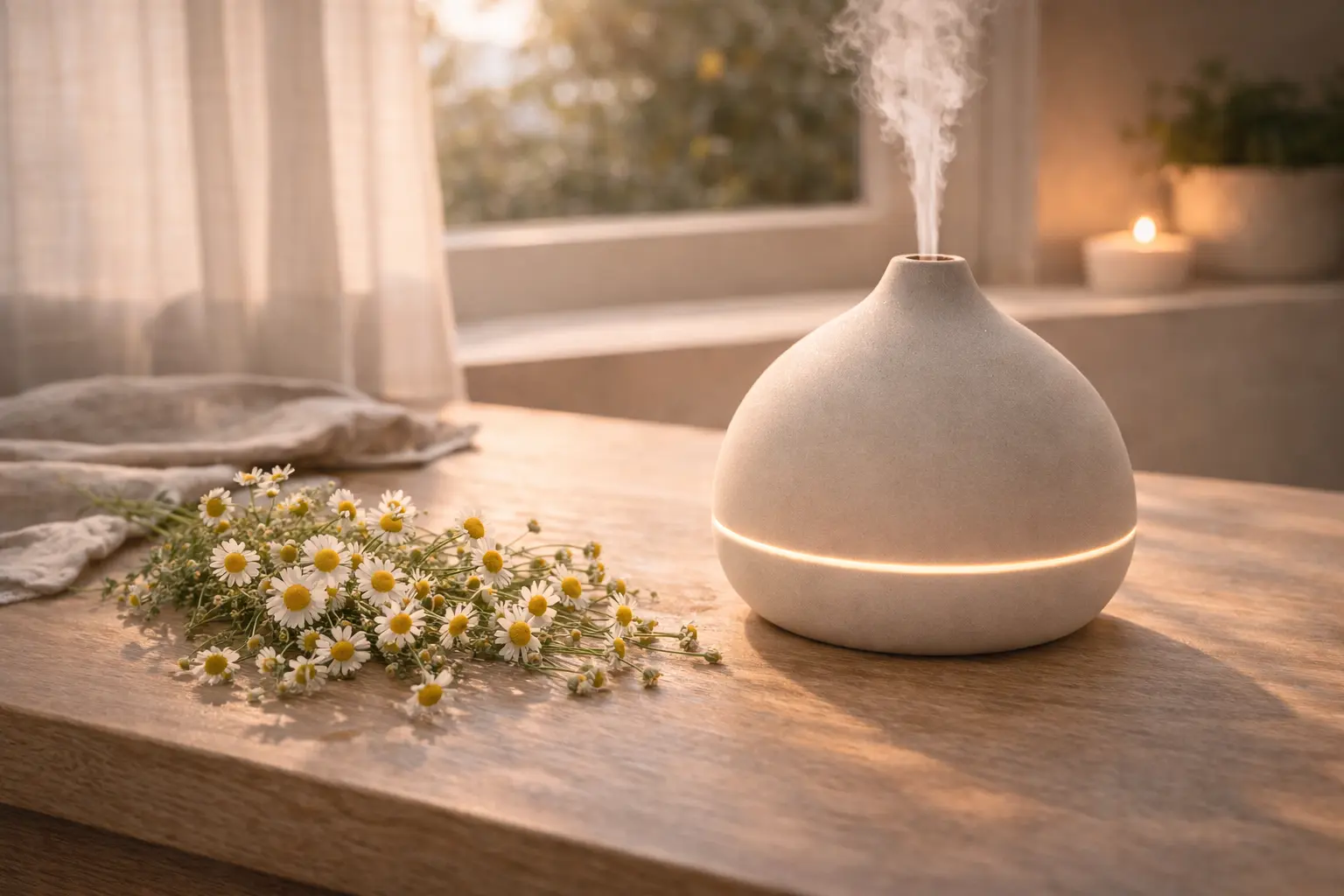
Roman Chamomile Diffuser Blends
Roman chamomile blends are usually best when they are simple, soft, and not overcrowded. Use it when you want a quiet atmosphere rather than a dramatic fragrance statement.
Little Apple Moon
- 1 drop roman chamomile
- 2 drops lavender
- 1 drop cedarwood atlas
A soft, peaceful blend for bedtime routines, quiet bedrooms, and slow evening transitions.
Honeyed Citrus
- 1 drop roman chamomile
- 2 drops mandarin red
- 1 drop bergamot
A gentle fruity-floral blend with a cheerful, tender, childlike softness.
Quiet Heart
- 1 drop roman chamomile
- 1 drop geranium
- 2 drops frankincense
A warm floral-resin blend for reflection, gentle breathing, and emotional steadiness.
Soft Linen
- 1 drop roman chamomile
- 2 drops lavender
- 2 drops sweet orange
A clean, cozy blend for bedrooms, laundry-day atmospheres, and relaxed home evenings.
What Blends Well with Roman Chamomile Essential Oil?
Roman chamomile blends naturally with lavender, bergamot, mandarin red, sweet orange, neroli, geranium, rose absolute, clary sage, frankincense, cedarwood atlas, sandalwood, sweet marjoram, ylang ylang, and german chamomile.
For bedtime blends, use Roman chamomile with lavender, cedarwood atlas, frankincense, or mandarin red. For emotional comfort blends, pair it with bergamot, geranium, clary sage, or rose absolute. For gentle skin-care aromas, combine it with lavender, frankincense, geranium, or sandalwood in very low dilution.
FAQ About Roman Chamomile Essential Oil
Is Roman chamomile the same as German chamomile?
No. Roman chamomile essential oil comes from Chamaemelum nobile, while German chamomile essential oil usually comes from Matricaria chamomilla or Matricaria recutita. They are related in common use and both are in the Asteraceae family, but they are different plants with different essential oils.
Is Roman chamomile essential oil safe for children?
Roman chamomile is often considered one of the gentler essential oils, but it still needs careful use around children. Use very small amounts, diffuse for short periods in a ventilated room, and avoid direct inhalation or undiluted skin use. For babies, toddlers, children with asthma, allergies, or medical conditions, seek qualified guidance first.
Can Roman chamomile essential oil be used during pregnancy?
Pregnancy use should be cautious. Roman chamomile has a long history as an herb, but essential oil is much more concentrated than tea or dried flowers. Pregnant or breastfeeding people should consult a qualified healthcare professional or trained clinical aromatherapist before using Roman chamomile essential oil.
Can Roman chamomile essential oil help with sleep?
Roman chamomile is commonly used in bedtime diffuser blends because its aroma feels soft, calm, and comforting. It should not be described as curing insomnia or treating sleep disorders. It can be part of a peaceful evening routine alongside good sleep habits.
Is Roman chamomile essential oil good for sensitive skin?
Roman chamomile is often used in products designed for sensitive-feeling skin, but it can still cause irritation or allergic reactions in some people. This is especially important for people sensitive to plants in the Asteraceae family, such as ragweed, daisies, chrysanthemums, or chamomile itself. Always dilute and patch test first.
Can Roman chamomile essential oil be applied directly to skin?
No. Roman chamomile essential oil should be diluted in a carrier oil, cream, lotion, balm, or other suitable base before topical use. Avoid the eyes, mucous membranes, broken skin, and irritated skin.
Can Roman chamomile essential oil be ingested?
Do not ingest Roman chamomile essential oil as a casual wellness practice. Roman chamomile tea and Roman chamomile essential oil are not the same thing. Essential oils are concentrated aromatic extracts and should only be used internally under qualified professional guidance.
Roman Chamomile Essential Oil, Spirituality, and Soul
The main sections above focus on botanical information, practical use, dilution, and safety. Roman chamomile also has a symbolic and spiritual life in modern aromatherapy, where its soft apple-like aroma is often associated with innocence, tenderness, emotional repair, and the ability to return to a quieter inner place.
Roman chamomile does not have the bright push of citrus oils or the deep gravity of resins. Its symbolism is smaller, softer, and more intimate. It belongs to the inner child, the tired nervous system, the gentle apology, the blanket, the cup of tea, the quiet room after everyone has gone home.
Inner Child and Tenderness
In symbolic aromatherapy, Roman chamomile is often connected with childlike softness and emotional gentleness. It may be chosen for rituals of self-kindness, forgiveness, grief-softening, or returning to a sense of safety after a difficult day.
Peace After Intensity
Roman chamomile can feel especially meaningful after emotional overstimulation. Its aroma suggests settling rather than escaping. It is a good symbolic companion for journaling, restorative yoga, breathwork, and quiet reflection.
Heart and Solar Plexus Softening
Some spiritual traditions associate Roman chamomile with the heart because of its tenderness and emotional warmth. Others connect it with the solar plexus when confidence needs softness rather than force. These associations are symbolic, not medical or scientific claims.
Safety Notes
Roman chamomile essential oil should be diluted before topical use. Do not apply it undiluted to the skin, do not use it in or near the eyes, and do not take it internally as a casual wellness practice.
Use caution if you are allergic or sensitive to chamomile, ragweed, daisies, chrysanthemums, or other plants in the Asteraceae family. Stop using Roman chamomile if you notice irritation, rash, itching, headache, nausea, breathing discomfort, or any unusual reaction.
Pregnant or breastfeeding people, babies, young children, elderly adults, people with asthma, complex medical conditions, medication use, or a history of significant allergies should seek qualified guidance before use. Diffuse in moderation, keep rooms ventilated, and avoid continuous diffusion.
Further Reading and Sources
For botanical, chemical, and safety-oriented background, these sources may be useful starting points: