Clary Sage Essential Oil
Essential Oils
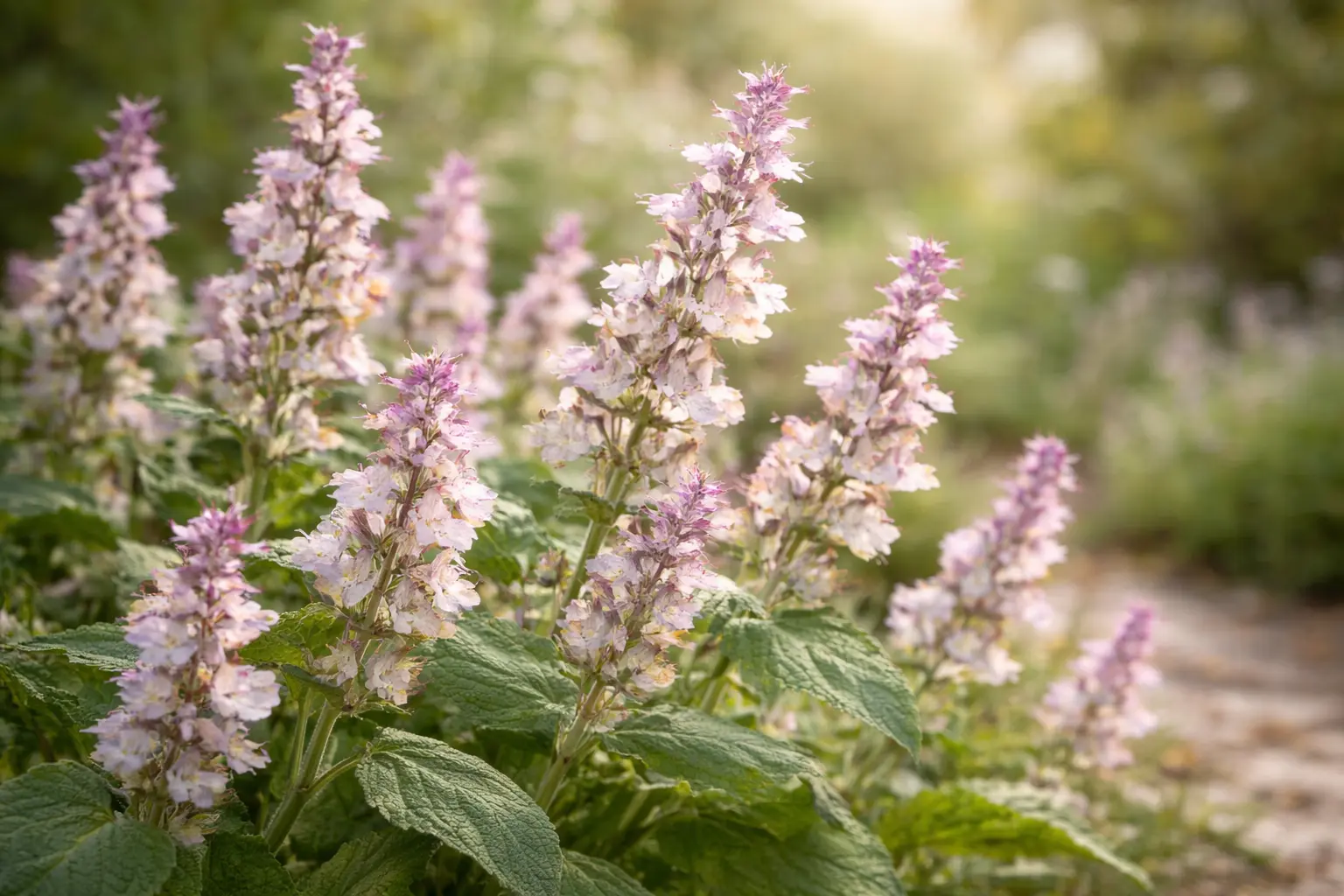
Clary sage essential oil is a soft, herbaceous, slightly floral essential oil distilled from the flowering tops of Salvia sclarea. It is commonly used in aromatherapy for calm evening routines, emotional steadiness, gentle massage blends, personal fragrance, and reflective self-care rituals.
Its scent is less sharp than common garden sage and more rounded than many green herbal oils. Clary sage can feel warm, musky, tea-like, floral, and slightly earthy. In blends, it often softens brighter oils and adds emotional depth to citrus, floral, wood, and resinous notes.
Quick Answer
Clary sage essential oil is best known for its herbaceous-floral aroma and its use in relaxation blends, evening diffuser routines, diluted massage oils, bath products, natural perfume, and women’s wellness rituals. It blends especially well with lavender, bergamot, sweet orange, frankincense, cedarwood atlas, geranium, and ylang ylang.
Clary sage should be used thoughtfully, especially during pregnancy, around young children, or by anyone with hormone-sensitive health concerns. Like all essential oils, it should be diluted before skin use and should not be taken internally as a casual wellness practice.
What Is Clary Sage Essential Oil?
Clary sage essential oil is usually steam distilled from the flowering tops and upper aerial parts of Salvia sclarea, a biennial or short-lived perennial herb in the mint family. The plant produces tall, softly colored flower spikes with pink, lilac, white, or lavender-toned bracts, and its aromatic leaves and blossoms have long made it valuable in perfumery, herbal traditions, and aromatic gardens.
Although clary sage belongs to the same broad botanical family as peppermint, lavender, rosemary, basil, marjoram, thyme, and oregano, its aroma is much softer and more rounded than many of these sharper herbal oils.
Clary sage essential oil is often associated with linalyl acetate and linalool, two aromatic constituents that also appear in oils such as lavender and bergamot. Natural composition can vary depending on growing region, harvest timing, plant part, distillation method, and storage conditions.
What Does Clary Sage Essential Oil Smell Like?
Clary sage has a distinctive aroma that can be hard to describe in one word. It is herbal, but not aggressively green. It is floral, but not sweet in the way ylang ylang or jasmine absolute can be. It has a gentle tea-like quality, a musky undertone, and a slightly earthy finish that gives blends a mature, contemplative mood.
In aromatherapy blends, clary sage often acts like a bridge. It connects bright citrus oils such as bergamot, lemon, sweet orange, and grapefruit pink with deeper oils such as frankincense, patchouli, cedarwood atlas, and sandalwood.
Common Uses of Clary Sage Essential Oil
Clary sage essential oil is most often chosen when a blend needs to feel soft, grounded, feminine, emotionally steady, or quietly sensual. It is not a “wake up and go” oil in the same way as peppermint or rosemary. Instead, it belongs more naturally to the late afternoon, evening, bath, massage, journaling, and slow exhale side of aromatherapy.
Relaxation and Evening Routines
Clary sage is commonly used in diffuser blends and massage oils intended for winding down. Its aroma can make a space feel softer and more settled, especially when combined with lavender, roman chamomile, cedarwood atlas, or frankincense. It is useful when you want an evening blend that feels less familiar than lavender alone and less heavy than a resin or wood blend.
Emotional Balance and Stressful Days
Many people choose clary sage during emotionally intense or mentally noisy days. The scent has a smooth, slightly euphoric quality that can feel comforting without becoming overly sweet. It is often paired with bergamot, sweet orange, geranium, and frankincense for calm, open, emotionally warm diffuser blends.
Women’s Wellness Rituals
Clary sage has a long association with women’s wellness traditions. In modern aromatherapy, it is often used in diluted abdominal massage blends, bath oils, and quiet self-care rituals connected with the menstrual cycle or midlife transitions. This should be framed as supportive aromatic use, not as a treatment for menstrual, hormonal, fertility, pregnancy, or menopause-related conditions.
For this type of use, clary sage is usually blended at a low dilution with gentle oils such as lavender, roman chamomile, geranium, or sweet marjoram. Anyone who is pregnant, trying to conceive, breastfeeding, under medical care, or managing a hormone-sensitive condition should speak with a qualified professional before using clary sage oil.
Massage and Body Oil Blends
Diluted clary sage can be used in massage blends when the goal is a warm, relaxing, herbaceous aroma. It pairs well with carrier oils such as jojoba oil, sweet almond oil, fractionated coconut oil, and apricot kernel oil. The aroma works especially well for shoulder, neck, foot, and lower-abdomen massage routines where the focus is comfort and relaxation.
Natural Perfume and Personal Aroma
Clary sage is valued in perfumery because it adds a musky, herbal-floral middle note. It can make citrus blends feel more sophisticated, soften floral blends, and add a skin-like warmth to woody compositions. Try it with bergamot, neroli, patchouli, cedarwood atlas, sandalwood, or rose absolute in very small amounts.
Hair and Scalp Products
Clary sage is sometimes used in diluted scalp oils, hair masks, and shampoo blends for its warm herbal scent. It should not be applied directly to the scalp undiluted. For a simple aromatic hair oil, it can be blended very lightly with rosemary, lavender, or cedarwood atlas in an appropriate carrier oil.
Quick Tips for Using Clary Sage Essential Oil
Soft Evening Diffuser
Add 2 drops clary sage, 2 drops lavender, and 1 drop bergamot to a diffuser. Run for 30 to 45 minutes in a ventilated room as part of a slow evening routine.
Relaxing Foot Massage
Dilute 1 drop clary sage and 1 drop lavender in 1 teaspoon of carrier oil, then massage into the feet. Avoid broken, irritated, or sensitive skin.
Calm Bath Aroma
Mix 2 drops clary sage into 1 tablespoon of unscented bath gel or a proper dispersant before adding to bathwater. Do not drop essential oils directly into the bath.
Personal Perfume Base
Use clary sage in tiny amounts with bergamot, cedarwood atlas, or frankincense for a soft herbal-floral perfume blend. Keep skin dilution low.
Dilution Guidance
General Adult Dilution
For general adult topical use, clary sage essential oil is usually best kept around 1% to 2% dilution. A 1% dilution is about 1 drop of essential oil per teaspoon of carrier oil. A 2% dilution is about 2 drops per teaspoon of carrier oil.
How to Use Clary Sage Essential Oil
In a Diffuser
Use 2 to 4 total drops of essential oil in a standard room diffuser, depending on room size, diffuser type, and personal sensitivity. Clary sage can become heavy if overused, so it often works best as one part of a blend rather than the only oil. Try pairing it with bergamot, sweet orange, lavender, or frankincense.
On Skin
Always dilute clary sage essential oil before applying it to skin. It can be used in massage oil, body oil, perfume oil, bath products, or creams when properly diluted. Avoid mucous membranes, eyes, inner ears, broken skin, and irritated skin.
In Bath Products
Essential oils do not dissolve safely in bathwater on their own. For baths, blend clary sage into an appropriate dispersant, unscented bath gel, or fully emulsified bath product before adding it to water. Avoid using clary sage in the bath during pregnancy unless guided by a qualified professional.
In DIY Products
Clary sage can be used in body oils, massage blends, room sprays, linen sprays, and natural perfume blends. In DIY products, measure carefully, label blends clearly, and keep them away from children and pets.
History and Origins of Clary Sage
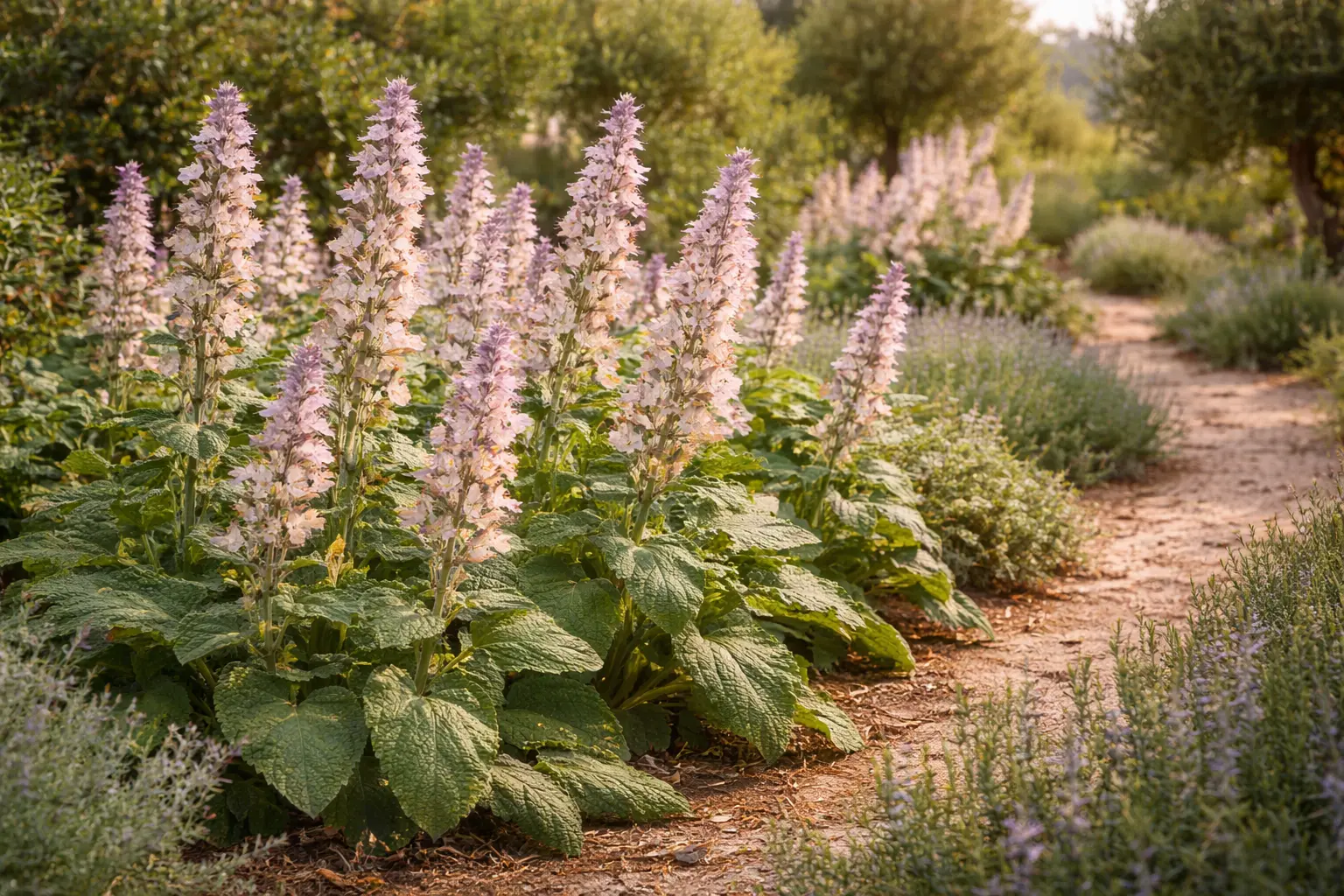
Clary sage is native to parts of the Mediterranean region, southern Europe, and western to central Asia. It thrives in sunny, well-drained conditions and has long been grown in herb gardens, cottage gardens, and aromatic plantings. The plant belongs to the large Salvia genus, a group known for strongly scented leaves, square stems, and a long relationship with traditional herbal practice.
The name “clary” is often connected with the older idea of “clear eye.” Historical herbals and plant traditions describe the mucilaginous seeds of clary sage being used in eye-cleansing folk practices. This does not mean that clary sage essential oil should be used in or near the eyes. It simply shows how the original plant carried a reputation for clarity, cleansing, and sensory brightness in earlier herbal culture.
Clary sage was also used as a flavoring plant. Its leaves and flowering tops were historically used to scent wines, beers, and liqueurs, and the plant developed an association with muscatel-like flavor. In some European traditions, it was valued not only as a household herb but also as a plant of feasts, fragrant drinks, and aromatic gardens.
The modern essential oil is a much more concentrated aromatic material than the fresh or dried plant. It belongs in careful, measured aromatherapy use rather than in casual internal use. Today, clary sage is grown for perfumery, cosmetics, aromatic products, and essential oil production in several regions where climate and cultivation conditions support a high-quality harvest.
Clary Sage Diffuser Blends
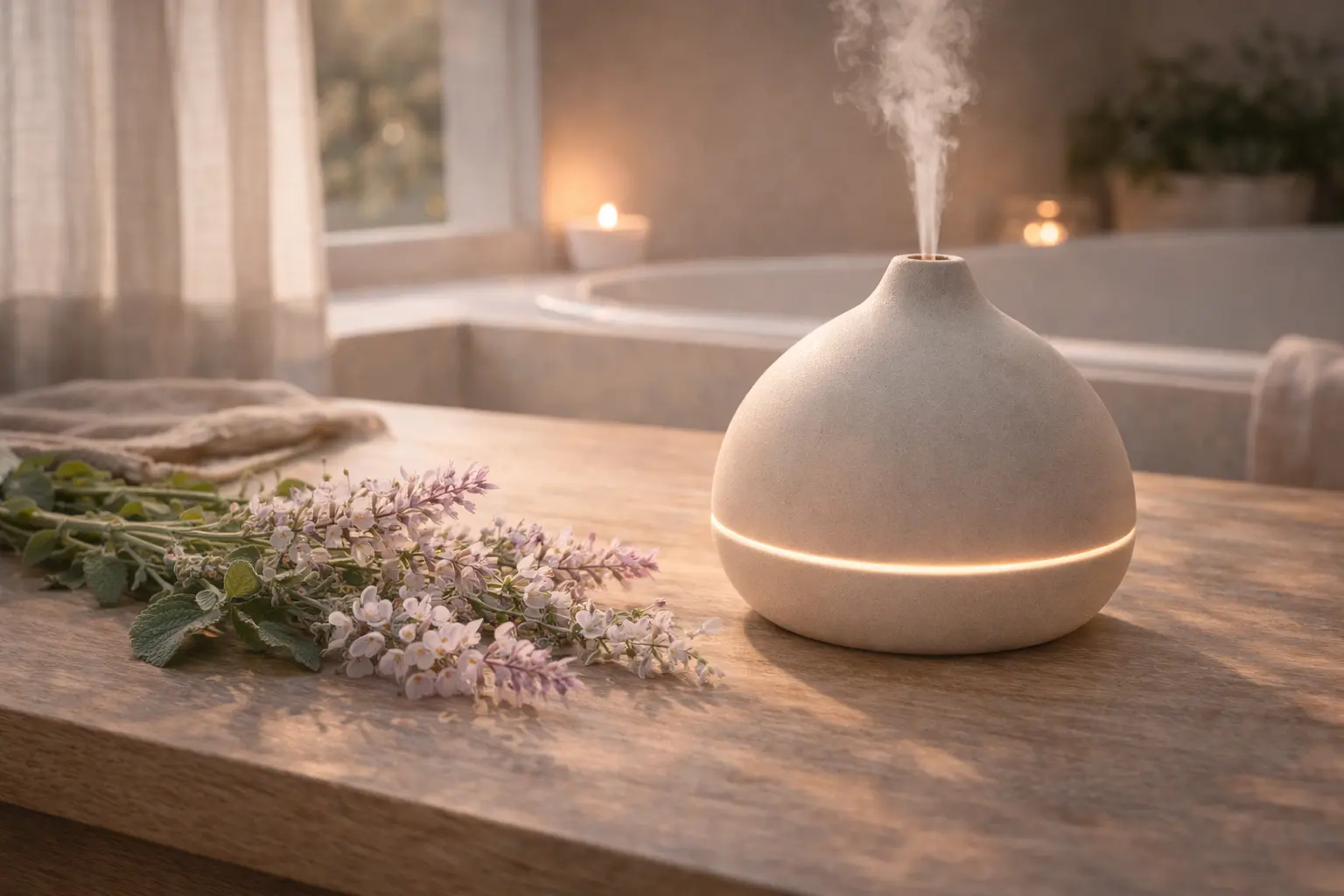
Clary sage blends beautifully with citrus, floral, wood, resin, and soft herbal oils. Start with fewer drops if you are sensitive to strong aromas, and diffuse in a well-ventilated room.
Moonlit Garden
Moonlit Garden
- 2 drops clary sage
- 2 drops lavender
- 1 drop bergamot
A soft floral-herbal blend for quiet evenings, reading, or gentle bedtime rituals.
Golden Exhale
- 2 drops clary sage
- 2 drops sweet orange
- 1 drop frankincense
A warm, rounded blend for emotional steadiness and a soft, welcoming room aroma.
Quiet Woods
- 2 drops clary sage
- 2 drops cedarwood atlas
- 1 drop lavender
A grounded, woody-floral blend for slow evenings and relaxed breathing space.
Soft Bloom
- 2 drops clary sage
- 1 drop geranium
- 2 drops bergamot
A floral-citrus blend with a calm, feminine, lightly elegant character.
What Blends Well with Clary Sage Essential Oil?
Clary sage blends naturally with lavender, bergamot, lemon, sweet orange, grapefruit pink, geranium, ylang ylang, roman chamomile, frankincense, cedarwood atlas, sandalwood, patchouli, sweet marjoram, and rosemary.
For a softer mood, pair it with florals and gentle woods. For a brighter blend, use citrus. For a more meditative atmosphere, combine it with frankincense, cedarwood, sandalwood, or patchouli.
FAQ About Clary Sage Essential Oil
Is clary sage the same as sage essential oil?
No. Clary sage essential oil comes from Salvia sclarea, while common sage essential oil usually comes from Salvia officinalis. They are related plants, but they are not interchangeable. Common sage essential oil is typically considered a more caution-heavy oil and should be researched separately.
Can clary sage essential oil be used during pregnancy?
Clary sage is traditionally associated with reproductive and menstrual wellness, so pregnancy use should be approached cautiously. Do not use clary sage essential oil during pregnancy, labor, breastfeeding, or fertility treatment unless guided by a qualified healthcare professional or trained clinical aromatherapist.
Can clary sage essential oil help with hormones?
Clary sage is often discussed in connection with women’s wellness and hormonal transitions, but it should not be presented as a treatment for hormonal conditions. It may be used as part of a relaxing aromatic routine, but anyone with a hormone-sensitive condition or endocrine-related medical concern should seek professional guidance first.
Is clary sage essential oil good for sleep?
Clary sage is often used in evening blends because its aroma feels soft, relaxing, and emotionally settling. It should not be described as a cure for sleep problems. For bedtime routines, it pairs well with lavender, roman chamomile, cedarwood atlas, and frankincense.
Can clary sage essential oil be applied directly to skin?
No. Clary sage essential oil should be diluted in a carrier oil, lotion, cream, bath product, or other suitable base before topical use. Avoid using it on broken, irritated, or inflamed skin.
Can clary sage essential oil be ingested?
Do not ingest clary sage essential oil as a casual wellness practice. Internal use of essential oils should only happen under the guidance of a qualified professional trained in that method of use.
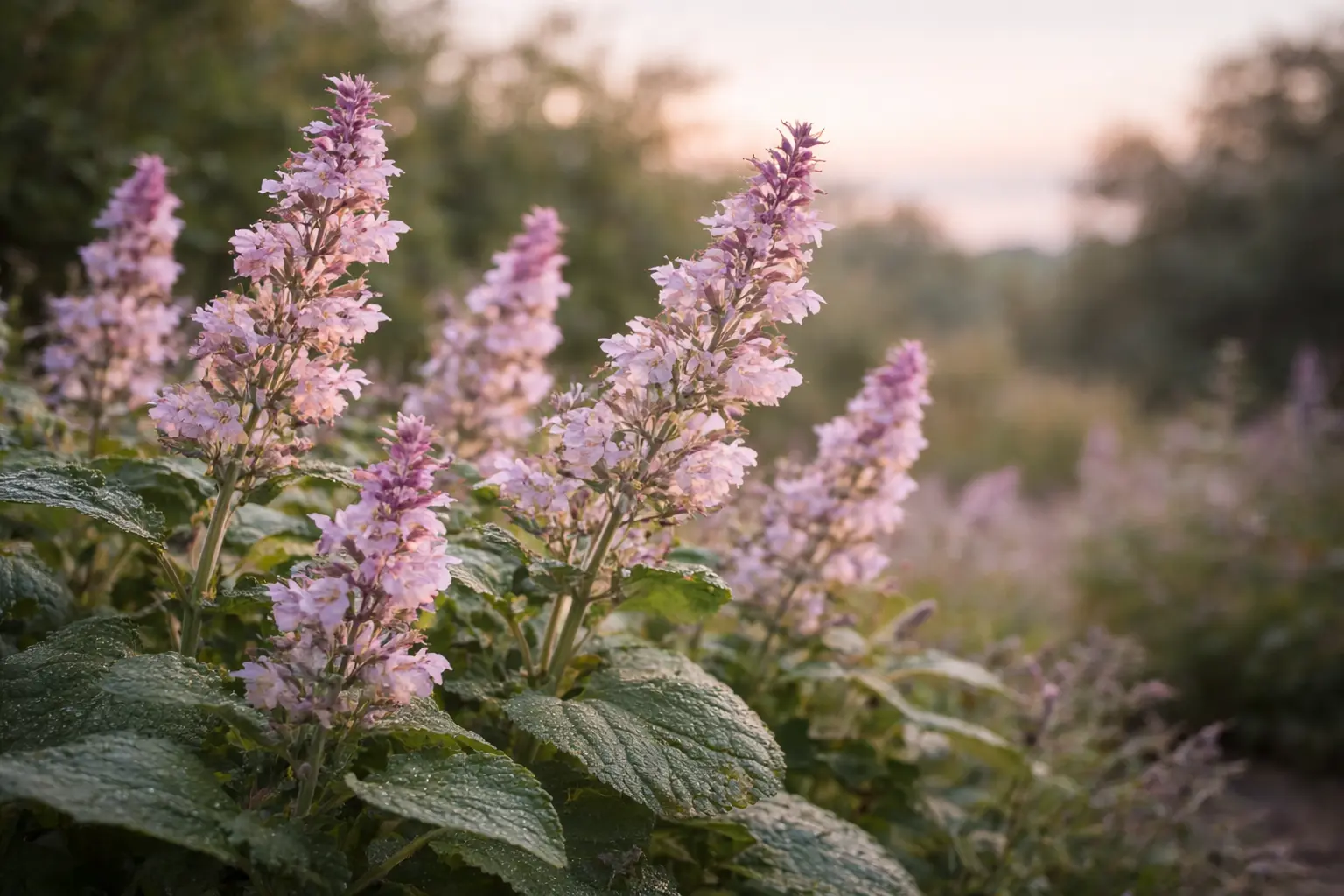
Clary Sage Essential Oil, Spirituality, and Soul
The main sections above focus on botanical information, practical use, dilution, and safety. Clary sage also has a symbolic and spiritual life in modern aromatherapy, where its soft herbal-floral aroma is often associated with intuition, emotional release, feminine wisdom, and the ability to soften inner tension.
Clary sage is sometimes used in meditation, journaling, breathwork, and quiet evening rituals when someone wants to move from mental overactivity into a more receptive, inward state. Its aroma can feel like a gentle clearing of emotional noise: not sharp or forceful, but spacious, warm, and quietly steady.
Intuition and Inner Listening
Because of its historical connection with clarity and “clear eye” symbolism, clary sage is often linked with inner seeing, intuitive awareness, and the ability to listen beneath surface-level thoughts. In spiritual aromatherapy, it may be chosen when a person wants to slow down and hear themselves more clearly.
Emotional Softening
Clary sage can feel especially supportive in rituals of release. Its musky-floral aroma has a gentle dissolving quality, making it a natural companion for journaling, moon rituals, restorative yoga, or quiet reflection after emotionally full days.
Sacral and Heart Energy
Some spiritual traditions associate clary sage with the sacral chakra because of its connection to creativity, sensuality, flow, and feminine cycles. Others connect it with the heart because of its softening, accepting quality. These associations are symbolic, not medical or scientific claims.
Safety Notes
Clary sage essential oil should be used with care and proper dilution. Do not apply it undiluted to the skin, do not use it in or near the eyes, and do not take it internally as a casual wellness practice.
Avoid clary sage essential oil during pregnancy, labor, breastfeeding, fertility treatment, or hormone-sensitive medical conditions unless you are working with a qualified healthcare professional or trained clinical aromatherapist. Use extra caution around babies, young children, pets, elderly adults, and anyone with asthma, epilepsy, complex medical conditions, or medication use.
For topical use, begin with a low dilution, patch test first, and stop using the oil if irritation, dizziness, headache, nausea, skin redness, breathing discomfort, or any unusual reaction occurs. Diffuse in moderation, keep rooms ventilated, and avoid continuous diffusion.
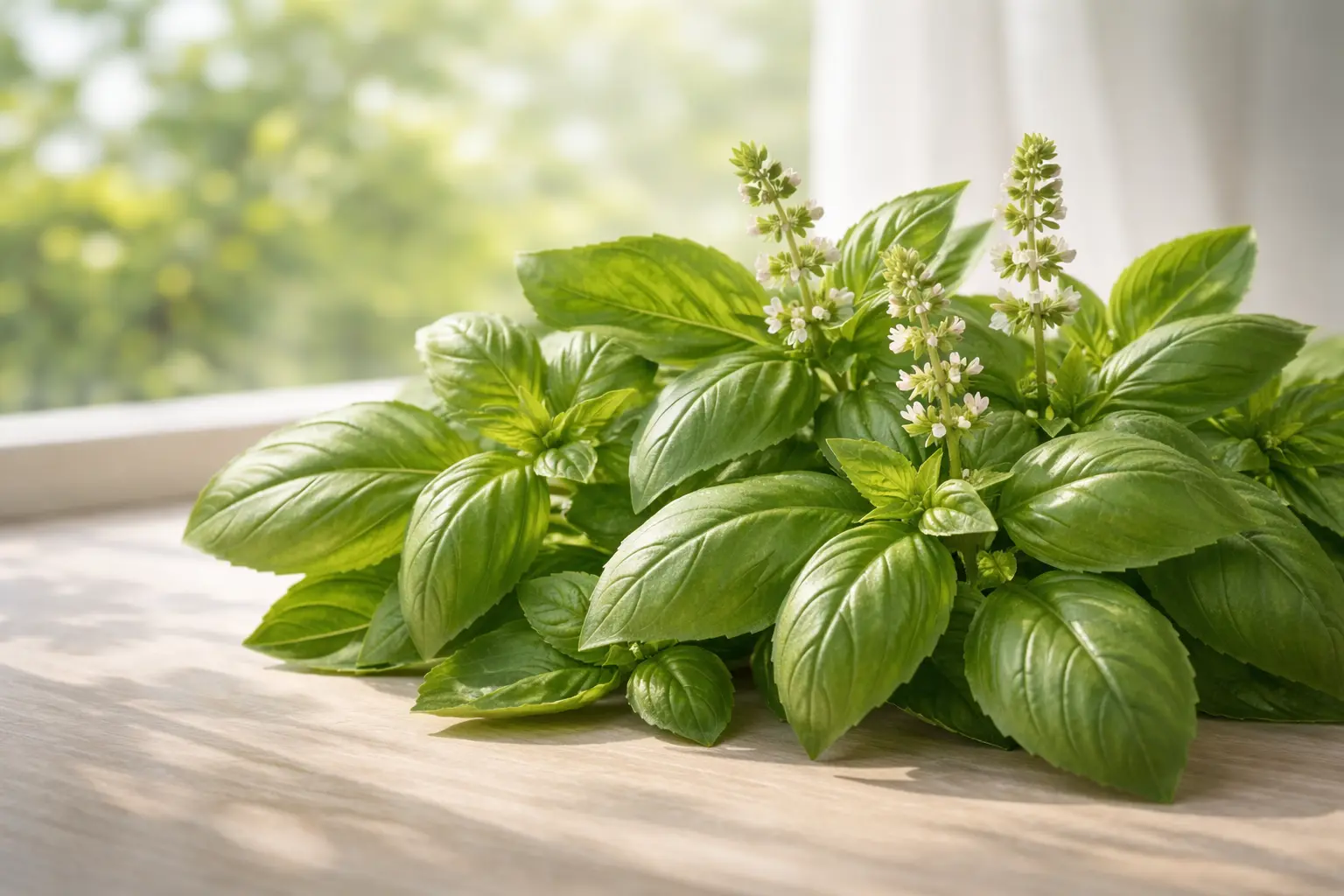
Basil Essential Oil
Basil essential oil is bright, green, sweet, and herbaceous: a familiar kitchen-garden aroma transformed into a concentrated aromatic oil with a crisp, lively personality. Steam distilled from the leaves and flowering tops of Ocimum basilicum, Basil essential oil is often used in diffuser blends, fresh herbal accords, natural perfumery, and carefully diluted body-care formulas. It can feel clear and uplifting in a room, especially when paired with citrus, mint, soft florals, or other Mediterranean herbs. Because basil oils vary widely in chemistry, this is also an oil where chemotype, dilution, and safety notes matter.
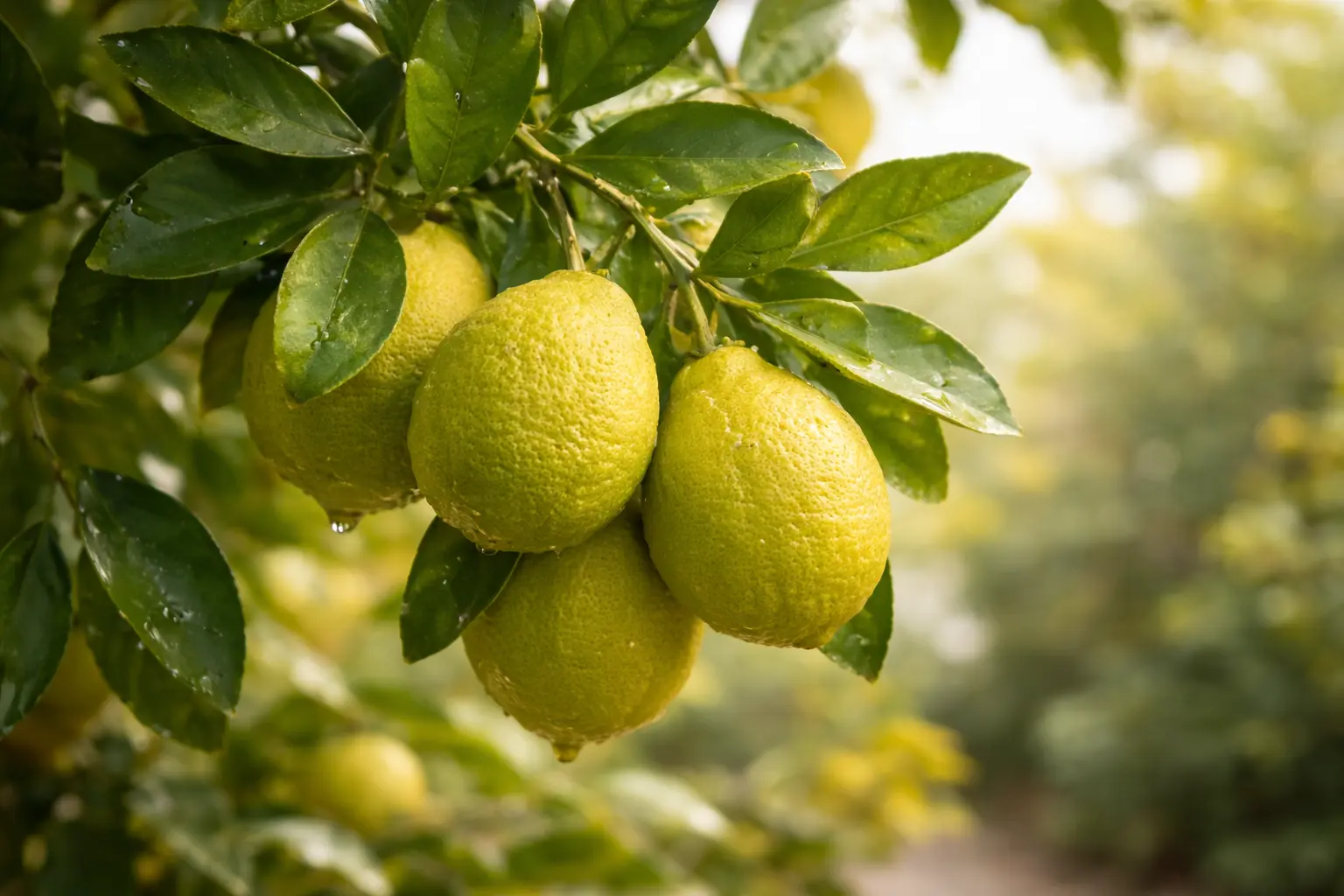
Bergamot Essential Oil
Bergamot essential oil is a bright, elegant citrus oil expressed from the peel of Citrus bergamia. It is best known for its fresh green-citrus aroma, soft floral undertone, connection to Earl Grey tea, and its long-standing role in perfumery, diffuser blends, emotional wellness rituals, and natural fragrance. Bergamot smells lighter and more complex than many familiar citrus oils. It has the sparkle of lemon, the gentle sweetness of sweet orange, a slightly bitter green edge, and a delicate floral quality that makes it blend beautifully with herbs, woods, resins, and florals.
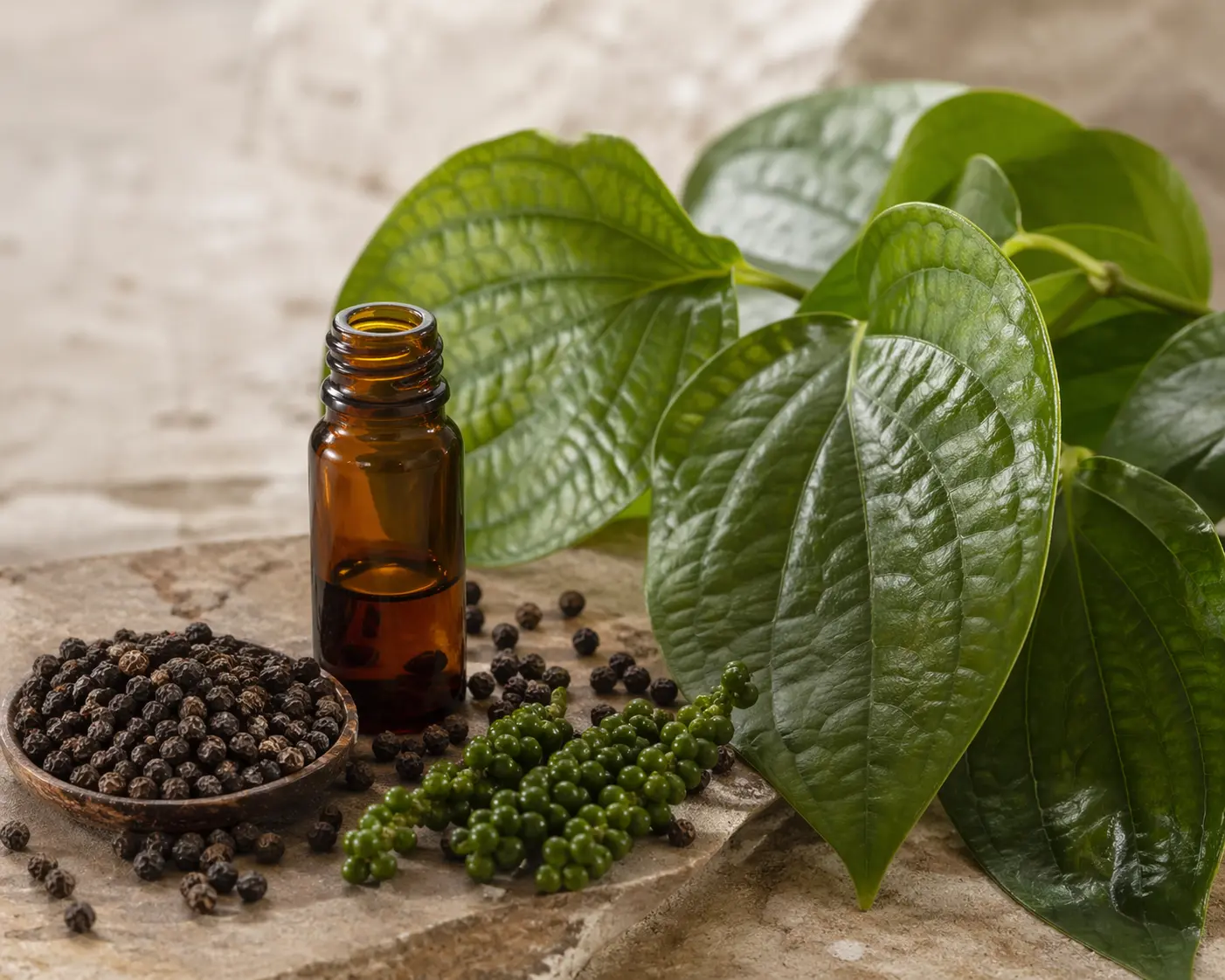
Black Pepper Essential Oil
Black Pepper essential oil is warm, dry, spicy, and quietly energizing, with the familiar spark of cracked peppercorns softened into a smooth aromatic oil. Steam distilled from the fruits of Piper nigrum, Black Pepper essential oil is often used in diffuser blends, natural perfumery, warming-feeling massage oils, and cozy routines where a dry spice note is wanted. It smells recognizable, but it is not the same as sprinkling pepper on food. The essential oil is a concentrated aromatic extract, used by the drop, and it should be diluted carefully before topical use.
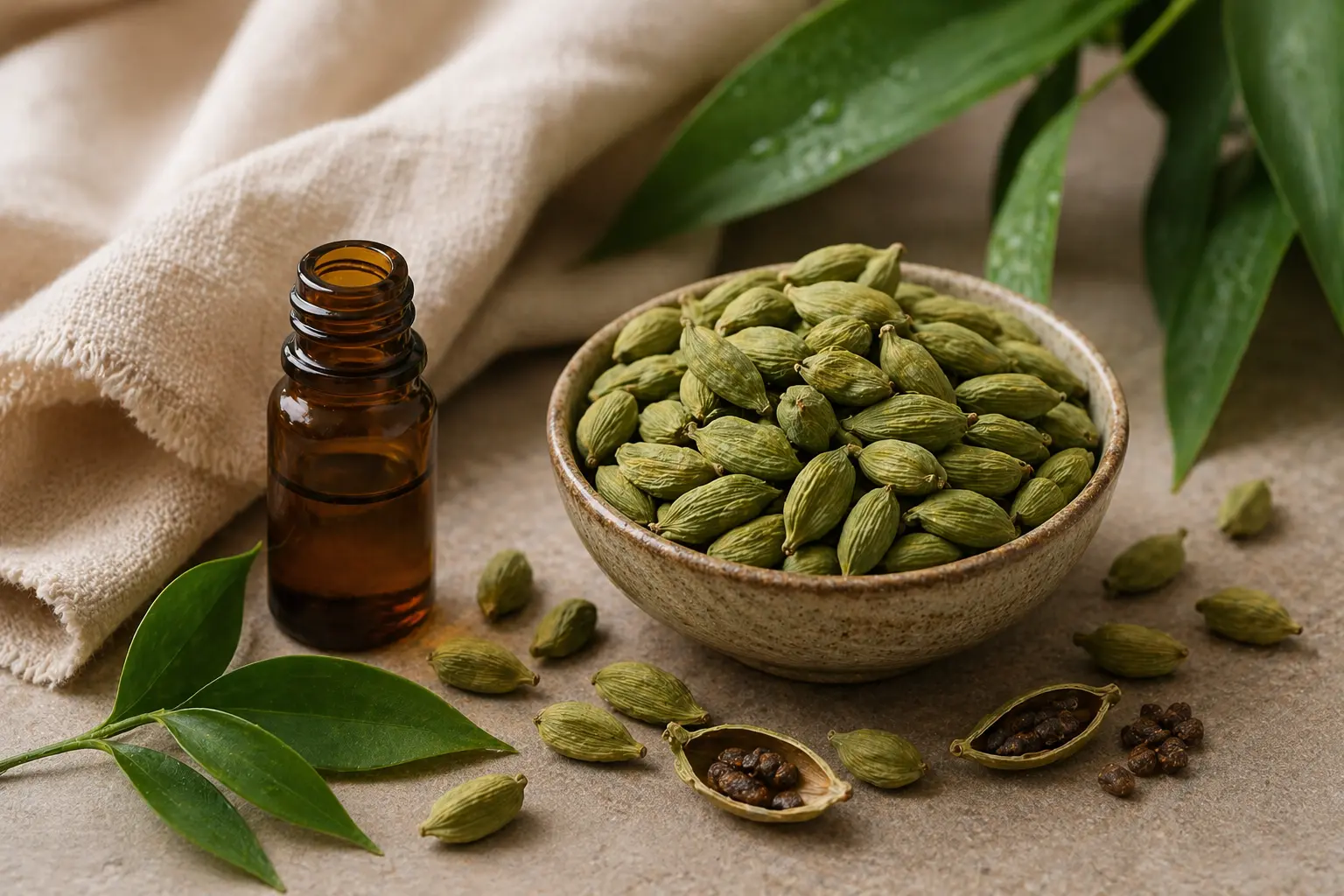
Cardamom Essential Oil
Cardamom essential oil is warm, sweet, spicy, and softly aromatic, with the elegant scent of green cardamom pods, citrus peel, fresh spice markets, and cozy kitchen rituals. Steam distilled from the seeds of Elettaria cardamomum, Cardamom essential oil is often used in diffuser blends, natural perfumery, massage oils at low dilution, and comforting home routines where a smooth spice note is wanted. It is gentler in aroma than many hot spice oils, but it is still a concentrated essential oil and should be diluted, diffused moderately, and used with care around sensitive people.
Further Reading and Sources
For botanical, chemical, and safety-oriented background, these sources may be useful starting points:
- North Carolina Extension Gardener Plant Toolbox: Salvia sclarea
- International Plant Names Index: Salvia sclarea L.
- Salvia sclarea Essential Oil Chemical Composition and Biological Activities
- Randomized controlled trial on inhalation of clary sage and lavender essential oils
- Diversity of essential oil glands of clary sage
- Salvia sclarea oil extract and uterine contraction model research