
Neroli Essential Oil
Essential Oils
Neroli essential oil is a precious floral-citrus oil steam distilled from the blossoms of the bitter orange tree, Citrus aurantium var. amara. It is best known for its elegant orange blossom aroma and is commonly used in natural perfume, calming diffuser blends, facial-care aromas, bath products, body oils, meditation rituals, and emotional comfort routines.
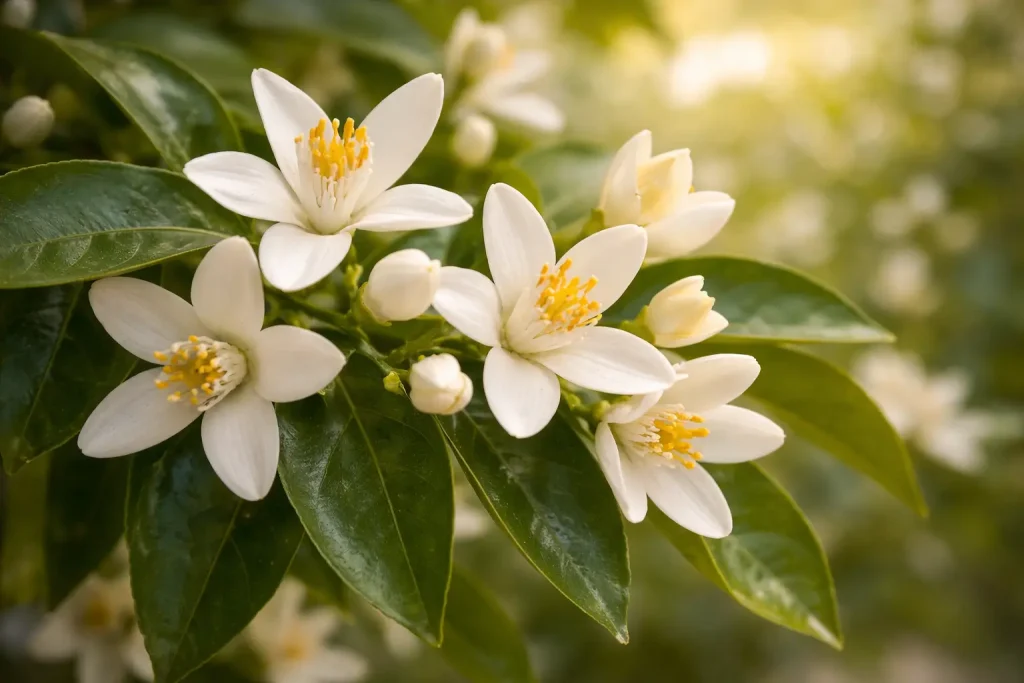
Neroli smells floral, citrusy, green, honeyed, slightly bitter, and softly radiant. It carries the brightness of citrus, but it is not a peel oil like sweet orange, lemon, lime, or pink grapefruit. It is a flower oil, and that gives it a softer, more perfumed, emotionally spacious character.
Quick Answer
Neroli essential oil is commonly used for natural perfume, soft floral diffuser blends, emotional comfort routines, gentle facial-care aromas, body oils, bath products, and meditation or breathwork rituals. It blends beautifully with bergamot, lavender, geranium, clary sage, red mandarin, petitgrain, frankincense, and sandalwood.
Neroli is generally considered a gentle-feeling essential oil, but it still requires proper dilution. It contains natural fragrance constituents such as linalool, limonene, geraniol, and farnesol that can irritate sensitive skin or trigger reactions in some people.
What Is Neroli Essential Oil?
Neroli essential oil is steam distilled from the fragrant white blossoms of the bitter orange tree, Citrus aurantium var. amara. The flowers are delicate, highly aromatic, and traditionally harvested with care because the scent is precious and the oil yield is low. This is one reason neroli is usually more expensive than many common citrus peel oils.
Botanically, neroli belongs to the same citrus family as bergamot, lemon, lime, sweet orange, red mandarin, pink grapefruit, bitter orange, and petitgrain. Its personality, however, is quite different because it comes from the blossom, not the peel.
Neroli essential oil is often associated with aromatic constituents such as linalool, limonene, linalyl acetate, nerolidol, alpha-terpineol, farnesol, and related floral-citrus compounds. Natural composition can vary depending on origin, harvest timing, flower freshness, distillation method, and storage.
Neroli vs. Petitgrain vs. Bitter Orange
Neroli, petitgrain, and bitter orange essential oils can all be connected with Citrus aurantium var. amara, but they come from different parts of the plant and smell very different.
Neroli essential oil comes from the blossoms. It smells floral, citrusy, honeyed, green, and elegant. It is one of the classic floral materials in perfumery and is often used in emotional comfort blends, facial-care aromas, and natural perfume.
Petitgrain essential oil comes from the leaves and twigs of the bitter orange tree. It smells greener, woodier, fresher, and less floral than neroli. It is excellent in diffuser blends, cologne-style perfumes, fresh home aromas, and emotional reset blends.
Bitter orange essential oil usually comes from the fruit peel. It smells more like a citrus peel oil: bright, bitter, orange-like, and fresh. Like other expressed citrus peel oils, it may have different phototoxicity and topical safety considerations than steam-distilled neroli.
These oils are related, but they are not interchangeable. A recipe calling for neroli will smell very different if petitgrain or bitter orange is used instead.
What Does Neroli Essential Oil Smell Like?
Neroli smells floral, citrusy, green, honeyed, slightly bitter, and refined. It has the white-flower brightness of orange blossom, but it is not as heavy as jasmine absolute, not as rosy as rose absolute, and not as tropical as ylang ylang. It is delicate, luminous, and emotionally open.
In blends, neroli can make citrus oils feel more elegant, floral blends feel fresher, and woody blends feel more graceful. It works beautifully with bergamot, red mandarin, petitgrain, geranium, lavender, frankincense, cedarwood atlas, and sandalwood.
Common Uses of Neroli Essential Oil
Neroli essential oil is most often chosen when a blend needs to feel elegant, tender, emotionally open, floral, and luminous. It belongs naturally to natural perfume, facial-care aromas, soft evening blends, breathwork rituals, bridal or romantic scents, bath products, and self-care routines that need beauty without heaviness.
Natural Perfume
Neroli is one of the classic materials in perfumery. It gives a fragrance a refined orange blossom heart and can make citrus, floral, herbal, and woody notes feel more polished. It works especially well in cologne-style blends with bergamot, petitgrain, lemon, and lavender, and in softer floral blends with geranium, rose absolute, jasmine absolute, and ylang ylang.
Emotional Comfort and Calm Atmosphere
Neroli is often used when someone wants a scent that feels emotionally soft, comforting, graceful, and spacious. It should not be described as treating anxiety, panic, depression, trauma, grief, or sleep disorders. A safer and more accurate way to frame neroli is as an aromatic support for quiet breathing, self-kindness, a calmer room, or a gentle emotional ritual.
For emotional comfort blends, neroli pairs beautifully with lavender, roman chamomile, bergamot, frankincense, clary sage, and red mandarin.
Facial-Care Aromas
Neroli is widely used in luxury facial oils, creams, serums, and balms because its aroma feels elegant, soft, and skin-care-like. It is often chosen for blends intended for dry, mature, delicate, or emotionally comforting skincare routines. This should stay cosmetic and aromatic, not medical. Neroli should not be presented as treating acne, eczema, rosacea, dermatitis, scars, wounds, or skin disease.
For facial use, neroli should be used at very low dilution. It blends beautifully with frankincense, geranium, roman chamomile, rose absolute, and sandalwood.
Bath and Body Products
Neroli can make bath oils, body lotions, massage oils, scrubs, and shower products feel soft, floral, and luxurious. Because neroli is potent and expensive, it is often used in small amounts. In bath products, it should always be dispersed properly before touching bathwater.
For body-care blends, neroli pairs well with red mandarin, bergamot, lavender, geranium, cedarwood atlas, and vanilla oleoresin.
Bedtime and Evening Rituals
Neroli is not a heavy bedtime oil, but it can be beautiful in evening blends when the goal is softness, emotional release, and a graceful transition into rest. It pairs especially well with lavender, roman chamomile, frankincense, cedarwood atlas, and red mandarin. It should not be described as curing insomnia or treating sleep problems.
Bridal, Romantic, and Heart-Centered Blends
Orange blossom has long carried associations with weddings, beauty, tenderness, and romance. Neroli can be used in symbolic or personal ritual blends connected with love, self-worth, softness, and new beginnings. In aromatherapy writing, keep this poetic rather than clinical: neroli can create a beautiful emotional atmosphere, but it does not heal relationships or treat emotional wounds.
Quick Tips for Using Neroli Essential Oil
Soft Floral Diffuser
Add 1 drop neroli, 2 drops bergamot, and 2 drops lavender to a diffuser. Run for 30 to 45 minutes in a ventilated room for a calm floral-citrus atmosphere.
Luxury Facial Aroma
Use neroli at very low dilution in facial oils or creams. Start tiny: even 1 drop in a larger blend can give a soft orange blossom aroma.
Evening Body Oil
Dilute 1 drop neroli and 1 drop red mandarin in 1 teaspoon of carrier oil for a gentle body oil aroma. Avoid broken or irritated skin.
Natural Perfume Heart
Blend neroli with petitgrain, bergamot, geranium, or sandalwood for an elegant orange blossom perfume accord.
Dilution Guidance
General Adult Dilution
For general adult topical use, neroli essential oil is usually best kept around 1% to 2% dilution. A 1% dilution is about 1 drop of essential oil per teaspoon of carrier oil. A 2% dilution is about 2 drops per teaspoon of carrier oil.
Because neroli is strong, precious, and often used in facial or emotional-care products, lower dilutions are often more appropriate. For facial use, a range around 0.25% to 0.5% is usually a better starting point. Avoid the eye area, lips, broken skin, irritated skin, and freshly shaved skin.
Neroli contains natural fragrance constituents that can irritate sensitive skin or trigger allergic reactions in some people. Patch test before using neroli in facial oils, perfumes, body oils, creams, or balms.
How to Use Neroli Essential Oil
In a Diffuser
Use 1 to 3 drops of neroli as part of a diffuser blend. Because neroli is both precious and aromatic, a little goes a long way. It is beautiful with bergamot, lavender, red mandarin, petitgrain, frankincense, and cedarwood atlas. Diffuse intermittently in a ventilated room.
On Skin
Always dilute neroli essential oil before applying it to skin. It can be used in facial oils, body oils, creams, balms, massage oils, bath products, and perfume oils when properly diluted. Avoid the eyes, mucous membranes, inner ears, broken skin, irritated skin, and freshly shaved areas.
In Facial Products
Neroli is popular in facial products because the aroma feels soft and elegant, but facial skin is delicate. Use a very low dilution, avoid the eye area, and patch test first. Do not apply essential oils to inflamed, wounded, rashy, or medically treated skin unless guided by a qualified professional.
In Bath Products
Do not add neroli essential oil directly to bathwater. Essential oils do not dissolve in water and can sit on the surface, increasing the chance of irritation. Mix neroli into an appropriate dispersant, unscented bath gel, or fully emulsified bath product before adding it to the bath.
In Natural Perfume
Neroli is a classic heart note in natural perfume. Use it with citrus top notes such as bergamot, red mandarin, or lemon; green notes such as petitgrain; floral notes such as geranium, rose absolute, or ylang ylang; and base notes such as frankincense, sandalwood, cedarwood atlas, or vanilla oleoresin.
History and Origins of Neroli
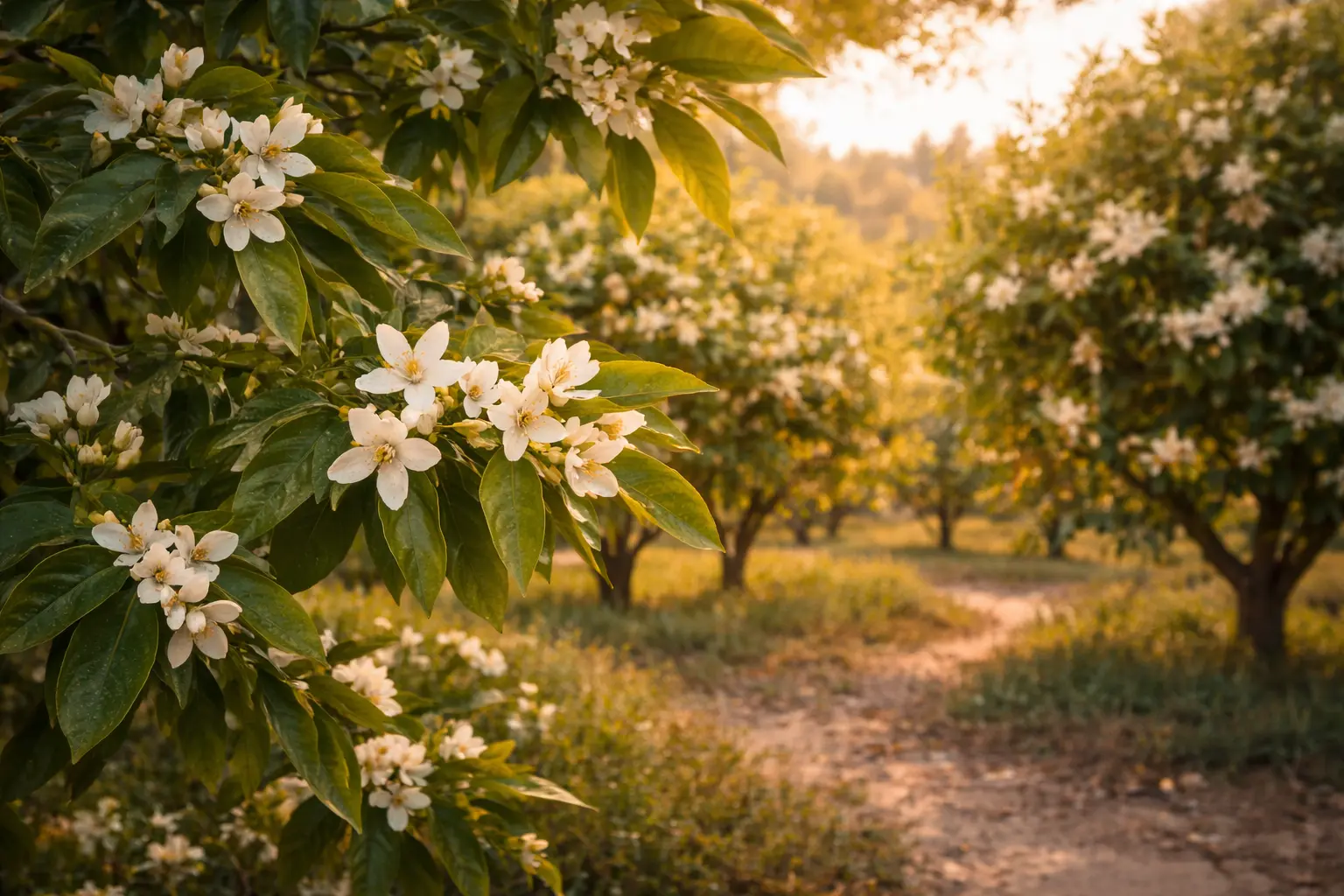
Neroli comes from the blossoms of the bitter orange tree, a plant long associated with the Mediterranean, North Africa, and citrus-growing regions where orange flowers have been valued for fragrance, beauty, and ritual. The bitter orange tree itself has given rise to several aromatic materials: neroli from the blossoms, petitgrain from the leaves and twigs, and bitter orange oil from the peel.
The name “neroli” is traditionally linked with Anne Marie Orsini, Princess of Nerola, a town near Rome, who helped popularize orange blossom essence as a fashionable fragrance in the late seventeenth century. Orange blossom scent became associated with gloves, baths, clothing, refinement, and courtly perfume culture.
Orange blossoms also carry a long association with weddings and purity in parts of Europe and the Mediterranean. Brides wore orange blossoms or used orange blossom fragrance as a symbol of beauty, fertility, tenderness, and new beginnings. This cultural symbolism belongs to the flower and fragrance tradition, not to any medical effect of the oil.
Today, neroli remains one of the most cherished floral-citrus oils in perfumery. It is used in fine fragrance, natural perfume, cosmetics, skincare aromas, and aromatherapy blends where a soft, luminous orange blossom note is desired. Because the oil yield from blossoms is low, true neroli is usually precious and should be used thoughtfully.
Neroli Diffuser Blends
Neroli diffuser blends are best when they are simple, elegant, and not overcrowded. One drop can transform a blend, especially when paired with citrus, lavender, woods, or resins.
Orange Blossom Calm
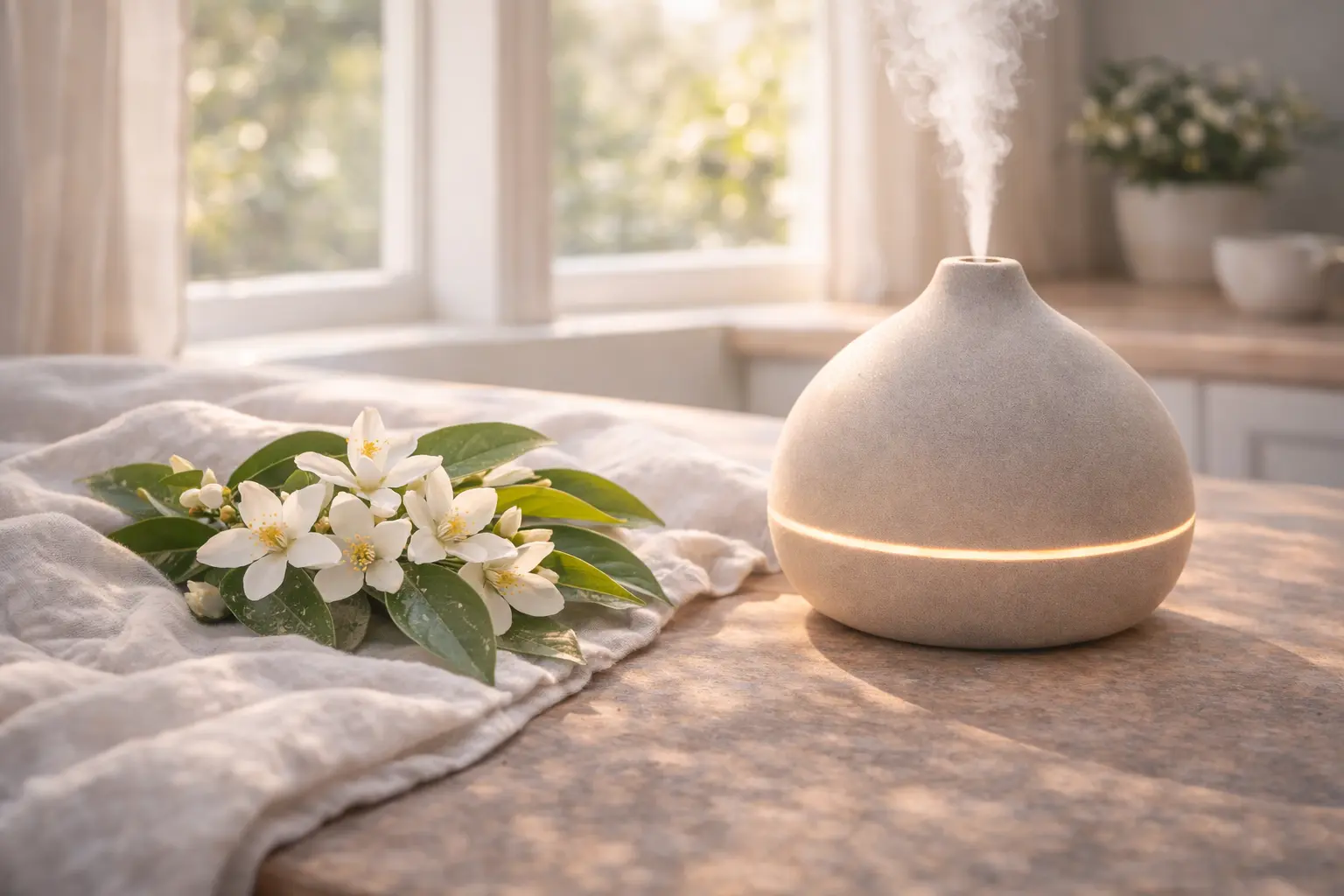
A soft floral-citrus blend for calm rooms, evening routines, and gentle emotional reset.
Bridal Garden
- 1 drop neroli
- 2 drops geranium
- 2 drops red mandarin
A tender floral-citrus blend with a romantic, soft, emotionally warm character.
Green Orange Grove
- 1 drop neroli
- 2 drops petitgrain
- 2 drops lemon
A fresh green-citrus blend that feels airy, elegant, and orchard-bright.
Soft Prayer
- 1 drop neroli
- 2 drops frankincense
- 1 drop sandalwood
A quiet floral-resin-wood blend for meditation, reflection, and heart-centered stillness.
What Blends Well with Neroli Essential Oil?
Neroli blends naturally with bergamot, red mandarin, lemon, sweet orange, pink grapefruit, petitgrain, bitter orange, lavender, geranium, rose absolute, jasmine absolute, ylang ylang, clary sage, frankincense, cedarwood atlas, sandalwood, and vanilla oleoresin.
For perfume blends, combine neroli with bergamot, petitgrain, geranium, rose absolute, sandalwood, or vanilla. For calming diffuser blends, pair it with lavender, red mandarin, frankincense, roman chamomile, or cedarwood atlas. For fresh citrus-floral blends, use neroli with lemon, sweet orange, pink grapefruit, or petitgrain.
FAQ About Neroli Essential Oil
Is neroli the same as orange blossom?
Neroli essential oil is steam distilled from orange blossoms, usually from the bitter orange tree, Citrus aurantium var. amara. Orange blossom absolute or orange blossom water may also come from orange flowers, but they are different products made by different methods. Neroli specifically refers to the essential oil.
Is neroli the same as petitgrain?
No. Neroli comes from the blossoms of the bitter orange tree. Petitgrain comes from the leaves and twigs. They may come from the same plant species, but they smell different and are used differently in blends.
Is neroli a citrus oil or a floral oil?
Neroli is both citrus-connected and floral. Botanically, it comes from a citrus tree, but aromatically it behaves more like a floral oil because it is distilled from blossoms rather than peel.
Can neroli essential oil be used on the face?
Yes, but only at a very low dilution and only if your skin tolerates it. Avoid the eye area, lips, broken skin, inflamed skin, and active irritation. Patch test first, especially if you have sensitive or allergy-prone skin.
Can neroli essential oil help with anxiety or sleep?
Neroli is often used in calming and bedtime-style blends because its aroma feels soft, comforting, and emotionally spacious. It should not be described as treating anxiety, panic, depression, insomnia, or any mental health condition. It can be part of a supportive relaxation routine.
Can neroli essential oil be used during pregnancy?
Pregnancy use should be cautious. Pregnant or breastfeeding people should consult a qualified healthcare professional or trained clinical aromatherapist before using neroli essential oil, especially for topical use or frequent diffusion.
Can neroli essential oil be applied directly to skin?
No. Neroli essential oil should be diluted in a carrier oil, cream, lotion, balm, or other suitable base before topical use. Undiluted use increases the risk of irritation or sensitization.
Can neroli essential oil be ingested?
Do not ingest neroli essential oil as a casual wellness practice. Essential oils are concentrated aromatic extracts, and internal use should only happen under qualified professional guidance.

Neroli Essential Oil, Spirituality, and Soul
The main sections above focus on botanical information, practical use, dilution, and safety. Neroli also has a symbolic and spiritual life in modern aromatherapy, where its orange blossom aroma is often associated with grace, tenderness, emotional openness, beauty, renewal, and the soft courage of beginning again.
Neroli does not feel loud or forceful. It feels like a threshold: a quiet doorway, a white flower, a breath before saying yes. Its aroma can be chosen for rituals of self-worth, forgiveness, heart-opening, bridal symbolism, new chapters, and gentle emotional repair.
Heart Energy and Emotional Openness
In symbolic aromatherapy, neroli is often connected with the heart because of its tender floral-citrus quality. It may be chosen when someone wants to soften defensiveness, invite compassion, or create a more emotionally open ritual space. These associations are symbolic, not medical or scientific claims.
Grace and New Beginnings
Because orange blossoms have long been connected with weddings and new chapters, neroli often symbolizes grace at the threshold of change. It may be used in rituals for transitions, commitments, fresh starts, or self-renewal.
Beauty Without Armor
Neroli has a delicate beauty that does not feel performative. Symbolically, it can represent softness without weakness, vulnerability without collapse, and beauty that does not need to announce itself loudly.
Safety Notes
Neroli essential oil should be diluted before topical use. Do not apply it undiluted to the skin, do not use it in or near the eyes, and do not take it internally as a casual wellness practice.
Neroli contains natural fragrance constituents such as linalool, limonene, geraniol, farnesol, citral, citronellol, and related compounds that may irritate sensitive skin or trigger allergic reactions in some people. Use caution with sensitive or allergy-prone skin, patch test first, and avoid old or oxidized oil on skin.
Pregnant or breastfeeding people, babies, young children, elderly adults, people with asthma, allergies, complex medical conditions, medication use, or very sensitive skin should seek qualified guidance before use. Diffuse in moderation, keep rooms ventilated, and avoid continuous diffusion. Stop using neroli if irritation, rash, headache, nausea, dizziness, breathing discomfort, or any unusual reaction occurs.
Further Reading and Sources
For botanical, chemical, and safety-oriented background, these sources may be useful starting points:
- Chemical composition of Citrus aurantium flowers essential oil, neroli oil
- Inhalation of Citrus aurantium var. amara essential oil and stress-related outcomes in a randomized controlled trial
- Citrus aurantium var. amara essential oil chemical and biological research background
- Seasonal variation of essential oil composition of Citrus aurantium var. amara
- Neroli historical and perfumery overview