
Use Guide
Essential oils can be part of a calm relaxation routine when they are used gently, safely, and with realistic expectations. The goal is not to force the body into calm or treat stress as a medical condition. The goal is to create a softer atmosphere, mark a transition in the day, and support simple rituals such as breathing, stretching, journaling, bathing, massage, or a quiet evening diffuser blend.
Relaxation is personal. Some people prefer soft florals such as lavender essential oil or roman chamomile essential oil. Others feel more settled with woods and resins such as cedarwood atlas essential oil, frankincense essential oil, or vetiver essential oil. This guide explains how to choose oils for a relaxed atmosphere, how to use them in diffusers and topical blends, and how to keep safety at the center of the routine.
Quick Answer
Good beginner essential oils for relaxation routines include lavender, bergamot, roman chamomile, sweet orange, frankincense, cedarwood atlas, clary sage, vetiver, geranium, and ylang ylang. Use them lightly in a diffuser, blend them into properly diluted body oils, or add them to a quiet evening ritual. Keep the aroma subtle, dilute before skin use, avoid casual internal use, and use extra caution around children, pets, pregnancy, asthma, allergies, migraines, and scent-sensitive people.
What Does “Relaxation” Mean in Aromatherapy?
In a safety-first essential oil routine, relaxation is best understood as atmosphere and ritual. A scent can make a room feel quieter, brighter, softer, warmer, cleaner, or more grounded. It can also become a cue that helps separate work time from evening time, screen time from rest time, or a busy home routine from a slower personal ritual.
Essential oils should not be presented as a treatment for anxiety, depression, insomnia, panic, trauma, or chronic stress. Those experiences deserve appropriate care and support. Essential oils may still be part of a comforting environment for some people, but they are not a replacement for medical or mental health care.
Safe framing: Think of essential oils as one small part of a calming routine: fresh air, lower light, a comfortable room, gentle movement, warm water, quiet music, journaling, or a short diffuser session.
Best Essential Oils for Relaxation Routines
The best relaxation oils are usually the ones that feel pleasant, not overpowering, and easy to live with. For beginners, it is often better to choose a few gentle oils and use them consistently than to build complicated blends with too many strong notes.
Beginner-Friendly Relaxation Oils
Lavender
Lavender essential oil has a soft floral-herbal aroma that fits evening routines, linen sprays, gentle massage blends, and quiet diffuser blends.
Bergamot
Bergamot essential oil brings a bright green-citrus note with a soft floral edge. For topical use, phototoxicity matters, so FCF bergamot is often the easier choice for leave-on blends.
Roman Chamomile
Roman chamomile essential oil smells soft, apple-like, floral, and gentle. It is often chosen for bedtime-style diffuser blends and tender aromatic routines.
Frankincense
Frankincense essential oil has a resinous, airy, quietly grounding aroma that works well for breath-centered rituals, meditation-style routines, and slow evening blends.
Soft Floral Oils
Soft floral oils can make a blend feel gentle, warm, and emotionally rounded. Lavender is the classic starting point because it is familiar, versatile, and easy to blend. Roman chamomile is quieter and more delicate. Geranium essential oil adds a rosy-green floral note, while ylang ylang essential oil is lush, sweet, and very persistent.
Because rich floral oils can become overwhelming, use them sparingly. Ylang ylang in particular is best used in small amounts, especially in diffusers or blends for scent-sensitive people.
Gentle Citrus Oils
Citrus oils can bring brightness to a relaxation blend without making it feel heavy. Sweet orange essential oil is warm, cheerful, and beginner-friendly as a room scent. Bergamot is more refined and green, with a soft tea-like quality. Red mandarin essential oil can feel sweet, rounded, and gentle in evening blends.
For skin use, citrus safety matters. Cold-pressed citrus oils may have different phototoxicity considerations depending on the oil. If you are making a leave-on body oil, perfume oil, lotion, or massage blend, check the oil-specific safety notes and use conservative dilution.
Woods, Resins, and Roots
Woody, resinous, and earthy oils can make relaxation blends feel grounded. Cedarwood atlas has a dry, warm wood aroma. Frankincense feels resinous, airy, and contemplative. Vetiver is earthy, deep, and tenacious, so one drop is often enough in a diffuser blend. Sandalwood essential oil adds a creamy, smooth base note when available from a responsible source.
These oils are useful when a blend needs depth. They can also soften bright citrus and floral notes so the finished aroma feels less sharp.
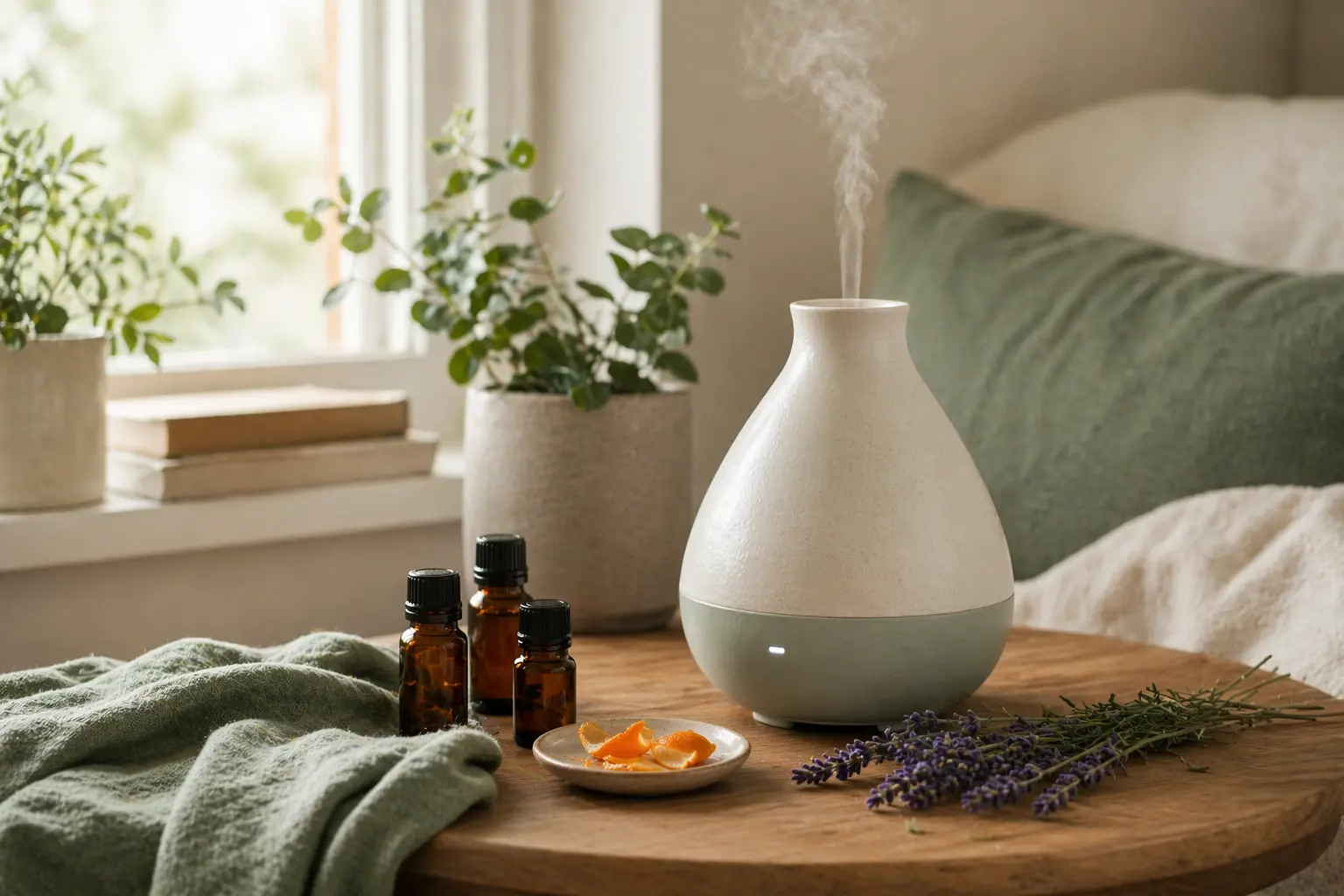
How to Use Essential Oils for Relaxation
The safest relaxation routines are usually simple. Choose one method, use a modest amount of essential oil, and pay attention to how the scent feels in the room or on the skin. More oil is not automatically more relaxing. In many homes, a lighter aroma is more comfortable and easier to repeat.
In a Diffuser
For a standard room diffuser, start with about 3 to 5 total drops of essential oil. Use fewer drops in small rooms, bedrooms, shared spaces, or around sensitive people. Diffuse intermittently in a ventilated room and stop if anyone experiences headache, nausea, coughing, dizziness, eye irritation, or discomfort.
For more details on timing, drop amounts, room size, cleaning, and household safety, see the guide to using essential oils in a diffuser.
In a Massage or Body Oil
For adult body use, many simple relaxation blends stay around 1% to 2% dilution. A gentle starting point is about 1 drop of essential oil per teaspoon of carrier oil. For sensitive skin, frequent use, facial use, pregnancy, older adults, or stronger oils, use less or ask a qualified professional for guidance.
Good carrier oils for relaxation blends include jojoba, sweet almond, apricot kernel, fractionated coconut oil, and grapeseed oil. The carrier oils guide explains how to choose a base oil by texture, skin feel, shelf life, and use.
In a Bath Routine
Do not add essential oils directly to bathwater. Essential oils do not dissolve in water, so they can float on the surface and contact the skin in concentrated droplets. For bath use, essential oils need to be properly dispersed or included in a formulated bath product.
If you are not sure how to formulate bath products safely, keep essential oils out of the bathwater and use a diffuser in the room instead. This gives you a gentle aromatic atmosphere without direct skin exposure in warm water.
As a Scent Ritual
A relaxation routine does not have to involve a complex recipe. You might open a bottle and smell the cap briefly, add a drop to an aroma stone, use a properly diluted roll-on, or choose a single diffuser blend that marks the end of the day. The ritual matters as much as the oil.
Simple Relaxation Routines
Evening Room Reset
Open a window briefly, clear the surface near your diffuser, and diffuse a light blend for 20 to 30 minutes. Keep the scent subtle enough that the room still feels fresh.
Gentle Hand Massage
Blend 1 drop lavender essential oil into 1 teaspoon carrier oil. Massage into hands and wrists, avoiding broken skin, eyes, and mucous membranes.
Journal Cue
Use one familiar aroma before journaling, reading, or stretching. Repeating the same gentle scent can help mark the shift into a quieter routine.
Relaxation Diffuser Blends
These blends are designed as soft atmospheric ideas, not as treatments. Adjust the total number of drops for your room size, diffuser type, and sensitivity. If a blend smells too strong, use fewer drops next time or diffuse for a shorter period.
Quiet Evening
- 3 drops lavender essential oil
- 2 drops sweet orange essential oil
- 1 drop frankincense essential oil
A soft floral-citrus-resin blend for a warm evening room.
Soft Citrus Calm
- 3 drops bergamot essential oil
- 2 drops red mandarin essential oil
- 1 drop cedarwood atlas essential oil
A bright but grounded blend with a gentle citrus opening and warm woody base.
Chamomile Linen
- 3 drops roman chamomile essential oil
- 2 drops lavender essential oil
- 1 drop frankincense essential oil
A tender floral-herbal blend for a quiet bedroom or reading nook.
Grounded Breath
- 3 drops frankincense essential oil
- 2 drops cedarwood atlas essential oil
- 1 drop vetiver essential oil
A deeper resin-wood-root blend for slow breathing, meditation-style routines, or a grounded room scent.
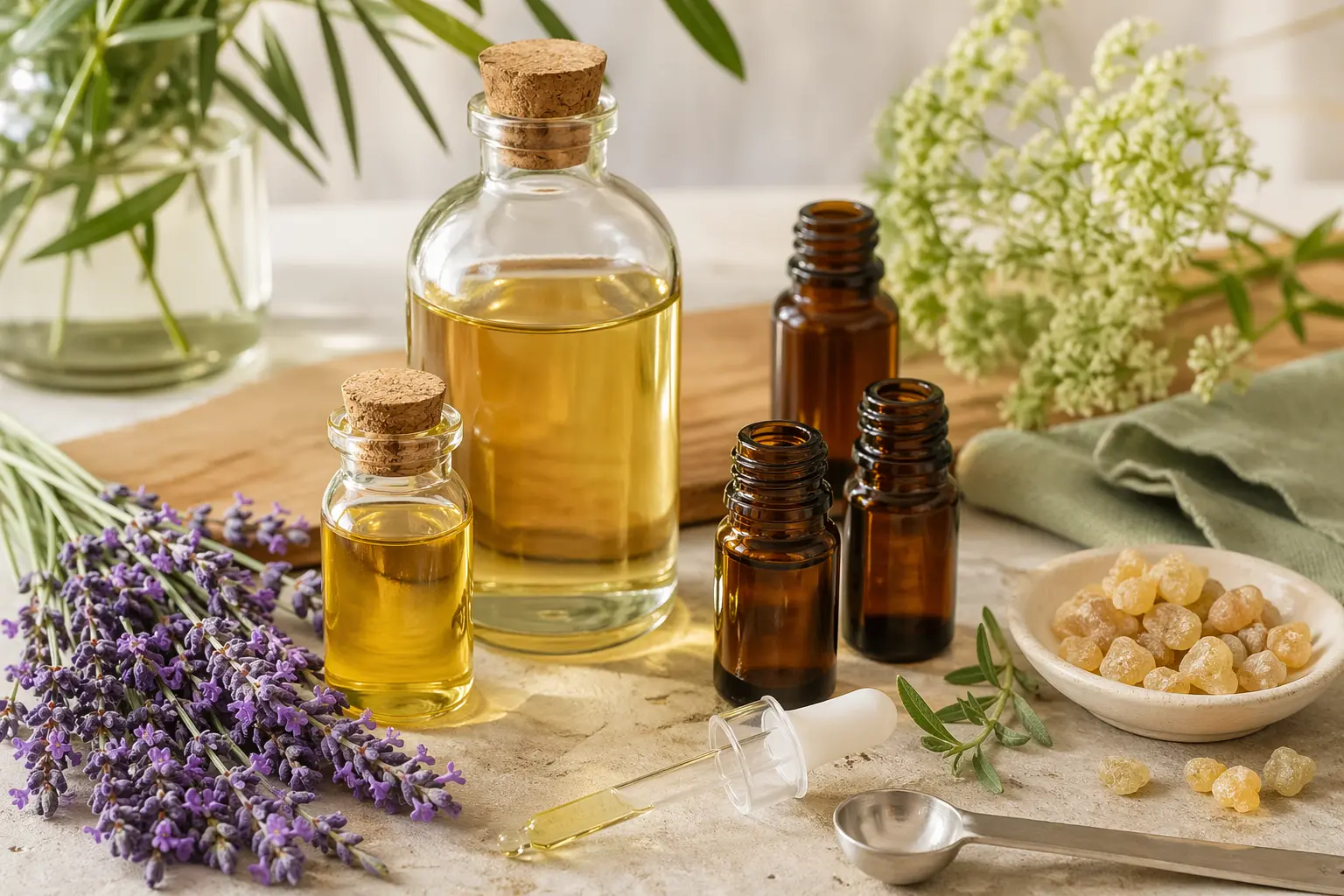
Relaxation Massage Blend Idea
A simple massage oil can be part of a relaxed evening routine, especially for hands, shoulders, arms, or feet. Keep the blend gentle and avoid applying essential oils to broken skin, irritated skin, the eye area, lips, or mucous membranes.
Simple Adult Body Oil
For a gentle 1% style blend, add 3 drops total essential oil to 1 tablespoon carrier oil. Try 2 drops lavender essential oil and 1 drop frankincense essential oil. Patch test first, use a small amount, and stop if irritation occurs.
For more detailed dilution guidance, including 0.5%, 1%, and 2% examples, see the essential oil dilution guide.
How to Choose a Relaxation Oil
Choose by scent family, strength, safety needs, and the routine you want to create. A single oil is often enough. If you are new to essential oils, start with lavender, sweet orange, bergamot, roman chamomile, or frankincense before moving into stronger florals, deeper base notes, or more complex blends.
If You Want Something Soft
Try lavender, roman chamomile, palmarosa, or a very small amount of ylang ylang. These oils can make a blend feel gentle and rounded, especially when paired with a light citrus or resin.
If You Want Something Bright
Try sweet orange, bergamot, red mandarin, or petitgrain. Citrus and citrus-adjacent oils can keep a relaxation blend from feeling too sleepy or heavy.
If You Want Something Grounded
Try frankincense, cedarwood atlas, sandalwood, vetiver, or myrrh. These oils work well when the routine is slower, quieter, or centered around breath and stillness.
If You Are Sensitive to Strong Scents
Use fewer drops, choose one oil at a time, keep diffusion short, and avoid intense oils in small rooms. Strong minty, camphoraceous, spicy, or very sweet floral oils can become uncomfortable quickly. If you are scent-sensitive, a passive diffuser or brief bottle-cap smelling may be more comfortable than a room diffuser.
Safety Notes for Relaxation Routines
Relaxing oils still need careful use. Essential oils are concentrated plant extracts, and a gentle aroma does not automatically mean an oil is safe undiluted, safe for children, safe for pets, or safe during pregnancy.
- Dilute essential oils before topical use.
- Avoid internal use unless guided by a qualified professional.
- Keep essential oils away from eyes, mucous membranes, broken skin, and irritated skin.
- Use extra caution around babies, children, pets, pregnancy, breastfeeding, asthma, allergies, migraines, epilepsy, medication use, and complex medical conditions.
- Diffuse intermittently in a ventilated room and make sure people and pets can leave the space.
- Store oils away from heat, light, and children.
- Stop using a blend if it causes headache, nausea, coughing, dizziness, irritation, or discomfort.
For a broader safety foundation, read the essential oil safety guide.
FAQ
What is the best essential oil for relaxation?
Lavender essential oil is one of the easiest starting points because it is familiar, versatile, and blends well with citrus, woods, resins, and soft florals. Bergamot, roman chamomile, frankincense, sweet orange, cedarwood atlas, and vetiver are also common choices for calm aromatic routines.
Can essential oils help with stress?
Essential oils can help create a pleasant atmosphere or a calming personal ritual for some people, but they should not be described as treating stress, anxiety, panic, depression, insomnia, or other health conditions. If stress is persistent, intense, or affecting daily life, professional support is important.
Are relaxing essential oils safe for sleep?
Some people like using gentle aromas as part of an evening routine, but all-night diffusion is usually unnecessary. A short diffuser session before bed, in a ventilated room, is often a more moderate approach. Use extra caution around children, pets, asthma, allergies, pregnancy, and scent-sensitive people.
Can I put relaxation oils directly on my skin?
No. Essential oils should be diluted before topical use. A common gentle adult body blend is around 1% dilution, but lower amounts may be better for sensitive skin, facial use, frequent use, pregnancy, older adults, or stronger oils.
Which essential oils should beginners avoid for relaxation?
Beginners may want to be cautious with very strong spicy, minty, camphoraceous, or intensely floral oils. Cinnamon, clove, oregano, thyme thymol, wintergreen, and heavy doses of peppermint or eucalyptus can be too intense for many relaxation routines. Use oil-specific safety guidance before blending stronger oils.
Final Safety Reminder
Essential oils can make a relaxation routine feel more intentional, but they are not a cure, treatment, or substitute for care. Use small amounts, dilute before applying to skin, diffuse moderately, avoid casual internal use, and choose oils with the people and animals in your home in mind.