
Why Some Rooms Hold Scent Longer Than Others
Home
.webp)
One of the most confusing things about home scent is that the same blend can feel balanced in one room and nearly invisible in another. Move it from a bedroom to a hallway, from a soft living room to a tiled bathroom, or from a closed winter room to an open spring window, and it can behave like a different formula entirely.
That difference is not imaginary. Rooms really do hold scent differently. Airflow, room size, ceiling height, humidity, temperature, fabric load, and even how many surfaces are available to catch and release aroma all change how essential oils move through a home. Once you understand that, many “bad blend” problems stop being mysterious.
Quick Answer
Some rooms hold scent longer because they have less airflow, more textile surface, smaller volume, or a scent profile that clings more easily to the materials in the space. Other rooms lose scent faster because the air moves more, the room is larger, or the surfaces do less to hold aroma in place.
If a blend disappears too quickly, that does not always mean it is weak. If it lingers too long, that does not always mean it is well made. Very often, the room itself is doing part of the work.
Room Size Changes Scent Before You Notice It
A small room does not need much aromatic material to feel full. That is why a blend that feels quietly elegant in a living room can become overwhelming in a small guest bathroom or box bedroom. The air volume is simply different. There is less space for the scent to disperse into, so the same number of drops may feel much denser.
The opposite is also true. Large rooms, open layouts, and high ceilings often make people think a blend is disappointing when it is really just more diluted by the space. This is one reason room-specific thinking matters so much in How to Choose the Right Diffuser for Each Room.
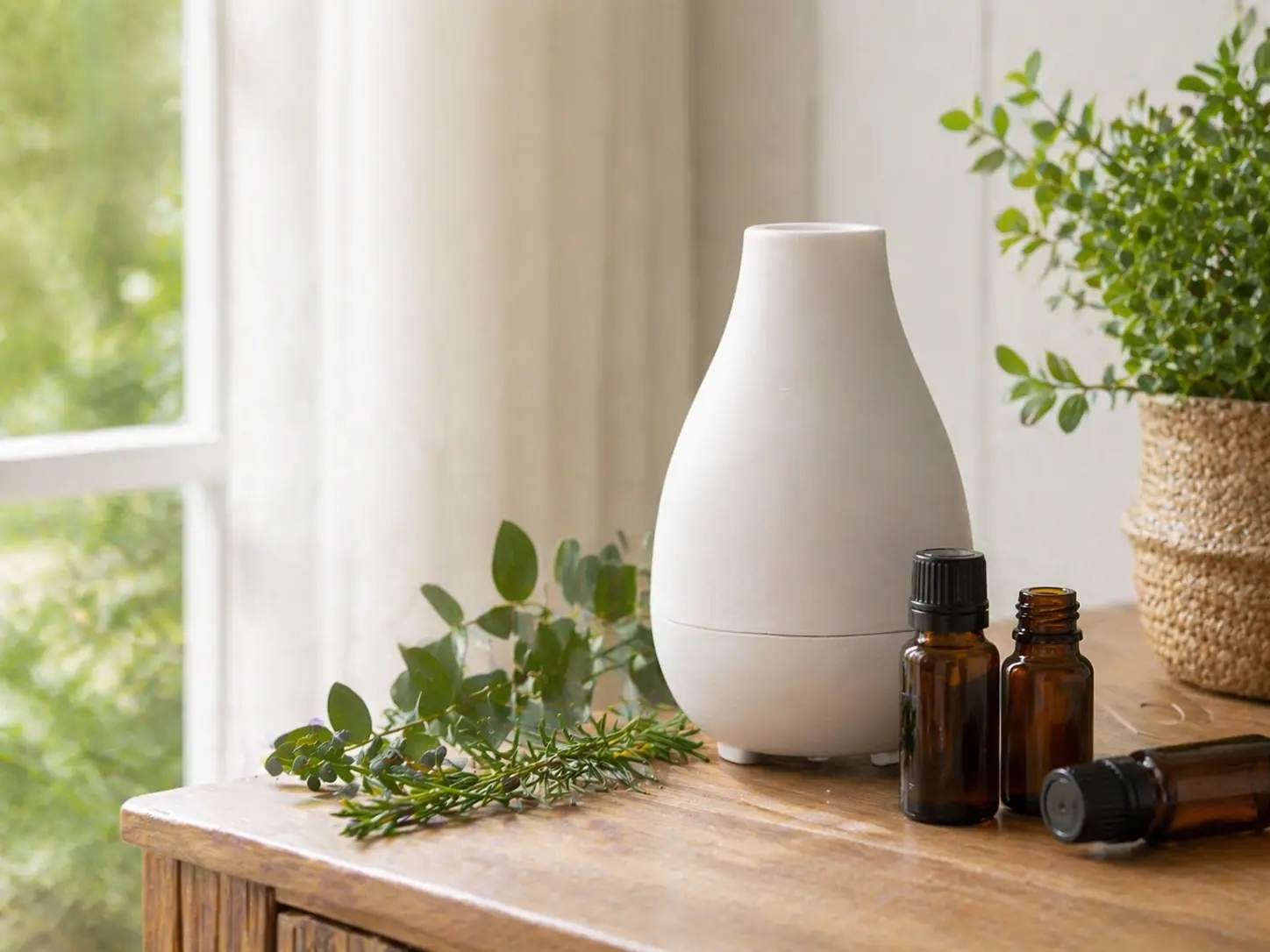
Textiles Quietly Act Like Scent Reservoirs
Soft furnishings matter more than people think. Curtains, rugs, bedding, upholstery, throws, coats, and entryway fabrics do not just decorate a room. They also catch and release aroma. Scientific work on indoor VOC behavior repeatedly points to fabrics as important sinks and secondary sources, which is a more technical way of saying that a room full of soft materials tends to hold onto smell differently than a sparse one.
That is why bedrooms and living rooms often keep scent longer than kitchens with harder surfaces, and why a well-upholstered room may continue feeling scented long after a short diffuser session ends. It can be lovely, but it can also make a heavy blend hang around longer than you wanted.
Airflow Can Help a Blend or Erase It
People often think of airflow only as a way to reduce scent, but it does more than that. Good airflow can make a blend feel clearer, more natural, and less congested. It can also shorten how long the aroma hangs in the room. A closed space may hold scent longer, but it can also make it feel flatter or duller over time.
This is one reason the open-window logic in Open-Window Spring Scent Ideas for a Lighter Home Mood works so well. A little movement in the air often makes aroma feel better placed, even if it makes it less persistent.
How to Read the Room More Accurately
If the scent lingers too long
Reduce drops first, then look at airflow and how much fabric the room is holding.
If the scent vanishes quickly
Check whether the room is larger, brighter, or more open than the blend was designed for.
If the room feels “stuffy scented”
The room may be holding aroma well, but not in a flattering way. More air may help more than more oil.
Some Scent Structures Naturally Linger Longer
Not every blend evaporates at the same pace. Bright citrus, mint, and many light herbs tend to announce themselves quickly and fade sooner. Woods, resins, softer florals, and richer base-note structures often hold on longer, especially when the room itself gives them somewhere to stay.
That is why a room with rugs, low airflow, and evening warmth can make a woody-calm blend feel beautifully persistent while the same conditions make a sweet floral blend feel padded and tiring. Longevity is not automatically a quality mark. It is an interaction between the blend and the room.
Humidity, Warmth, and Daily Rhythm Also Matter
Aroma behaves differently in January than in July. Warm air can make some notes feel more active and quicker to move, while cooler or more closed conditions can make a room feel as if it is holding the scent in place. Humidity also changes how air feels and how quickly a room seems to clear after a diffusion session.
Even the hour of day matters. Morning rooms with open windows and movement often treat scent differently than evening rooms with lamps on, fabric settled, and the house closing down for the night. If a blend keeps confusing you, it may not be inconsistent. It may just be living in different weather.
The Better Question Is Not “Why Is This Blend Weak?”
Often the better question is: what is this room doing to the blend? Is it absorbing it? Trapping it? Thinning it out? Making the top notes disappear first? Stretching the base until it feels heavier than intended? That shift in perspective makes home scent much easier to troubleshoot with taste.
It also keeps you from overcorrecting. If you keep adding more drops to solve a room problem, you can easily make the next test in a different room far too strong. Understanding the room first usually saves the blend from being blamed for the wrong thing.
Home
How to Choose the Right Diffuser for Each Room
A practical room-by-room guide to choosing diffuser size, intensity, timing, and placement for bedrooms, living rooms, work corners, entryways, and bathrooms.
Home
How to Freshen Laundry and Linens with Essential Oils
Freshen laundry, bed linens, towels, closets, and fabric routines with essential oils in a simple, clean-feeling, safety-first way.
Home
Essential Oils for a Guest-Ready Living Room
Create a welcoming living-room atmosphere with essential oils that feel polished, lived-in, and guest-ready without turning the room overly sweet or heavy.
Home
How to Clean an Essential Oil Diffuser
A practical, safety-first guide to cleaning an essential oil diffuser so it runs better, smells fresher, and fits cleanly into a real home routine.
Further Reading and Sources
These reads help explain why indoor scent behaves differently across materials, air conditions, and room types.