
Red Mandarin Essential Oil
Essential Oils
Red mandarin essential oil is a sweet, soft, cheerful citrus oil usually cold expressed from the peel of ripe Citrus reticulata fruit. It is commonly used in aromatherapy for gentle diffuser blends, family-friendly home routines, bedtime citrus blends, bath products, body oils, natural perfume, and emotional comfort rituals where a warm, tender citrus note is wanted.
Compared with sharper citrus oils, mandarin red feels rounder, softer, and more childlike. It is sweeter than lime, gentler than lemon, less bitter than pink grapefruit, and less floral than bergamot. In blends, it brings warmth, ease, and a friendly citrus glow.
Quick Answer
Red mandarin essential oil is best known for its sweet, soft citrus aroma and its use in calm diffuser blends, children’s spaces when used cautiously, bedtime routines, gentle body oils, bath products, room sprays, and natural perfume. It blends especially well with lavender, roman chamomile, bergamot, sweet orange, cedarwood atlas, frankincense, neroli, and petitgrain.
Red mandarin is often considered one of the gentler citrus oils, and expressed mandarin fruit oil is generally not treated as a major phototoxic concern. Even so, it should still be diluted before skin use, stored carefully to prevent oxidation, and used conservatively around children, sensitive skin, pregnancy, pets, and anyone with medical complexity.
What Is Red Mandarin Essential Oil?
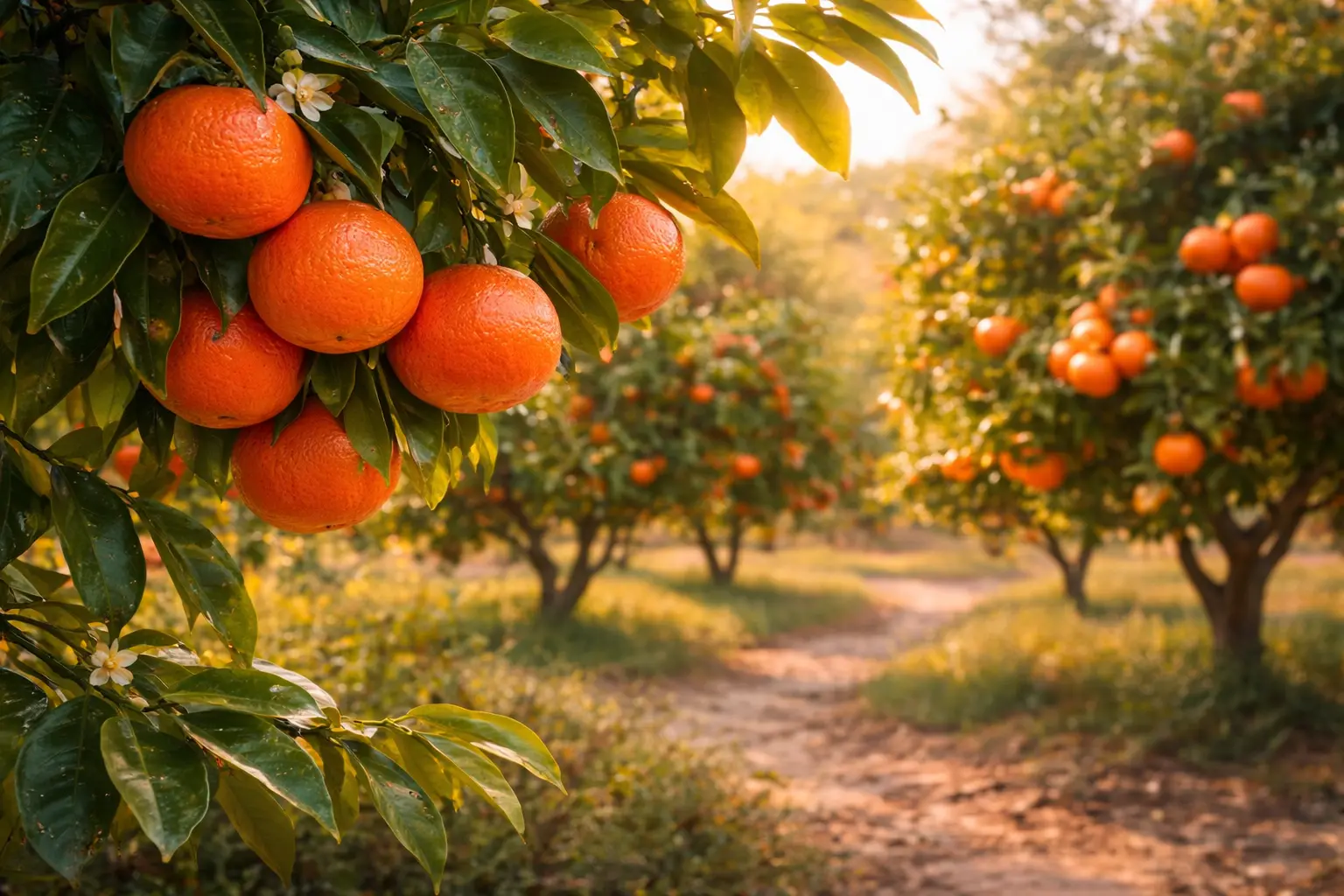
Red mandarin essential oil comes from the peel of ripe Citrus reticulata, a small citrus fruit known for its easy-to-peel skin, juicy segments, sweet flavor, and warm orange color. In essential oil use, the peel is the important part. Tiny oil glands in the rind hold the aromatic material that gives mandarin red its soft, sweet, sunny citrus scent.
Botanically, mandarin belongs to the Rutaceae family, the same citrus family as lemon, lime, sweet orange, pink grapefruit, bergamot, bitter orange, neroli, and petitgrain. Mandarin is especially important in citrus history because many modern citrus fruits have mandarin ancestry.
Red mandarin essential oil is usually rich in limonene, with other citrus constituents such as gamma-terpinene, beta-pinene, linalool, and small aromatic components contributing to its gentle fruity character. Natural composition varies depending on cultivar, fruit maturity, growing region, extraction method, and storage.
Red Mandarin, Green Mandarin, and Yellow Mandarin
Mandarin essential oil may be sold as green, yellow, or red mandarin. These names often relate to the maturity stage of the fruit peel when the oil is expressed. Green mandarin usually comes from less ripe fruit and tends to smell greener, fresher, and sharper. Yellow mandarin sits somewhere in the middle. Red mandarin comes from riper fruit and is usually sweeter, warmer, rounder, and more familiar as a soft orange-like aroma.
All of these oils may come from Citrus reticulata, but their scent profiles can feel different. If a recipe simply says “mandarin essential oil,” check the label to see whether it is green, yellow, red, cold pressed, or distilled. For gentle evening and family-style blends, mandarin red is often the softest and most comforting choice.
What Does Red Mandarin Essential Oil Smell Like?
Red mandarin essential oil smells sweet, juicy, warm, soft, and citrusy. It has a tender orange-like aroma, but it is usually lighter and more delicate than sweet orange. It does not have the sharp edge of lime, the sour brightness of lemon, or the bitter sparkle of pink grapefruit.
In blends, red mandarin brings a gentle glow. It softens herbs, sweetens woods, brightens resins, and makes bedtime blends feel lighter. It is especially beautiful with lavender, roman chamomile, cedarwood atlas, frankincense, neroli, petitgrain, geranium, and clary sage.
Common Uses of Red Mandarin Essential Oil
Red mandarin essential oil is most often chosen when a blend needs to feel gentle, cheerful, warm, sweet, and emotionally easy. It belongs naturally to bedtime rituals, family spaces, cozy diffuser blends, bath products, body oils, room sprays, natural perfume, and self-care routines that should feel reassuring rather than stimulating.
Bedtime and Wind-Down Routines
Red mandarin is one of the loveliest citrus oils for evening use because it feels soft rather than sharp. It can brighten a bedtime blend without making it feel too awake. It pairs beautifully with lavender, roman chamomile, cedarwood atlas, frankincense, and bergamot.
It should not be described as curing insomnia or treating sleep disorders. A safer way to present red mandarin is as part of a peaceful evening atmosphere or sleep-friendly routine.
Children’s Spaces and Family Routines
Red mandarin is often chosen for family spaces because its aroma feels gentle, familiar, sweet, and cheerful. Even so, essential oil use around children should stay conservative. Diffuse small amounts for short periods, keep rooms ventilated, and avoid direct inhalation from the bottle or diffuser mist.
For babies, toddlers, children with asthma, allergies, breathing sensitivity, neurological conditions, or complex medical needs, seek qualified guidance before using essential oils. A calm room, fresh air, predictable routine, and low scent intensity matter more than using more oil.
Emotional Comfort and Cheerful Rituals
Red mandarin is often used when someone wants a scent that feels lighthearted, warm, and emotionally kind. It can be part of journaling, slow mornings, evening baths, family rituals, or simple self-care moments. It should not be described as treating anxiety, depression, grief, or any emotional health condition. It can, however, help create a softer and more pleasant aromatic environment.
Bath and Body Products
Red mandarin is popular in body oils, bath oils, scrubs, lotions, creams, and shower products because it smells sweet, fresh, and friendly. It blends especially well with lavender, geranium, neroli, palmarosa, cedarwood atlas, and frankincense.
For topical use, always dilute red mandarin. Although it is generally not treated as a major phototoxic citrus oil, it can still irritate skin if used too strongly, used oxidized, or applied to sensitive skin.
Natural Perfume
Red mandarin gives natural perfume blends a sweet, tender citrus opening. It is softer than lemon or lime and can make floral blends feel more approachable. It works well with neroli, petitgrain, geranium, ylang ylang, cedarwood atlas, sandalwood, and vanilla oleoresin.
Fresh Home and Room Sprays
Red mandarin can make room sprays and diffuser blends feel cheerful without becoming sharp. It works well in living rooms, bedrooms, entryways, and cozy family spaces. For a fresher home aroma, blend it with lemon, lime, petitgrain, or rosemary. For a softer home aroma, blend it with lavender, roman chamomile, geranium, or frankincense.
Quick Tips for Using Red Mandarin Essential Oil
Gentle Bedtime Diffuser
Add 3 drops red mandarin, 2 drops lavender, and 1 drop cedarwood atlas to a diffuser. Run for 30 minutes in a ventilated room before bedtime.
Cheerful Room Blend
Diffuse 3 drops red mandarin with 2 drops sweet orange and 1 drop bergamot for a soft, happy citrus atmosphere.
Comfort Body Oil
Dilute 1 drop red mandarin and 1 drop roman chamomile in 1 teaspoon of carrier oil for a gentle evening body oil aroma.
Family Space Reminder
Use fewer drops around children, diffuse for shorter periods, and keep the room ventilated. Gentle aroma still needs thoughtful use.
Dilution Guidance
General Adult Dilution
For general adult topical use, red mandarin essential oil is usually best kept around 1% to 2% dilution. A 1% dilution is about 1 drop of essential oil per teaspoon of carrier oil. A 2% dilution is about 2 drops per teaspoon of carrier oil.
For sensitive skin, facial products, first-time use, children’s products, or large-area application, start lower. For facial use, a range around 0.25% to 0.5% is often more appropriate. Avoid the eye area, lips, broken skin, irritated skin, and freshly shaved skin.
Red mandarin is generally not treated as a strongly phototoxic citrus oil, but citrus oils can oxidize over time. Oxidized oils are more likely to irritate skin. Store red mandarin essential oil tightly closed, away from heat, light, and air, and avoid using old oil on skin.
How to Use Red Mandarin Essential Oil
In a Diffuser
Use 3 to 6 total drops of essential oil in a standard room diffuser, depending on room size, diffuser type, and personal sensitivity. Red mandarin is lovely on its own, but it becomes more interesting with soft florals, gentle woods, and resins. Try it with lavender, roman chamomile, cedarwood atlas, frankincense, neroli, or geranium.
On Skin
Always dilute red mandarin essential oil before applying it to skin. It can be used in body oils, creams, lotions, balms, massage oils, bath products, and perfume oils when properly diluted. Avoid the eyes, mucous membranes, inner ears, broken skin, irritated skin, and freshly shaved areas.
In Children’s Spaces
For children’s spaces, use red mandarin lightly and conservatively. Diffuse fewer drops than you would for adults, run the diffuser for a shorter time, and keep the door open or the room ventilated. Do not place a diffuser close to a child’s face, crib, or bed. For babies, toddlers, children with asthma or medical concerns, ask a qualified professional first.
In Bath Products
Do not add red mandarin essential oil directly to bathwater. Essential oils do not dissolve in water and can sit on the surface, increasing the chance of irritation. Mix red mandarin into an appropriate dispersant, unscented bath gel, or fully emulsified bath product before adding it to water.
In DIY Products
Red mandarin can be used in room sprays, linen sprays, body oils, creams, balms, scrubs, perfume oils, and diffuser blends. Water-based sprays need a proper solubilizer or emulsifier, not just water and essential oil. Label blends clearly, store them safely, and keep them away from children and pets.
History and Origins of Mandarin
Mandarin is one of the foundational citrus fruits in the history of cultivated citrus. Citrus reticulata is native to parts of China, and mandarins have been grown, selected, and cherished in East and Southeast Asian cultures for centuries. Their small size, sweet pulp, easy-peeling skin, and bright color made them both practical and symbolically meaningful.
Mandarins later traveled through trade, cultivation, and botanical exchange into the Mediterranean, the Americas, and other citrus-growing regions. Over time, mandarin ancestry became deeply woven into many familiar citrus fruits and hybrids, including tangerines, clementines, satsumas, and other easy-peeling citrus types.
In cultural symbolism, mandarins are often connected with good fortune, sweetness, family gatherings, winter celebrations, and the return of light. This belongs to the fruit and its cultural life rather than to essential oil therapy, but it helps explain why mandarin red essential oil feels so naturally cheerful and comforting.
Modern red mandarin essential oil is a concentrated aromatic extract from the peel. It should not be treated as the same thing as fresh mandarin fruit, juice, tea, or culinary zest. In aromatherapy, it belongs in careful diffusion, measured dilution, and thoughtful storage.
Red Mandarin Diffuser Blends
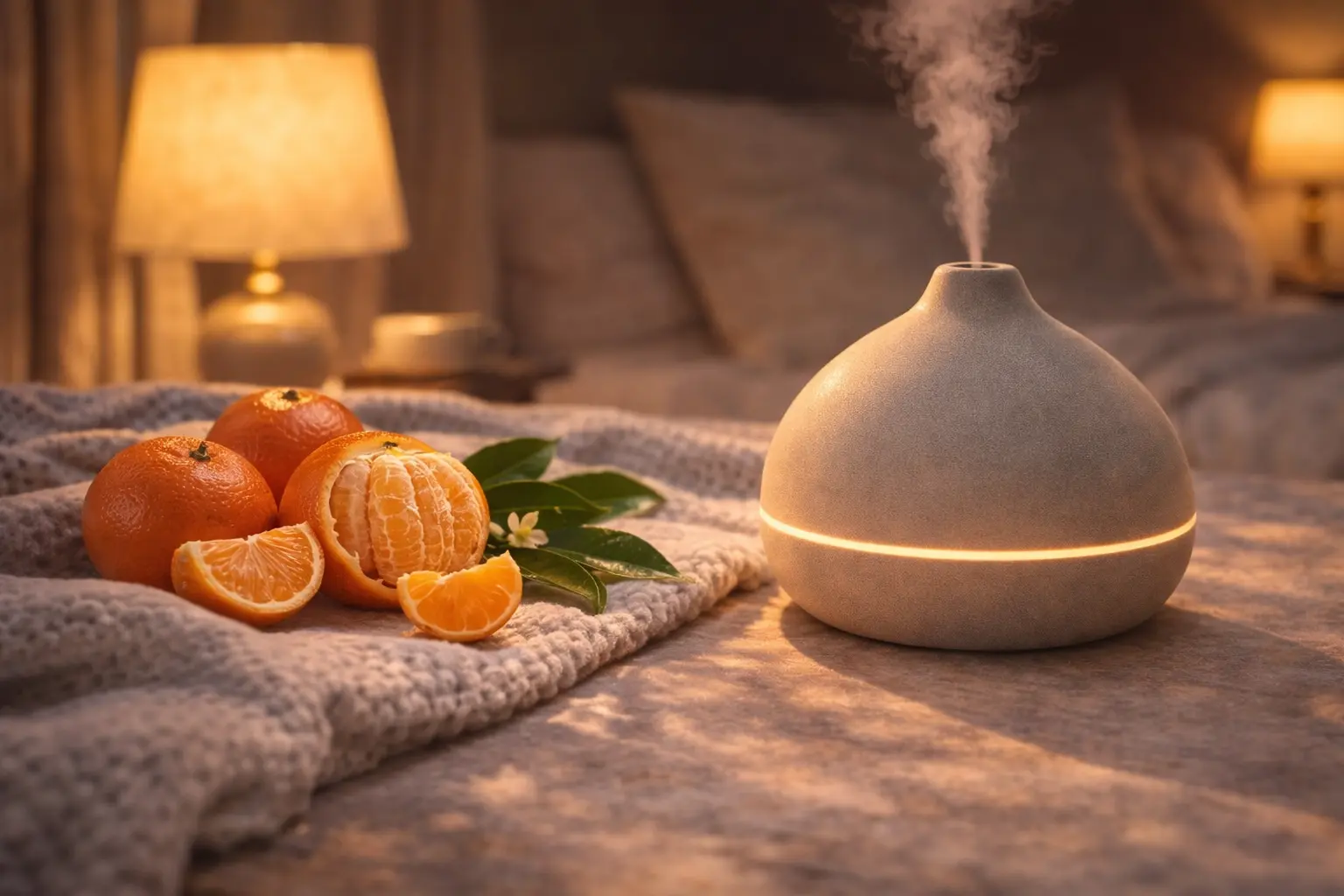
Red mandarin diffuser blends are best when they feel warm, simple, and gentle. It works beautifully with soft florals, woods, resins, and other citrus oils, especially when you want a cheerful blend that does not feel sharp.
Cozy Lantern
- 3 drops mandarin red
- 2 drops lavender
- 1 drop cedarwood atlas
A soft citrus-floral-wood blend for slow evenings, bedrooms, and gentle bedtime transitions.
Little Apple Sun
- 3 drops red mandarin
- 1 drop roman chamomile
- 1 drop frankincense
A tender, comforting blend with a soft fruit-floral heart and a quiet resin base.
Sweet Citrus Home
- 3 drops red mandarin
- 2 drops sweet orange
- 1 drop bergamot
A cheerful citrus blend for family rooms, weekend mornings, and warm home atmospheres.
Soft Blossom
- 3 drops red mandarin
- 1 drop neroli
- 1 drop geranium
A gentle citrus-floral blend with a tender, elegant, emotionally warm character.
What Blends Well with Red Mandarin Essential Oil?
Red mandarin blends naturally with lavender, roman chamomile, german chamomile, bergamot, sweet orange, lemon, lime, pink grapefruit, neroli, petitgrain, geranium, clary sage, frankincense, cedarwood atlas, sandalwood, vanilla oleoresin, and ylang ylang.
For bedtime blends, combine red mandarin with lavender, roman chamomile, cedarwood atlas, or frankincense. For cheerful family-space blends, pair it with sweet orange, bergamot, or neroli. For natural perfume, use mandarin red with petitgrain, geranium, sandalwood, vanilla, or ylang ylang.
FAQ About Red Mandarin Essential Oil
Is mandarin red the same as red mandarin essential oil?
Yes, the names are often used for the same style of oil. Mandarin red or red mandarin essential oil usually refers to oil expressed from ripe Citrus reticulata peel. Always check the botanical name and extraction method on the label.
Is red mandarin essential oil phototoxic?
Expressed mandarin fruit oil is generally not treated as a major phototoxic essential oil. However, it is still a cold-pressed citrus peel oil, so conservative dilution, good storage, and caution with sensitive skin are wise. If a product will be used before sun exposure, keep the formula simple and conservative.
Is red mandarin essential oil safe for children?
Mandarin red is often considered one of the gentler citrus oils, but it still needs careful use around children. Use small amounts, diffuse for short periods in a ventilated room, and avoid direct inhalation or undiluted skin use. For babies, toddlers, or children with asthma, allergies, or medical conditions, seek qualified guidance first.
Can red mandarin essential oil be used for sleep?
Red mandarin is commonly used in bedtime-style blends because its aroma feels soft, warm, and comforting. It should not be described as curing insomnia or treating sleep disorders. It can be part of a peaceful evening routine.
Can red mandarin essential oil be used on skin?
Yes, but it must be diluted. Use lower dilutions for sensitive skin, facial products, children’s products, or large-area application. Avoid broken, irritated, inflamed, or freshly shaved skin.
Can red mandarin essential oil be ingested?
Do not ingest red mandarin essential oil as a casual wellness practice. Mandarin fruit, mandarin peel, and mandarin essential oil are not the same thing. Essential oils are concentrated aromatic extracts and should only be used internally under qualified professional guidance.
How should red mandarin essential oil be stored?
Store red mandarin essential oil tightly closed, away from heat, light, and air. Citrus oils oxidize more quickly than many essential oils. If the oil smells stale, harsh, sticky, or noticeably different, do not use it on skin.

Red Mandarin Essential Oil, Spirituality, and Soul
The main sections above focus on botanical information, practical use, dilution, and safety. Red mandarin also has a symbolic and spiritual life in modern aromatherapy, where its sweet citrus aroma is often associated with comfort, childlike joy, emotional warmth, innocence, and the gentle return of light.
Red mandarin does not feel forceful. It does not push the door open like lime or sparkle sharply like lemon. It feels more like a small lantern in the evening: warm, familiar, and quietly cheerful. It can be chosen for rituals of reassurance, family connection, self-kindness, and soft beginnings.
Inner Child and Joy
In symbolic aromatherapy, red mandarin is often connected with the inner child because of its sweet, playful, familiar scent. It may be chosen when someone wants to invite more ease, warmth, and simple joy into a ritual or room.
Comfort and Emotional Warmth
Red mandarin can symbolize the kind of comfort that does not require explanation. It may be used in gentle evening rituals, journaling, bath routines, or quiet moments of self-soothing. These associations are symbolic, not medical or scientific claims.
Solar Plexus and Gentle Confidence
Some spiritual traditions associate sweet citrus oils with the solar plexus because of their sunny, confidence-supporting character. Red mandarin’s version of this energy is soft rather than bold: a warm encouragement, not a demand.
Safety Notes
Red mandarin essential oil should be diluted before topical use. Do not apply it undiluted to the skin, do not use it in or near the eyes, and do not take it internally as a casual wellness practice.
Red mandarin is often considered a gentler citrus oil and is generally not treated as strongly phototoxic, but it can still irritate skin if used too strongly, used on sensitive skin, or used after oxidation. Store it away from heat, light, and air, and avoid using old oil on skin.
Use caution around babies, young children, pregnancy, breastfeeding, pets, asthma, allergies, sensitive skin, medication use, and complex medical conditions. Diffuse in moderation, keep rooms ventilated, and avoid continuous diffusion. Stop using mandarin red if irritation, headache, nausea, dizziness, breathing discomfort, or any unusual reaction occurs.
Further Reading and Sources
For botanical, chemical, and safety-oriented background, these sources may be useful starting points:
- Kew Plants of the World Online: Citrus reticulata
- Citrus reticulata essential oil composition across cultivars
- Chemical composition of Citrus reticulata essential oil at different maturity stages
- Chemical composition of tangerine and other citrus essential oils
- Tisserand Institute: Phototoxicity, essential oils, sun and safety