
German Chamomile Essential Oil
Essential Oils
German chamomile essential oil is a deep blue, herbaceous, sweet, hay-like essential oil steam distilled from the flowering tops of Matricaria chamomilla, also known as Matricaria recutita. It is best known for its striking blue color, soft herbal aroma, and use in gentle skincare aromas, calming diffuser blends, bath products, body oils, and quiet evening rituals.
German chamomile has a very different personality from the familiar cup of chamomile tea. The dried flowers are soft, apple-like, and comforting, while the essential oil is more concentrated, earthy, herbal, slightly bitter, and often blue because of chamazulene formed during distillation. It is a precious oil to use thoughtfully, not casually.
Quick Answer
German chamomile essential oil is commonly used in aromatherapy for gentle skincare aromas, diluted body oils, bath products, bedtime-style diffuser blends, sensitive-feeling self-care routines, and quiet emotional comfort rituals. It blends especially well with lavender, roman chamomile, bergamot, red mandarin, frankincense, geranium, cedarwood atlas, and sweet marjoram.
The most important safety point is allergy awareness. German chamomile belongs to the Asteraceae family, so people sensitive to chamomile, ragweed, daisies, chrysanthemums, or related plants should use extra caution. It should be diluted before skin use and should not be used internally as a casual wellness practice.
What Is German Chamomile Essential Oil?
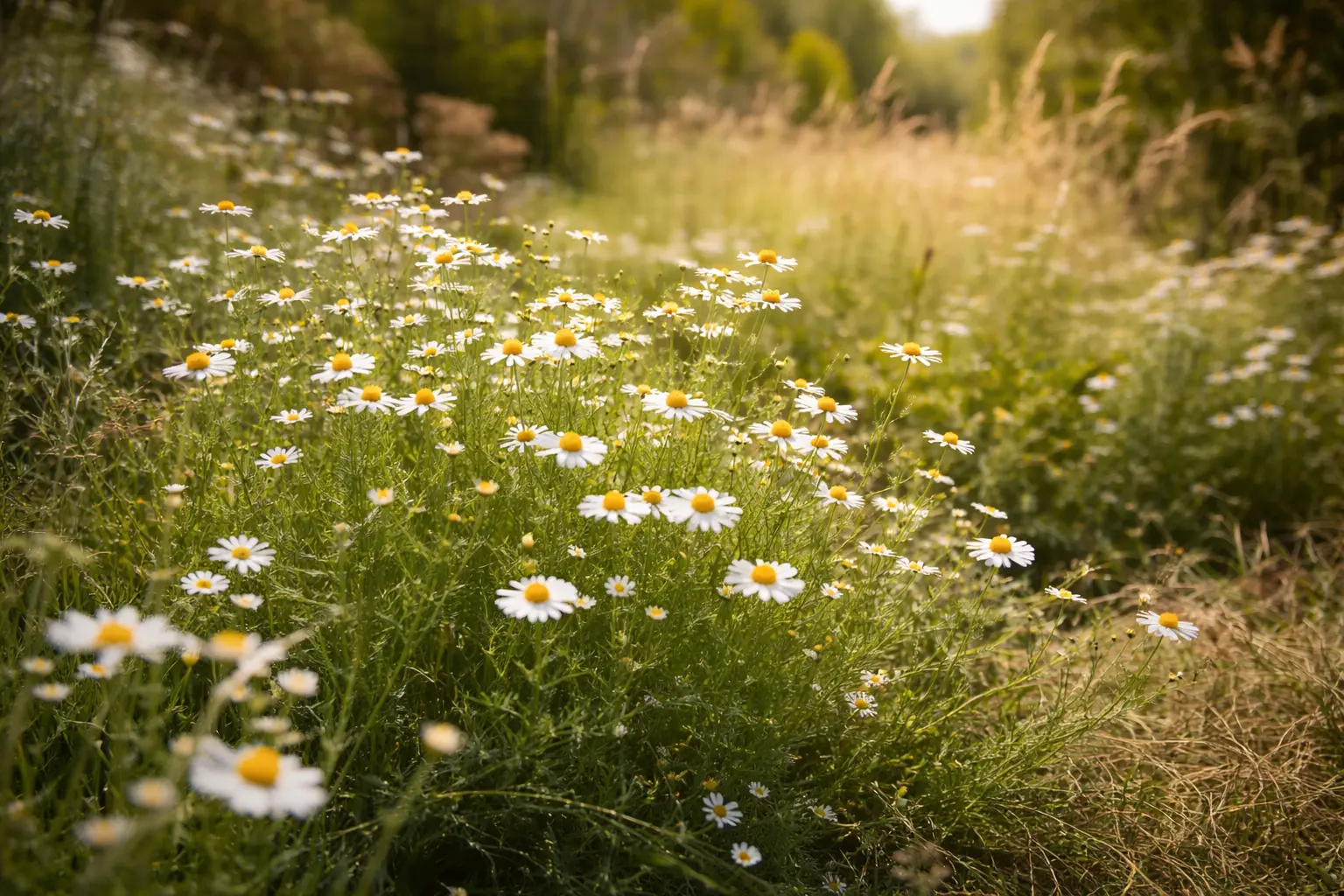
German chamomile essential oil is distilled from the flower heads of Matricaria chamomilla, an annual plant in the Asteraceae family. The plant has delicate white petals, raised yellow centers, finely divided leaves, and a soft apple-like scent. The flowers are the most important part for essential oil production and traditional herbal use.
German chamomile is not the same as roman chamomile. German chamomile usually refers to Matricaria chamomilla or Matricaria recutita, while Roman chamomile refers to Chamaemelum nobile. Both are called chamomile, both have daisy-like flowers, and both are associated with gentle herbal traditions, but their essential oils differ in color, chemistry, aroma, and typical use.
German chamomile essential oil is often associated with constituents such as chamazulene, alpha-bisabolol, bisabolol oxides, bisabolone oxide A, beta-farnesene, and related sesquiterpene compounds. Natural composition varies depending on chemotype, growing region, cultivar, harvest timing, drying method, distillation method, and storage.
German Chamomile vs. Roman Chamomile
German chamomile and roman chamomile are close in common herbal imagination, but they should not be treated as the same essential oil. If a recipe simply says “chamomile essential oil,” it is worth checking which botanical name is intended.
German chamomile essential oil comes from Matricaria chamomilla or Matricaria recutita. It is often blue to blue-green because of chamazulene formed during distillation. Its aroma is herbal, sweet, hay-like, earthy, and somewhat stronger than many people expect from the word “chamomile.” It is often chosen for skincare-style blends, gentle body oils, and calming aromatic routines.
Roman chamomile essential oil comes from Chamaemelum nobile. It is usually pale yellow, pale blue-green, or light in color, depending on the oil. Its aroma is sweeter, fruitier, more apple-like, and more delicate. Roman chamomile is often used in bedtime blends, children’s spaces when appropriate, emotional comfort blends, and soft floral-fruity diffuser routines.
For Essencyclopedia profiles, German chamomile means Matricaria chamomilla / Matricaria recutita, and Roman chamomile means Chamaemelum nobile.
Why Is German Chamomile Essential Oil Blue?
German chamomile essential oil is famous for its blue color. This color is mainly associated with chamazulene, a blue compound that forms during the distillation process from naturally occurring precursors in the plant, especially matricin. The fresh flower itself is not blue, and chamomile tea is not blue in the same way. The blue color is a feature of the distilled essential oil.
The intensity of the blue color can vary. Some German chamomile oils are deep blue, while others are blue-green or less vividly colored. Color depends on plant material, chemotype, harvest timing, drying conditions, and distillation. A blue color can be a useful clue, but it should not be the only quality marker. Botanical name, extraction method, storage, aroma, and supplier transparency still matter.
German chamomile’s blue appearance makes it visually memorable, but it can also stain pale fabrics, light surfaces, or handmade products. Use care when adding it to lotions, balms, bath products, and textiles.
What Does German Chamomile Essential Oil Smell Like?
German chamomile essential oil smells herbaceous, sweet, hay-like, earthy, slightly bitter, warm, and faintly apple-like. It is not as candy-soft as many people expect from chamomile tea. It has a stronger herbal body and a deeper, slightly medicinal edge that makes it feel more serious than roman chamomile.
In blends, German chamomile can soften sharper oils and add a quiet herbal depth. It works beautifully with lavender, roman chamomile, frankincense, cedarwood atlas, geranium, sweet marjoram, red mandarin, and bergamot.
Common Uses of German Chamomile Essential Oil
German chamomile essential oil is most often chosen when a blend needs to feel gentle, herbal, cooling in tone, skin-care-like, quiet, and emotionally soothing. It is not usually the first oil for bright citrus freshness or dramatic floral perfume. It belongs more naturally to soft body oils, calming bath products, gentle massage blends, skincare aromas, evening rituals, and blends where a small amount of blue herbal depth is useful.
Skincare Aromas
German chamomile is widely used in skincare-style aromatherapy because its scent and blue color are associated with gentle, calming body-care products. It is often found in facial oils, balms, creams, after-sun style products, body oils, and sensitive-feeling skincare blends. This should stay cosmetic and aromatic, not medical.
German chamomile should not be presented as treating eczema, psoriasis, rosacea, acne, wounds, burns, allergic reactions, infections, dermatitis, or any diagnosed skin condition. A safety-first way to describe it is as an oil commonly chosen for gentle skincare aromas and soothing-feeling self-care blends when properly diluted.
Body Oils and Massage Blends
Diluted German chamomile can be used in body oils and massage blends when the desired mood is quiet, soft, and comforting. It works especially well with lavender, frankincense, roman chamomile, cedarwood atlas, and sweet marjoram.
Because German chamomile is potent and often expensive, it usually works best as one small part of a blend. A single drop can color and aromatically shape a body oil.
Bath Products
German chamomile can be beautiful in bath products when the goal is a soft herbal evening aroma. It blends well with roman chamomile, lavender, red mandarin, frankincense, and sweet marjoram. It should always be dispersed properly before touching bathwater. Essential oils do not dissolve safely in water on their own.
German chamomile may tint bath products or handmade formulations because of its blue color, so it is wise to test small batches first.
Bedtime-Style Diffuser Blends
German chamomile can be used in bedtime-style diffuser blends, but it has a stronger herbal character than Roman chamomile. It is best used lightly, often with softer oils such as lavender, red mandarin, roman chamomile, cedarwood atlas, or frankincense.
It should not be described as curing insomnia or treating sleep disorders. A safer way to frame it is as part of a quiet evening atmosphere or sleep-friendly routine.
Emotional Comfort and Calm Rituals
German chamomile is often chosen for emotional comfort rituals because its aroma feels soft, protective, and settling. It can be part of journaling, slow evenings, restorative yoga, bath routines, or moments when the room needs to feel quieter. It should not be described as treating anxiety, panic, depression, grief, trauma, or any mental health condition.
Gentle Family Spaces
German chamomile may be used in family spaces with caution, but it should not be treated as automatically safe for all children. It is concentrated, allergen-relevant for Asteraceae-sensitive people, and should be used very lightly. For babies, toddlers, children with asthma, allergies, medical conditions, or complex needs, ask a qualified professional before using essential oils.
Quick Tips for Using German Chamomile Essential Oil
Blue Balm Aroma
Add 1 drop German chamomile to a larger balm or body oil blend with lavender and frankincense. Test first, because the blue oil may tint pale products.
Gentle Evening Diffuser
Diffuse 1 drop German chamomile, 2 drops lavender, and 2 drops red mandarin for a soft herbal-citrus evening atmosphere.
Comfort Foot Oil
Dilute 1 drop German chamomile and 1 drop roman chamomile in 2 teaspoons of carrier oil, then massage into the feet as part of a quiet evening routine.
Allergy Check
Use extra caution if you react to chamomile, ragweed, daisies, chrysanthemums, or other Asteraceae-family plants.
Dilution Guidance
General Adult Dilution
For general adult topical use, German chamomile essential oil is usually best kept around 0.5% to 1% dilution for many everyday blends. A 1% dilution is about 1 drop of essential oil per teaspoon of carrier oil.
Some adult body blends may use up to 2% total essential oil, but German chamomile itself often works better as a small portion of the blend. For facial products, sensitive skin, first-time use, or large-area application, use much less, often around 0.25% to 0.5%.
Always dilute German chamomile before applying it to the skin. Avoid the eye area, lips, mucous membranes, broken skin, irritated skin, and freshly shaved skin. Patch test first, especially if you have sensitive skin or known plant allergies.
How to Use German Chamomile Essential Oil
In a Diffuser
Use 1 drop of German chamomile as part of a diffuser blend, especially in small rooms. It works well with lavender, roman chamomile, red mandarin, cedarwood atlas, frankincense, and sweet marjoram. Diffuse intermittently in a ventilated room.
On Skin
Always dilute German chamomile essential oil before topical use. It can be used in body oils, facial oils, creams, balms, massage oils, bath products, and perfume oils when properly diluted. Use lower dilutions for facial products, sensitive skin, and large-area application.
In Skincare Products
German chamomile can be used in skincare-style blends for its soft herbal aroma and blue color. Do not apply essential oils to inflamed, wounded, rashy, infected, or medically treated skin unless guided by a qualified professional. If you have a known Asteraceae allergy, avoid or seek expert guidance before use.
In Bath Products
Do not add German chamomile essential oil directly to bathwater. Essential oils do not dissolve in water and can sit on the surface, increasing the chance of irritation. Mix German chamomile into an appropriate dispersant, unscented bath gel, or fully emulsified bath product before adding it to the bath.
In DIY Products
German chamomile can be used in balms, salves, body oils, facial oils, bath blends, massage blends, and diffuser blends. It may tint products blue or blue-green. Label homemade blends clearly, store them safely, and keep them away from children and pets.
History and Origins of German Chamomile
German chamomile, Matricaria chamomilla, is native across parts of Europe, North Africa, and temperate Asia, and it has spread widely through cultivation and naturalization. It is an annual herb that grows in fields, meadows, roadsides, gardens, and cultivated herb farms. Its small white-and-yellow flowers are among the most recognizable medicinal and household herbs in the world.
The name chamomile is often traced to the Greek idea of “ground apple,” a reference to the plant’s low-growing habit and apple-like fragrance. This apple-like scent is still part of chamomile’s identity, especially in dried flowers and herbal tea. German chamomile’s Spanish name, manzanilla, also carries the “little apple” idea.
Chamomile has been used for centuries in European, Egyptian, Middle Eastern, and Asian herbal traditions. The dried flowers were used in teas, baths, compresses, household preparations, and gentle family remedies. These traditional uses belong primarily to the plant and its flower preparations, not directly to the modern concentrated essential oil.
In essential oil production, German chamomile became especially notable because of its blue oil. The formation of chamazulene during distillation made German chamomile visually distinctive and important in aromatherapy, perfumery, cosmetics, and skincare-style formulations. Today, it remains a classic example of how distillation can transform a familiar herb into a concentrated aromatic material with its own identity.
German Chamomile Diffuser Blends
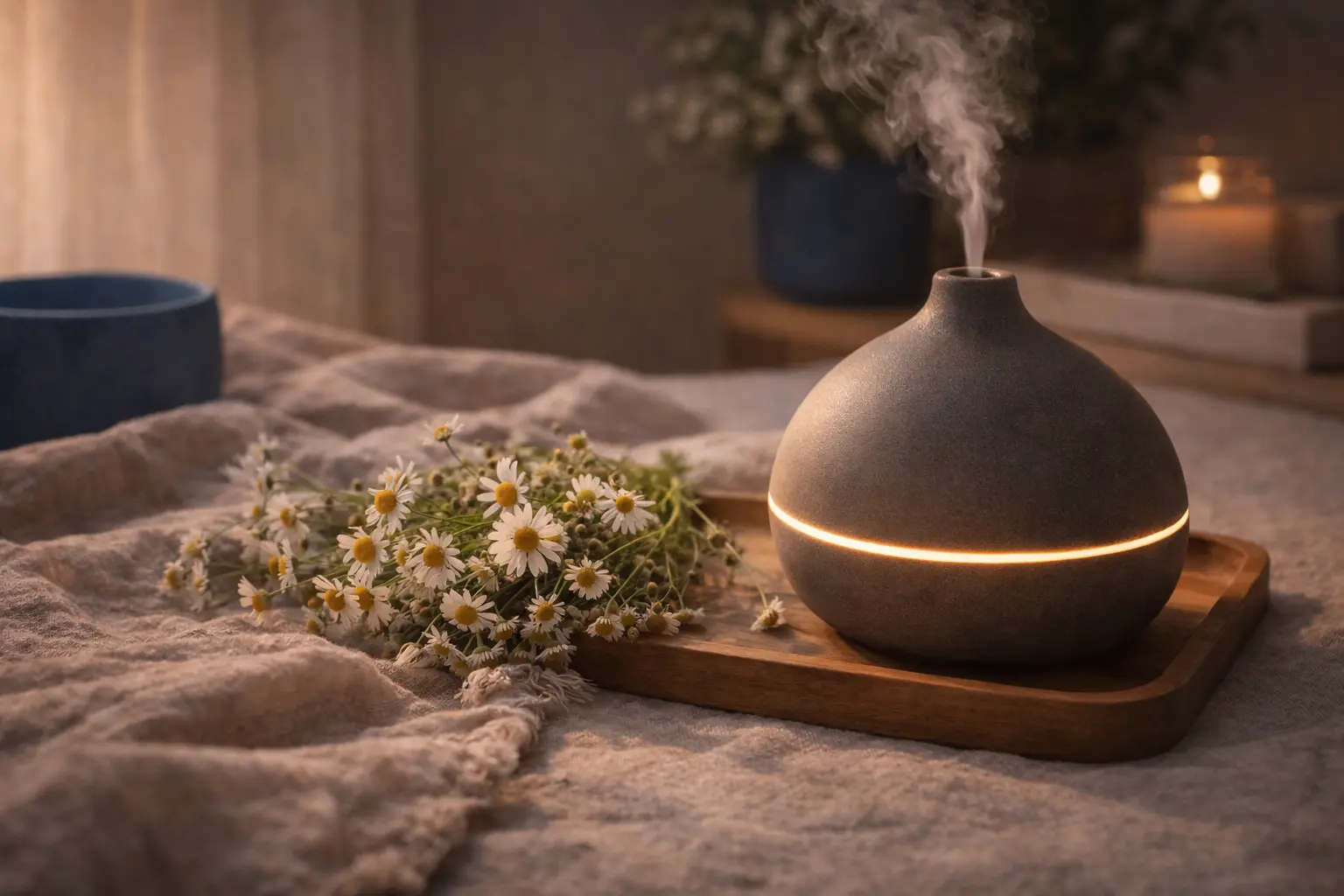
German chamomile diffuser blends are best when they are soft, simple, and not too crowded. One drop is usually enough. Pair it with gentle florals, soft citrus, woods, or resins to create a quiet evening atmosphere.
Blue Evening
- 1 drop german chamomile
- 2 drops lavender
- 2 drops red mandarin
A soft herbal-citrus blend for quiet evenings, gentle rooms, and slow transitions.
Chamomile Blanket
- 1 drop german chamomile
- 1 drop roman chamomile
- 2 drops cedarwood atlas
A warm herbal-wood blend for bedtime-style routines and emotionally gentle spaces.
Cool Meadow
- 1 drop german chamomile
- 2 drops bergamot
- 1 drop frankincense
A fresh herbal-citrus-resin blend with a calm, spacious, meadow-like feeling.
Soft Rest
- 1 drop german chamomile
- 2 drops sweet marjoram
- 2 drops lavender
A gentle herbal blend for evening comfort, quiet rooms, and relaxed home rituals.
What Blends Well with German Chamomile Essential Oil?
German chamomile blends naturally with lavender, roman chamomile, red mandarin, bergamot, frankincense, cedarwood atlas, sweet marjoram, geranium, neroli, clary sage, sandalwood, vetiver, patchouli, and tea tree.
For bedtime-style blends, pair German chamomile with lavender, roman chamomile, red mandarin, cedarwood atlas, or sweet marjoram. For skincare-style aromas, combine it with lavender, frankincense, roman chamomile, geranium, or sandalwood. For deeper emotional comfort blends, use it with frankincense, vetiver, patchouli, or cedarwood atlas in very small amounts.
FAQ About German Chamomile Essential Oil
Is German chamomile the same as Roman chamomile?
No. German chamomile essential oil comes from Matricaria chamomilla or Matricaria recutita. Roman chamomile essential oil comes from Chamaemelum nobile. They are different plants with different essential oils, even though both are commonly called chamomile.
Why is German chamomile essential oil blue?
German chamomile essential oil is blue because chamazulene forms during distillation from natural plant precursors. The fresh flower is not blue, but the distilled oil can become blue or blue-green.
Can German chamomile essential oil be used on the face?
Yes, but only at a very low dilution and only if your skin tolerates it. Avoid the eye area, lips, broken skin, inflamed skin, and active irritation. Patch test first, especially if you have sensitive skin or Asteraceae-family plant allergies.
Is German chamomile essential oil safe for children?
German chamomile may be used cautiously in family spaces, but essential oil use around children should be conservative. Use very small amounts, diffuse for short periods in a ventilated room, and avoid direct inhalation or undiluted skin use. For babies, toddlers, children with asthma, allergies, or medical conditions, seek qualified guidance first.
Can German chamomile essential oil help with skin irritation?
German chamomile is often used in skincare-style blends because it has a gentle, calming reputation, but it should not be described as treating skin disease or irritation. If skin is inflamed, infected, wounded, allergic, or medically treated, consult a qualified professional.
Can German chamomile essential oil be used during pregnancy?
Pregnancy use should be cautious. Pregnant or breastfeeding people should consult a qualified healthcare professional or trained clinical aromatherapist before using German chamomile essential oil, especially for topical use or frequent diffusion.
Can German chamomile essential oil be applied directly to skin?
No. German chamomile essential oil should be diluted in a carrier oil, cream, lotion, balm, or other suitable base before topical use. Undiluted use increases the risk of irritation or sensitization.
Can German chamomile essential oil be ingested?
Do not ingest German chamomile essential oil as a casual wellness practice. Chamomile tea and chamomile essential oil are not the same thing. Essential oils are concentrated aromatic extracts and should only be used internally under qualified professional guidance.
German Chamomile Essential Oil, Spirituality, and Soul
The main sections above focus on botanical information, practical use, dilution, and safety. German chamomile also has a symbolic and spiritual life in modern aromatherapy, where its blue herbal aroma is often associated with cooling, tenderness, emotional repair, protection, and calm after intensity.
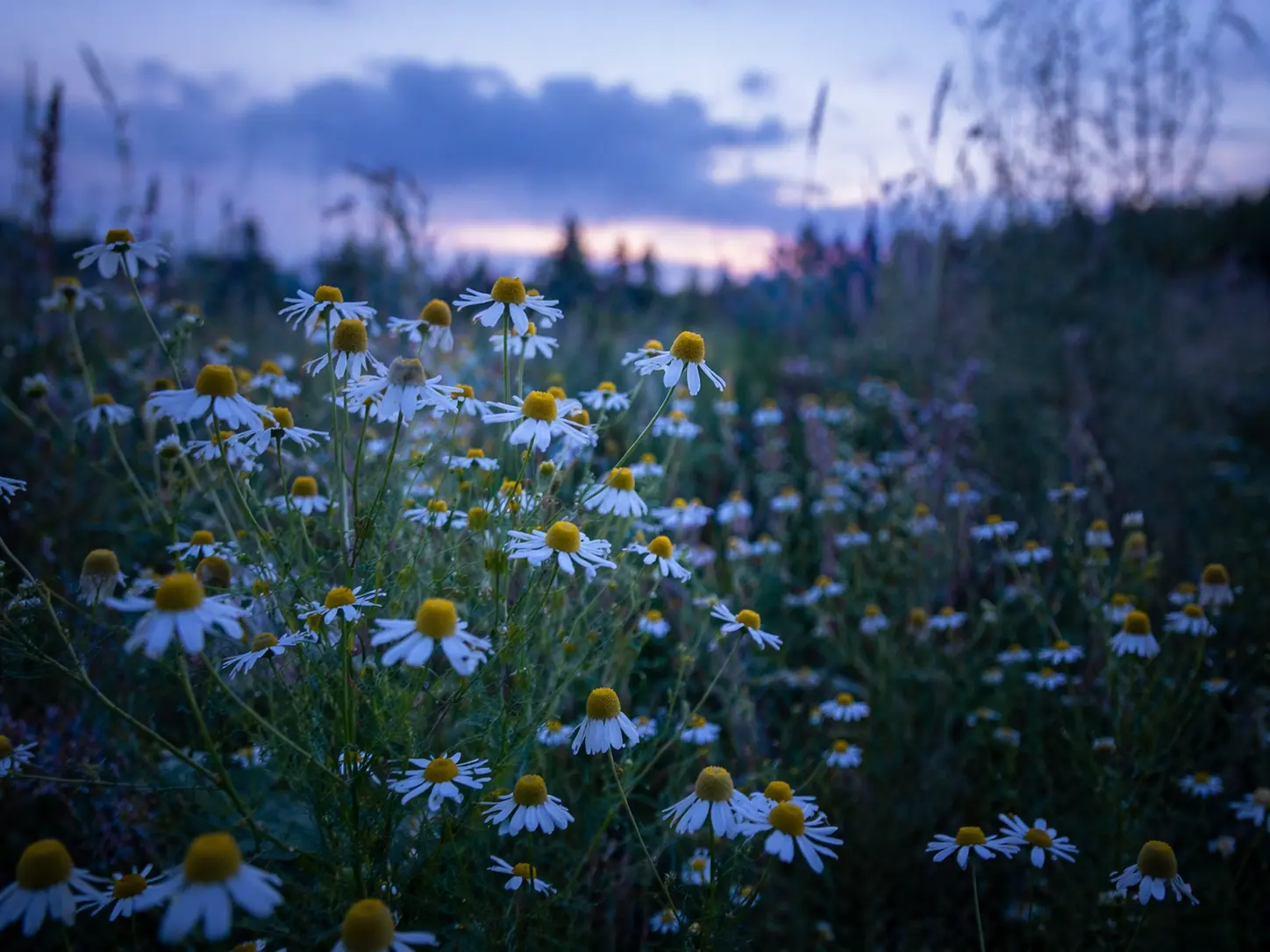
German chamomile does not feel bright and sunny in the way citrus oils do. It feels like blue evening after heat, like a meadow becoming quiet after a difficult day. Its symbolism is soft, but not fragile. It carries the feeling of being soothed without being rushed.
Cooling and Emotional Softening
In symbolic aromatherapy, German chamomile is often connected with emotional cooling. It may be chosen when someone wants to soften reactivity, create a calmer ritual space, or mark the movement from intensity into quiet.
Protection and Tender Boundaries
Chamomile flowers look delicate, but they have a long history as resilient herbal companions in household traditions. Symbolically, German chamomile can represent gentle protection: not a wall, but a soft place to recover.
Blue Calm and Restoration
The blue color of German chamomile essential oil gives it a strong symbolic link with peace, evening, coolness, and restoration. These associations are symbolic, not medical or scientific claims.
Safety Notes
German chamomile essential oil should be diluted before topical use. Do not apply it undiluted to the skin, do not use it in or near the eyes, and do not take it internally as a casual wellness practice.
Use caution if you are allergic or sensitive to chamomile, ragweed, daisies, chrysanthemums, or other plants in the Asteraceae family. Stop using German chamomile if you notice irritation, rash, itching, headache, nausea, breathing discomfort, or any unusual reaction.
Pregnant or breastfeeding people, babies, young children, elderly adults, people with asthma, allergies, complex medical conditions, medication use, or very sensitive skin should seek qualified guidance before use. Diffuse in moderation, keep rooms ventilated, and avoid continuous diffusion. German chamomile may stain pale products or fabrics because of its blue color.
Further Reading and Sources
For botanical, chemical, and safety-oriented background, these sources may be useful starting points:
- Kew Plants of the World Online: Matricaria chamomilla
- Chamomile, Matricaria chamomilla L.: ethnomedicinal use, phytochemistry and pharmacological review
- Chamomile, Matricaria chamomilla L.: overview and traditional use background
- German chamomile biology, genetic improvement, agro and process technology review
- Chamazulene and alpha-bisabolol content in German chamomile essential oil