
How to Substitute Essential Oils in Recipes and Blends
Beginner Basics

Substituting essential oils gets easier once you stop looking for one perfect replacement and start thinking in categories: aroma family, strength, mood, and safety. A substitute does not need to smell identical to be useful. It needs to play a similar role in the blend or recipe without pushing the formula too far in the wrong direction.
This is especially helpful in everyday routines. If a diffuser blend calls for bergamot and you do not have it, you may not need to abandon the whole idea. If a body blend uses lavender, you may have more than one calm floral path you can take. The key is to substitute intentionally, not randomly.
Quick Answer
To substitute essential oils well, compare the original oil and the replacement in four ways: what family it belongs to, how strong it smells, what mood it creates, and what safety notes travel with it. This gives you a better result than swapping oils by common name alone.
A good substitute keeps the structure of the blend intact. That might mean replacing a bright citrus with another bright citrus, a soft floral with another calm heart note, or a woody base with a similarly grounding anchor. If the replacement is stronger, sharper, or more restricted in use, reduce the amount and reassess the whole blend.
Start with the Job the Oil Is Doing
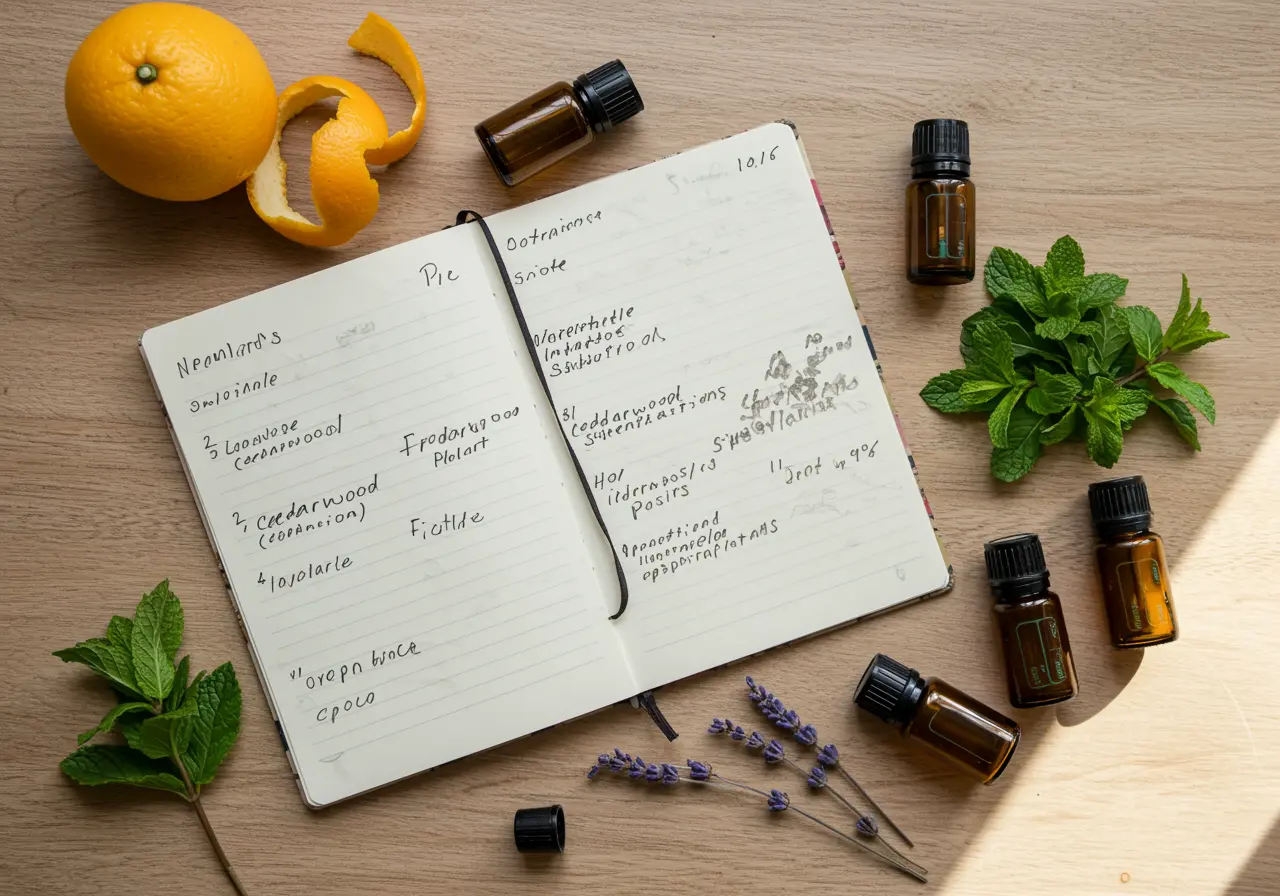
Every essential oil in a blend is there for a reason. Some bring lift. Some soften the middle. Some ground the base. Some create the clean feeling in a room spray or the calm feeling in a bedtime blend. If you know the oil’s job, substitution gets simpler.
For example, if a recipe calls for sweet orange because it gives easy cheerful brightness, another bright citrus such as red mandarin or pink grapefruit may make more sense than replacing it with something unrelated like patchouli. The oils do very different work.
Think in Aroma Families First
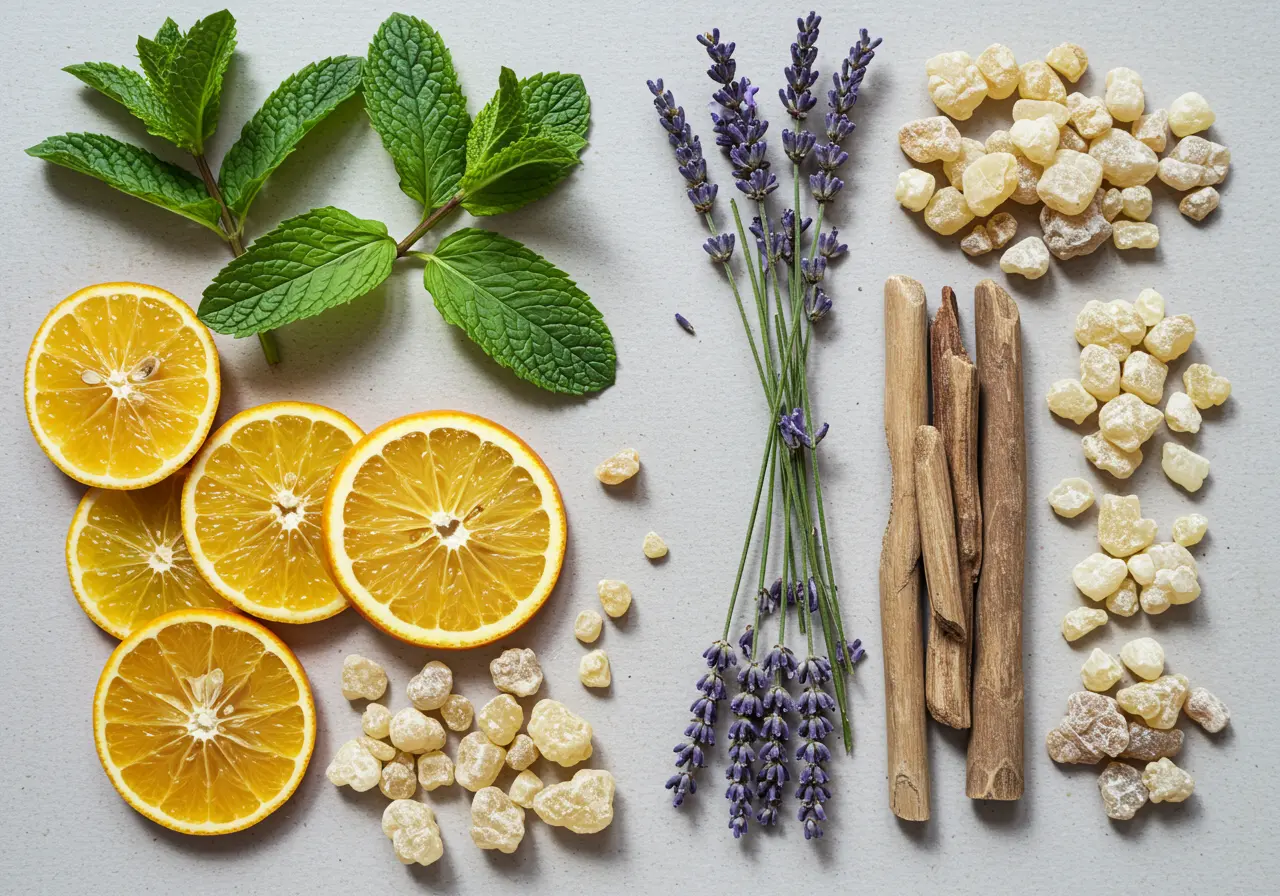
Aroma family is often the quickest way to narrow the options. If the original oil is citrus, try citrus first. If it is woody, start with other woods. If it is floral-soft, look at floral or floral-green oils before reaching for spice, mint, or resin.
This does not mean all family members are interchangeable. Bergamot and lime are both citrus, but bergamot is often softer and more elegant, while lime can feel sharper and cleaner. The family helps you find direction. The nuance comes next.
Simple Substitution Logic
Bright citrus to bright citrus
Sweet orange, red mandarin, and pink grapefruit can often support similar cheerful roles.
Soft floral to soft floral
Lavender, roman chamomile, and geranium can sometimes overlap depending on the mood needed.
Grounding base to grounding base
Cedarwood atlas, patchouli, and vetiver all ground differently, but can serve similar structural roles.
Match Strength, Not Just Family
Some substitutions fail not because the family is wrong, but because the intensity is off. Replacing a mild note with a very strong one can make a balanced room spray become sharp or make a diffuser blend feel much heavier than planned. A substitute may need fewer drops, or it may need supporting oils around it to stay balanced.
This is especially important with mints, herbs, spices, and stronger resins. If the original oil felt soft and background-like, the replacement should not suddenly become the loudest thing in the room.
Mood Matters Too
Two oils can sit in the same family and still create different emotional tones. Bergamot often feels elegant and softly uplifting. Pink grapefruit can feel brighter and more playful. Red mandarin often feels warmer and cozier. If a recipe is built for a specific mood, that matters just as much as the technical aroma family.
This is why substitution is partly structural and partly editorial. You are not just preserving smell. You are preserving the atmosphere the blend was meant to create.
Never Ignore Safety Differences
Even when two oils seem like close scent substitutes, the safety picture may not be the same. Citrus oils may differ in phototoxicity depending on the exact oil and extraction. Stronger herbs or spices can be more intense on skin. A substitute that works beautifully in a diffuser may not be the right substitute in a leave-on body product.
That is why the final check should always be practical: what is this blend for, where will it be used, and who will be around it? If you are substituting in a topical product, go back to dilution guidance and the exact oil profiles before assuming the swap is equivalent.
Substitution reminder: “Smells similar” does not always mean “behaves similarly.” Always compare safety context before swapping oils in topical blends, children’s routines, or pet-shared spaces.
Beginner Basics
50 Simple Ways to Use Essential Oils in Everyday Life
A practical, easy-to-scan collection of 50 beginner-friendly essential oil ideas for home routines, textiles, mood, gentle DIY, and everyday atmosphere.
Beginner Basics
How to Build a Small Essential Oil Collection That Actually Gets Used
Build a small, useful essential oil collection around real routines, not overbuying, so the oils you keep are the ones you actually reach for.

Beginner Basics
Passive Diffusers for Small Spaces: When They Make More Sense Than a Full Diffuser
A plain-English guide to when passive diffusers make more sense than a full electric diffuser in bedrooms, desks, entryways, and other small spaces.
Beginner Basics
Easy Essential Oil Habits That Are Realistic for Beginners
A plain-English beginner guide to a few easy essential oil habits that are actually sustainable, useful, and simple to keep up in real life.
Further Reading and Sources
These pages pair well with practical substitution logic.