
Lemongrass Essential Oil
Essential Oils
Lemongrass essential oil is bright, lemony, grassy, and boldly fresh, with the crisp feeling of crushed green blades and warm citrus peel.
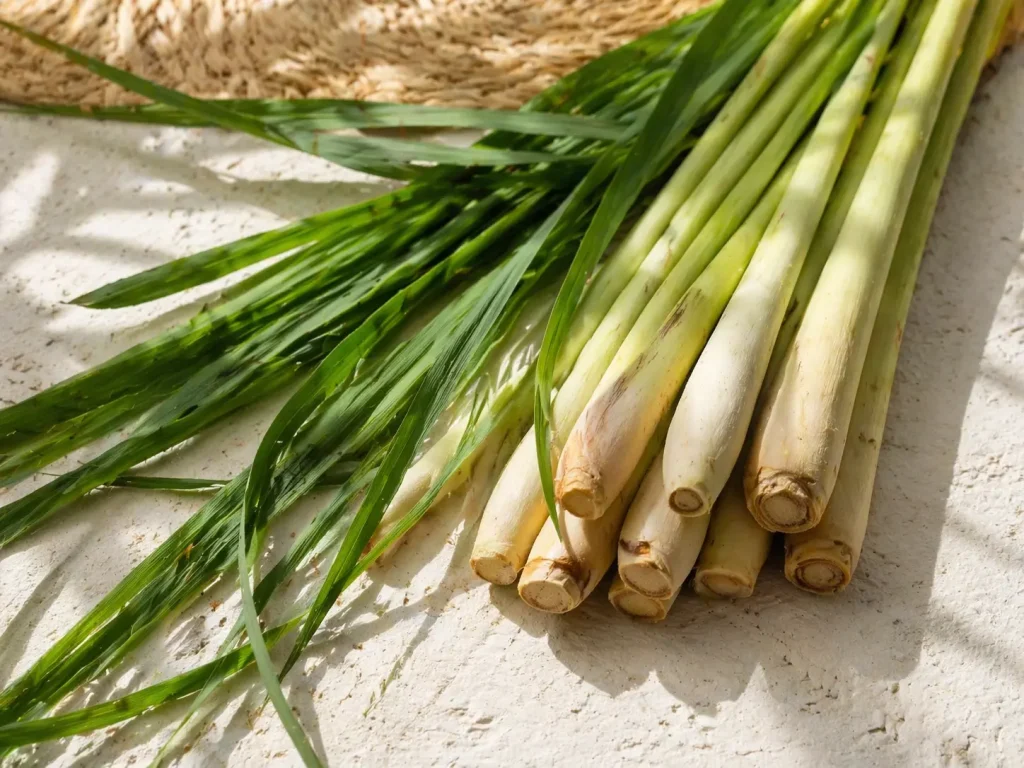
Steam distilled from the aromatic leaves of Cymbopogon citratus, Lemongrass essential oil is often chosen for fresh diffuser blends, clean home aromas, outdoor-feeling room blends, and careful adult body-care formulas. Its scent is cheerful and vivid, but the oil is also strong: because it is typically rich in citral, it needs low dilution, good ventilation, and extra respect for sensitive skin.
Quick Answer
Lemongrass essential oil is a lemony, grassy essential oil from Cymbopogon citratus. It is commonly used in diffuser blends, fresh home routines, natural perfumery, and very low-dilution topical blends when appropriate. Because it is often rich in citral, it can irritate or sensitize skin if overused, so keep topical dilution low and avoid casual ingestion.
What Is Lemongrass Essential Oil?
Lemongrass essential oil comes from Cymbopogon citratus, a perennial aromatic grass in the Poaceae family. Kew’s Plants of the World Online lists the species as native to southern India and Sri Lanka, and it is widely cultivated in tropical and subtropical regions.
The plant has long, narrow, aromatic leaves and a fresh lemon-like scent. The essential oil is usually steam distilled from the leaves, producing a concentrated aromatic oil that smells greener, sharper, and more intense than culinary lemongrass stalks.
Lemongrass essential oil is most famous for its citral-rich aroma. Citral is the name commonly used for a natural mixture of two related aromatic compounds, geranial and neral. These constituents help create the oil’s vivid lemon profile, but they are also a reason Lemongrass essential oil needs careful dilution for skin use.
Lemongrass vs Citronella and Palmarosa Essential Oil
Lemongrass, citronella, and palmarosa are all aromatic grasses in the Cymbopogon genus, but they are not the same oil. Lemongrass essential oil from Cymbopogon citratus is usually bright, lemony, grassy, and citral-rich.
Citronella essential oil usually comes from species such as Cymbopogon nardus or Cymbopogon winterianus. It tends to smell lemony too, but with a more rosy, citronella-candle, outdoor-herbal character. Palmarosa Essential Oil, from Cymbopogon martinii, is quite different: softer, rosy, floral, and often rich in geraniol.
These oils can sometimes overlap in fresh home blends, but they should not be swapped automatically. Their chemistry, aroma, and skin-use considerations differ.
What Does Lemongrass Essential Oil Smell Like?
Lemongrass essential oil smells intensely lemony, grassy, green, and fresh. It is less sweet than Lemon Essential Oil and more herbal than most citrus oils. The scent can feel sharp, sparkling, dry, and slightly earthy underneath the lemon top note.
In a diffuser blend, Lemongrass essential oil can make a room feel freshly aired and bright. In natural perfumery, it acts as a vivid green-citrus top note, but it should be used sparingly because it can dominate softer oils very quickly.
Common Uses of Lemongrass Essential Oil
Lemongrass essential oil is commonly used in diffuser blends when a space needs a bold, fresh, lemon-green aroma. It pairs well with citrus oils such as Lime Essential Oil, Lemon Essential Oil, Sweet Orange Essential Oil, and Pink Grapefruit Essential Oil.
It is also popular in clean home aroma routines. A small amount can bring a bright, grassy freshness to a kitchen, entryway, or workspace. This is an aromatic use, not a disinfecting promise, and it works best alongside ordinary cleaning, ventilation, and sensible room care.
In body-care blending, Lemongrass essential oil must be used cautiously. It can add a crisp citrus-grass scent to massage oils, foot blends, or wash-off products, but it is not a casual “more is better” oil. Low dilution is important because citral-rich oils can irritate or sensitize the skin.
In natural perfumery, Lemongrass is useful in tiny amounts for citrus-green, herbal, tropical, and bright woody accords. It can give lift to heavier oils such as Patchouli Essential Oil, Vetiver Essential Oil, and Cedarwood Atlas Essential Oil.
Quick Tips for Using Lemongrass Essential Oil
Use Very Little
Lemongrass is powerful. One drop can brighten a whole diffuser blend, especially in a small room.
Keep Skin Dilution Low
Because Lemongrass is often citral-rich, it needs conservative dilution for topical use.
Blend With Soft Oils
Round its sharpness with lavender, cedarwood, or sweet orange.
Ventilate Well
Diffuse in short sessions in a ventilated room, especially around children, pets, pregnancy, asthma, or scent sensitivity.
Dilution Guidance
Lemongrass essential oil needs more conservative topical dilution than many beginner-friendly oils. Tisserand Institute discusses a maximum dermal concentration of 0.7% for Lemongrass oil because the safety concern is based on skin reaction risk.
For adult leave-on body products, a practical conservative range is about 0.25% to 0.5%. This means approximately 1 drop of Lemongrass essential oil in 4 to 8 teaspoons, or 20 to 40 ml, of carrier oil. For sensitive skin, facial use, children, pregnancy, breastfeeding, older adults, or anyone with a history of fragrance reactions, avoid topical use unless guided by a qualified professional.
Lemongrass is not a good choice for strong roll-ons, high-percentage massage blends, or undiluted spot application. It may smell clean and familiar, but the essential oil is concentrated and can be harsh on skin when overused.
Simple Dilution Reminder
Keep Lemongrass essential oil below 0.7% for topical use. For a very gentle adult blend, use 1 drop in 4 to 8 teaspoons of carrier oil, patch test first, and stop use if any irritation appears.
How to Use Lemongrass Essential Oil
For diffusion, add 1 drop of Lemongrass essential oil to a blend with softer citrus, woods, florals, or herbs. Diffuse for short periods in a well-ventilated room. Lemongrass is strong, so it rarely needs to be the largest part of a diffuser recipe.
For a fresh room blend, combine Lemongrass with Lime Essential Oil, Spearmint Essential Oil, or Rosemary Essential Oil. The result is bright, green, and crisp.
For a low-dilution adult body oil, use Lemongrass only when the skin is not sensitive and the blend is properly diluted. A carrier such as jojoba, sunflower, fractionated coconut oil, or sweet almond oil can work well. Avoid the face, mucous membranes, broken skin, freshly shaved skin, and irritated areas.
For natural perfumery, treat Lemongrass as a powerful top note. A trace can add a fresh lemon-grass sparkle to blends with Bergamot Essential Oil, Petitgrain Essential Oil, Geranium Essential Oil, Palmarosa Essential Oil, or Vetiver Essential Oil.

History and Origins of Lemongrass
Cymbopogon citratus is native to southern India and Sri Lanka according to Kew’s Plants of the World Online, and it is now widely grown in warm regions around the world. It is valued as a culinary herb, aromatic plant, and source of essential oil.
In cooking, lemongrass stalks are known for their lemony flavor in soups, curries, teas, marinades, and broths. This culinary familiarity can make the essential oil seem simple, but the oil is much more concentrated than the fresh plant and belongs in careful aromatic use rather than casual food use.
As an aromatic material, Lemongrass essential oil became important because it provides a strong natural lemon note without coming from citrus peel. Its green-citrus character makes it useful in perfumery, home fragrance, soaps, and aromatherapy-style blending, especially where a bright grassy edge is desired.
Diffuser Blends with Lemongrass Essential Oil
Fresh Porch
- 1 drop Lemongrass Essential Oil
- 3 drops Lime Essential Oil
- 1 drop Spearmint Essential Oil
Bright, crisp, and green, with a clean citrus-mint feeling for warm afternoons.
Sunny Kitchen
- 1 drop Lemongrass Essential Oil
- 3 drops Sweet Orange Essential Oil
- 1 drop Basil Essential Oil
Sweet, green, and lively, like citrus peel and fresh herbs on a clean counter.
Green Grounding
- 1 drop Lemongrass Essential Oil
- 2 drops Cedarwood Atlas Essential Oil
- 1 drop Vetiver Essential Oil
Fresh on top and earthy underneath, with a grassy-woody character that feels steady.

What Blends Well with Lemongrass Essential Oil?
Lemongrass essential oil blends especially well with citrus oils such as Lime Essential Oil, Lemon Essential Oil, Sweet Orange Essential Oil, Pink Grapefruit Essential Oil, Bergamot Essential Oil, and Red Mandarin Essential Oil. These combinations create bright, juicy, fresh room aromas.
It also pairs naturally with green and herbal oils, including Spearmint Essential Oil, Basil Essential Oil, Rosemary Essential Oil, Palmarosa Essential Oil, and Geranium Essential Oil. Palmarosa and Geranium are especially useful when you want to soften Lemongrass with a rosy floral edge.
For grounding, Lemongrass can be blended in tiny amounts with Cedarwood Atlas Essential Oil, Vetiver Essential Oil, Patchouli Essential Oil, Frankincense Essential Oil, or Cypress Essential Oil. These heavier oils help anchor its sharp lemon top note.
Lemongrass Essential Oil FAQ
Is Lemongrass essential oil the same as lemon essential oil?
No. Lemongrass essential oil comes from the leaves of Cymbopogon citratus, a grass. Lemon Essential Oil comes from citrus peel. Lemongrass smells lemony, but it is greener, grassier, and usually richer in citral.
What is Lemongrass essential oil commonly used for?
It is commonly used in fresh diffuser blends, clean home aroma routines, natural perfumery, and very low-dilution adult topical blends when appropriate.
Can Lemongrass essential oil be used on skin?
Yes, but only at low dilution and only when the skin is suitable. Lemongrass can irritate or sensitize skin if overused, so keep topical blends conservative and patch test first.
Is Lemongrass essential oil phototoxic?
Lemongrass essential oil is not generally treated like a phototoxic expressed citrus oil, but it still has important skin-safety limits because of its citral content. Dilution matters.
Can you ingest Lemongrass essential oil?
Do not ingest Lemongrass essential oil casually. Fresh lemongrass used in food and concentrated essential oil are very different. Internal use should only be considered with qualified professional guidance.

Lemongrass Essential Oil, Spirituality, and Soul
The main sections above focus on botanical information, practical use, dilution, and safety. Lemongrass also has a symbolic and spiritual life in modern aromatherapy, shaped by its bright lemon-green scent and its strong association with freshness.
In symbolic routines, Lemongrass essential oil is often used when someone wants a clear beginning. Its aroma can feel like opening the windows, sweeping a threshold, or clearing the table before starting again. It is vivid, direct, and practical rather than soft or dreamy.
Lemongrass can also symbolize momentum. A brief diffusion session before tidying, planning, or creative work may help mark the shift from stuckness into action. These uses are personal and symbolic, not promises of emotional, energetic, or medical effects.
Safety Notes
Lemongrass essential oil is strong and often citral-rich. Dilute carefully before topical use, avoid eyes, mucous membranes, broken skin, and sensitive areas, and do not ingest casually.
Keep topical dilution low. Tisserand Institute discusses a 0.7% maximum dermal concentration for Lemongrass oil, and sensitive users may need far less or no topical use at all. Avoid using Lemongrass essential oil undiluted, in strong roll-ons, or on freshly shaved, damaged, inflamed, or highly reactive skin.
Diffuse Lemongrass essential oil moderately in a well-ventilated room. Avoid continuous diffusion, especially around babies, young children, pregnant or breastfeeding people, pets, older adults, and anyone with asthma, respiratory sensitivity, migraines, allergies, or strong scent sensitivity.
Stop use if irritation, redness, itching, headache, nausea, coughing, wheezing, dizziness, or any other adverse reaction occurs. Keep essential oils out of reach of children and pets, and never use them as a replacement for medical care.
Safety-first reminder: Lemongrass essential oil is best used like a bright seasoning in a blend: one careful drop can be beautiful, while too much can quickly become harsh for skin, noses, and sensitive users.
Further Reading and Sources
For botanical, chemical, and safety-oriented background, these sources may be useful starting points:
- Kew Plants of the World Online: Cymbopogon citratus (DC.) Stapf
- Evaluation of the Chemical Composition of Brazilian Commercial Cymbopogon citratus Samples
- Cymbopogon citratus Essential Oil: Extraction, GC-MS, and Phytochemical Analysis
- Chemical Composition of Cymbopogon citratus Essential Oil from Cuba and Brazil
- Ethnopharmacology, Chemical Composition and Functions of Cymbopogon citratus
- Tisserand Institute: Q&A Safety Maximums for Dermal Application