
Sweet Marjoram Essential Oil
Essential Oils
Sweet Marjoram essential oil is warm, herbal, soft, and gently spicy, with the comforting scent of a Mediterranean kitchen garden after the sun has warmed the leaves.
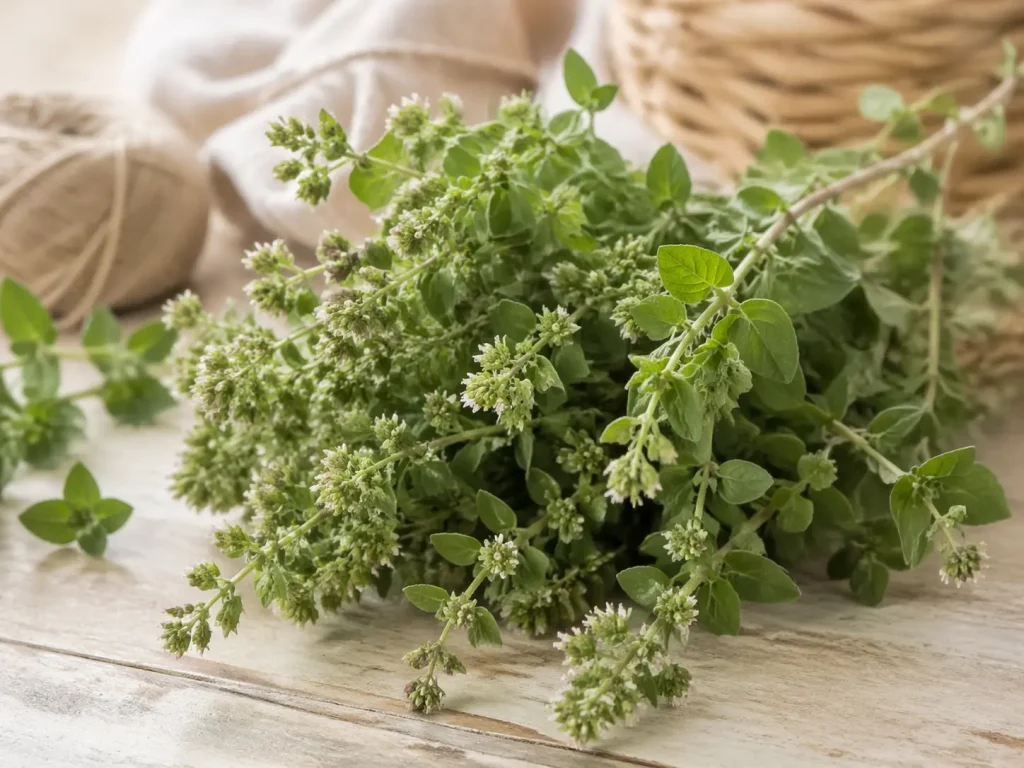
Steam distilled from the aerial parts of Origanum majorana, Sweet Marjoram essential oil is often chosen for quiet diffuser blends, evening routines, herbal natural perfumes, and low-dilution body-care formulas. It has a softer personality than many oregano-type oils, but it is still a concentrated essential oil that deserves careful dilution, moderate diffusion, and thoughtful use.
Quick Answer
Sweet Marjoram essential oil is a warm, herbaceous, softly spicy oil from Origanum majorana. It is commonly used in diffuser blends, natural perfumery, massage oils at low dilution, and cozy aromatic routines. It is not the same as strong oregano oil, and it should be diluted before skin use, diffused moderately, and avoided in casual ingestion.
What Is Sweet Marjoram Essential Oil?
Sweet Marjoram essential oil comes from Origanum majorana, an aromatic herb in the mint family, Lamiaceae. Kew’s Plants of the World Online lists Origanum majorana as an accepted species native to Cyprus and southern Türkiye, and the plant is widely cultivated as a culinary and aromatic herb.
The essential oil is usually steam distilled from the leaves and flowering tops. It captures the plant’s warm herbal scent in a concentrated form: softer than oregano, rounder than thyme, and less sharp than many green herb oils.
In aromatherapy-style blending, Sweet Marjoram is valued for its gentle herbal warmth. It can soften citrus, round out wood oils, support lavender, and bring a calm kitchen-garden feeling to diffuser blends without becoming heavy or medicinal.
Sweet Marjoram vs Oregano Essential Oil
Sweet Marjoram and oregano are related, and their names can be confusing. Sweet Marjoram essential oil comes from Origanum majorana. Oregano essential oil is commonly associated with Origanum vulgare or related oregano species and chemotypes.
The aromatic difference is important. Sweet Marjoram essential oil is usually softer, warmer, and more rounded. Oregano essential oil is often much sharper, hotter, phenolic, and intense, especially when rich in carvacrol or thymol.
In practical blending, Sweet Marjoram is the gentler choice when you want a cozy herb note for diffuser blends, massage oils, or natural perfume. Oregano oils need more restrictive safety handling and are not interchangeable with Sweet Marjoram in everyday aromatic use.
What Does Sweet Marjoram Essential Oil Smell Like?
Sweet Marjoram essential oil smells warm, herbaceous, softly spicy, and lightly sweet. It can suggest dried herbs, fresh green leaves, mild pepper, warm stems, and a faint woody undertone.
Compared with Basil Essential Oil, Sweet Marjoram is less bright and anise-like. Compared with Rosemary Essential Oil, it is softer and less camphoraceous. Compared with Thyme Linalool Essential Oil, it feels rounder, warmer, and more culinary-herbal.
In a blend, Sweet Marjoram often behaves like a comfort note. It can make a room feel lived-in, quiet, and gently ordered, especially when paired with lavender, citrus, cedarwood, or frankincense.
Common Uses of Sweet Marjoram Essential Oil
Sweet Marjoram essential oil is commonly used in diffuser blends when a warm herbal atmosphere is wanted. It pairs especially well with Lavender Essential Oil, Bergamot Essential Oil, Sweet Orange Essential Oil, and Cedarwood Atlas Essential Oil.
It is also often chosen for evening routines. A small amount in a diffuser blend can help create a quiet aromatic setting for reading, stretching, journaling, or slowing the pace of the room. This is an atmospheric use, not a treatment for sleep, stress, pain, or any health condition.
In body-care blending, Sweet Marjoram can add a warm herbal scent to massage oils, bath-adjacent products, foot oils, and unscented lotions when properly diluted. It should not be used undiluted, and sensitive users should patch test first.
In natural perfumery, Sweet Marjoram is useful in herbal, fougere, Mediterranean, soft spicy, and warm woody accords. It can make citrus oils feel more botanical and give floral blends a gentle savory contrast.
Quick Tips for Using Sweet Marjoram Essential Oil
Choose It for Warmth
Sweet Marjoram is useful when a blend needs a soft herbal note rather than a sharp green edge.
Pair With Lavender
Try it with lavender for a gentle herbal-floral diffuser blend.
Use Small Amounts
Its warmth can become dominant in close spaces. Start with 1 drop and build slowly.
Do Not Swap With Oregano
Sweet Marjoram and oregano oils are related but not interchangeable. Oregano oils are usually much stronger and need stricter caution.
Dilution Guidance
For adult topical use, Sweet Marjoram essential oil should be diluted before applying to skin. A conservative everyday range is about 0.5% to 1% for leave-on body products. This means about 1 to 2 drops of essential oil in 2 teaspoons, or 10 ml, of carrier oil.
For small-area adult blends, some people may use up to 2% dilution, but lower amounts are often enough because Sweet Marjoram has a distinct herbal warmth. For facial use, sensitive skin, children, pregnancy, breastfeeding, older adults, or anyone with a medical condition, use extra caution and consult a qualified professional.
As with other essential oils, oxidation and storage matter. Keep the bottle tightly closed and away from heat, light, and air. If the oil smells stale, harsh, or noticeably changed, avoid using it on skin.
Simple Dilution Reminder
For a 1% dilution, use about 1 drop of Sweet Marjoram essential oil in 1 teaspoon, or 5 ml, of carrier oil. Patch test first, avoid broken or irritated skin, and stop use if redness, itching, headache, or discomfort occurs.
How to Use Sweet Marjoram Essential Oil
For diffusion, add 1 to 2 drops of Sweet Marjoram essential oil to a blend with lavender, citrus, woods, resins, or soft herbs. Diffuse in short sessions in a well-ventilated room rather than continuously.
For a calm evening room blend, combine Sweet Marjoram with Lavender Essential Oil, Roman Chamomile Essential Oil, or Frankincense Essential Oil. Add a small amount of citrus if you want the blend to feel lighter.
For massage oil, dilute Sweet Marjoram essential oil in a carrier such as jojoba, sunflower, fractionated coconut oil, or sweet almond oil. Keep the dilution low, avoid sensitive areas, and do not apply to broken, irritated, or freshly shaved skin.
For natural perfumery, use Sweet Marjoram as a warm herbal middle note. It pairs well with Bergamot Essential Oil, Clary Sage Essential Oil, Patchouli Essential Oil, Sandalwood Essential Oil, and Vetiver Essential Oil.

History and Origins of Sweet Marjoram
Sweet Marjoram has a long history as a culinary and aromatic herb in Mediterranean traditions. Kew lists Origanum majorana as native to Cyprus and southern Türkiye, and it has been introduced and cultivated widely in Europe, North Africa, and other regions.
In the kitchen, marjoram is known for its gentle savory warmth. It is related to oregano but usually milder, sweeter, and more delicate in flavor. This same softness appears in the essential oil, where the plant’s herbaceous character becomes concentrated but still rounded.
Historically, marjoram has also carried associations with comfort, hospitality, affection, and household blessing. In modern aromatic use, those themes often become simple, practical routines: warming a room, softening a blend, or creating a quiet transition from the active part of the day into rest.
Diffuser Blends with Sweet Marjoram Essential Oil
Kitchen Garden Quiet
- 1 drop Sweet Marjoram Essential Oil
- 2 drops Lavender Essential Oil
- 2 drops Bergamot Essential Oil
Soft, herbal, and lightly citrusy, with a peaceful garden-at-dusk atmosphere.
Warm Linen
- 1 drop Sweet Marjoram Essential Oil
- 2 drops Sweet Orange Essential Oil
- 1 drop Cedarwood Atlas Essential Oil
Warm, sweet, and quietly woody, like folded linens in a sunlit room.
Herbal Hearth
- 1 drop Sweet Marjoram Essential Oil
- 1 drop Frankincense Essential Oil
- 1 drop Roman Chamomile Essential Oil
Gentle, resinous, and softly herbal, suited to slow evenings and quiet rooms.

What Blends Well with Sweet Marjoram Essential Oil?
Sweet Marjoram essential oil blends beautifully with floral and soft herbal oils, including Lavender Essential Oil, Roman Chamomile Essential Oil, Clary Sage Essential Oil, Geranium Essential Oil, and Palmarosa Essential Oil. These pairings bring out its softer, rounder side.
It also pairs well with citrus oils such as Bergamot Essential Oil, Sweet Orange Essential Oil, Lemon Essential Oil, Lime Essential Oil, Pink Grapefruit Essential Oil, and Red Mandarin Essential Oil. Citrus keeps Sweet Marjoram from feeling too warm or savory.
For grounding and depth, try Sweet Marjoram with Cedarwood Atlas Essential Oil, Frankincense Essential Oil, Sandalwood Essential Oil, Vetiver Essential Oil, or Patchouli Essential Oil. It also works with green herbs such as Basil Essential Oil, Rosemary Essential Oil, and Thyme Linalool Essential Oil when used lightly.
Sweet Marjoram Essential Oil FAQ
Is Sweet Marjoram essential oil the same as oregano essential oil?
No. Sweet Marjoram essential oil comes from Origanum majorana. Oregano essential oil usually comes from Origanum vulgare or related oregano species and is often much stronger, hotter, and more phenolic.
What is Sweet Marjoram essential oil commonly used for?
It is commonly used in warm diffuser blends, quiet evening routines, herbal natural perfumes, massage oils at low dilution, and cozy home aroma blends.
What does Sweet Marjoram essential oil smell like?
It smells warm, herbaceous, softly spicy, lightly sweet, and slightly woody. It has a gentle culinary-herbal character without the sharp intensity of many oregano oils.
Can Sweet Marjoram essential oil be used on skin?
Yes, but only when properly diluted. Patch test first, avoid broken or irritated skin, and use extra caution with sensitive users, children, pregnancy, breastfeeding, and medical conditions.
Can you ingest Sweet Marjoram essential oil?
Do not ingest Sweet Marjoram essential oil casually. Fresh or dried marjoram used as a culinary herb is not the same as concentrated essential oil. Internal use should only be considered with qualified professional guidance.

Sweet Marjoram Essential Oil, Spirituality, and Soul
The main sections above focus on botanical information, practical use, dilution, and safety. Sweet Marjoram also has a symbolic and spiritual life in modern aromatherapy, shaped by its long connection with home, warmth, and gentle herbal comfort.
In symbolic routines, Sweet Marjoram essential oil is often used when someone wants to soften the atmosphere of a room. Its aroma can feel like a warm meal, a folded blanket, or a quiet table after a busy day. It is not dramatic; its symbolism is domestic, steady, and kind.
Sweet Marjoram can also mark transitions. A short diffusion session may be part of closing a workday, preparing for journaling, tidying a bedroom, or creating a more settled evening mood. These uses are symbolic and personal, not promises of emotional, energetic, or medical effects.
Safety Notes
Sweet Marjoram essential oil is concentrated and should be used with care. Dilute before topical use, avoid eyes, mucous membranes, broken skin, and sensitive areas, and do not ingest casually.
Use Sweet Marjoram essential oil moderately in a well-ventilated room. Avoid continuous diffusion, especially around babies, young children, pregnant or breastfeeding people, pets, older adults, and anyone with asthma, respiratory sensitivity, migraines, allergies, or strong scent sensitivity.
For topical use, patch test first and keep dilution appropriate. Avoid applying it to broken, irritated, freshly shaved, or highly reactive skin. People who are pregnant or breastfeeding, managing a medical condition, taking medication, or using oils with children or pets should consult a qualified professional before use.
Stop use if irritation, redness, itching, headache, nausea, coughing, wheezing, dizziness, or any other adverse reaction occurs. Keep essential oils out of reach of children and pets, and never use them as a replacement for medical care.
Safety-first reminder: Sweet Marjoram essential oil may feel gentle and familiar, but it is still a concentrated aromatic oil. Dilution, ventilation, patch testing, and individual sensitivity matter.
Further Reading and Sources
For botanical, chemical, and safety-oriented background, these sources may be useful starting points:
- Kew Plants of the World Online: Origanum majorana L.
- Origanum majorana Essential Oil: A Review of Its Chemical Profile
- Chemical Composition, Enantiomeric Distribution, Antimicrobial and Antioxidant Activities of Origanum majorana L. Essential Oil from Nepal
- Chemical Composition and Antimicrobial Activity of Origanum majorana Essential Oil from Morocco
- Chemical Composition and In Vitro Evaluation of Tunisian Origanum majorana Essential Oil
- Tisserand Institute: Q&A Safety Maximums for Dermal Application