Geranium Essential Oil
Essential Oils
Geranium essential oil is a sweet, rosy, green-floral essential oil usually steam distilled from the aromatic leaves and flowering tops of Pelargonium graveolens. It is commonly used in aromatherapy for emotional balance routines, soft floral diffuser blends, natural perfume, skin-care aromas, bath products, body oils, and gentle home fragrance.
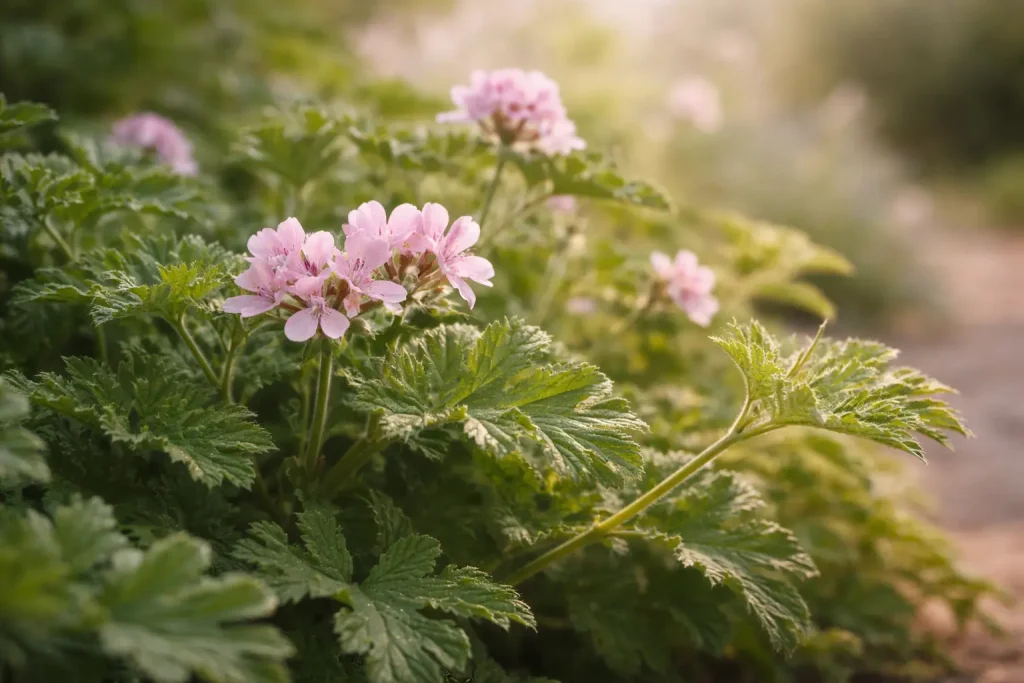
Although many people think of geranium as a flower oil, the essential oil is usually distilled mainly from the fragrant leaves. This gives geranium its distinctive character: floral and rose-like, but also green, leafy, slightly citrusy, and herbaceous. In blends, geranium can soften sharp oils, brighten heavier oils, and bring a graceful floral heart to citrus, wood, resin, and herb blends.
Quick Answer
Geranium essential oil is best known for its rosy-green aroma and its use in diffuser blends, body oils, facial-care aromas, bath products, natural perfume, linen sprays, and emotional comfort routines. It blends especially well with lavender, bergamot, clary sage, roman chamomile, neroli, ylang ylang, frankincense, and cedarwood atlas.
Geranium is often described as balancing and comforting, but it should still be used thoughtfully. It can irritate sensitive skin, it contains natural fragrance allergens such as citronellol and geraniol, and it should always be diluted before topical use.
What Is Geranium Essential Oil?
Geranium essential oil is usually distilled from Pelargonium graveolens, an aromatic plant often called rose geranium, rose-scented geranium, or sweet-scented geranium. The plant has soft, deeply lobed, fragrant leaves and small pink to lilac flowers. When the leaves are brushed or crushed, they release a rose-like scent with green, citrusy, and herbaceous undertones.
The word “geranium” can be confusing because true geraniums and pelargoniums are botanically different groups of plants. In essential oil use, geranium essential oil most often refers to oil from Pelargonium graveolens or related rose-scented Pelargonium cultivars, not garden cranesbill plants in the true Geranium genus.
Geranium essential oil is often associated with aromatic constituents such as citronellol, geraniol, citronellyl formate, linalool, and related compounds. These natural constituents help explain its rosy, fresh, green-floral aroma. Composition can vary depending on growing region, cultivar, harvest timing, distillation method, and storage.
Geranium vs. Rose Geranium
In everyday aromatherapy language, “geranium essential oil” and “rose geranium essential oil” are sometimes used almost interchangeably, but labels can vary. Rose geranium usually refers to a rose-scented Pelargonium oil, often from Pelargonium graveolens or closely related cultivated forms. The aroma tends to be especially rosy and floral, which is why geranium oil is sometimes used as a more affordable rosy note in natural perfume.
This does not mean geranium essential oil is the same as rose absolute or rose essential oil. Rose materials usually come from plants such as Rosa damascena or Rosa centifolia, while geranium comes from Pelargonium. They can share a soft floral impression, but they are different plants, different extracts, and different aromatic materials.
When buying or writing about geranium oil, the botanical name matters. For this Essencyclopedia profile, geranium essential oil means Pelargonium graveolens.
What Does Geranium Essential Oil Smell Like?
Geranium essential oil smells rosy, green, floral, leafy, slightly citrusy, and lightly herbaceous. It has the sweetness of a floral oil, but it is not as rich or heavy as ylang ylang. It has a rosy quality, but it is greener and sharper than rose absolute. It can feel soft and feminine, but also fresh, clean, and garden-like.
In blends, geranium often acts as a bridge between floral, citrus, herbal, and woody notes. It gives body to bergamot, softness to lemon, floral warmth to lavender, elegance to frankincense, and a gentle rosy lift to deeper oils such as patchouli, cedarwood atlas, and vetiver.
Common Uses of Geranium Essential Oil
Geranium essential oil is most often chosen when a blend needs to feel balanced, rosy, soft, green, emotionally warm, and quietly elegant. It sits in the middle of a formula beautifully: not as bright as citrus, not as heavy as woods, not as sweet as tropical florals, and not as resinous as frankincense. That makes it one of the most versatile floral-green oils for everyday aromatherapy.
Emotional Balance Routines
Geranium is often used in aromatherapy when someone wants a scent that feels comforting, steady, and emotionally soft. It is popular in diffuser blends for stressful days, mood-shifting rituals, journaling, gentle movement, and slow evening routines. It should not be described as treating anxiety, depression, mood disorders, or hormonal conditions. A safer way to frame geranium is as an aromatic support for a calmer atmosphere and a more pleasant self-care routine.
For emotional balance blends, geranium pairs well with bergamot, clary sage, lavender, roman chamomile, frankincense, and sweet orange.
Skin-Care Aromas
Geranium essential oil is widely used in facial oils, creams, lotions, body oils, and balms because its aroma feels fresh, floral, and polished. It is often chosen for blends intended for normal, dry, mature, combination, or oily-feeling skin, but the wording should stay cosmetic and aromatic rather than medical. Geranium should not be presented as treating acne, eczema, rosacea, dermatitis, wounds, infections, or any diagnosed skin condition.
For facial products, geranium should be used at a very low dilution. It blends beautifully with lavender, frankincense, roman chamomile, neroli, rose absolute, and sandalwood in elegant skin-care aromas.
Natural Perfume
Geranium is a valuable natural perfume ingredient because it gives a rosy floral heart without the cost or intensity of true rose materials. It can soften citrus blends, round out herbal blends, and add floral structure to woody or resinous bases. It works especially well with bergamot, neroli, petitgrain, clary sage, ylang ylang, patchouli, and cedarwood atlas.
Women’s Wellness Rituals
Geranium is often used in body oils, bath products, and diffuser blends connected with women’s wellness, cyclical self-care, and emotional steadiness. This should be framed gently and carefully. Geranium essential oil does not “balance hormones” in the medical sense, and it should not be presented as a treatment for PMS, menopause symptoms, fertility concerns, or endocrine conditions.
For this style of aromatic ritual, geranium is often paired with clary sage, lavender, roman chamomile, bergamot, and sweet marjoram. Anyone who is pregnant, breastfeeding, trying to conceive, under medical care, or managing a hormone-sensitive condition should seek qualified guidance before frequent topical use.
Bath and Body Products
Geranium can make bath oils, body lotions, scrubs, creams, and massage oils feel more floral, polished, and emotionally warm. It is especially pleasant in blends with sweet orange, mandarin red, lavender, frankincense, and cedarwood atlas. For baths, essential oils should always be dispersed properly before they touch bathwater.
Fresh Home and Linen Blends
Geranium can be used in room sprays, linen sprays, and diffuser blends when you want a clean floral aroma that does not smell powdery or old-fashioned. It pairs well with citrus oils such as bergamot, lemon, grapefruit pink, and lime, as well as green oils such as petitgrain, rosemary, and tea tree.
Quick Tips for Using Geranium Essential Oil
Balanced Diffuser
Add 2 drops geranium, 2 drops bergamot, and 1 drop lavender to a diffuser. Run for 30 to 45 minutes in a ventilated room for a soft floral-citrus atmosphere.
Simple Body Oil
Dilute 1 drop geranium and 1 drop sweet orange in 1 teaspoon of carrier oil for a rosy, cheerful body oil aroma. Avoid irritated or freshly shaved skin.
Floral Bath Aroma
Mix 1 to 2 drops geranium into unscented bath gel or a proper dispersant before adding to bathwater. Do not drop essential oils directly into the bath.
Perfume Heart Note
Use geranium with bergamot, neroli, patchouli, or cedarwood atlas for a natural perfume blend with a soft rosy-green heart.
Dilution Guidance
General Adult Dilution
For general adult topical use, geranium essential oil is usually best kept around 1% to 2% dilution. A 1% dilution is about 1 drop of essential oil per teaspoon of carrier oil. A 2% dilution is about 2 drops per teaspoon of carrier oil.
For sensitive skin, facial products, first-time use, or large-area application, start lower. For facial use, a range around 0.25% to 0.5% is often more appropriate. Geranium has a strong floral presence, so a little usually goes a long way.
Geranium essential oil contains natural fragrance constituents that can irritate sensitive or allergy-prone skin. Store the oil tightly closed, away from heat and light, and avoid using old or oxidized oil on skin. Patch test before using geranium in body oils, facial oils, perfumes, balms, or creams.
How to Use Geranium Essential Oil
In a Diffuser
Use 2 to 5 total drops of essential oil in a standard room diffuser, depending on room size, diffuser type, and personal sensitivity. Geranium is often strongest when used as part of a blend rather than alone. It pairs well with bergamot, sweet orange, lavender, frankincense, and petitgrain. Diffuse intermittently in a ventilated room.
On Skin
Always dilute geranium essential oil before applying it to skin. It can be used in body oils, facial oils, creams, lotions, balms, massage oils, bath products, and perfume oils when properly diluted. Avoid the eyes, mucous membranes, inner ears, broken skin, irritated skin, and freshly shaved areas.
In Skin-Care Products
For skin-care aromas, geranium should be used lightly. It can dominate a formula if overused, and sensitive skin may react to its natural fragrance constituents. Start with a low dilution, patch test, and avoid using essential oils on active rashes, wounds, inflamed skin, or medically treated skin unless guided by a qualified professional.
In Bath Products
Do not add geranium essential oil directly to bathwater. Essential oils do not dissolve in water and can sit on the surface, increasing the chance of irritation. Mix geranium into an appropriate dispersant, unscented bath gel, or fully emulsified bath product before adding it to the bath.
In DIY Products
Geranium can be used in room sprays, linen sprays, body oils, creams, balms, natural perfumes, and diffuser blends. Water-based products need proper formulation with a solubilizer or emulsifier, not just water and essential oil. Label blends clearly, store them safely, and keep them away from children and pets.
History and Origins of Geranium
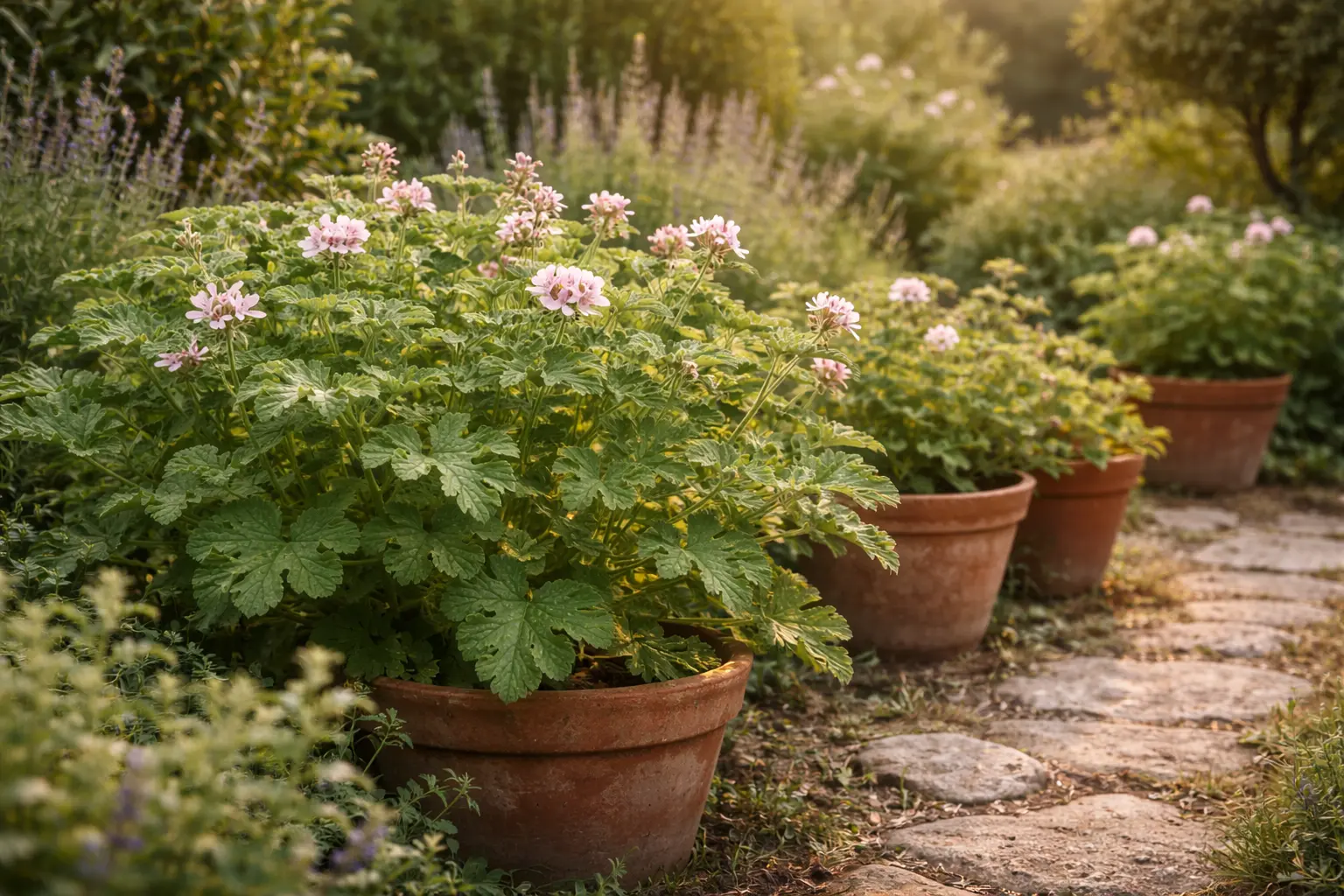
Pelargonium graveolens is native to parts of southern Africa, including regions of South Africa, Zimbabwe, and Mozambique. Like many aromatic pelargoniums, it became popular far beyond its native range because of its scented leaves, attractive flowers, and usefulness in gardens, perfumery, and aromatic products.
Scented pelargoniums were introduced into European garden culture and became prized as ornamental and aromatic plants. Their leaves could smell like rose, lemon, mint, spice, apple, or other familiar scents depending on the species or cultivar. Rose-scented geraniums became especially important because their fragrance could echo the soft floral impression of rose while remaining greener, more herbal, and easier to cultivate at scale.
Geranium essential oil developed a strong role in perfumery and cosmetics. Its rosy scent made it useful in soaps, creams, floral perfumes, and body products, where it could bring a fresh rose-like note without the cost or intensity of true rose extracts. It is sometimes described as a “poor man’s rose” in older fragrance and essential oil discussions, though geranium has its own personality and should not be treated merely as a rose substitute.
Today, geranium is cultivated in several regions for essential oil production, including parts of Africa, the Mediterranean, Asia, and island climates where aromatic pelargoniums grow well. The modern essential oil is a concentrated aromatic extract and should be used with the same care as any essential oil: measured, diluted for skin, and clearly identified by botanical name.
Geranium Diffuser Blends
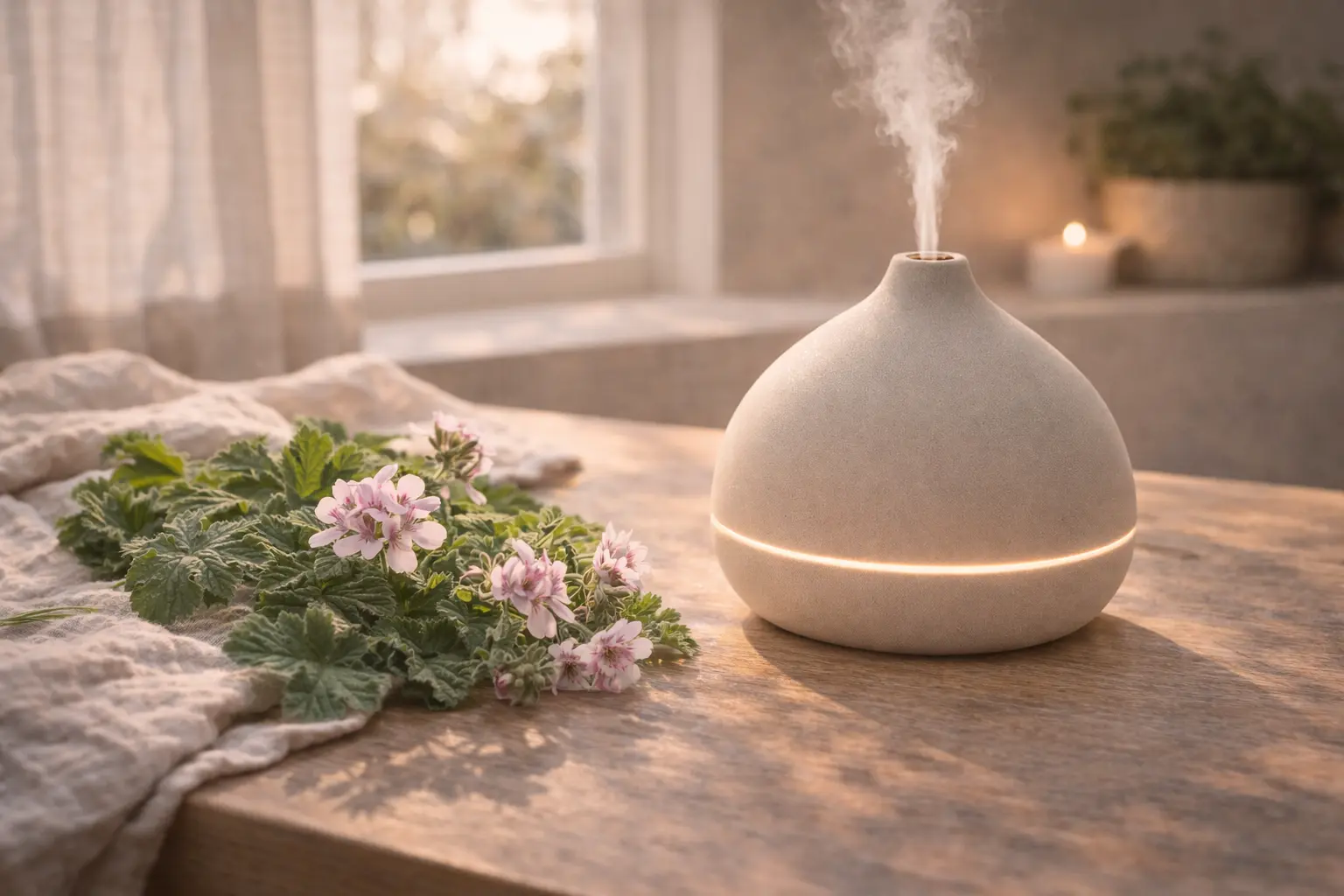
Geranium diffuser blends work best when the floral note is supported by citrus, herbs, woods, or resins. Too much geranium can become heavy or perfumey, so it is often best used as the heart of a blend rather than the whole blend.
Rose Garden Light
A soft floral-citrus blend for brightening a room without making it feel sharp or overly sweet.
Heart Garden
- 2 drops geranium
- 1 drop clary sage
- 2 drops sweet orange
A warm, emotionally soft blend for journaling, evening self-care, and a kind home atmosphere.
Green Floral Reset
- 2 drops geranium
- 2 drops petitgrain
- 1 drop lemon
A clean green-floral blend for daytime freshness, open windows, and light home resets.
Velvet Woods
- 2 drops geranium
- 2 drops cedarwood atlas
- 1 drop frankincense
A deeper floral-wood-resin blend for calm evenings and natural perfume-inspired room scent.
What Blends Well with Geranium Essential Oil?
Geranium blends naturally with lavender, bergamot, lemon, sweet orange, grapefruit pink, mandarin red, neroli, petitgrain, clary sage, roman chamomile, ylang ylang, rose absolute, frankincense, cedarwood atlas, patchouli, sandalwood, palmarosa, cypress, and tea tree.
For emotional comfort blends, pair geranium with bergamot, lavender, clary sage, roman chamomile, or frankincense. For skin-care aromas, use geranium with lavender, neroli, frankincense, rose absolute, or sandalwood. For fresh home blends, combine geranium with lemon, grapefruit pink, petitgrain, rosemary, or tea tree.
FAQ About Geranium Essential Oil
Is geranium essential oil the same as rose geranium?
They are closely related in common aromatherapy language, but labels vary. Geranium essential oil is often distilled from Pelargonium graveolens, which is also called rose geranium or rose-scented geranium. Always check the botanical name on the bottle.
Is geranium essential oil the same as rose essential oil?
No. Geranium essential oil comes from Pelargonium graveolens. Rose essential oil or rose absolute usually comes from plants such as Rosa damascena or Rosa centifolia. Geranium can smell rosy, but it is a different botanical material.
Can geranium essential oil be used on the face?
Yes, but only at a very low dilution and only if your skin tolerates it. Avoid the eye area, lips, broken skin, inflamed skin, and active irritation. Patch test first, especially if you have sensitive or allergy-prone skin.
Can geranium essential oil help balance hormones?
Geranium is often used in women’s wellness and emotional balance routines, but it should not be described as balancing hormones in a medical sense. It can be part of a comforting aromatic ritual, but it is not a treatment for hormonal, menstrual, fertility, or endocrine conditions.
Is geranium essential oil safe during pregnancy?
Pregnancy use should be cautious. Pregnant or breastfeeding people should consult a qualified healthcare professional or trained clinical aromatherapist before using geranium essential oil, especially for topical use or frequent diffusion.
Is geranium essential oil safe for children?
Use caution around children. Diffuse only small amounts for short periods in a ventilated room, and avoid direct inhalation or undiluted skin use. For babies, toddlers, children with asthma, allergies, or medical conditions, seek qualified guidance first.
Can geranium essential oil be applied directly to skin?
No. Geranium essential oil should be diluted in a carrier oil, lotion, cream, balm, or other suitable base before topical use. Undiluted use increases the risk of irritation or sensitization.
Can geranium essential oil be ingested?
Do not ingest geranium essential oil as a casual wellness practice. Essential oils are concentrated aromatic extracts, and internal use should only happen under qualified professional guidance.
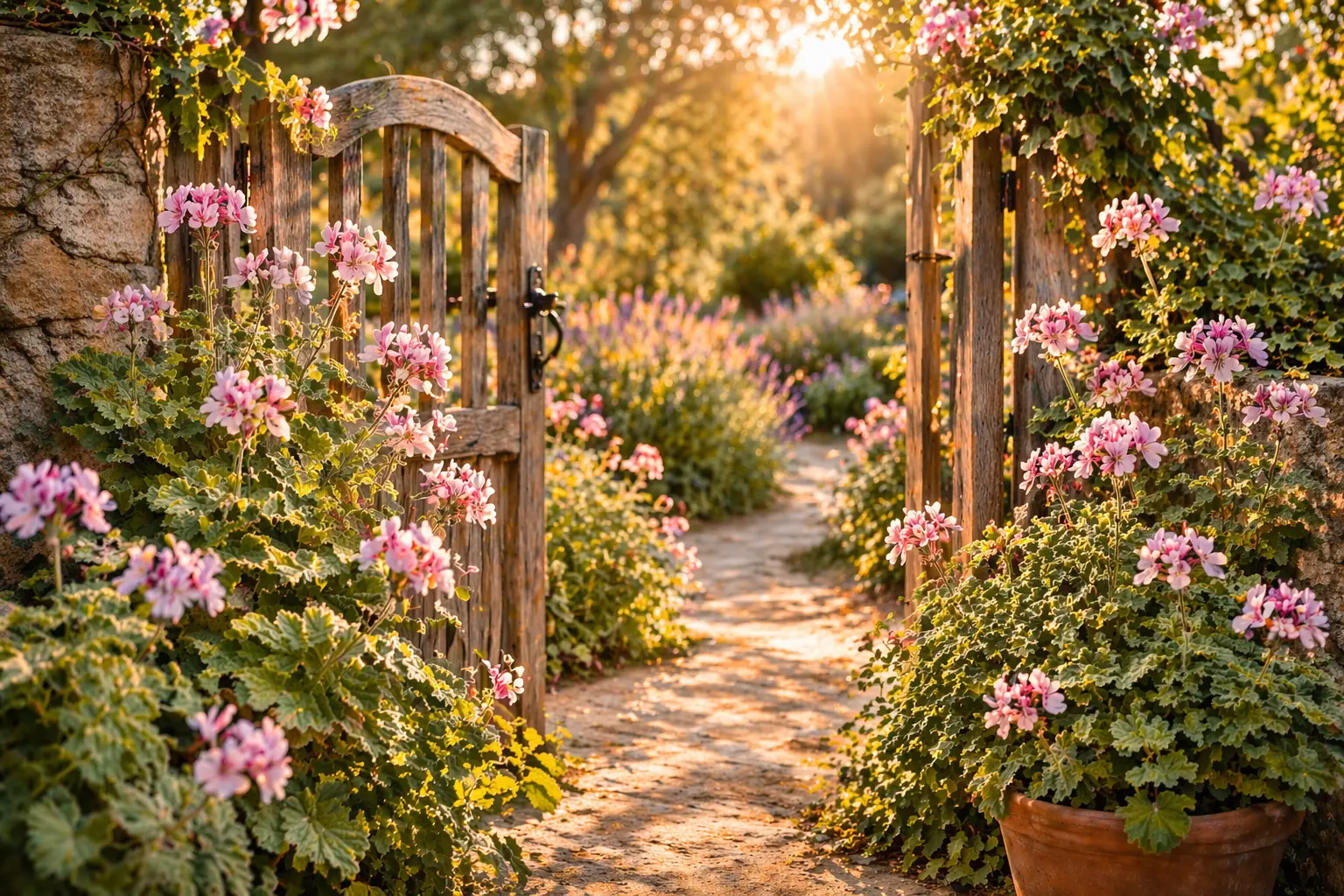
Geranium Essential Oil, Spirituality, and Soul
The main sections above focus on botanical information, practical use, dilution, and safety. Geranium also has a symbolic and spiritual life in modern aromatherapy, where its rosy-green aroma is often associated with emotional balance, softness, self-kindness, heart-centered renewal, and the ability to return to oneself gently.
Geranium does not feel as airy as bergamot or as deep as cedarwood atlas. It lives somewhere in the heart of the garden: floral, leafy, alive, and quietly composed. It can feel like opening a gate after being closed for too long.
Heart Energy and Emotional Balance
In symbolic aromatherapy, geranium is often connected with the heart because of its rosy, soft, emotionally warm aroma. It may be chosen for rituals of compassion, self-acceptance, forgiveness, and emotional steadiness. These associations are symbolic, not medical or scientific claims.
Soft Boundaries
Geranium can also suggest healthy boundaries: not a hard wall, but a living garden edge. It may be used symbolically when someone wants to feel open without feeling overexposed, kind without losing themselves, and emotionally available without becoming depleted.
Feminine Renewal
Because geranium is often used in floral, body-care, and women’s wellness blends, it has become associated with feminine renewal, cyclical self-care, and gentle reconnection with the body. This is best understood as symbolic and ritual language, not a medical claim about hormones or reproductive health.
Safety Notes
Geranium essential oil should be diluted before topical use. Do not apply it undiluted to the skin, do not use it in or near the eyes, and do not take it internally as a casual wellness practice.
Geranium contains natural fragrance constituents such as citronellol, geraniol, linalool, citral, and related compounds that may irritate sensitive skin or trigger allergic reactions in some people. Use caution with sensitive or allergy-prone skin, patch test first, and avoid old or oxidized oil on skin.
Pregnant or breastfeeding people, babies, young children, elderly adults, people with asthma, allergies, complex medical conditions, medication use, hormone-sensitive concerns, or very sensitive skin should seek qualified guidance before use. Diffuse in moderation, keep rooms ventilated, and avoid continuous diffusion. Stop using geranium if irritation, rash, headache, nausea, dizziness, breathing discomfort, or any unusual reaction occurs.
Further Reading and Sources
For botanical, chemical, and safety-oriented background, these sources may be useful starting points:
- Kew Plants of the World Online: Pelargonium graveolens
- Chemical composition and biological activities of rose-scented geranium, Pelargonium graveolens
- Phytochemical composition and essential oil production from geranium
- Chemical profiling and biological activities of Pelargonium graveolens essential oils
- Britannica: Pelargonium graveolens