Frankincense Essential Oil
Essential Oils
Frankincense essential oil is a warm, resinous, woody essential oil steam distilled from the aromatic resin of Boswellia trees. It is one of the most historically significant aromatic materials in the world, known for its use in incense, perfumery, meditation, skin-care blends, quiet diffuser routines, and grounding aromatic rituals.
Frankincense is not a single botanical species. Essential oils sold as frankincense may come from several Boswellia species, including Boswellia carterii, Boswellia sacra, Boswellia frereana, Boswellia serrata, and Boswellia papyrifera. These oils share a resinous family character, but they are not identical in aroma, sourcing, chemistry, or traditional context.
Quick Answer
Frankincense essential oil is a steam-distilled resin oil from Boswellia species. It has a warm, resinous, woody, balsamic aroma and is commonly used in diffuser blends, meditation routines, massage oils, facial oils, body-care products, and natural perfumery. It should still be diluted before skin use, kept away from the eyes and mucous membranes, and used with extra care around children, pets, pregnancy, nursing, allergies, and medical conditions.
Quick Facts
Common name:
Frankincense
Botanical name:
Boswellia spp.
Common species:
B. carterii, B. sacra, B. frereana, B. serrata
Plant family:
Burseraceae
Plant part:
Resin
Extraction:
Steam distillation
Aroma:
Resinous, woody, balsamic, incense-like
Aroma note:
Base note
What Is Frankincense Essential Oil?
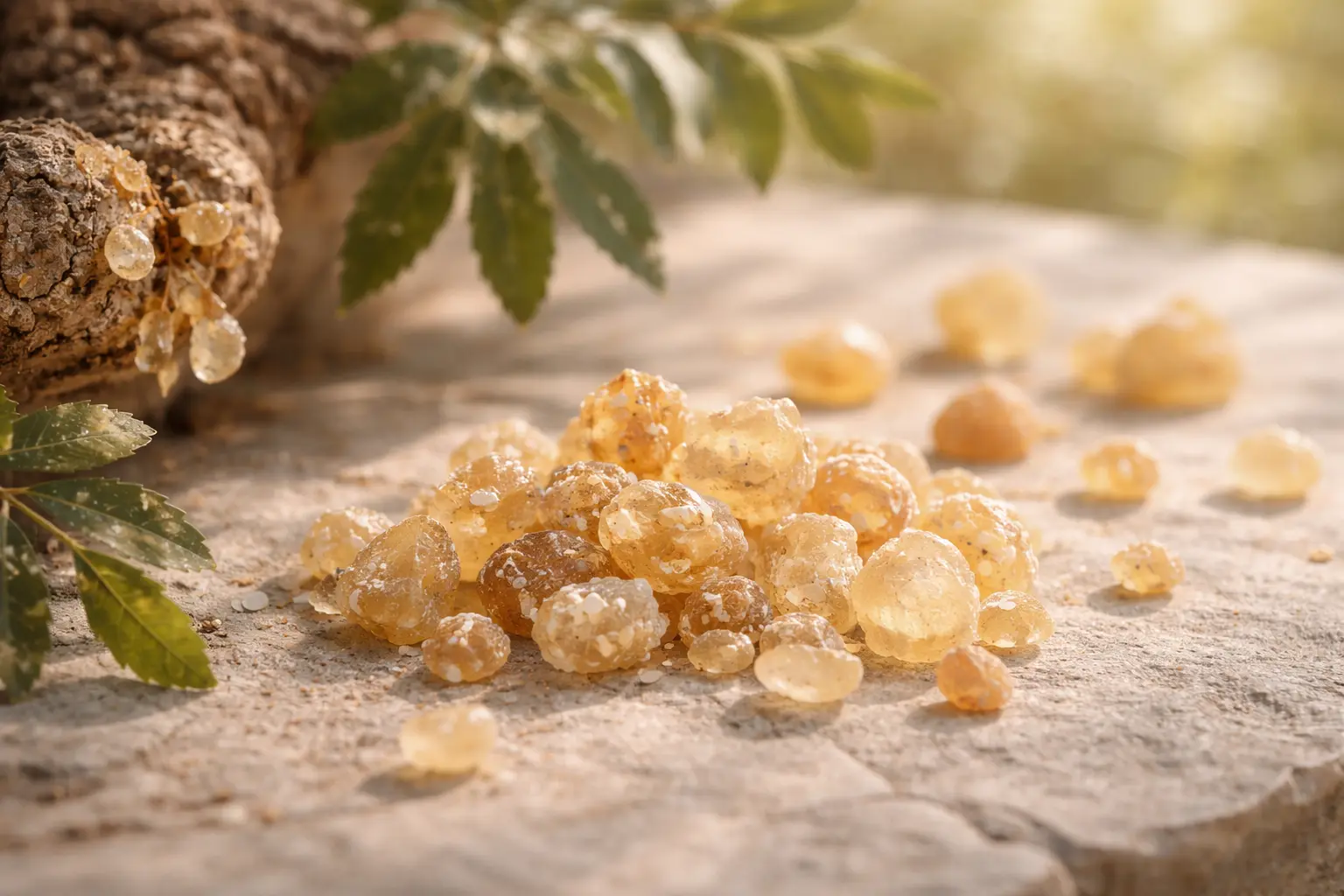
Frankincense essential oil is produced by steam distilling the hardened resin, often called resin tears, of Boswellia trees. The resin forms when the bark is cut or naturally wounded, and the tree exudes a sticky aromatic sap that gradually hardens into pale, golden, amber, or whitish tears.
Unlike leaf oils such as eucalyptus radiata or tea tree, frankincense begins as resin. This gives the oil its deep, dry, balsamic character and connects it with incense, sacred smoke, perfumery, and ancient trade routes.
Frankincense belongs to the Burseraceae family, the same plant family as myrrh, elemi, palo santo, and other aromatic resin-producing trees. These materials often share warm, resinous, spiritual, or perfumery associations, but each has its own botanical identity and safety profile.
Frankincense essential oil is not the same thing as frankincense resin, incense tears, boswellia dietary supplements, boswellia extracts, or resin tinctures. This distinction matters, especially because many wellness claims about boswellia are based on resin extracts, not the steam-distilled essential oil.
Frankincense Species: Carterii, Sacra, Frereana, Serrata, and Papyrifera
Frankincense is best understood as a family of related resin oils rather than one single oil. The species name matters because different Boswellia species can vary in aroma, growing region, resin quality, chemistry, and sustainability concerns.
Frankincense carterii, from Boswellia carterii, is one of the most common frankincense essential oils in aromatherapy. It often has a balanced resinous, lemony, woody aroma and is widely used in diffuser blends, skin-care formulas, and meditation routines.
Frankincense sacra, from Boswellia sacra, is strongly associated with Oman and parts of the Arabian Peninsula. It is highly valued historically and culturally, and it can have a refined, bright, resinous character.
Frankincense frereana, from Boswellia frereana, is sometimes called “Maydi” frankincense. It is often prized in traditional resin trade and can have a softer, sweet, resinous, almost creamy aromatic profile.
Frankincense serrata, from Boswellia serrata, is strongly associated with India and Ayurvedic traditions. Boswellia serrata resin extracts are often discussed in herbal supplement contexts, but those extracts are not the same as frankincense essential oil.
Frankincense papyrifera, from Boswellia papyrifera, is another important resin source, especially in parts of northeastern Africa. Like other frankincense species, it deserves its own profile when sourcing, sustainability, and aroma differences matter.
Frankincense Resin History and Traditional Use
Frankincense has one of the richest histories of any aromatic material. For thousands of years, frankincense resin has been traded, burned as incense, used in religious ceremonies, included in perfumes, and valued as a precious material across North Africa, the Arabian Peninsula, India, the Mediterranean, and beyond.

Frankincense was part of ancient trade routes that connected Arabia, the Horn of Africa, India, Egypt, the Levant, Greece, and Rome. The resin was valuable because it was fragrant, portable, long-lasting, and culturally meaningful. It could scent a room, mark a ritual, honor a guest, accompany prayer, or become part of perfumery and burial practices.
Frankincense is also widely known from biblical and sacred text traditions. It appears in the Hebrew Bible and New Testament, most famously as one of the gifts brought to the infant Jesus by the Magi. It has also been used in Christian liturgy, Islamic cultural contexts, ancient Egyptian practices, and other ceremonial traditions.
Historically, these uses were centered on the resin itself, not the modern essential oil. People burned frankincense tears as incense, chewed certain resins, used them in balms or perfumes, or traded them as precious aromatic materials. Steam-distilled frankincense essential oil is a more modern concentrated aromatic preparation.
What Does Frankincense Essential Oil Smell Like?
Frankincense essential oil smells resinous, woody, dry, balsamic, slightly citrusy, warm, and incense-like. Some frankincense oils smell brighter and more lemony, while others are deeper, softer, sweeter, smokier, or more woody.
Compared with myrrh, frankincense is usually brighter, drier, and more lifted. Myrrh often feels heavier, darker, more bitter, and more earthy. Compared with cedarwood atlas, frankincense is more resinous and incense-like, while cedarwood is more dry, woody, and pencil-like.
Frankincense blends well with lavender, bergamot, lemon, sweet orange, cedarwood atlas, myrrh, sandalwood indian, patchouli, vetiver, black pepper, roman chamomile, clary sage, rose, and ylang ylang.
Frankincense Essential Oil vs. Boswellia Extract
This distinction is important. Boswellia dietary supplements, resin extracts, and some topical extracts are often discussed because they may contain boswellic acids. These compounds are associated with much of the research around boswellia extracts.
Frankincense essential oil is different. Essential oils are made of volatile aromatic compounds that pass over during distillation. Boswellic acids are heavier, non-volatile resin compounds and are not typically found in meaningful amounts in steam-distilled frankincense essential oil.
This means frankincense essential oil should not be promoted as if it contains the same active resin compounds as boswellia supplements. It can be a beautiful aromatic material for scent, ritual, massage, skin-care formulas, and perfumery, but it should not be marketed as a treatment for inflammatory diseases, cancer, arthritis, asthma, or other medical conditions.
Common Uses of Frankincense Essential Oil
Frankincense essential oil is often chosen when a blend needs to feel grounding, resinous, meditative, warm, or quietly luxurious. It is common in diffuser blends, meditation routines, facial oils, massage oils, body-care formulas, natural perfumes, bath products, and spiritual or reflective rituals.
Frankincense is usually gentler in scent than strong oils such as peppermint, eucalyptus radiata, or tea tree, but gentle-feeling does not mean risk-free. Dilution and individual sensitivity still matter.
Meditation and Quiet Diffuser Routines
Frankincense is one of the classic oils for meditation and reflection. Its resinous aroma can help create a sense of stillness, slowness, and depth in a room. It pairs especially well with low light, silence, breathwork, prayer, journaling, or slow evening routines.
In diffusers, frankincense can be used alone or blended with citrus, woods, florals, or resins. It is less sharp than eucalyptus or lemon and less sweet than orange, which makes it useful when the goal is calm without heaviness.
Grounding Home Fragrance
Frankincense brings a grounding base note to home fragrance blends. It can make bright citrus oils feel more mature, herbal blends feel softer, and floral blends feel more contemplative.
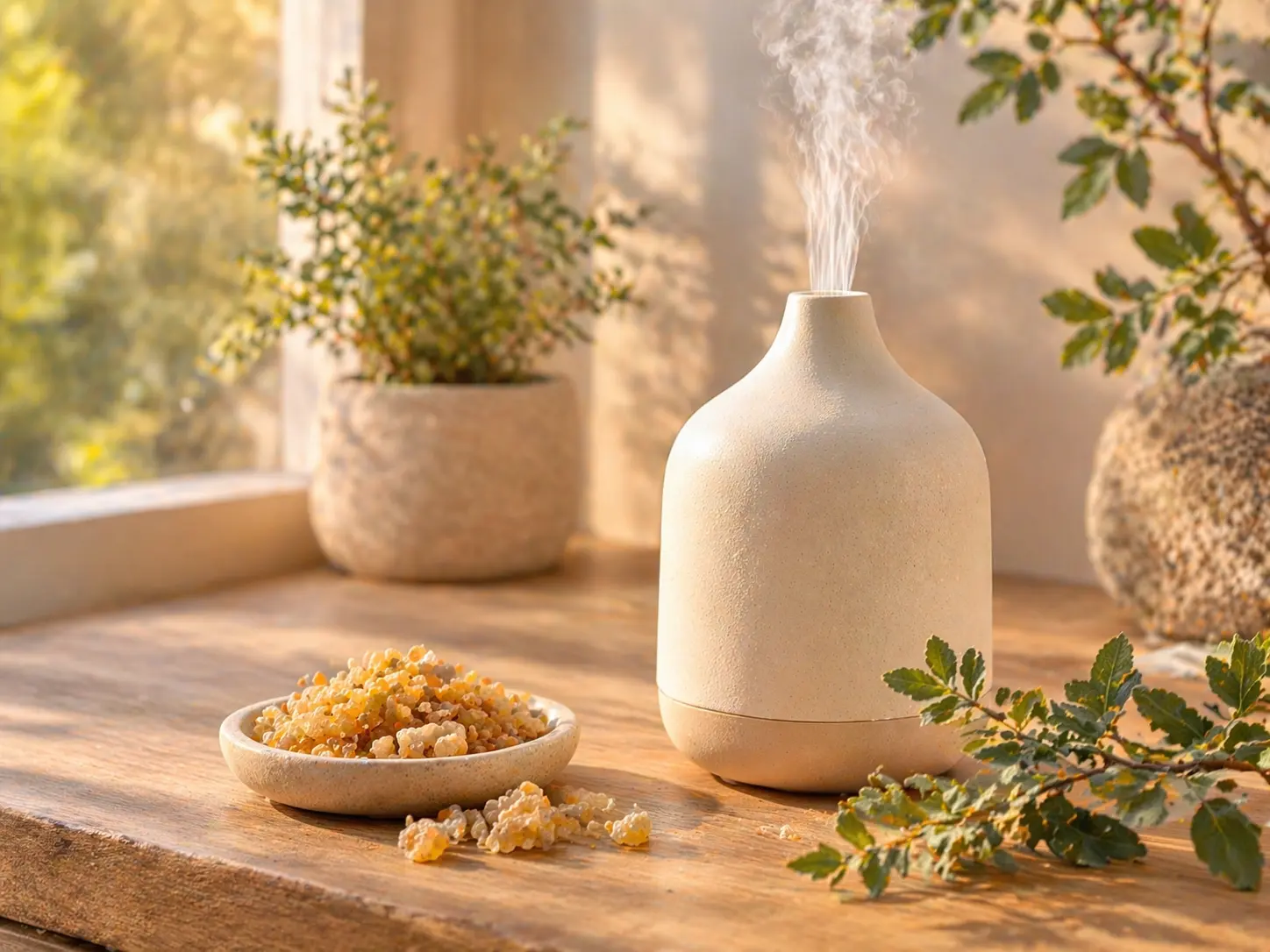
For a simple home fragrance routine, frankincense pairs beautifully with sweet orange, bergamot, cedarwood atlas, lavender, sandalwood indian, and myrrh. It can be used in daytime blends when paired with citrus, or evening blends when paired with woods and soft florals.
Facial Oils and Mature Skin Formulas
Frankincense is often used in facial oils and mature-skin formulas because its aroma feels elegant, resinous, and calming. It appears in face oils, serums, balms, body oils, and massage blends where a refined resin note is wanted.
Skin-care claims should stay careful. Frankincense essential oil can be a pleasant aromatic ingredient in a well-formulated product, but it should not be described as reversing aging, treating wrinkles, healing wounds, curing skin disease, or replacing dermatological care.
Massage and Body Care
Frankincense is a useful massage oil ingredient because it blends well with carrier oils and gives body-care formulas a warm, grounding aroma. It works well in blends for shoulders, back, hands, feet, and general relaxation routines.
For massage, it pairs well with lavender, cedarwood atlas, black pepper, sweet orange, ginger, patchouli, and vetiver. Keep the dilution appropriate for the person, area of the body, and frequency of use.
Bath and Evening Rituals
Frankincense can feel beautiful in bath products, especially with lavender, roman chamomile, sweet orange, cedarwood atlas, or sandalwood indian. It gives a bath blend a ritual quality without needing a heavy fragrance.
Essential oils should not be dropped directly into bathwater without proper dispersion. Use a finished bath product or dilute and disperse the oil appropriately so it does not float on the surface and contact skin undiluted.
Natural Perfumery and Resin Blends
Frankincense is valuable in natural perfumery because it connects top notes and base notes. It can brighten woods, soften resins, ground florals, and add a sacred-incense quality without becoming smoky.
It blends especially well with bergamot, lemon, sweet orange, rose, ylang ylang, patchouli, vetiver, myrrh, sandalwood indian, cedarwood atlas, black pepper, and cardamom. Because it is a base note, it can help a blend last longer and feel more complete.
Quick Tips for Using Frankincense Essential Oil
Quiet Diffuser
Add 3 drops frankincense, 2 drops sweet orange, and 1 drop cedarwood atlas to a diffuser for a warm, grounding room aroma.
Facial Oil Accent
Dilute 1 drop frankincense essential oil in 2 teaspoons of carrier oil for a gentle adult facial oil. Avoid the eyes, irritated skin, and use with caution on sensitive skin.
Evening Massage
Blend frankincense with lavender or roman chamomile in a carrier oil for a quiet evening massage. Keep the dilution low and patch test first.
How to Use Frankincense Essential Oil Safely
Frankincense essential oil is often considered relatively gentle compared with very strong oils such as oregano, cinnamon bark, clove bud, peppermint, or eucalyptus. However, it still needs proper dilution, careful storage, and individual safety awareness.
The main safety themes are dilution, skin sensitivity, resin allergies, eye avoidance, internal use avoidance, pregnancy and nursing caution, children, pets, and sourcing quality.
Simple Dilution Guidance
For general adult body use, a 1% to 2% dilution is a common beginner range. For facial oils, sensitive skin, older adults, or frequent use, start lower, around 0.5% to 1%. A simple 1% dilution is about 1 drop of essential oil per teaspoon of carrier oil.
Frankincense essential oil should not be used undiluted on the skin. Even oils that smell soft can cause irritation or sensitization in some people, especially with repeated use.
Diffusion Guidance
For a typical room diffuser, frankincense can be used at around 3 to 5 drops total blend. It is usually less overwhelming than peppermint or eucalyptus, but the room should still be ventilated and diffusion should be intermittent.
Frankincense works well for short reflective routines. Thirty to sixty minutes is often enough. Stop diffusing if anyone notices headache, nausea, throat irritation, dizziness, or discomfort.
Topical Guidance
For skin use, dilute frankincense essential oil in a carrier oil, balm, lotion, serum, or properly formulated product. Good carrier choices include jojoba, sunflower oil, argan oil, rosehip seed oil, sweet almond oil, apricot kernel oil, grapeseed oil, and fractionated coconut oil.
Avoid the eyes, inner ears, nose, mouth, mucous membranes, broken skin, inflamed skin, and irritated skin. Patch testing is useful, especially if you have sensitive skin, eczema, allergies, or a history of fragrance reactions.
Children, Pets, Pregnancy, and Nursing
Use extra caution around children. Keep essential oil bottles out of reach and use low dilutions only when appropriate. Do not let children apply essential oils themselves.
Do not apply frankincense essential oil directly to pets. If diffusing in a home with animals, keep the amount low, ventilate well, and make sure the animal can leave the room. Cats, birds, small animals, young pets, and animals with health conditions may be especially sensitive.
During pregnancy or nursing, use frankincense cautiously and in low amounts if appropriate. Avoid casual internal use and avoid applying products where an infant could inhale or contact them. Consult a qualified professional if unsure.
Sustainability and Sourcing
Frankincense sourcing deserves attention. Some Boswellia species and harvesting regions face pressure from overharvesting, habitat stress, climate conditions, grazing, and poor regeneration. Responsible sourcing matters because frankincense comes from slow-growing trees in fragile environments.
When choosing frankincense essential oil, look for clear botanical names, country or region of origin, extraction method, and supplier transparency. Species-level identification is especially important with frankincense.
Frankincense Diffuser Blends
Frankincense is a beautiful base note for diffuser blends. It softens sharp oils, grounds bright citrus, and gives floral blends more depth. Use it when you want a room to feel calm, warm, spacious, and quietly reflective.
Golden Stillness
- 3 drops frankincense
- 2 drops sweet orange
- 1 drop cedarwood atlas
A warm resinous-citrus blend for quiet evenings and grounding routines.
Temple Garden
A soft, contemplative blend with floral, resinous, and elegant citrus notes.
Resin Woods
- 3 drops frankincense
- 2 drops sandalwood indian
- 1 drop black pepper
A deep, warm, woody-resinous blend with a subtle spicy edge.
Frankincense Essential Oil in DIY Recipes
Frankincense essential oil can be useful in DIY recipes when a formula needs warmth, depth, elegance, or a resinous base note. It appears often in facial oils, body oils, massage blends, balms, bath products, diffuser blends, natural perfumes, and meditation rollers.
For beginner DIY, frankincense is easier to work with than many strong spice or herb oils. It blends well with lavender, sweet orange, bergamot, cedarwood atlas, sandalwood indian, myrrh, patchouli, vetiver, roman chamomile, clary sage, rose, and ylang ylang.
For facial use, keep the dilution low and avoid the eye area. For body oils and massage blends, frankincense can be used slightly more generously, but the total essential oil dilution should still be appropriate for the person and purpose.
Frequently Asked Questions
Which frankincense essential oil is best?
There is no single “best” frankincense essential oil. Boswellia carterii, Boswellia sacra, Boswellia frereana, Boswellia serrata, and other species can all be valuable. The best choice depends on aroma preference, intended use, sourcing transparency, sustainability, and safety information.
Is frankincense essential oil the same as boswellia extract?
No. Frankincense essential oil is steam distilled from resin and contains volatile aromatic compounds. Boswellia extracts and supplements may contain heavier resin compounds such as boswellic acids. These are different materials and should not be treated as interchangeable.
Does frankincense essential oil contain boswellic acids?
Frankincense essential oil does not typically contain meaningful amounts of boswellic acids. Boswellic acids are heavy, non-volatile compounds found in resin and extracts, not the main volatile fraction that comes over in steam distillation.
Can frankincense essential oil be applied directly to skin?
It is better to dilute frankincense essential oil before applying it to skin. Undiluted use can increase the risk of irritation or sensitization, especially with repeated use or sensitive skin.
Can I ingest frankincense essential oil?
Essencyclopedia does not recommend casual internal use of frankincense essential oil. Internal essential oil use requires appropriate formulation, dose control, product quality, and professional guidance.
Is frankincense essential oil good for meditation?
Frankincense is often used in meditation, prayer, breathwork, and quiet reflection because its resinous aroma is historically associated with ritual and stillness. This is an aromatic and symbolic use, not a medical claim.
What oils blend well with frankincense?
Frankincense blends well with bergamot, lemon, sweet orange, lavender, cedarwood atlas, sandalwood indian, myrrh, patchouli, vetiver, black pepper, roman chamomile, clary sage, rose, and ylang ylang.
Frankincense Essential Oil, Spirituality, and Symbolism
The main sections above focus on botanical information, practical use, dilution, and safety. Frankincense also has a symbolic and spiritual life, shaped by its long association with prayer, ritual, stillness, reverence, breath, and sacred tradition.
Stillness and Reverence
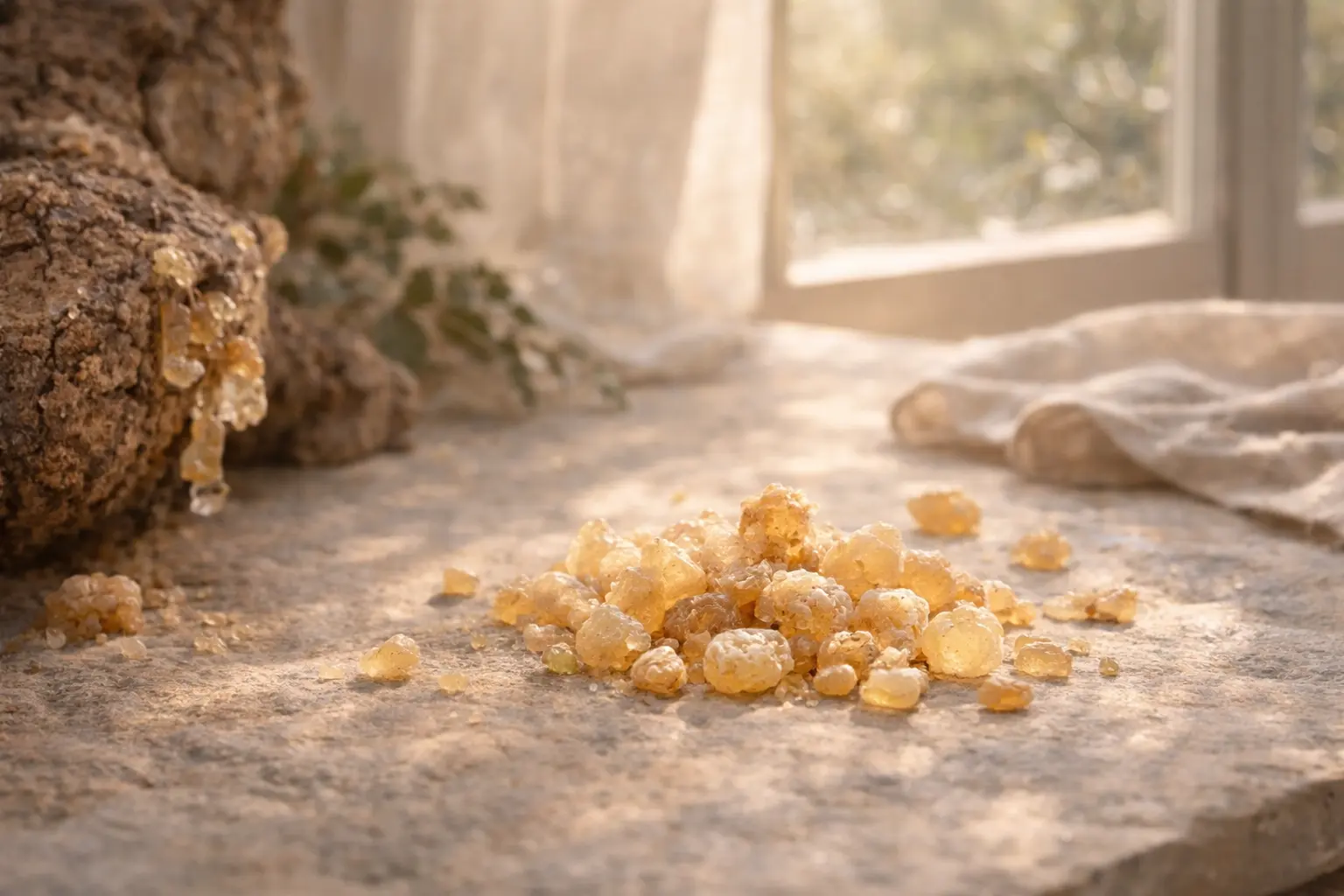
Frankincense has been used in sacred spaces for centuries, which gives it a deep symbolic connection with reverence and stillness. Its aroma can mark a transition from ordinary activity into a quieter inner state.
Grounding and Breath
Because frankincense smells warm, resinous, and spacious, it is often used symbolically for grounding and deeper breathing. In reflective practices, it may represent returning to the body, slowing down, and making room for presence.
Crown and Root Associations
In some contemporary aromatherapy and energy-work traditions, frankincense is associated with both the crown chakra and the root chakra: crown for spiritual connection, root for grounded stability. These are symbolic uses, not medical claims.
Safety Notes for Frankincense Essential Oil
Frankincense essential oil is often considered relatively gentle, but it should still be diluted before topical use and kept away from the eyes, inner ears, nose, mouth, mucous membranes, and broken or irritated skin.
Do not ingest frankincense essential oil as a casual home practice. Frankincense resin, boswellia supplements, and frankincense essential oil are different materials. Internal use requires professional guidance, appropriate formulation, and careful dose control.
Use extra caution around children, pets, pregnancy, nursing, asthma, allergies, sensitive skin, complex medical conditions, and medication use. Do not apply frankincense essential oil directly to pets, and keep diffusion light, brief, and well ventilated if animals are in the home.
For skin use, patch test first and avoid broken, irritated, inflamed, or highly sensitive skin. If redness, itching, burning, headache, nausea, dizziness, breathing discomfort, or other unwanted symptoms occur, stop using the oil and ventilate the room or wash the area as appropriate.
Store frankincense essential oil tightly closed, away from heat and light. Choose oils with clear botanical names, extraction methods, sourcing transparency, and appropriate safety information, especially because frankincense species and resin sourcing can vary.
Further Reading and Sources
For a broader understanding of frankincense, boswellia resin, essential oil chemistry, and responsible aromatherapy practice, these resources are useful starting points:
- NCCIH: Boswellia
- Tisserand Institute: Does Frankincense Oil Contain Boswellic Acid?
- PubMed: Frankincense Essential Oil as Supportive Therapy Case Study
This article is educational and does not replace medical advice. If you are pregnant, nursing, taking medication, managing a medical condition, preparing essential oil products for children or pets, or considering internal use, consult an appropriately qualified professional.